

Quick Facts
- Event
- China International Import Expo 2026
- Date
- Thursday, November 5, 2026
- City
- Shanghai
- Event Type
- Trade Fair
- Likely Venue Area
- National Exhibition and Convention Center, Hongqiao area
- Best For
- B2B sourcing, market expansion, government-to-business networking
- Main Airports
- Shanghai Hongqiao International Airport, Shanghai Pudong International Airport
- eSIMno Networks
- China Mobile
Why This Event Matters
China International Import Expo isn’t just another giant hall-and-badge trade show. It’s China’s flagship import-focused expo, which gives it a very specific energy: country showcases, official delegations, procurement teams, and global brands all trying to turn introductions into actual market access. If your goal is sourcing, entering the Chinese market, or meeting buyers and partners at scale, this is exactly the kind of event worth crossing continents for.
That’s also why it attracts such a focused crowd. Exporters come to test demand and build distributor relationships. Importers and distributors come to compare suppliers in one place. Trade officials, investors, and multinational business teams show up because the event sits at the intersection of commerce and policy in a way few expos do. You feel that mix in the aisles: one conversation is about packaging compliance, the next is about regional rollout, and the next is a formal delegation visit with cameras nearby.
What makes CIIE stand out is its scale and intent. It’s a premier gateway for international companies targeting Chinese buyers and partners, not just a place to collect business cards. Come expecting long walking days, structured registration, serious networking zones, and a schedule that can change quickly once meetings start landing. If that sounds like your kind of trip, explore eSIMno plans for Shanghai before you fly.
Getting There and Around on Expo Days
For this event, Hongqiao is usually the smartest arrival point. Shanghai Hongqiao International Airport is much closer to the likely venue area around the National Exhibition and Convention Center, and it also links neatly with Hongqiao Railway Station if you’re coming in from another Chinese city. Pudong still works, of course, but the cross-city transfer can eat into your first day if traffic is heavy.
From Hongqiao, a taxi or ride-hail is the simplest option if you’ve got samples, brochures, or a suit bag. Metro users usually rely on the Hongqiao transport hub and the lines serving the exhibition district; on event mornings, leave earlier than the map suggests because station corridors and security checks add time. If you’re staying nearby, look at Hongqiao, Xujing, or western Changning for convenience. If you want more restaurant choice and a slightly easier evening scene, Gubei is a good compromise. Jing’an is more polished for business dinners, but the commute is longer.
During the expo itself, local transport gets peaky in very predictable waves: before opening, right after major sessions, and again when the halls empty. That’s when having your route, pickup point, and Chinese venue name ready on your phone really helps. For late dinners or post-event returns, metro is often efficient, but ride-hailing becomes useful once you’re carrying catalogs and your feet are done for the day.
Beyond the Event: Short Shanghai Detours That Fit a Business Trip
If you only have a few free hours, keep your detours realistic. Zhujiajiao Ancient Town is one of the easiest rewarding side trips from the Hongqiao side of Shanghai. It gives you stone bridges, canal lanes, and a slower rhythm that feels worlds away from expo halls. Mini tip: go earlier in the day if you want cleaner photos and a calmer boat-ride atmosphere.
For something central but still manageable after meetings, Shanghai Museum is a strong pick if you want culture without committing a full day. It’s especially good for travelers who’ve spent all morning in negotiation mode and want an hour of quiet before dinner. If your schedule opens up at sunset, the Bund still delivers that classic Shanghai contrast of riverfront history and modern skyline, but treat it as an evening walk rather than a rushed checklist stop.
Food-wise, this trip should not be all hotel buffets and coffee counters. Near the western business districts, look for local spots serving shengjian bao, cong you ban mian, and xiaolongbao for quick but satisfying meals. For a more social dinner, Huanghe Road is known for classic Shanghai dishes and old-school restaurant energy, while the Gubei area is handy for business meetups with plenty of international dining options. If you want something distinctly local, try hong shao rou or drunken chicken alongside a lighter vegetable dish; expo days are long, and heavy ordering at lunch can slow you down fast.
Staying Connected When the Halls Fill Up
CIIE is exactly the kind of event where venue WiFi looks useful on paper and then struggles once everyone is scanning, uploading, translating, and messaging at the same time. The practical phone moments come one after another: loading a QR ticket at the entrance, checking a live floor map, receiving a booth change in WeChat, translating product details, and finding your group after a meeting runs over.
We’d treat mobile data as your primary connection, not your backup. It matters before the gates open, when you’re confirming registration details on the way in. It matters during crowd peaks, when public WiFi can become slow or awkward to rejoin. And it matters after the event, when thousands of people are trying to book transport at once from the same exhibition zone.
Photo sharing is another underrated one. At this expo, people constantly send booth photos, packaging shots, and product displays to colleagues who aren’t on site. Group messaging can get busy fast, especially if your team is split between country pavilions and supplier meetings. A stable connection keeps those small decisions moving. If you want to sort that before arrival, explore eSIMno plans for Shanghai so your phone is ready for the actual pressure points, not just the easy moments.
How to Connect
- Before the gates open
Get your data working before you leave your hotel in Hongqiao, Xujing, Gubei, or Jing’an. Open your registration email, save the venue name in Chinese, and load your first route while you still have a calm moment rather than outside the entrance with a queue behind you. - At the entrance for QR scanning
Keep your QR ticket or registration page already open before you reach the checkpoint. Expo entry lines move in bursts, and this is not the moment to depend on overloaded venue WiFi or a weak indoor signal while your screen refreshes. - During the busiest hall hours
Use mobile data for exhibitor maps, translation apps, and live meeting changes. If your team is spread across country pavilions or procurement zones, agree to message exact hall and booth numbers, not just company names, because the venue is huge. - When the halls empty out
As the crowd heads toward metro stations and pickup areas, book transport early. Peak-time ride-hailing around the National Exhibition and Convention Center can get messy, so send your group a precise gate or pickup landmark before you start walking. - On the way to dinner or back to the hotel
Use your connection for post-event coordination: sharing booth photos, confirming tomorrow’s schedule, and checking if the fastest return is metro from Hongqiao hub or a direct car. Those last-minute changes are common at CIIE, especially after evening networking.
Tips
- Carry a slim folder for business cards and paper notes. At a trade expo this formal, not every useful contact exchange happens digitally, and it helps when your phone is busy with maps or messages.
- Build a lunch plan before noon. Nearby food options and venue dining areas get crowded quickly, and a delayed lunch can throw off afternoon meetings more than people expect.
- If you’re meeting multiple suppliers in one hall, sort them by hall sequence rather than appointment time alone. The walking distance inside the venue can be bigger than it looks on a floor map.
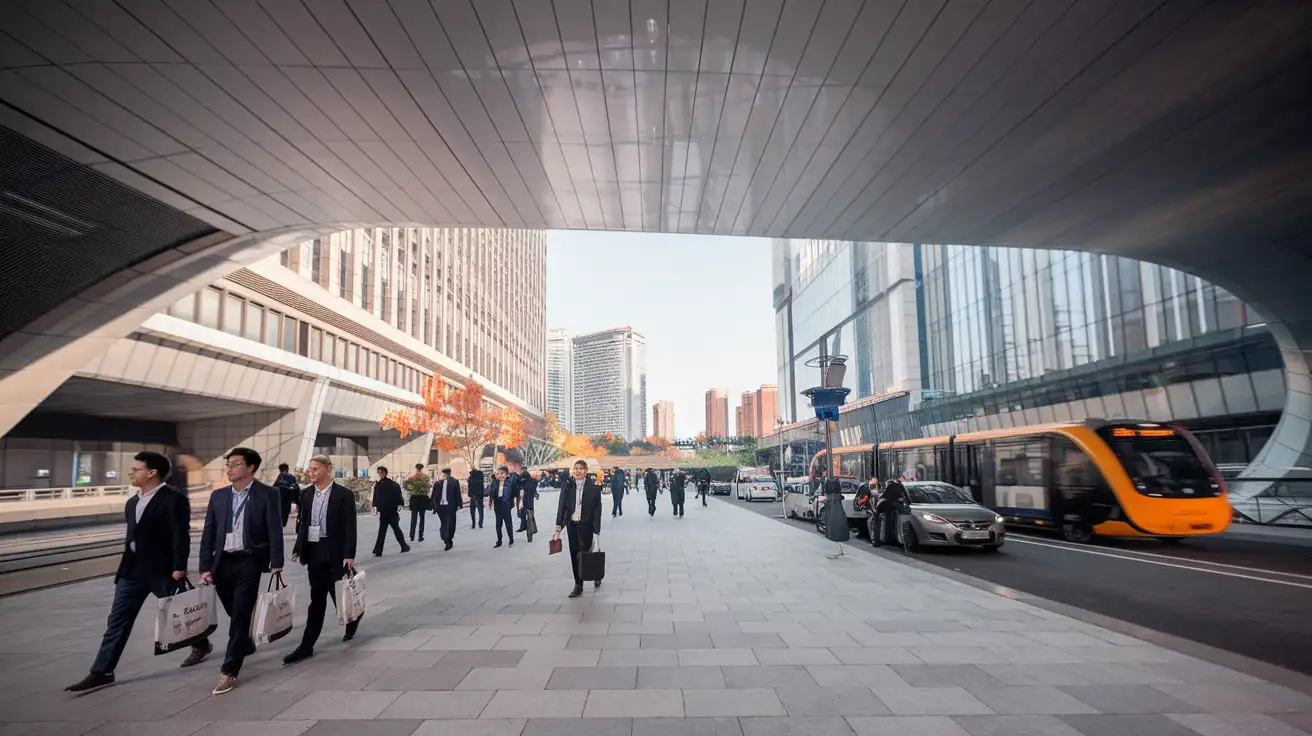
Expo Day in Western Shanghai
Compare Connectivity for China International Import Expo 2026
 Recommended Recommended | Local SIM / Operator | Roaming | |
|---|---|---|---|
| FEATURES | |||
| Setup time | Few minutes | Store visit + paperwork | Auto |
| No local ID needed | Online checkout | Local ID required | Use home account |
| Speed | 4G/LTE; 5G in some areas | Carrier-grade | Partner-dependent |
| Travel support | English support 24/7 | Operator shops and call centre | Home carrier hours |
| Keep home number | Dual SIM | Replaces it | Same number |
| Cost predictability | Fixed price | Bills can spike | Bill-shock risk |
| PRICING | |||
Typical pricing | See plans below | — | — |
PRICING — PICK YOUR ESIMNO PLAN
Destination overview
Frequently Asked Questions
Featured eSIM plans
China Mobile

China Mobile
China Mobile
China Mobile
China Mobile
China Mobile
China Mobile
China Mobile