
Quick Facts
- Event
- China Hi-Tech Fair 2026
- Date
- Saturday, November 14, 2026
- City
- Shenzhen
- Likely Venue Area
- Futian convention district, around Shenzhen Convention & Exhibition Center
- Best For
- Tech scouting, hardware partnerships, innovation networking
- Who Goes
- Tech buyers, founders, investors, product teams, electronics sourcing professionals
- Nearest Main Airport
- Shenzhen Bao'an International Airport
- eSIMno Networks
- China Mobile
Why This Event
China Hi-Tech Fair works because it feels bigger than a normal expo visit. You’re not just walking booth aisles and collecting brochures. You’re stepping into Shenzhen’s hardware and innovation ecosystem, in a city where product ideas, manufacturing conversations, and investor interest often sit unusually close together. That’s the real travel reason to come: Shenzhen gives you a front-row view of how innovation moves from concept to supply chain.
This fair is especially strong if you want more than polished product displays. It brings together product discovery, startup exposure, and practical access to suppliers in a way that suits Shenzhen’s tech-hub personality. You might spend the morning looking at AI applications or advanced manufacturing systems, then spend the afternoon discussing sourcing, prototyping, or follow-up factory visits. That mix is what makes this event feel useful rather than just impressive.
The crowd reflects that purpose. Tech buyers come to compare options fast. Founders show up to meet partners and test market interest. Investors use the fair to spot momentum early. Product teams and electronics sourcing professionals often get the most out of it because Shenzhen lets them keep the conversation going after the halls close. If that sounds like your kind of trip, this is the fair to build around. Before you arrive, it’s worth taking a minute to explore eSIMno plans for Shenzhen so your phone is ready for booth pins, supplier chats, and same-day schedule changes.
Getting There and Around
For most international and domestic arrivals, Shenzhen Bao'an International Airport is the obvious entry point. If the fair is based in the usual Futian convention area, the airport-to-venue run is straightforward by metro, taxi, or ride-hailing app. Metro is often the least stressful on event mornings because road traffic can bunch up around major exhibition days. If you’re carrying samples or display materials, a taxi may be worth the extra cost, but leave more buffer time than the map suggests.
For hotels, Futian is the practical choice if you want short commutes and easy access to the convention district. Huanggang also works well for business travelers who want transport convenience without being right on top of the busiest blocks. Luohu can make sense if you’re combining the fair with cross-border plans or older commercial districts, though the daily ride is longer. Shekou is a good fit if you prefer evenings by the water and don’t mind commuting in for the event.
On fair days, the metro usually beats surface traffic for reliability. Just expect station exits around the convention area to feel busy before opening and right after closing. If you’re meeting someone, send the exact hall or entrance reference, not just the venue name. The district is large, and a five-minute mismatch can turn into twenty. If you’ve got evening meetings, The MixC area is useful for polished business dinners, while Shuiwei is better for a more casual late meal after a long expo day.
Beyond the Event
You don’t need to spend every spare hour inside meeting rooms. Shenzhen gives this fair a nice after-hours counterbalance. If you want the most obvious industry detour, head to Huaqiangbei. It’s not just shopping; it’s a live lesson in the city’s electronics culture. Mini tip: go with a short list, because wandering without a purpose can eat half a day.
For a reset after the expo floor, Shenzhen Museum is a smart stop if you want context for how quickly this city changed and why its business energy feels different from older Chinese cities. It’s a good choice for a lighter afternoon before dinner. If you’d rather get outside, Sea World in Shekou is handy for waterfront walking and easy evening meetups, especially if your contacts are staying on the western side of town.
Food matters here, especially after a day of talking shop. Near the convention side of town, Shuiwei is a reliable area for late dinners and casual group meals. Look for Cantonese seafood, roast goose, clay pot rice, and dim sum if you want something classic and easy to share. If you end up in Shekou, seafood and Cantonese dishes are easy to find around Sea World. And if you want a very Shenzhen kind of side trip, pair your fair visit with a run through local electronics markets by day and a slower dinner by the bay at night. That contrast suits the city.
Staying Connected at China Hi-Tech Fair
This is the kind of event where weak data becomes a real problem fast. Registration and entry often depend on QR codes, and those are exactly the moments when crowded venue WiFi can drag. We’d keep your ticket confirmation, passport copy, and any event registration emails easy to reach on your phone before you join the morning queue.
Once you’re inside, mobile data helps with the practical stuff that keeps the day moving: live schedule updates, hall maps, supplier chats, translation tools, and quick photo sharing with teammates. At a fair like this, people are constantly sending booth locations, changing meeting times, and asking for product shots. If you’re coordinating a small team, group messaging matters almost as much as navigation.
The connection pressure usually spikes again after the event, when everyone starts booking rides or checking metro routes at once. That post-event transport window is exactly when having your own data is more useful than relying on overloaded public networks. We’d also expect many visitors to line up factory visits or dinner meetings on short notice, so keeping your phone responsive all day is part of the business plan, not an extra. If you want a simple setup before you land, explore eSIMno plans for Shenzhen and sort it out ahead of the fair.
How to Connect
- Before the gates open
At Shenzhen Bao'an International Airport or once you reach your hotel in Futian, make sure your event QR confirmation, passport image, hotel address in Chinese, and your first meeting point are all loading properly on mobile data before expo morning. - At registration and entry
If the queue is moving near the Shenzhen Convention & Exhibition Center area, don’t count on venue WiFi to load your badge email at the last second. Open the QR code before you reach the scanner and keep screen brightness high for a faster read. - During crowd peak inside the halls
Use mobile data for live floor maps, supplier chats, translation, and sending booth pins to colleagues. This fair attracts dense business traffic, and shared WiFi can slow down right when you need to confirm a hall change or a networking meetup. - After the show lets out
As attendees head for metro stations, taxis, and ride-hailing pickups, data demand jumps again. Check your route before leaving the building, especially if you’re heading back to Futian, over to Shekou for dinner, or onward to Huaqiangbei for an evening electronics run. - For group messaging and follow-ups
Create one chat thread for your team or buyer group with booth numbers, contact names, and dinner plans. It sounds simple, but at China Hi-Tech Fair it saves time when people split across halls and reconnect later in Shuiwei, The MixC area, or a hotel lobby.
Tips
- Carry a small power bank with a short cable you can use while walking. Trade-fair days in Shenzhen often mean constant scanning, messaging, and photo-taking before lunch even starts.
- If a supplier suggests a same-day factory visit, ask for the location pin and district name immediately. In Shenzhen, a quick yes can turn into a long cross-city ride if you don’t confirm where you’re actually going.
- Save a plain-text note with your hotel name, venue area, and key contacts in both English and Chinese. It helps if you need to show directions quickly to a driver or venue staff when the day gets rushed.
Expo Day in Shenzhen
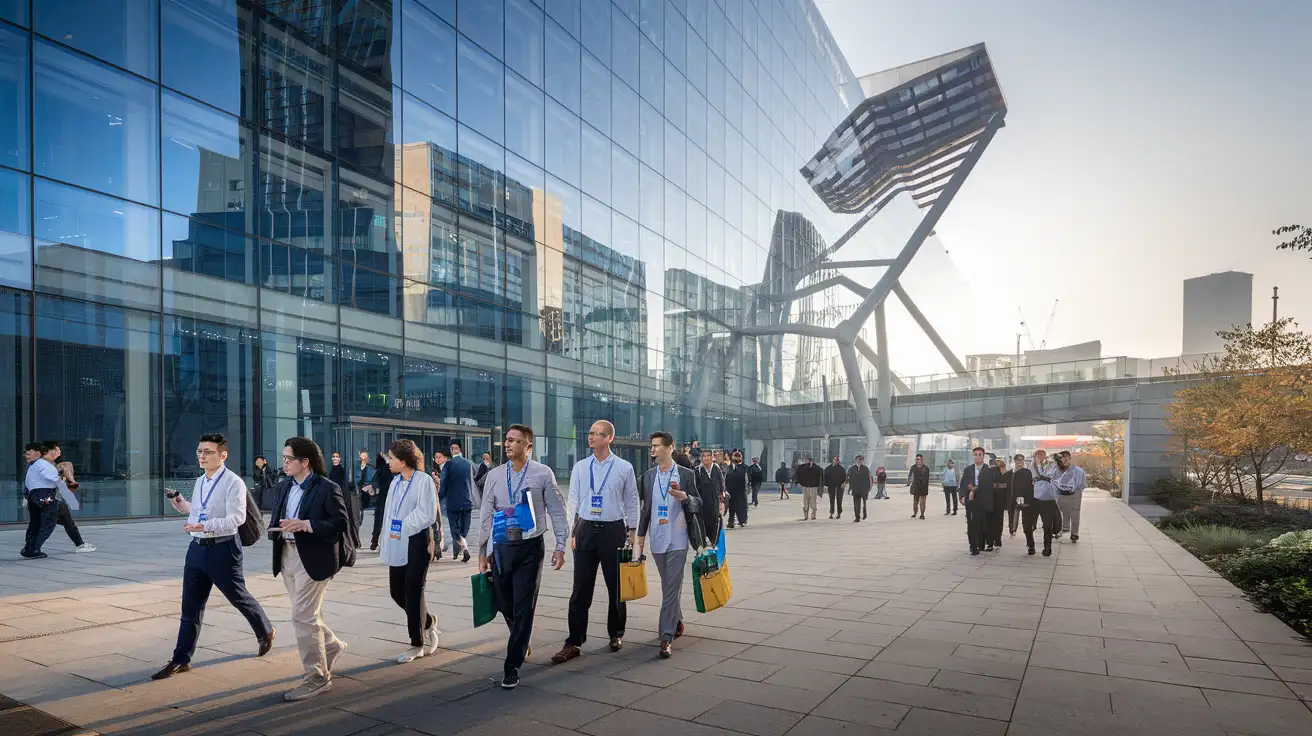
Compare Connectivity for China Hi-Tech Fair 2026
 Recommended Recommended | Local SIM / Operator | Roaming | |
|---|---|---|---|
| FEATURES | |||
| Setup time | Few minutes | Store visit + paperwork | Auto |
| No local ID needed | Online checkout | Local ID required | Use home account |
| Speed | 4G/LTE; 5G in some areas | Carrier-grade | Partner-dependent |
| Travel support | English support 24/7 | Operator shops and call centre | Home carrier hours |
| Keep home number | Dual SIM | Replaces it | Same number |
| Cost predictability | Fixed price | Bills can spike | Bill-shock risk |
| PRICING | |||
Typical pricing | See plans below | — | — |
PRICING — PICK YOUR ESIMNO PLAN
Destination overview
Frequently Asked Questions
Featured eSIM plans
China Mobile

China Mobile
China Mobile
China Mobile
China Mobile
China Mobile
China Mobile
China Mobile