

Quick Facts
- Language
- German (Deutsch)
- Currency
- Euro (EUR, €)
- Time Zone
- Central European Standard Time (UTC+1)
- Dialing Code
- +43
- Power Plug
- Type C, E, F (round 2-pin, common across most of Europe)
- Emergency
- 112
- eSIMno Networks
- A1, H3G, T-Mobile
How to Get Your eSIM
- Pick Your Austria Data Plan
Browse eSIMno plans sized for weekend city breaks or longer Austrian itineraries. Choose the GB allowance that matches your trip length and streaming habits. - Complete Checkout in Under 2 Minutes
Pay with card or Apple Pay. Your eSIM QR code and installation link arrive by email within seconds—no shipping, no pickup. - Install Over WiFi Before Your Flight
Scan the QR from your home or hotel WiFi. The profile downloads in under a minute. Keep your home SIM in the primary slot for incoming calls. - Activate After Landing at Schwechat
Once your plane reaches the gate, switch off airplane mode. Your phone connects to A1, H3G, or T-Mobile automatically—pull up ÖBB train times or Bolt pickup before you reach passport control. - Stay Connected Across Austria
Your plan works from Vienna's U-Bahn platforms to Salzburg's old town to alpine passes beyond Innsbruck. One eSIM, nationwide coverage, zero SIM swaps.
Traveler Tips
- Download the Wiener Linien app before departure—it shows real-time U-Bahn, tram, and bus arrivals across all six metro lines plus surface routes, and stores your 24/48/72-hour ticket QR for tap-free validation.
- Schönbrunn Palace timed-entry slots sell out days ahead during peak season; book online and keep the confirmation QR accessible—cell signal inside the palace grounds stays strong on A1 towers.
- Vienna's Heurigen wine taverns in Grinzing and Neustift am Walde rarely appear on English-language booking apps; use Google Maps to find opening hours and walk-in availability, then translate the handwritten chalkboard menu on arrival.
- The City Airport Train (CAT) departs Platform 1 at Schwechat every 30 minutes for Wien Mitte (16 min, around €12 one-way)—buy the mobile ticket via the ÖBB app to skip the station queue.
- Rain turns Stephansplatz cobblestones slick and pushes crowds into the covered Naschmarkt stalls; Bolt and FreeNow surge pricing spikes within minutes, so request your ride before leaving the museum foyer.
Why Data Matters in Vienna
Vienna runs on timed-entry QR codes, real-time transit apps, and cashless payment confirmation screens. The Kunsthistorisches Museum, Albertina, and Belvedere Palace all issue mobile tickets that must load at the entrance turnstile—no signal means standing aside while the queue moves past. Inside the galleries, the official audio-guide streams require stable data; downloading a 400 MB tour file over airport WiFi before your visit saves battery and buffering.
The city's six U-Bahn lines, 29 tram routes, and 127 bus lines converge at hubs like Karlsplatz, Stephansplatz, and Praterstern. The Wiener Linien app updates departure boards every 15 seconds, displays elevator outages for accessibility routing, and validates mobile tickets via on-screen QR. Miss a connection at Schottentor and the app recalculates in real time—data makes the difference between a 4-minute wait and a 22-minute detour.
Rideshare apps fill the gap when rain floods Ringstrasse tram stops or opera curtain calls empty 1,709 seats onto Opernring at 22:30. Bolt and FreeNow both operate in Vienna; surge pricing appears and disappears within minutes, so checking both apps simultaneously—only possible with fast data—saves €5-10 per ride. Taxi apps also handle payment, eliminating the need to find a Bankomat after a late dinner in Leopoldstadt.
Day-trip logistics multiply the value of eSIMno plans for Vienna, Austria. The ÖBB app books Railjet seats to Salzburg (2 h 22 min, €30-55 each way depending on flex tier), stores the ticket QR, and sends push alerts for platform changes at Wien Hauptbahnhof. The Wachau wine valley is 80 km west; DDSG Blue Danube river cruises depart from Schwedenplatz pier and confirm boarding via mobile ticket. Your plan keeps working through every transfer—no roaming toggle, no new SIM, no top-up queue at Westbahnhof.
About Vienna & What Travelers Come For
Neighborhoods at a Glance
Innere Stadt—the historic first district inside the Ringstrasse—packs St. Stephen's Cathedral, the Hofburg Imperial Palace, and the Graben pedestrian boulevard into a 3 km² walkable core. Leopoldstadt across the Danube Canal holds the Prater amusement park and the Riesenrad Ferris wheel (64.75 m tall, 15-minute rotation). Neubau and Mariahilf draw design-hotel crowds to the MuseumsQuartier, one of the world's largest cultural complexes at 60,000 m². Josefstadt and Alsergrund fan north toward the University of Vienna campus and the leafy paths of Sigmund Freud Park.
Top Things Travelers Come For
Schönbrunn Palace draws 4 million visitors annually—the 1,441-room Baroque palace and its 190-hectare gardens require a half-day minimum. The Belvedere Palace upper gallery holds Klimt's The Kiss; the Kunsthistorisches Museum opposite Maria-Theresien-Platz houses Vermeer, Caravaggio, and Bruegel the Elder. Opera pilgrims queue for €15 standing-room tickets at the Staatsoper, a 1,709-seat house rebuilt after 1945. Coffee-house culture is UNESCO-listed; Café Central (opened 1876) and Café Sperl (1880) serve Einspänner and Apfelstrudel on marble tabletops beneath vaulted ceilings. The Naschmarkt stretches 1.5 km with 120+ stalls selling Tyrolean cheese, Turkish dried fruit, and Viennese Leberkäse sandwiches.
When to Visit
December transforms Rathausplatz into Christkindlmarkt, Vienna's largest Christmas market, where Glühwein vendors and handicraft stalls stay open until 22:00. Summer concerts fill the Schönbrunn Palace gardens and the Donauinselfest stage on the Danube Island—Europe's largest open-air music festival, free admission, 3 million attendees across three days each June.
Getting Around Vienna
Airport Transfers
Vienna Schwechat sits 18 km southeast of the city center. The City Airport Train reaches Wien Mitte in 16 minutes; the S7 suburban rail covers the same route in 25 minutes at lower cost. ÖBB Railjet services stop at Schwechat en route to Wien Hauptbahnhof (12 min). Bolt and FreeNow quote fixed fares to Innere Stadt before confirmation—expect €35-45 depending on traffic and time of day. Vienna Airport Lines buses serve Westbahnhof, Schwedenplatz, and Donauzentrum every 30 minutes.
Public Transit
Wiener Linien operates the U-Bahn (6 lines, 109 stations), trams (29 routes), and buses (127 routes). Single rides cost around €2.40; 24/48/72-hour passes unlock unlimited travel across zones 100-101 covering the entire city core. Validate mobile tickets by displaying the QR on-screen to roving inspectors—paper validators are being phased out. The U1 runs north-south from Leopoldau to Oberlaa; the U4 traces the Danube Canal past Schwedenplatz, Schottenring, and Schönbrunn.
Walking & Rideshare
The Innere Stadt is flat and compact—Stephansplatz to the Hofburg is 600 m, to the Kunsthistorisches Museum 1.1 km. Beyond the Ring, elevation stays gentle except for the vineyard hills of Grinzing and Nussdorf. Lime e-scooters dot major squares; unlock via the Lime app and pay per minute. Taxi apps handle post-opera surges better than street hails—request from inside the venue foyer before the final bow.
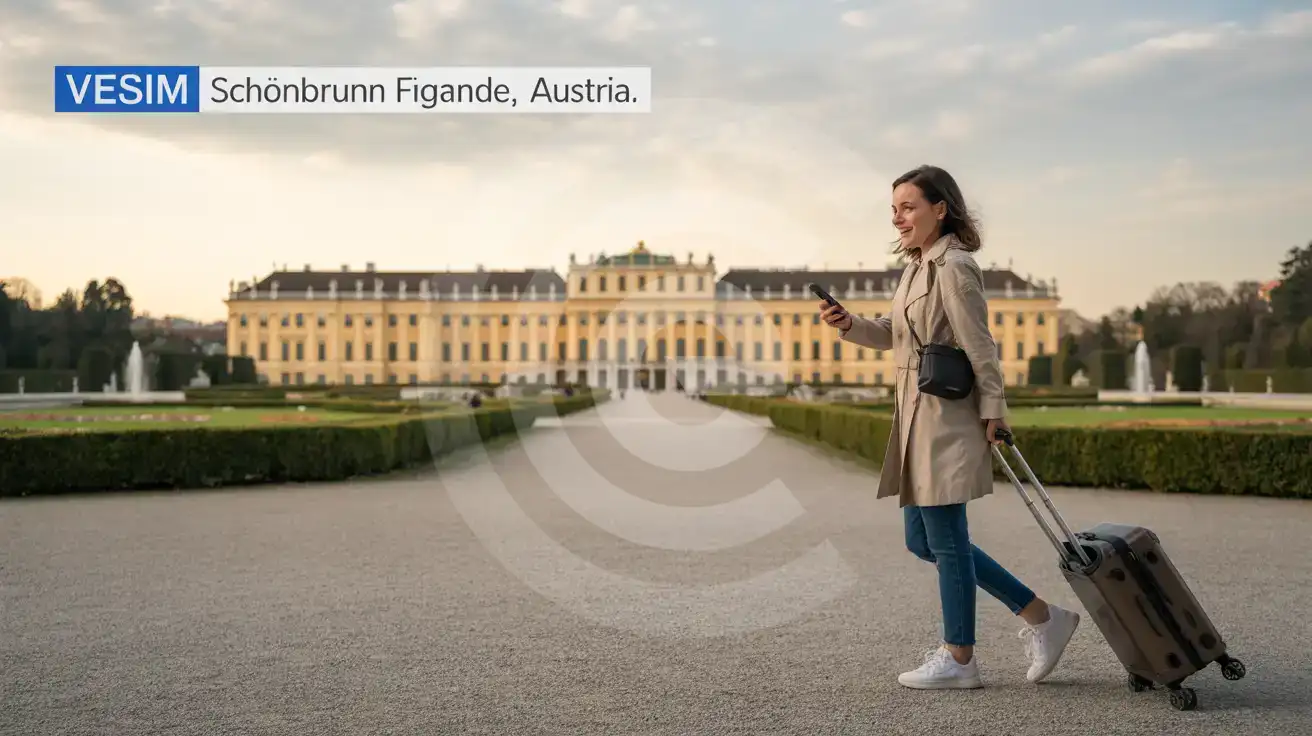
Schönbrunn Palace Gardens
Compare eSIM Providers in Vienna
eSIMno | Local SIM / Operator | Roaming | |
|---|---|---|---|
| FEATURES | |||
| Setup time | Few minutes | Only emergency calls work until it is registered | Auto |
| No local ID needed | Online checkout | Official photo ID required to register | Use home account |
| Speed | 4G/LTE on all three Austrian networks; 5G in some areas | One network only | Partner-dependent |
| Travel support | English support 24/7 | German-language service | Home carrier hours |
| Keep home number | Dual SIM | Replaces it | Same number |
| Cost predictability | Fixed price | Prepaid, no bill shock | Bill-shock risk |