

Quick Facts
- Language
- Italian (Italiano)
- Currency
- Euro (EUR, €)
- Time Zone
- Central European Standard Time (UTC+1)
- Dialing Code
- +39
- Power Plug
- Type C, E, F (round 2-pin, common across most of Europe)
- Emergency
- 112
- eSIMno Networks
- Vodafone, Wind Tre
How to Get Your eSIM
- Pick your Italy data plan
Choose from 1GB to 20GB options based on your Venice trip length. A 3-5 day lagoon stay with daily navigation, vaporetto apps, and photo uploads runs comfortably on 5-7GB. - Install at home before your flight
Scan the QR code over your home WiFi and save the eSIM profile. The whole process takes 3-4 minutes on iPhone or Android — no tools, no physical card. - Activate after landing at Marco Polo
Switch off airplane mode once your aircraft reaches the gate. Your phone connects to Vodafone or Wind Tre within seconds, ready for the water-taxi booking or ACTV vaporetto directions. - Set eSIMno as your data line
Keep your home SIM active for incoming calls and texts. Route all mobile data through the eSIMno profile so maps, tickets, and translation run on local Italian signal. - Navigate the lagoon instantly
By the time you're walking toward the Alilaguna dock or the ATVO bus stop, Google Maps is already recalculating your route to Piazzale Roma or Fondamente Nove.
Traveler Tips
- Download the ACTV Venezia app before arrival — real-time vaporetto departures for Lines 1, 2, 4.1, 4.2, and 5.1 save 15-20 minutes of dock confusion per day.
- Timed-entry tickets for Doge's Palace and the Gallerie dell'Accademia arrive as QR codes only — screenshot them before entering any building where signal dips.
- Venice address format uses sestiere names (San Marco, Dorsoduro, Cannaregio, Castello, San Polo, Santa Croce) plus a number that means nothing geographically — always cross-reference with Google Maps coordinates.
- Signal holds strong along the Grand Canal and main tourist routes but can weaken inside thick-walled palazzi and ground-floor osterie — load menus and directions before ducking inside.
- The Alilaguna Orange Line water bus to San Marco takes 70-80 minutes from Marco Polo; having live departure updates beats guessing which dock to queue at.
Why Data Matters in Venice
Venice operates on water, not roads — and your phone replaces every navigation tool a car-based city would offer. The vaporetto network runs 20+ lines across the lagoon, with Line 1 crawling down the Grand Canal (45 minutes end-to-end), Line 2 offering the express alternative (25 minutes), and Lines 4.1/4.2 circling to Murano and Burano. Real-time departures on the ACTV Venezia app tell you whether to sprint for the Rialto Mercato pontoon or wait 8 minutes for the next boat — that's data-dependent information that paper schedules can't match.
Timed-entry reservations have become standard at every major site. The Doge's Palace, Gallerie dell'Accademia, Peggy Guggenheim Collection, and Scuola Grande di San Rocco all issue mobile QR codes. Miss your 10:30 slot because your phone died, and you're rebooking for the next available window — sometimes hours later during Biennale season. eSIMno plans for Venice, Italy keep your confirmation emails, wallet passes, and backup screenshots accessible without hunting for café WiFi.
Restaurant reservations in Venice increasingly run through TheFork or direct WhatsApp booking — especially for cicchetti bars near the Rialto Market and bacaro crawls through Cannaregio. Confirming your 19:30 table at a 12-seat osteria means messaging the owner in Italian, which Google Translate handles in real time. After dinner, the walk back to your apartment in Dorsoduro involves crossing the Accademia Bridge, turning left at a sotoportego with no signage, and hoping Maps recalculates before you hit a canal dead-end. Local data makes the difference between a 10-minute stroll and a 40-minute wander.
About Venice & What Travelers Come For
Neighborhoods at a Glance
San Marco anchors the tourist core — Saint Mark's Square, the Campanile, and Doge's Palace cluster within a 5-minute walk, with the Procuratie arcades sheltering overpriced caffès and the Correr Museum. Dorsoduro runs southwest along the Giudecca Canal, home to the Accademia galleries, the Guggenheim, and the student bars around Campo Santa Margherita that stay open past midnight. Cannaregio stretches north toward the train station and the historic Jewish Ghetto, with quieter canals and neighborhood bacari serving €1.50 cicchetti. Castello sprawls east past the Arsenale toward the Biennale pavilions and the pine-shaded Giardini, thinning out to residential calm beyond Sant'Elena.
What Travelers Come For
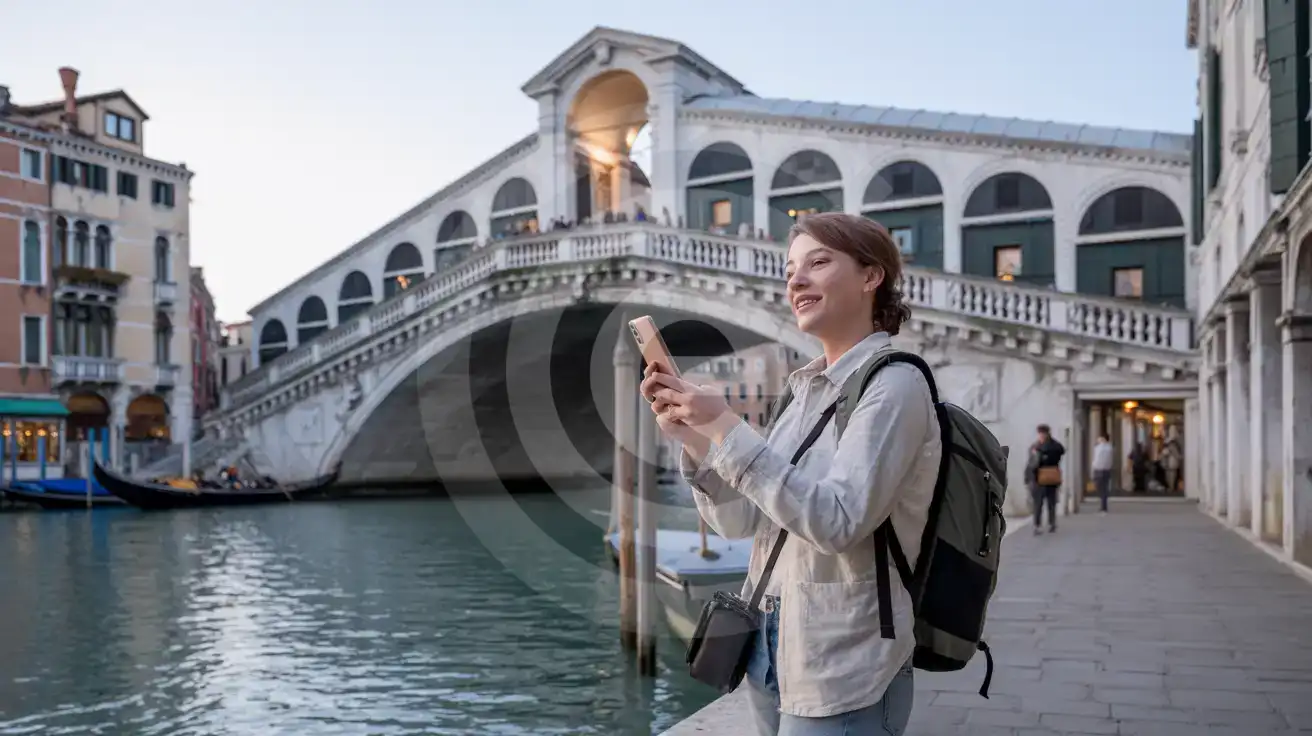
The Grand Canal delivers the postcard view — 3.8 kilometers of palazzo facades, gondola traffic, and vaporetto wakes reflecting off centuries-old brick. The Rialto Bridge arches over the canal's narrowest point, with the Rialto Market sprawling on the San Polo side (open 07:30-12:00 for fish, produce, and tourist overflow). Saint Mark's Basilica anchors Piazza San Marco with Byzantine gold mosaics and a dress code that turns away bare shoulders. Teatro La Fenice hosts opera seasons in a red-velvet jewel box rebuilt after the 1996 fire. And the lagoon islands — Murano for glass furnaces, Burano for candy-colored houses, Torcello for cathedral mosaics older than Venice itself — scatter across a 45-minute vaporetto radius.
When to Visit
Carnival (February) packs the calli with masked crowds and requires reservations months ahead. The Biennale Arte (May-November, odd years) and Biennale Architettura (May-November, even years) draw global art traffic to the Arsenale and Giardini. The Venice Film Festival (late August-early September) fills the Lido with red carpets and paparazzi. November through January brings acqua alta flooding, fewer tourists, and atmospheric fog rolling off the lagoon at dawn.
Getting Around Venice
Airport Transfers
Marco Polo Airport sits 13 kilometers north of the historic center on the mainland. The Alilaguna water bus offers three color-coded lines: Orange to San Marco (70-80 min), Blue to Lido via Fondamente Nove (90 min), and Red to Giudecca (seasonal). Tickets run around €15-20 one way — check the operator app for current pricing. The ATVO land bus reaches Piazzale Roma in 20 minutes; from there, vaporetto Lines 1 or 2 continue into the canal network. Private water taxis cost €100-130 fixed fare to most central hotels but deliver door-to-dock service with luggage handling.
Vaporetto Network
ACTV runs the public waterbus system. Line 1 is the all-stops Grand Canal route — scenic but slow (45 min Piazzale Roma to San Marco). Line 2 runs express with fewer stops (25 min). Lines 4.1 and 4.2 circle toward Murano; Line 12 continues to Burano and Torcello. Single rides are around €9.50 — the 24-hour (€25) or 72-hour (€45) tourist passes pay off fast. Tap on at each pontoon; inspectors fine unticketed passengers €60+.
Walking & Water Taxis
Venice measures 5 kilometers tip to tip — technically walkable in 90 minutes if you never got lost, which you will. The calli (narrow streets) dead-end at canals, loop back on themselves, and share names across different sestieri. Follow yellow signs pointing to major landmarks (Per San Marco, Per Rialto, Per Ferrovia) as backup navigation. Private water taxis and gondolas operate on negotiated fares — agree on the price before stepping aboard. Gondola rides run €80-100 for 30-40 minutes on quieter back canals; the Grand Canal route costs more during peak afternoon hours.
Rialto Bridge at Sunrise
Compare eSIM Providers in Venice
eSIMno | Local SIM / Operator | Roaming | |
|---|---|---|---|
| FEATURES | |||
| Setup time | Few minutes | Store registration, about ten minutes | Auto |
| No local ID needed | Online checkout | Passport is required by law; some also ask for a tax code | Use home account |
| Speed | 4G/LTE on Vodafone and WindTre; 5G in some areas | One network only | Partner-dependent |
| Travel support | English support 24/7 | Italian-language service | Home carrier hours |
| Keep home number | Dual SIM | Replaces it | Same number |
| Cost predictability | Fixed price | Prepaid, no bill shock | Bill-shock risk |