

Quick Facts
- Language
- Japanese (日本語)
- Currency
- Japanese Yen (JPY, ¥)
- Time Zone
- Tokyo Standard Time (UTC+9)
- Dialing Code
- +81
- Power Plug
- Type A (flat 2-pin, common in Japan and North America; voltage is 100V in Japan, lower than the 110-120V of the US)
- Emergency
- 110 (police), 119 (fire / ambulance)
- eSIMno Networks
- KDDI
How to Get Your eSIM
- Pick Your Japan Data Plan
Choose from 7-day, 14-day, or 30-day options based on your Tokyo stay plus any Kyoto, Osaka, or Hokkaido extensions. Data works nationwide on KDDI. - Install at Home Over WiFi
Scan the QR code on your home network before packing. The profile downloads in under 2 minutes — no Japanese carrier store visit required. - Board With Data Ready
Your eSIM sits dormant during the flight. Keep your home SIM active for any last-minute boarding messages or lounge WiFi codes. - Activate After Landing
Switch off airplane mode once the captain clears phone use. By the time you're walking the Narita Express platform, your phone is pulling live departure boards. - Keep Your Home Number for Calls
The eSIMno plan is data-only. Incoming calls reach your home SIM normally — no setup needed. For outgoing calls, use WhatsApp, FaceTime, or LINE over your eSIM data to avoid roaming charges.
Traveler Tips
- Download the JR East app and Suica/PASMO mobile wallet before departure — Apple Pay Suica setup requires a Japanese App Store region, so configure it at home while you have time to troubleshoot.
- Shinjuku Station has 200+ exits across 12 lines; screenshot your hotel's specific exit number (e.g., 'South Exit 5') before arriving, since underground signal can dip in the deepest transfer corridors.
- Convenience store ATMs (7-Eleven, Lawson, FamilyMart) accept foreign cards when bank ATMs often reject them — data helps you locate the nearest one at 2 AM when jet lag hits.
- Restaurant reservations through Tabelog or Omakase require Japanese phone verification; use a VoIP app like Skype to receive the SMS code over your eSIM data.
- TeamLab Borderless and Planets sell out 2-3 weeks ahead — your timed-entry QR code is the only way past the door, and it lives on your phone.
Why Data Matters in Tokyo
Tokyo's transit network moves 8.6 million passengers daily across 13 metro lines, 30+ JR lines, and dozens of private railways — and the system assumes you can read Japanese. Google Maps and Navitime become essential the moment you step off the Narita Express at Tokyo Station's Marunouchi exit and need to find the Marunouchi Line platform for your Shinjuku hotel. The station has 10 distinct platform clusters spread across 4 underground levels; wrong turns cost 15-20 minutes of backtracking. Real-time navigation shows which staircase, which transfer gate, which platform number — details the overhead signs bury in kanji.
Shibuya's restaurant scene runs on mobile reservations. A 7 PM slot at Narisawa (2 Michelin stars, ¥45,000 omakase) requires booking 60 days ahead through their online portal; walk-ins at even mid-tier izakayas like Uoshin in Ebisu fill by 6:30 PM on weekends. Your confirmation QR loads at the door — no screenshot, no seat. The same applies to Tokyo Skytree's Tembo Deck (¥2,100 base, ¥3,100 with Tembo Galleria), where timed-entry slots sell out by noon during cherry blossom season. eSIMno plans for Tokyo, Japan keep your booking flow uninterrupted from hotel WiFi to venue gate.
Ride-share works differently here. Uber exists but serves primarily taxi dispatch; the S.RIDE and GO apps dominate with better fare estimates and driver availability. Surge pricing during Roppongi last-train rush (around 12:30 AM) or Shibuya Halloween crowds can triple base rates — live fare comparison across apps requires data at the curb. The alternative is a 40-minute queue at Shibuya Station's taxi stand or a ¥15,000-20,000 ride from drivers who know you're stranded.
About Tokyo & What Travelers Come For
Neighborhoods at a Glance
Shinjuku splits into west-side skyscrapers housing the Tokyo Metropolitan Government Building observation deck (free entry, 202 meters up) and east-side neon chaos around Kabukicho and Golden Gai's 200+ micro-bars. Shibuya centers on the scramble crossing and Shibuya Sky (230 meters, ¥2,200), with Harajuku's Takeshita Street a 10-minute walk north. Asakusa anchors old Tokyo around Sensō-ji and Nakamise shopping street, while Akihabara stacks eight floors of electronics, anime, and gaming across stores like Yodobashi Camera and Mandarake. Roppongi splits between Roppongi Hills' art museum circuit and late-night expat bars.
What Travelers Come For
The contrast defines Tokyo: a 7th-century Buddhist temple (Sensō-ji, founded 645 AD) sits 4 km from the world's busiest train station (Shinjuku, 3.6 million daily passengers). Day-trippers pack the Imperial Palace East Gardens (free, closed Mondays), while architecture pilgrims hunt Tadao Ando's 21_21 Design Sight in Roppongi and Kengo Kuma's National Stadium. Food tourism drives reservations at 226 Michelin-starred restaurants — more than Paris or New York. Theme park visitors split between Tokyo Disneyland in Urayasu (40 minutes by JR Keiyo Line from Tokyo Station) and Universal Studios Japan in Osaka (2 hours 30 minutes by Shinkansen Nozomi).
When to Visit
Cherry blossom season (late March to early April) packs Ueno Park and Meguro River with hanami picnickers; hotel rates spike 40-60% and TeamLab slots vanish. Autumn foliage (mid-November to early December) brings crowds to Meiji Jingu's ginkgo avenue and Rikugien Gardens. Summer (June-August) means 32°C humidity and the Sumida River fireworks festival (late July, 1 million attendees). Winter stays mild (5-10°C) with lighter crowds and Illumination displays across Marunouchi and Omotesando.
Getting Around Tokyo
Airport Transfers
Narita International sits 60 km east of central Tokyo. The Narita Express (N'EX) reaches Tokyo Station in 53 minutes and Shinjuku in 80 minutes; fares run ¥3,070-3,250 one-way depending on destination. The budget alternative is the Access Express via Keisei Line to Aoto, transferring to the Asakusa Line for Nihombashi or Shimbashi — 90 minutes total. Haneda Airport sits closer at 15 km south; the Tokyo Monorail reaches Hamamatsucho in 13 minutes, while the Keikyu Line connects to Shinagawa in 11 minutes for JR transfers.
Metro & JR Lines
Tokyo Metro's 9 lines and Toei Subway's 4 lines blanket the central wards, with single rides priced by distance. JR East's Yamanote Line loops through all major hubs — Shinjuku, Shibuya, Ikebukuro, Tokyo, Ueno, Akihabara — completing a full circuit in 60 minutes. The Chuo-Sobu Line cuts across the loop for faster east-west travel. Tap-to-pay with Suica or PASMO cards (or Apple Pay Suica) works across all systems; fares deduct automatically at exit gates based on distance traveled.
Walking & Rideshare
Shibuya to Harajuku takes 12 minutes on foot via Cat Street; Asakusa to Ueno covers 1.5 km through Kappabashi kitchenware district. Uber functions as taxi dispatch only — no private drivers — with fares matching metered rates. S.RIDE and GO apps offer better driver availability and fare transparency. Taxis start at ¥500 for the first 1.1 km, adding ¥100 every 255 meters. Late-night surcharges (22:00-05:00) add 20% to the meter.
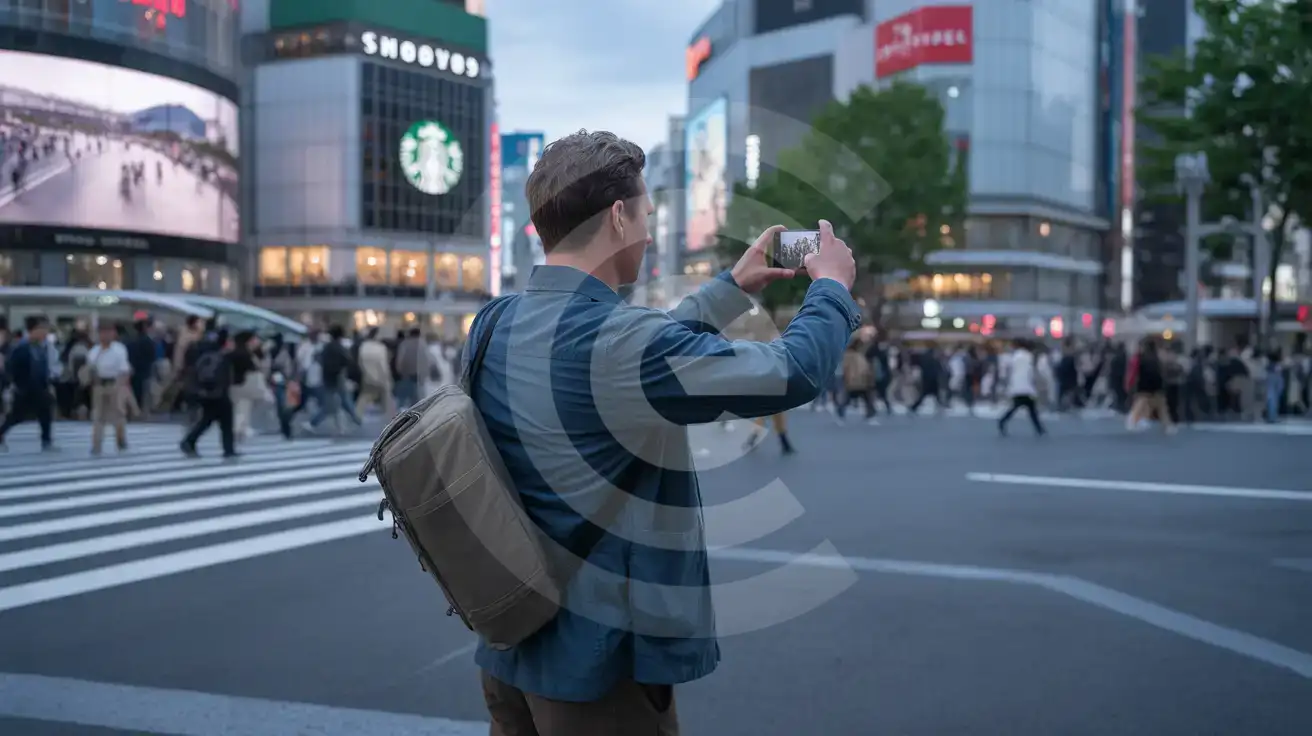
Shibuya Crossing Connection
Compare eSIM Providers in Tokyo
eSIMno | Local SIM / Operator | Roaming | |
|---|---|---|---|
| FEATURES | |||
| Setup time | Few minutes | Counter pickup or pre-order by post | Auto |
| No local ID needed | Online checkout | Passport scan since April 2026 | Use home account |
| Speed | 4G/LTE on KDDI + Softbank; 5G in some areas | Carrier-grade | Partner-dependent |
| Travel support | English support 24/7 | Japanese-language service | Home carrier hours |
| Keep home number | Dual SIM | Data-only: no Japanese number | Same number |
| Cost predictability | Fixed price | Prepaid, fixed term | Bill-shock risk |