

Quick Facts
- Capital
- Stockholm
- Language
- Swedish (Svenska)
- Currency
- Swedish Krona (SEK, kr)
- Time Zone
- Central European Standard Time (UTC+1)
- Dialing Code
- +46
- Power Plug
- Type C, E, F (round 2-pin, common across most of Europe)
- Emergency
- 112
- eSIMno Networks
- H3G, Tele2, Telenor (Vodafone), Telia
How to Get Your eSIM
- Pick Your Sweden Data Plan
Browse the eSIMno plans below — options range from short city breaks to multi-week Scandinavian itineraries. Select the data allowance that matches your trip length and streaming habits. - Complete Checkout in 2 Minutes
Enter your email for instant delivery. No passport scan, no Swedish phone number, no physical shipping — just a QR code arriving in your inbox before your bags are packed. - Install Over Home WiFi Before Departure
Scan the QR code while still on your home network. iPhone users: Settings → Cellular → Add eSIM. Android: Settings → Network → SIMs → Add. The profile installs in under 60 seconds. - Activate After Landing at Arlanda
Once your flight reaches the gate and the captain clears phone use, switch off airplane mode. Your phone will register on Telia, Telenor, or another Swedish carrier within seconds — no further setup needed. - Keep Your Home SIM for Calls
Your eSIMno plan handles all data — maps, apps, browsing, video calls over WhatsApp or FaceTime. Your home SIM stays active for incoming calls and texts, so family can reach you at your regular number.
Traveler Tips
- Download the SL app before landing — it shows real-time Tunnelbana, bus, and tram arrivals across Stockholm and accepts mobile tickets directly.
- The Arlanda Express runs every 15 minutes and reaches Stockholm Central in 20 minutes; your eSIM data lets you book tickets on the app mid-walk from arrivals.
- Sweden is largely cashless — restaurants, transit, even street vendors prefer card or Swish. Your eSIM keeps payment apps and currency converters live.
- Museum timed-entry QRs (Vasa, ABBA, Skansen) load faster on cellular than crowded lobby WiFi — have them ready on your phone before joining the queue.
- Gothenburg's tram network uses the Västtrafik To Go app; real-time tracking and mobile tickets require data, so your eSIM saves hunting for station WiFi.
Why Data Matters Across Sweden
Sweden's public transport runs on mobile-first assumptions. The SL app in Stockholm displays live Tunnelbana departures at T-Centralen (red, green, and blue lines converge there every 3-5 minutes during peak hours), Pendeltåg commuter rail schedules to suburbs like Solna and Sundbyberg, and real-time disruption alerts when winter weather delays surface buses. Without cellular data, you're guessing arrival times from static platform boards — fine for locals who know the rhythm, frustrating for visitors navigating an unfamiliar network.
The same data dependency extends beyond transit. Timed-entry tickets for the Vasa Museum (Djurgården island, 10-minute ferry from Slussen) arrive as QR codes that the gate scanner reads directly from your phone screen. Restaurant reservations on The Fork or Resy confirm in seconds while you're still walking Stortorget in Gamla Stan. Rideshare apps like Bolt and Uber pull live driver ETAs across the city — essential when you're hauling luggage from Södermalm to Arlanda at 5 AM and don't want to risk an empty taxi rank.
Coverage quality across Sweden is strong. Telia and Telenor maintain macro towers along major highways, inside Tunnelbana stations, and across the archipelago ferry routes. Gothenburg's Västtrafik tram network, Malmö's Citytunneln commuter rail, and even Kiruna's limited-service Arctic zone connect reliably. An eSIMno plan for Sweden locks you onto these networks from Arlanda arrivals to your final departure gate — no SIM swaps, no top-up kiosks, no Swedish-language registration portals.
About Sweden & What Travelers Come For
Gateway Cities
Stockholm spreads across 14 islands where Lake Mälaren meets the Baltic Sea. The medieval core of Gamla Stan anchors the city, while Djurgården island holds the Vasa Museum, Skansen open-air museum, and ABBA The Museum within walking distance of each other. Gothenburg, Sweden's second city, sits on the west coast — its tram network, Liseberg amusement park, and seafood-centric Feskekôrka fish market draw 2 million visitors annually. Malmö, connected to Copenhagen via the Öresund Bridge, offers the Turning Torso tower and a compact walkable center 35 minutes from Copenhagen Airport by train.
What Travelers Come For
The Northern Lights pull winter visitors to Abisko and Kiruna above the Arctic Circle, where clear skies from December through March offer prime aurora viewing. Midsummer celebrations in late June transform the countryside with maypole dancing and all-night sunlight. Design enthusiasts tour Stockholm's Nordiska museet and Gothenburg's Röhsska Museum. Outdoor travelers hike the Kungsleden trail (440 km from Abisko to Hemavan) or kayak the Stockholm archipelago's 30,000 islands. ICEHOTEL in Jukkasjärvi, rebuilt each winter from Torne River ice, draws travelers willing to sleep at -5°C for the experience.
When to Visit
Summer (June-August) brings 18-hour daylight, outdoor café culture, and peak cruise traffic into Stockholm. Winter (December-February) delivers Northern Lights, ski resorts like Åre, and the ICEHOTEL's fresh construction. Shoulder seasons offer lower prices and fewer crowds — September's autumn colors in Lapland, April's lingering snow in the north paired with spring blooms in Skåne.
Getting Around Sweden
Airport Transfers
Stockholm Arlanda handles international arrivals 40 km north of the city center. The Arlanda Express train reaches Stockholm Central in 20 minutes; Flygbussarna coaches take 45-50 minutes and cost less. Gothenburg Landvetter Airport sits 25 km east of the city — the Flygbussarna coach reaches Nils Ericson Terminal in 30 minutes. Malmö travelers often fly into Copenhagen Airport (CPH) and take the Öresund train directly to Malmö Central in 35 minutes.
Public Transit
Stockholm's SL network combines the Tunnelbana metro (3 lines, 100 stations), Pendeltåg commuter rail, buses, trams, and ferries under one fare system. Tap-and-ride with contactless cards or load the SL app with mobile tickets. Gothenburg's Västtrafik system runs trams, buses, and ferries — the tram network covers the city center thoroughly. Malmö's Skånetrafiken buses and Citytunneln trains connect the compact center to surrounding Skåne county.
Inter-City & Long-Distance
SJ high-speed trains connect Stockholm to Gothenburg in 3 hours and to Malmö in 4.5 hours. The overnight sleeper train to Kiruna (Arctic Sweden) runs 17 hours from Stockholm Central. For Northern Lights trips, domestic flights from Arlanda to Kiruna Airport take 1 hour 30 minutes. Rental cars suit travelers exploring the countryside, though winter driving above the Arctic Circle requires studded tires and confidence on icy roads.
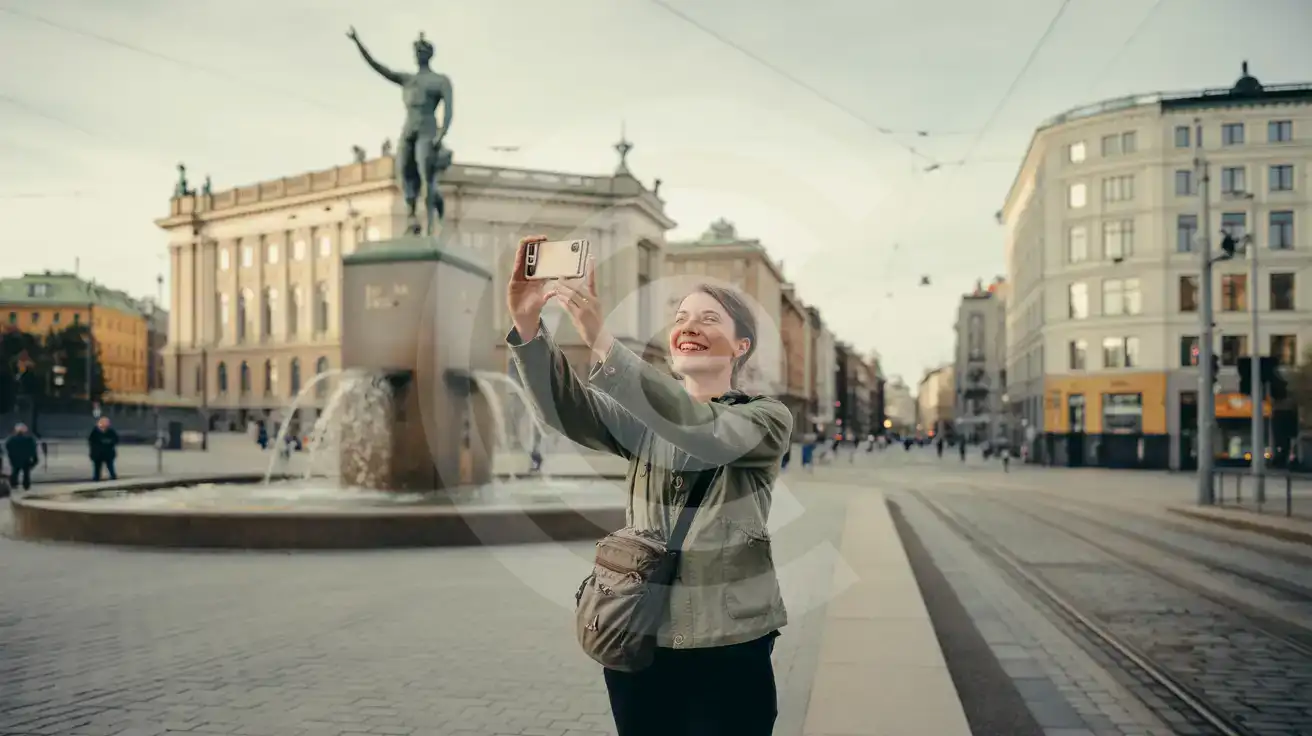
Connected in Gothenburg
Compare eSIM Providers for Sweden
eSIMno | Local SIM / Operator | Roaming | |
|---|---|---|---|
| FEATURES | |||
| Setup time | Few minutes | Store visit + paperwork | Auto |
| No local ID needed | Online checkout | Local ID required | Use home account |
| Speed | 4G/LTE; 5G in some areas | Carrier-grade | Partner-dependent |
| Travel support | English support 24/7 | Operator shops and call centre | Home carrier hours |
| Keep home number | Dual SIM | Replaces it | Same number |
| Cost predictability | Fixed price | Bills can spike | Bill-shock risk |