

Quick Facts
- Capital
- Madrid
- Language
- Valencian (Español)
- Currency
- Euro (EUR, €)
- Time Zone
- Central European Time (UTC+1, UTC+2 DST)
- Dialing Code
- +34
- Power Plug
- Type C, E, F (round 2-pin, common across most of Europe)
- Emergency
- 112
- eSIMno Networks
- Movistar, Orange
How to Get Your Spain eSIM
- Pick Your Data Plan
Choose from 7-day, 15-day, or 30-day options based on your trip length. Touring Barcelona and Madrid for a week? The 7-day plan covers you. Adding Andalucía or the islands? Go longer. - Complete Checkout in 2 Minutes
Enter your email, pay securely, and receive your eSIM QR code instantly. No passport upload, no Spanish phone number required. - Install at Home Over WiFi
Scan the QR code from your email using your iPhone or Android settings. Label it 'Spain Data' so you can find it easily. The profile sits dormant until you activate it. - Activate After Landing
Once your plane reaches the gate at El Prat, Barajas, or Málaga, switch off airplane mode. Your phone connects to Movistar or Orange within seconds — data is live before you reach passport control. - Keep Your Home SIM for Calls
Your existing number stays active in dual-SIM mode. Incoming calls reach you normally; outgoing calls go through WhatsApp, FaceTime, or similar apps over your eSIMno data. One phone, two purposes.
Traveler Tips for Spain
- Book Alhambra tickets 60+ days ahead — the 8:30 AM Nasrid Palaces slot sells out fastest and requires a QR code on your phone at the gate.
- Renfe AVE high-speed trains from Madrid to Barcelona take 2 hours 30 minutes; download your ticket to Apple Wallet or the Renfe app before boarding — conductors scan phones, not printouts.
- Siesta hours (2-5 PM) close smaller shops across Andalucía and Castilla; plan museum visits or transit transfers during this window instead of shopping.
- FreeNow and Cabify work better than hailing street taxis in Barcelona and Madrid — surge pricing alerts via the app beat negotiating in Spanish at rush hour.
- Cathedral dress codes apply everywhere: cover shoulders and knees for Seville Cathedral, Granada Cathedral, and the Mezquita in Córdoba.
- Google Translate's camera mode handles Catalan menus in Barcelona and Basque signage in San Sebastián — point, tap, read.
Why Data Matters Across Spain
Spain runs on mobile data the moment you clear customs. At Barcelona El Prat, the Aerobus to Plaça de Catalunya departs every 5 minutes — but finding the correct stop among six terminal exits means pulling up Google Maps mid-concourse. At Madrid-Barajas T4, the Metro Line 8 platform sits a 12-minute walk from arrivals; real-time departure boards on the Madrid Metro app tell you whether to rush or grab a coffee first.
Timed-entry tickets dominate Spain's top attractions. The eSIMno plans for Spain keep those QR codes loading at the gate — Sagrada Família scans fail on airport WiFi cached hours earlier, Alhambra entry requires live barcode validation, and Park Güell's turnstiles reject screenshots. Rideshare apps fill the gap where taxis are scarce: Cabify covers Valencia and Seville, FreeNow dominates Barcelona and Madrid, and both need data to request, track, and pay.
Translation closes the language gap faster than phrasebooks. Catalan menus in the Born district, Basque pintxo boards in San Sebastián's Parte Vieja, rapid Andalusian Spanish in Seville's Triana — Google Translate's camera mode handles all of it with one tap. Currency converters keep euro-to-home math instant at La Boqueria market stalls. Group chats coordinate meetups across different city zones when your travel party splits for the afternoon. Without data, you're guessing at everything from transit routes to tapas prices.
About Spain & What Travelers Come For
Gateway Cities
Madrid anchors the center — the Prado, Reina Sofía, and Royal Palace cluster within walking distance of Sol, while Atocha station launches AVE trains to Barcelona, Seville, and Valencia in under three hours. Barcelona draws Gaudí pilgrims to the Sagrada Família, Park Güell, and Casa Batlló, plus beach afternoons at Barceloneta and late dinners in Gràcia. Seville delivers flamenco in Triana, the Alcázar's Mudéjar courtyards, and the world's largest Gothic cathedral. Granada owns the Alhambra — Spain's most-visited monument — plus the whitewashed Albaicín lanes and sunset views from Mirador de San Nicolás.
Coastal & Island Escapes
The Costa del Sol stretches from Málaga to Marbella with beach clubs, golf courses, and ferry connections to Morocco. The Balearic Islands split three ways: Mallorca for cathedral towns and mountain cycling, Ibiza for club culture and hidden coves, Menorca for quieter beaches and prehistoric stone monuments. The Costa Brava north of Barcelona offers rocky inlets and Dalí's museum in Figueres.
What Travelers Come For
Architectural icons span Roman aqueducts in Segovia, Moorish palaces in Granada, Gothic cathedrals in Burgos and León, and Gaudí's modernisme across Barcelona. Culinary circuits run from pintxos in San Sebastián (more Michelin stars per capita than almost anywhere) to paella in Valencia, jamón ibérico in Extremadura, and sherry bodegas in Jerez. Football fans fill Camp Nou (capacity 99,354) and the Bernabéu (capacity 83,186) for El Clásico and Champions League nights.
Getting Around Spain
Airport Arrivals
Barcelona El Prat connects to Passeig de Gràcia via Aerobus (35 minutes, runs every 5 minutes, fare around €7 one-way) or RENFE Rodalies R2 Nord to Passeig de Gràcia (25 minutes, fare around €4.60). Madrid-Barajas T4 links to central Sol via Metro Line 8 plus Line 10 transfer at Nuevos Ministerios (40-50 minutes total, fare around €5 including airport supplement). Málaga-Costa del Sol Airport runs the C1 Cercanías train to María Zambrano station (12 minutes, fare around €1.80).
High-Speed Rail
Renfe AVE trains cover Madrid–Barcelona in 2 hours 30 minutes, Madrid–Seville in 2 hours 20 minutes, and Madrid–Valencia in 1 hour 40 minutes. Book through the Renfe app — mobile tickets display as QR codes and conductors scan phones directly. Peak-season routes sell out weeks ahead; flexible fares cost more but allow same-day changes.
Urban Transit & Rideshare
Barcelona's TMB runs metro, bus, and tram on the T-Casual card (10 trips, valid across zones). Madrid Metro covers 12 lines and 300+ stations on a rechargeable Multi card. Valencia's Metrovalencia integrates metro and tram on a single SUMA card. FreeNow and Cabify handle rideshare across all three cities; Uber operates in Madrid only. Island ferries (Baleària, Trasmed) connect mainland ports to Mallorca, Ibiza, and Menorca — book online and carry your QR confirmation.
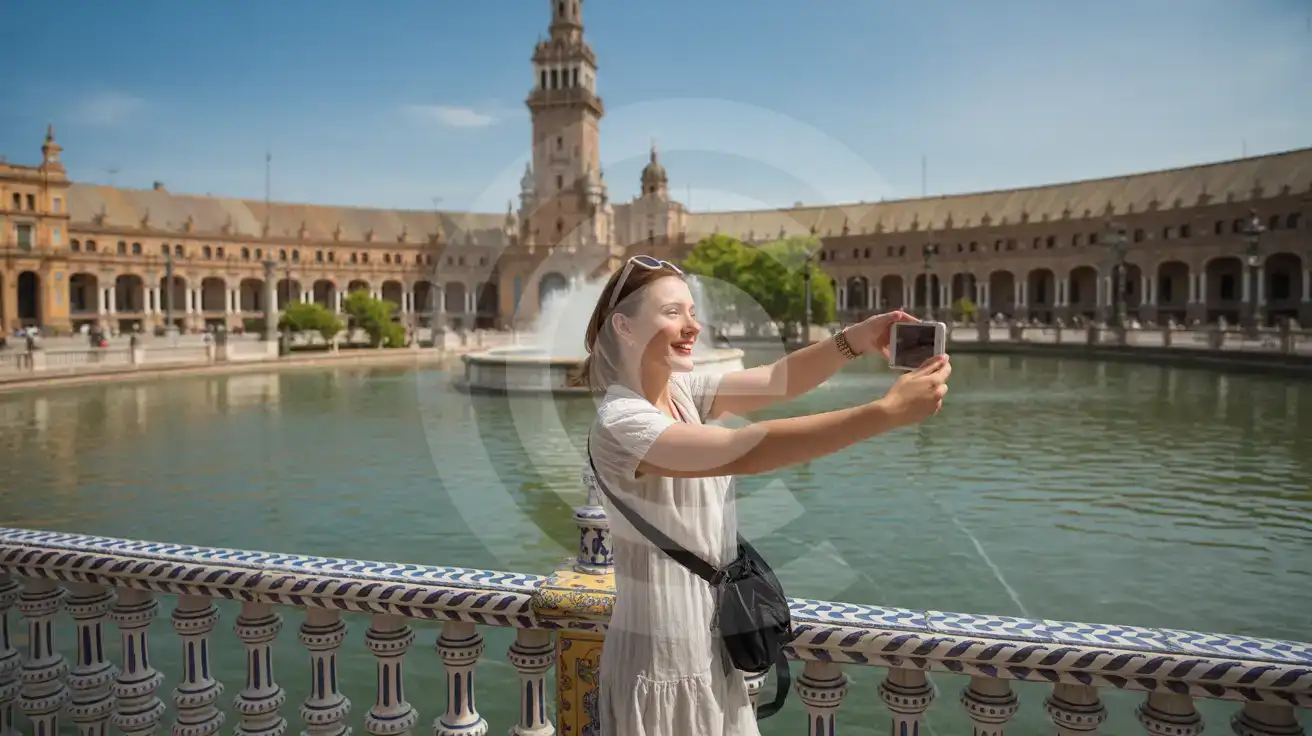
Plaza de España, Seville
Compare eSIM Providers for Spain
eSIMno | Local SIM / Operator | Roaming | |
|---|---|---|---|
| FEATURES | |||
| Setup time | Few minutes | Registered in store before the SIM works | Auto |
| No local ID needed | Online checkout | Photo ID required by law at purchase | Use home account |
| Speed | 4G/LTE on Movistar and Orange; 5G in some areas | One network only | Partner-dependent |
| Travel support | English support 24/7 | Spanish-language service | Home carrier hours |
| Keep home number | Dual SIM | Replaces it | Same number |
| Cost predictability | Fixed price | Prepaid, no bill shock | Bill-shock risk |