

Quick Facts
- Capital
- Bratislava
- Language
- Slovak (Slovenčina)
- Currency
- Euro (EUR, €)
- Time Zone
- Central European Standard Time (UTC+1)
- Dialing Code
- +421
- Power Plug
- Type C, E, F (round 2-pin, common across most of Europe)
- Emergency
- 112
- eSIMno Networks
- Orange, T-Mobile
How to Get Your Slovakia eSIM
- Pick Your Data Plan
Choose from eSIMno's Slovakia plans based on your trip length — a long weekend in Bratislava needs less data than a two-week Tatras hiking circuit with daily trail-map downloads. - Install at Home Over WiFi
Scan the QR code on your home network before you leave for the airport. The profile sits dormant until you're ready to activate in Slovakia. - Board Your Flight With Confidence
Your eSIM is installed and waiting. No last-minute SIM shopping, no stressing about airport kiosk hours at Bratislava or Vienna. - Activate After Landing
Once your aircraft reaches the gate at Bratislava Airport, switch off airplane mode. Your phone registers on Orange or T-Mobile within seconds. - Start Navigating Immediately
Pull up Bolt for your transfer, load Google Maps for Old Town directions, and check your hotel confirmation — all before you reach the arrivals hall exit.
Traveler Tips
- Bratislava's tram network uses contactless payment at validators inside each car — tap your bank card or use the Slovaklines app with data rather than hunting for paper tickets at kiosks.
- High Tatras weather shifts within minutes; download the Windy or Mountain Forecast apps before your hike so real-time radar loads at trailheads where café WiFi doesn't reach.
- Keep your home SIM active for incoming calls — it stays dormant for voice while eSIMno handles all data. Use WhatsApp or FaceTime Audio over your Slovak data for outgoing calls.
- Košice's main train station sits 1.2 km from the UNESCO Old Town center — Bolt or Uber fare runs €3-5, but you'll need data to request the ride.
- Slovak menus outside Bratislava rarely include English translations; Google Translate's camera mode over your eSIM data turns any restaurant into an accessible experience.
Why Data Matters Across Slovakia
Slovakia's compact size hides a surprising amount of connectivity demand. Bratislava's Old Town is walkable, but the moment you venture toward Devín Castle (11 km west) or the Danube cycling path toward Austria, you're relying on mobile data for directions and return-bus schedules. The city's tram and bus network — operated by DPB — runs on a zone system where the Slovaklines app calculates fares and validates tickets digitally. Without data, you're stuck at a kiosk deciphering Slovak-only instructions while the tram pulls away.
The High Tatras present a different challenge. Štrbské Pleso sits at 1,346 meters elevation, and the Tatranská Lomnica cable car climbs to Lomnický štít at 2,634 meters — mobile signal holds surprisingly well thanks to Orange and T-Mobile towers along the main ridges, but lodge WiFi is patchy at best. Trail-condition updates from the Horská Záchranná Služba (Mountain Rescue) post to their site in Slovak; real-time translation keeps you informed about closures after storms. The electric rack railway (TEŽ) connecting Tatras resort villages runs every 30-60 minutes, and the departure board at Starý Smokovec station is Slovak-only — Google Translate's instant camera mode turns it readable in seconds.
Beyond the mountains, Banská Štiavnica's steep Renaissance streets defeat offline maps at every hairpin. Košice's State Theatre and East Slovak Museum both use QR-code ticketing that loads faster on eSIMno plans for Slovakia than on the venue's overcrowded guest WiFi. And if you're crossing into Hungary or Austria mid-trip, your Slovak eSIM keeps working until you're ready to swap profiles — no border-crossing panic, no roaming surprises from your home carrier.
About Slovakia & What Travelers Come For
Gateway Cities
Bratislava handles most international arrivals at M. R. Štefánik Airport (BTS), just 9 km northeast of the Old Town. Vienna's Schwechat Airport (VIE) sits only 60 km west and serves as an alternative gateway with bus connections running every 30 minutes. Košice International Airport (KSC) in the east connects to Prague, Warsaw, and London for travelers heading straight to the Tatras or eastern Slovakia's wine country.
What Travelers Come For
Bratislava Castle draws visitors for panoramic Danube views and the Slovak National Museum galleries inside. The Old Town's Michael's Gate — the only surviving medieval entrance — anchors a pedestrian zone of baroque palaces and sidewalk cafés. The High Tatras pack Alpine drama into a compact 26 km ridge: Štrbské Pleso's glacial lake, the Lomnický štít summit cable car, and marked trails ranging from lakeside strolls to via ferrata scrambles. Spiš Castle, one of Central Europe's largest fortress ruins, sprawls across a travertine hill in the east. Banská Štiavnica's Renaissance town square and open-air mining museum recall Slovakia's silver-boom centuries. The Tokaj wine region spills across the Hungarian border near Košice, with cellar tastings that reward a rental-car detour.
When to Visit
Summer (June-August) fills Tatras trails and Danube cycling paths — book mountain lodges weeks ahead. Winter (December-February) transforms Jasná and Štrbské Pleso into ski destinations with lift-pass apps that need data to load. Spring and autumn thin the crowds at Spiš Castle and Banská Štiavnica while keeping hiking weather mild.
Getting Around Slovakia
Airport Transfers
Bratislava Airport connects to the city center via Bus 61 (25 minutes to the main train station) or taxi/rideshare (15-20 minutes, €15-25 depending on traffic). From Vienna Schwechat, FlixBus and Slovak Lines run direct coaches to Bratislava's main bus station in 45-60 minutes; fares fluctuate by booking window, so check the app with data before committing. Košice Airport sits 6 km south of the Old Town — a taxi runs €8-12, or Bus 23 connects to the train station in 20 minutes.
Public Transit
Bratislava's DPB network covers trams, buses, and trolleybuses on a unified ticket system. The Slovaklines app or contactless bank-card tap at onboard validators handles payment; inspectors check digital receipts randomly. Tram 1 runs from the main station through the Old Town to Petržalka across the Danube. Inter-city trains operated by ZSSK connect Bratislava to Žilina (2 hours), Košice (4.5-5 hours), and the Tatras hub at Poprad-Tatry (3.5 hours). The Tatras electric railway (TEŽ) loops through mountain villages from Poprad to Štrbské Pleso every 30-60 minutes.
Rideshare & Driving
Bolt dominates Bratislava and Košice; Uber operates in Bratislava only. Both require data to request rides. Rental cars open access to Spiš Castle, Banská Štiavnica, and Tokaj-region wineries where public transit thins out. Motorway vignettes (e-známka) are digital and purchased online — your phone's data connection completes the transaction before you hit the D1.
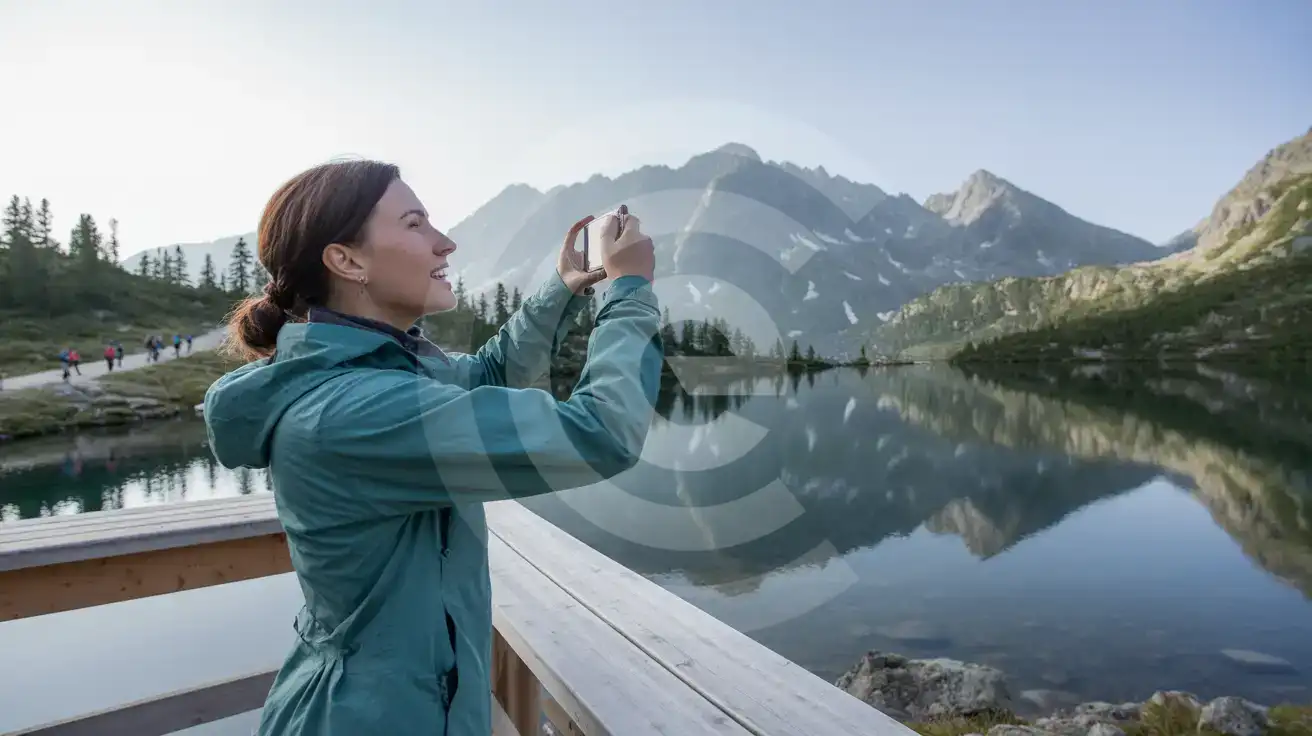
Exploring the High Tatras
Compare eSIM Providers for Slovakia
eSIMno | Local SIM / Operator | Roaming | |
|---|---|---|---|
| FEATURES | |||
| Setup time | Few minutes | Store visit + paperwork | Auto |
| No local ID needed | Online checkout | Local ID required | Use home account |
| Speed | 4G/LTE; 5G in some areas | Carrier-grade | Partner-dependent |
| Travel support | English support 24/7 | Operator shops and call centre | Home carrier hours |
| Keep home number | Dual SIM | Replaces it | Same number |
| Cost predictability | Fixed price | Bills can spike | Bill-shock risk |