

Quick Facts
- Capital
- Riyadh
- Language
- Arabic (عربي)
- Currency
- Saudi Riyal (SAR, ر.س)
- Time Zone
- Arabic Standard Time (UTC+3)
- Dialing Code
- +966
- Power Plug
- Type G (3-pin rectangular, common in UK and several Asian markets)
- Emergency
- 911 (general)
- eSIMno Networks
- Mobily
How to Get Your eSIM
- Pick Your Saudi Arabia Plan
Choose the data allowance that matches your trip length — a weekend in Riyadh needs less than a two-week heritage tour through AlUla, Jeddah, and Abha. - Install at Home Over WiFi
Scan the QR code or tap the installation link while you're still connected to your home network. The eSIM profile downloads in under a minute. - Keep Your Home SIM Active
Your phone's dual-SIM mode lets you receive calls and texts on your home number while routing all data through your Saudi eSIM — no need to choose one or the other. - Activate After Landing
Once your Saudia or flynas flight reaches the gate at King Khalid or King Abdulaziz, switch off airplane mode. Your phone connects to Mobily within seconds. - Start Navigating Immediately
Pull up Uber or Careem for your airport transfer, load your hotel confirmation, and check real-time prayer schedules — all before you clear customs.
Traveler Tips
- Riyadh Metro runs six color-coded lines spanning 176 km — download the Riyadh Metro app before arrival so station names render in both Arabic and English with live train positions.
- Hegra archaeological site in AlUla requires timed-entry tickets purchased through the Experience AlUla platform; your QR code must load at the gate scanner, so reliable data beats hoping for visitor-center WiFi.
- Careem and Uber both operate across Riyadh, Jeddah, and Dammam — compare surge pricing in real time, especially during Friday prayer hours when demand spikes.
- Dress codes at heritage sites and malls are strictly enforced; keep a screenshot of venue rules offline or pull them up on data when guards check compliance at entrances.
- WhatsApp and FaceTime work normally on Saudi networks after 2017 VoIP restrictions lifted — use your eSIM data for video calls home instead of paying roaming voice rates.
- Currency exchange kiosks cluster at airport arrivals, but the XE app on your data connection shows live SAR rates so you can spot poor spreads before handing over cash.
Why Data Matters Across Saudi Arabia
Saudi Arabia's transformation into a global tourism destination means travelers face a constant stream of digital checkpoints. Riyadh Metro launched in 2024 with 85 stations across six lines — the Purple Line alone runs 38 km from King Khalid International Airport to downtown Olaya. Real-time train positions on the Riyadh Metro app save guesswork at interchange stations like KAFD or Western Station where three lines converge. Without data, you're squinting at static maps printed in Arabic calligraphy.
Heritage Sites and QR Ticketing
AlUla's Hegra site operates exclusively through timed-entry QR codes purchased via Experience AlUla — no data means your confirmation email won't load at the gate scanner, and staff won't admit you without a visible barcode. The same applies to Diriyah's At-Turaif UNESCO district outside Riyadh, where weekend crowds fill morning slots by 9 AM. Checking availability and booking the next open window requires a live connection, not cached pages from your hotel lobby.
Rideshare and Real-Time Navigation
Uber and Careem dominate urban transport, but surge pricing during Friday prayer hours (roughly 12:30-2:00 PM) can triple fares in central Riyadh. Watching the app map in real time lets you wait out the spike or walk 400 meters to a lower-surge zone. Jeddah's Al-Balad district adds navigation complexity — the coral-stone alleyways of the historic quarter confuse even local drivers, and live turn-by-turn guidance through Google Maps keeps your Careem driver on track.
For travelers heading to the Red Sea coast or Aseer highlands, eSIMno plans for Saudi Arabia mean your data works on desert highways where roadside SIM vendors don't exist. Video-call your family from the Edge of the World escarpment, share AlUla sunset photos to Instagram, or pull up trail maps for Aseer's Habala village cable car — all without hunting for WiFi that doesn't exist outside urban cores.
About Saudi Arabia & What Travelers Come For
Saudi Arabia spans 2.15 million square kilometers of Arabian Peninsula terrain — from the glass towers of Riyadh's King Abdullah Financial District to the Nabatean tombs carved into AlUla's sandstone cliffs 1,100 km northwest. The Kingdom opened to international tourists in 2019, and infrastructure has expanded rapidly since.
Gateway Cities
Riyadh anchors central Saudi with direct flights from over 100 international destinations through King Khalid International Airport, the country's busiest hub. Jeddah serves as the Red Sea gateway, with King Abdulaziz International handling pilgrims bound for Mecca and leisure travelers heading to the historic Al-Balad waterfront. Dammam on the Gulf coast connects to Bahrain via the 25-km King Fahd Causeway and serves as the commercial hub for the Eastern Province oil region.
What Travelers Come For
AlUla dominates heritage tourism — Hegra (Mada'in Saleh) holds 111 Nabatean tombs dating to the 1st century CE, rivaling Jordan's Petra in scale. Diriyah's At-Turaif district outside Riyadh preserves the mud-brick birthplace of the first Saudi state, now a UNESCO World Heritage Site with museums and traditional restaurants. Jeddah's Al-Balad district features coral-stone merchant houses and the floating Al-Rahma Mosque. Adventure travelers head to the Aseer highlands for the Habala village cable-car descent or the Edge of the World escarpment 90 km from Riyadh.
When to Visit
October through March delivers mild temperatures (18-28°C in Riyadh) ideal for outdoor exploration. Summer months push Riyadh above 45°C, though coastal Jeddah and highland Abha stay relatively cooler. Ramadan timing shifts annually — some attractions adjust hours, and daytime dining options close until sunset.
Getting Around Saudi Arabia
Saudi Arabia's scale demands a mix of domestic flights, new metro systems, and rideshare apps — paper maps and taxi haggling don't cut it anymore.
Airport Transfers
King Khalid International Airport sits 35 km north of central Riyadh. The Purple Metro Line (Line 6) connects Terminal 1-2 to Olaya district in approximately 45 minutes. Uber and Careem pickups happen at designated bays outside arrivals — expect 35-50 minutes to downtown depending on traffic, with fares running SAR 60-90. King Abdulaziz International in Jeddah lies 19 km north of the city center; the Haramain High-Speed Railway station at the airport connects to Mecca (under an hour) and Medina (approximately 2 hours).
Urban Transit
Riyadh Metro opened in 2024 with six lines, 85 stations, and 176 km of track. The system runs every 3-6 minutes during peak hours. Jeddah relies on buses and rideshare while its metro system remains under construction. Both Uber and Careem operate nationwide — Careem often edges out on availability in smaller cities like Abha and Tabuk.
Inter-City Travel
Saudi Arabian Airlines (Saudia), flynas, and flyadeal connect Riyadh, Jeddah, Dammam, AlUla, Abha, and Tabuk with frequent domestic flights (typically SAR 200-500 one-way). The Haramain High-Speed Railway links Jeddah, Mecca, and Medina at 300 km/h — the full Jeddah-Medina run takes around 2 hours. Car rental agencies operate at all major airports; highways between cities are modern and well-maintained, though distances are vast (Riyadh to AlUla is 1,100 km by road).
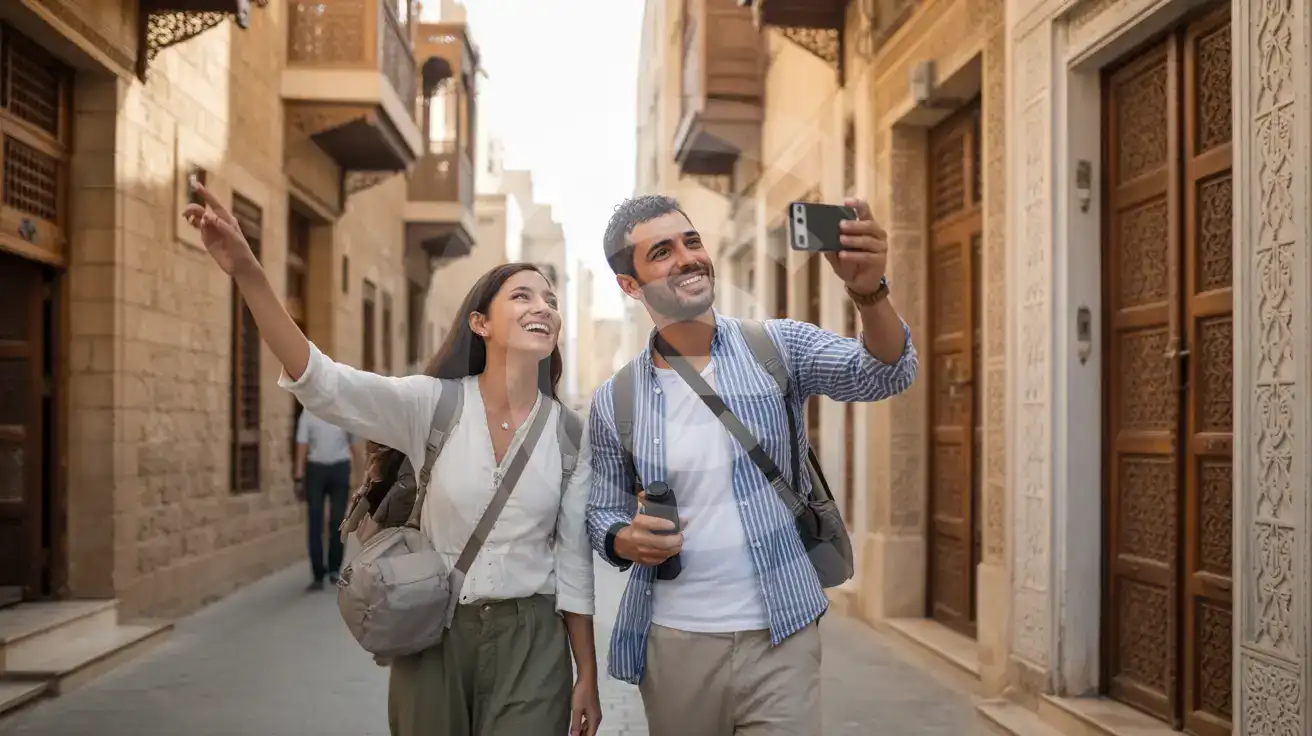
Connected Exploration in Jeddah
Compare eSIM Providers for Saudi Arabia
eSIMno | Local SIM / Operator | Roaming | |
|---|---|---|---|
| FEATURES | |||
| Setup time | Few minutes | Store visit + paperwork | Auto |
| No local ID needed | Online checkout | Local ID required | Use home account |
| Speed | 4G/LTE; 5G in some areas | Carrier-grade | Partner-dependent |
| Travel support | English support 24/7 | Operator shops and call centre | Home carrier hours |
| Keep home number | Dual SIM | Replaces it | Same number |
| Cost predictability | Fixed price | Bills can spike | Bill-shock risk |