

Quick Facts
- Capital
- Bucharest
- Language
- Romanian (Românã)
- Currency
- Romanian Leu (RON, L)
- Time Zone
- E. Europe Standard Time (UTC+2)
- Dialing Code
- +40
- Power Plug
- Type C, E, F (round 2-pin, common across most of Europe)
- Emergency
- 112
- eSIMno Networks
- Digi, Orange, T-Mobile, Telkom, Vodafone
How to Get Your eSIM
- Pick Your Romania Data Plan
Choose from 7-day, 15-day, or 30-day options based on your itinerary length — whether you're doing a quick Bucharest weekend or a full Transylvania road trip. - Buy and Receive Your QR Code
Complete checkout and your eSIM QR code arrives by email within minutes. No shipping, no waiting — just a digital profile ready to install. - Install Over Home WiFi Before Departure
Scan the QR code from your phone's Settings > Cellular > Add eSIM. Label it 'Romania Travel' so you can identify it easily. This takes 2 minutes at home. - Board Your Flight to Henri Coandă
Keep airplane mode on during the flight. Your eSIM profile sits dormant until you activate it — no charges, no accidental roaming. - Activate After Landing in Bucharest
Once the aircraft reaches the gate, switch off airplane mode and toggle your Romania eSIM to primary data. By the time you're walking toward customs, you're pulling up Bolt, checking CFR train times, and confirming your hotel transfer.
Traveler Tips
- Bucharest's M2 metro line connects Henri Coandă Airport to Piața Victoriei in 23 minutes — real-time arrival updates on the Metrorex app save platform guessing.
- Bolt and Uber both operate across Romania's major cities; having data active lets you compare surge pricing between Bucharest's Lipscani district and your hotel at peak hours.
- CFR train tickets from Bucharest Nord to Brașov (2.5 hours) can be purchased on the CFR Călători app — the QR ticket loads faster than waiting in station queues.
- Orthodox churches and monasteries in Bucovina require modest dress; Google Translate's camera mode handles Romanian signage explaining specific rules at each site.
- Download offline Google Maps for the Transfăgărășan Highway before you leave Sibiu — cell signal drops along certain mountain stretches above 2,000 meters.
- Romanian restaurants increasingly use QR menus; data keeps you from asking staff to translate every dish in tourist-heavy Brașov or Cluj-Napoca.
Why Data Matters Across Romania
Romania's travel rhythm demands constant connectivity. You're navigating Bucharest's M1 and M2 metro lines with the Metrorex app, checking real-time delays on CFR Călători for the 08:15 train to Sighișoara, and pulling up Bolt to escape a sudden Carpathian rainstorm outside Bran Castle. Data isn't optional — it's what separates smooth travel from frustrating guesswork.
Bucharest Arrivals
Henri Coandă International sits 18 kilometers north of the city center. The Express Bus 783 departs every 20-40 minutes and takes 40 minutes to Piața Unirii (RON 3.50 per ride via the STB app). The M2 metro connection opened in 2025 and reaches Piața Victoriei in 23 minutes. Either option requires a digital ticket or contactless tap — fumbling for cash at a kiosk while jet-lagged burns time your eSIMno plan eliminates.
Transylvania Road Trips
The 150-kilometer stretch from Brașov to Sibiu via the Transfăgărășan Highway climbs to 2,042 meters at Bâlea Lake. Waze rerouting around construction zones, Google Maps satellite view for finding unmarked guesthouses in Biertan, WhatsApp coordination with your group at Peleș Castle — each task needs data. Offline maps cover emergencies, but live traffic and translation make the journey enjoyable.
Black Sea Coast
Constanța and Mamaia sit 225 kilometers east of Bucharest, reachable via CFR train (2.5 hours) or Autogara bus apps. Beach resort WiFi is overloaded in July and August; your eSIM keeps restaurant bookings, Bolt pickups, and Instagram uploads running without hunting for café passwords.
About Romania & What Travelers Come For
Gateway Cities
Bucharest handles the vast majority of international arrivals at Henri Coandă International (OTP), with direct flights from London, Paris, Frankfurt, Istanbul, and Tel Aviv. Cluj-Napoca's Avram Iancu International (CLJ) serves Transylvania directly, useful for travelers heading straight to the northern Carpathians or Maramureș. Timișoara's Traian Vuia Airport (TSR) connects western Romania to Vienna and Munich.
What Travelers Come For
Transylvania draws the largest crowds — Bran Castle near Brașov, the fortified churches of Viscri and Biertan, the medieval citadel of Sighișoara where Vlad III was born. Bucharest's Old Town (Lipscani) packs Belle Époque architecture, rooftop bars, and the colossal Palace of the Parliament. The painted monasteries of Bucovina display UNESCO-listed 15th-century frescoes. The Danube Delta, Europe's second-largest river delta, offers birdwatching and boat tours through 5,165 square kilometers of wetlands.
When to Visit
May through September brings warm weather ideal for Carpathian hiking and Black Sea beaches. December's Christmas markets in Sibiu and Brașov draw winter visitors, while January ski season opens Poiana Brașov and Sinaia's slopes.
Getting Around Romania
Airport Transfers
From Henri Coandă International, the M2 metro reaches central Bucharest in 23 minutes for RON 3 per ride. The Express Bus 783 runs to Piața Unirii in 40 minutes. Bolt and Uber cost RON 60-90 to the Old Town depending on traffic. From Cluj-Napoca's CLJ, city bus 5 reaches the center in 25 minutes; Bolt averages RON 25-35.
Public Transit
Bucharest's metro system has 4 lines covering 77 stations; the Metrorex app shows real-time arrivals. Surface trams and buses use the STB app for contactless payment. In smaller cities like Brașov, Sibiu, and Timișoara, local buses connect train stations to Old Town squares — Google Maps transit directions work reliably.
Inter-City Rail & Road
CFR Călători operates trains between Bucharest Nord and Brașov (2.5 hours), Sibiu (5.5 hours via Brașov transfer), and Cluj-Napoca (8-10 hours). The CFR app sells QR tickets that skip station queues. FlixBus and Autogara.ro cover bus routes; the Bucharest–Constanța bus runs 3-4 hours to the Black Sea. For Transfăgărășan or Transalpina drives, rental cars from Bucharest or Sibiu offer freedom — Waze handles real-time detours around mountain closures.
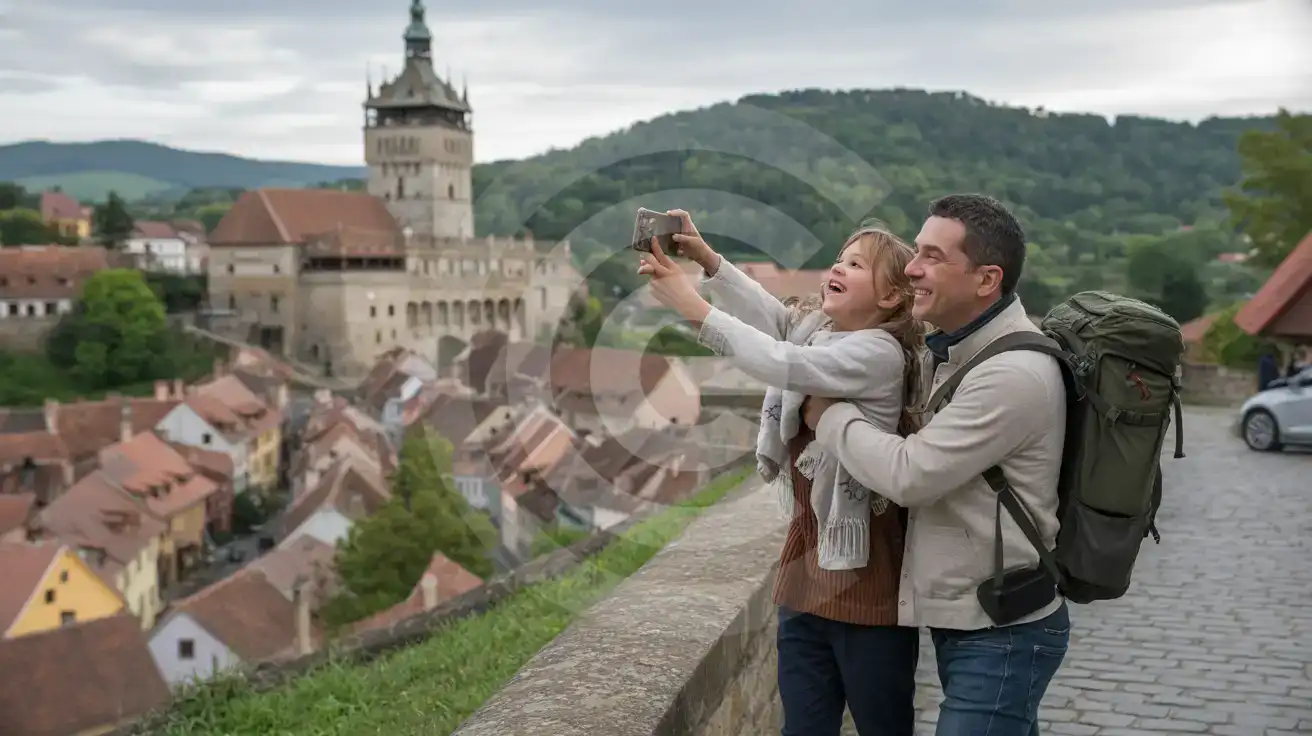
Exploring Transylvania
Compare eSIM Providers for Romania
eSIMno | Local SIM / Operator | Roaming | |
|---|---|---|---|
| FEATURES | |||
| Setup time | Few minutes | Store visit + paperwork | Auto |
| No local ID needed | Online checkout | Local ID required | Use home account |
| Speed | 4G/LTE; 5G in some areas | Carrier-grade | Partner-dependent |
| Travel support | English support 24/7 | Operator shops and call centre | Home carrier hours |
| Keep home number | Dual SIM | Replaces it | Same number |
| Cost predictability | Fixed price | Bills can spike | Bill-shock risk |