

Quick Facts
- Capital
- Warsaw
- Language
- Polish (Polski)
- Currency
- Polish Zloty (PLN, zł)
- Time Zone
- Central European Standard Time (UTC+1)
- Dialing Code
- +48
- Power Plug
- Type C, E, F (round 2-pin, common across most of Europe)
- Emergency
- 112
- eSIMno Networks
- Plus
How to Get Your eSIM
- Pick Your Poland Data Plan
Choose from 1GB to 20GB options based on your trip length — a week in Warsaw and Kraków with daily maps, rideshare, and translation runs around 5-7GB comfortably. - Install Over Home WiFi Before Your Flight
Complete the eSIM profile installation while you're still at home with reliable internet. The entire process takes 3-5 minutes through your phone's settings. - Board Your Flight With Data Ready
Your eSIM sits dormant during the flight. Keep your home SIM active for any last-minute calls or texts before takeoff. - Activate After Landing at Chopin or Balice
Once your plane taxis to the gate at Warsaw Chopin or Kraków Balice, switch off airplane mode. Your phone connects to Poland's Plus network within seconds. - Navigate Poland From Gate to Final Stop
Pull up SKM train times to Warszawa Śródmieście, check your hotel confirmation, or order a Bolt to Stare Miasto — your data works before you reach passport control.
Traveler Tips
- Download the Jakdojade app before departure — it covers all Polish cities' buses, trams, and metro with live departures, and works offline for route planning if signal dips in metro tunnels.
- Wieliczka Salt Mine tickets sell out 2-3 days ahead during summer — book your timed-entry slot through the official site and keep the QR code accessible on your phone for gate scanning.
- Warsaw's Metro Line M2 runs east-west connecting Rondo Daszyńskiego to Dworzec Wileński in 12 minutes, with trains every 3-4 minutes during peak hours.
- Keep your home SIM active for incoming calls — your eSIMno plan handles all data (maps, Uber, WhatsApp calls) while your home number stays reachable for banks or family.
- Polish restaurants increasingly use QR code menus — your eSIM loads translations through Google Lens faster than asking the server to explain each dish.
- Bolt and Uber both operate across Warsaw, Kraków, Wrocław, and Gdańsk — compare prices between apps before confirming, as surge patterns differ by platform.
Why Data Matters Across Poland
Poland's cities run on mobile-first infrastructure that assumes you have data. Warsaw's public transport requires the moBiLET app or Jakdojade to buy tickets — paper options exist but the queue at Rondo ONZ kiosks during rush hour adds 15 minutes to your commute. Kraków's tram network spans 24 lines across the city, with the 4 and 14 trams running from Główny station to Kazimierz every 8-10 minutes. Real-time arrivals through the mPK Kraków app save you from standing at the Plac Wszystkich Świętych stop wondering if the next tram is 2 minutes or 12 minutes away.
Museum culture here demands advance booking with QR access. The Auschwitz-Birkenau Memorial requires free timed-entry tickets reserved through the official site — showing up without a booking means waiting 3-4 hours for a slot during peak season. POLIN Museum tickets run around 30 PLN and load as mobile passes; the Schindler's Factory Museum in Kraków uses the same system. Each confirmation email needs a stable connection to pull up at the entrance, and lobby WiFi at these venues handles hundreds of visitors simultaneously with predictable slowdowns.
Getting between cities rewards those with live data. PKP Intercity trains connect Warsaw Centralna to Kraków Główny in 2 hours 20 minutes on Pendolino, with tickets from 89-249 PLN depending on booking timing. FlixBus covers the same route in 4.5 hours for 30-60 PLN, but pickup points shift occasionally — your eSIMno plans for Poland keep the confirmation GPS pin loading when the bus stop isn't where Google Maps expected. The Modlin Airport shuttle to Warsaw Centralna runs every 30 minutes and costs around 35 PLN; you'll want the WizzAir-branded shuttle schedule on your phone rather than hoping the paper timetable at the curb is current.
About Poland & What Travelers Come For
Gateway Cities
Warsaw Chopin Airport (WAW) handles the majority of international arrivals, sitting 10km southwest of the city center with SKM trains running to Śródmieście every 15-20 minutes (roughly 25 minutes, around 4.50 PLN). Kraków Balice Airport (KRK) serves southern Poland, with bus 208 connecting to Główny station in 40 minutes for 6 PLN. Gdańsk Lech Wałęsa Airport (GDN) links to the Baltic coast, with SKM trains to Główny in 25 minutes. Wrocław Copernicus Airport (WRO) covers western arrivals, with bus 106 reaching the city center in 30 minutes.
What Travelers Come For
Kraków's Wawel Castle complex draws visitors for its Renaissance royal chambers and the cathedral where Polish kings were crowned for 500 years. The Wieliczka Salt Mine outside Kraków descends 135 meters underground through carved chapels and saline lakes — the Chapel of St. Kinga alone took 30 years to carve from solid salt. Warsaw's rebuilt Old Town, a UNESCO site reconstructed after WWII destruction, centers on Plac Zamkowy with the Royal Castle and Sigismund's Column. The Auschwitz-Birkenau Memorial in Oświęcim remains Poland's most visited and most solemn site, requiring advance booking and a full day. Gdańsk's waterfront Długie Pobrzeże showcases Hanseatic merchant houses and the towering St. Mary's Church with 405 steps to the viewing platform.
When to Visit
Summer (June-August) fills Gdańsk's beaches, Kraków's café terraces, and Warsaw's riverside boulevards with peak crowds and 25°C averages. Shoulder seasons (April-May, September-October) offer milder weather and shorter museum queues. Winter brings Christmas markets to every major square — Kraków's Rynek Główny market runs from late November through December 26 with mulled wine stalls and amber jewelry vendors.
Getting Around Poland
Airport Transfers
Warsaw Chopin connects to the city via SKM suburban rail (line S2/S3 to Śródmieście, 25 minutes, around 4.50 PLN) or bus 175/188 to Centrum (30-40 minutes depending on traffic). Kraków Balice offers bus 208 to Główny station (40 minutes, 6 PLN) or the faster but pricier train service from Kraków Airport station (18 minutes, around 12 PLN). Taxis from Chopin to central Warsaw run 40-60 PLN; Balice to Kraków Old Town costs 80-120 PLN. Uber and Bolt operate at all major airports with pickup zones at arrivals level exits.
Public Transit
Warsaw's Metro runs two lines: M1 (north-south, 21 stations from Kabaty to Młociny) and M2 (east-west, 19 stations from Bemowo to Bródno). Single tickets cost around 4.40 PLN for 75 minutes; 24-hour passes run 15 PLN. Kraków's tram network covers the Old Town perimeter with lines 1, 3, and 18 circling Planty park. Gdańsk's SKM trains connect Główny to Sopot (12 minutes) and Gdynia (25 minutes) along the Tricity corridor. The Jakdojade app consolidates all Polish cities' transit schedules with live GPS tracking.
Inter-City Rail & Rideshare
PKP Intercity runs Pendolino trains between Warsaw-Kraków (2h20m, 89-249 PLN), Warsaw-Gdańsk (2h45m, 99-229 PLN), and Warsaw-Wrocław (3h30m, 79-189 PLN). Booking through the PKP Intercity app or e-IC.pl offers mobile tickets loaded directly to your phone. FlixBus covers longer routes at lower prices but with extended travel times. BlaBlaCar rideshare operates actively between all major cities — confirm pickup points via in-app messaging, which requires your data connection.
Exploring Poland's Baltic Coast
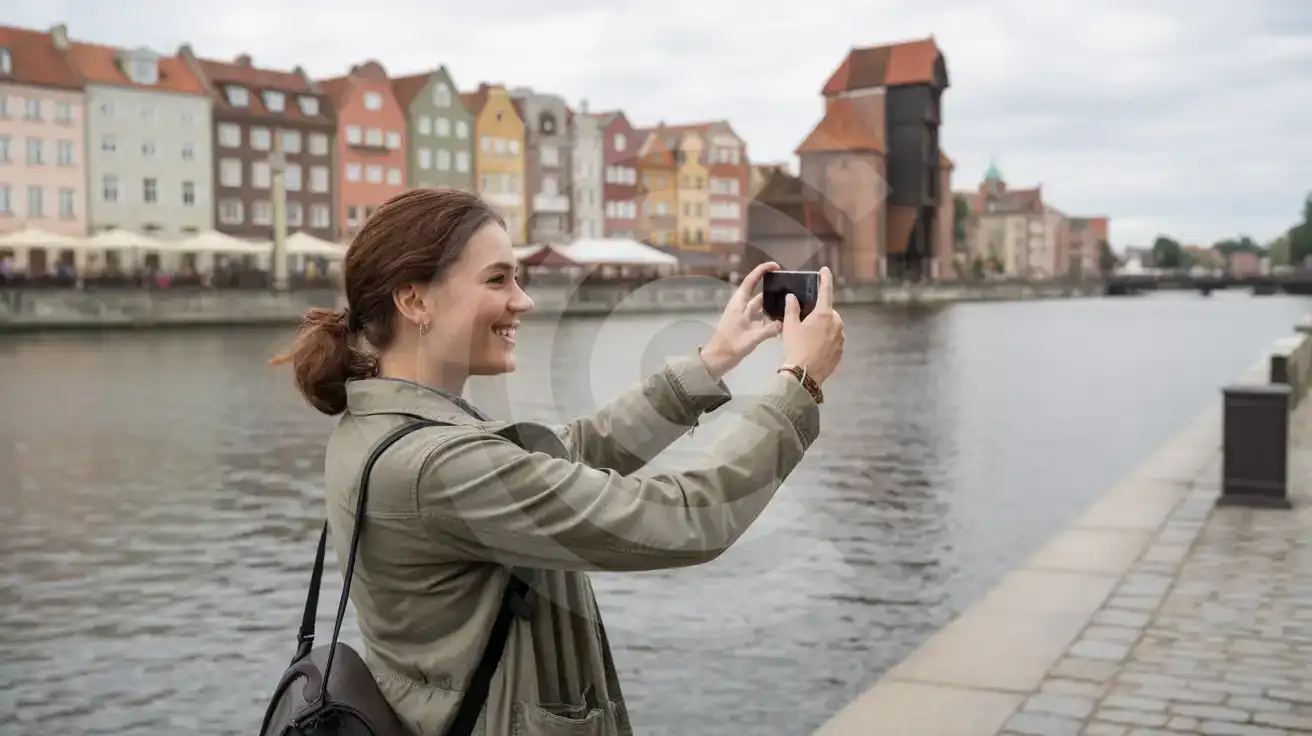
Compare eSIM Providers for Poland
eSIMno | Local SIM / Operator | Roaming | |
|---|---|---|---|
| FEATURES | |||
| Setup time | Few minutes | Store visit + paperwork | Auto |
| No local ID needed | Online checkout | Local ID required | Use home account |
| Speed | 4G/LTE; 5G in some areas | Carrier-grade | Partner-dependent |
| Travel support | English support 24/7 | Operator shops and call centre | Home carrier hours |
| Keep home number | Dual SIM | Replaces it | Same number |
| Cost predictability | Fixed price | Bills can spike | Bill-shock risk |