

Quick Facts
- Capital
- Oslo
- Language
- Norwegian (Bokmal) (Norsk)
- Currency
- Norwegian Krone (NOK, kr)
- Time Zone
- Central European Standard Time (UTC+1)
- Dialing Code
- +47
- Power Plug
- Type C, E, F (round 2-pin, common across most of Europe)
- Emergency
- 112
- eSIMno Networks
- ice, Telenor, Telia
How to Get Your eSIM
- Pick Your Norway Data Plan
Browse eSIMno plans for Norway and choose the data allowance that matches your trip length — a week exploring Oslo and Bergen needs less than a month-long fjord-hopping adventure. - Install at Home Before Your Flight
Download the eSIM profile over your home WiFi the night before departure. The install takes under 2 minutes and your home SIM stays active for calls and texts. - Board With Data Ready
Your eSIM sits dormant during the flight. No action needed at cruising altitude — the profile waits for a Norwegian network signal. - Activate After Landing at Gardermoen
Once the captain clears phone use and you switch off airplane mode, your eSIM connects to ice, Telenor, or Telia automatically. By the time you reach the Flytoget platform, Maps is routing your downtown transfer. - Stay Connected Nationwide
The same eSIM works from Oslo's Karl Johans gate to Tromsø's Arctic Cathedral to the Lofoten ferry terminals. No top-ups, no second card, no coverage gaps between regions.
Traveler Tips
- Download the Ruter app for Oslo public transit — it shows live tram and metro arrivals and accepts mobile tickets that require data to validate at inspections.
- Bergen's Fløibanen funicular queues shrink after 16:00; use real-time wait updates on Google Maps to time your ascent for sunset views without the crowd.
- Fjord ferry schedules (Geiranger, Nærøyfjord, Sognefjord) shift seasonally — pull live timetables from the Norled or Fjord1 apps rather than relying on printed boards.
- Your home SIM stays active for incoming calls while the eSIMno profile handles data — no need to share a new number with family or your airline's SMS alerts.
- Northern lights tours from Tromsø confirm pickup locations via WhatsApp 30-60 minutes before departure based on aurora forecasts; data keeps you in the loop.
Why Data Matters Across Norway
Norway stretches 1,752 kilometers from Kristiansand in the south to the North Cape, and every transit connection between those points runs through apps. The Flytoget airport express from Gardermoen to Oslo Central takes 19 minutes and costs around NOK 220 — your ticket lives on the Vy app, which validates via QR scan at the platform gate. Miss that scan without data and you're stuck at the turnstile while the next train leaves. The same pattern repeats at Bergen Airport Flesland, where the Bybanen light rail into the city center takes 45 minutes; mobile tickets on the Skyss app need a live connection to activate.
Fjord Country Connectivity
The UNESCO-listed Nærøyfjord and Geirangerfjord draw travelers who book ferry crossings, kayak rentals, and RIB-boat tours through apps like GetYourGuide, Viator, and local operators' own booking portals. Confirmation emails contain QR codes that load only with data. The Bergen-to-Flåm railway — rated one of the world's most scenic train journeys — includes 20 tunnels where offline maps go dark; live GPS tracking on Entur or Google Maps helps you anticipate the Kjosfossen waterfall stop and the best photo windows. Hurtigruten coastal voyages from Bergen to Kirkenes span 11 days and 34 ports; onboard WiFi is metered and slow, so passengers rely on cellular data to upload photos and check weather at upcoming stops.
Arctic and Urban Data Demands
Tromsø, the gateway to northern lights chasing, operates on real-time aurora alerts from apps like Norway Lights and My Aurora Forecast. Tour operators text pickup locations 30-60 minutes before departure based on cloud cover and solar wind data — no data means missed buses. In Oslo, the Vipps payment app dominates local commerce; street-food stalls at Mathallen, tram ticket machines, and even some museum gift shops expect mobile payment over cash. Bergen's fish market vendors at Torget accept card but prefer Vipps for speed. Throughout Norway, Google Translate's camera mode handles Norwegian menus, grocery labels, and pharmacy instructions in seconds — all requiring a live data stream.
About Norway & What Travelers Come For
Norway occupies the western edge of the Scandinavian Peninsula, bordered by Sweden to the east and the North Sea to the south. Its coastline — if you straightened every fjord indent — would stretch over 100,000 kilometers, making it one of the most convoluted shorelines on Earth. That geography defines the travel experience: ferries, tunnels, and mountain passes replace straight highways.
Gateway Cities
Oslo serves as the primary international hub, with direct flights from North America, the Middle East, and across Europe landing at Gardermoen. The city anchors visits to the Viking Ship Museum, the Munch Museum, and the modernist Opera House whose rooftop doubles as a public plaza. Bergen, Norway's second city, sits at the mouth of the fjord country and operates as the departure point for the Bergen Railway, the Flåm Railway, and Hurtigruten cruises. Tromsø, 350 kilometers north of the Arctic Circle, draws northern lights seekers from September through March and midnight-sun tourists from May through July. Stavanger anchors the southwestern coast with access to Preikestolen (Pulpit Rock), a 604-meter cliff overlooking Lysefjord.
What Travelers Come For
The fjords dominate bucket lists: Geirangerfjord's Seven Sisters waterfalls, Nærøyfjord's narrow passages, and Sognefjord's 204-kilometer length rank among Europe's most dramatic landscapes. The northern lights pull photographers and romantics to Tromsø, Alta, and the Lofoten Islands between September and March. Norway's stave churches — 28 survive — date to the medieval period; Urnes Stave Church holds UNESCO status. Outdoor pursuits range from summer hiking on the Trolltunga rock formation to winter skiing at Holmenkollen and cross-country trails around Lillehammer.
When to Visit
Summer (June–August) brings 20-hour daylight and peak fjord-cruise season; expect crowds at Geirangerfjord and higher ferry prices. Winter (December–February) offers northern lights and ski conditions but shorter daylight windows — Tromsø sees no sunrise from late November to mid-January. Shoulder months (May, September) balance moderate weather with thinner crowds and lower accommodation rates.
Getting Around Norway
Norway's terrain — fjords, mountains, Arctic tundra — fragments overland routes. The transport network compensates with integrated rail, bus, ferry, and air links, nearly all bookable through the national Entur app or operator-specific platforms.
Airport Transfers
Oslo Gardermoen (OSL), 47 kilometers north of the city center, connects via the Flytoget express (19 minutes, around NOK 220) and NSB regional trains (23 minutes, around NOK 115). Bergen Airport Flesland (BGO) links to the city center via the Bybanen light rail (45 minutes, around NOK 42). Tromsø Airport (TOS) sits 5 kilometers from downtown; the Flybussen airport coach takes 15 minutes, while taxis run NOK 200–250. Stavanger Airport Sola (SVG) connects via Flybussen to the city center in 25 minutes.
Public Transit
Oslo's Ruter network covers metro (T-bane, 5 lines), trams, buses, and ferries to the Oslofjord islands. A single ticket costs around NOK 42 and lasts 60 minutes with unlimited transfers. Bergen's Skyss system runs the Bybanen tram plus city buses; single rides cost around NOK 42. Tromsø operates a compact bus network with single fares around NOK 50. All three cities accept contactless payment at gates or onboard readers, but mobile tickets via the respective apps (Ruter, Skyss, Troms Fylkestrafikk) offer convenience and occasional discounts.
Inter-City Rail & Fjord Ferries
Vy operates long-distance trains including the Bergen Railway (Oslo–Bergen, 7 hours), the Dovre Railway (Oslo–Trondheim, 6.5 hours), and the Nordland Railway (Trondheim–Bodø, 10 hours). The Flåm Railway, a 20-kilometer branch from Myrdal to Flåm, descends 866 meters through 20 tunnels and ranks among the steepest standard-gauge lines in the world. Fjord ferries from operators Norled, Fjord1, and Boreal connect roadless villages and tourist routes; the Gudvangen–Kaupanger crossing spans the Nærøyfjord in 2 hours. Hurtigruten's coastal voyage from Bergen to Kirkenes stops at 34 ports over 11 days, blending transport and cruise.
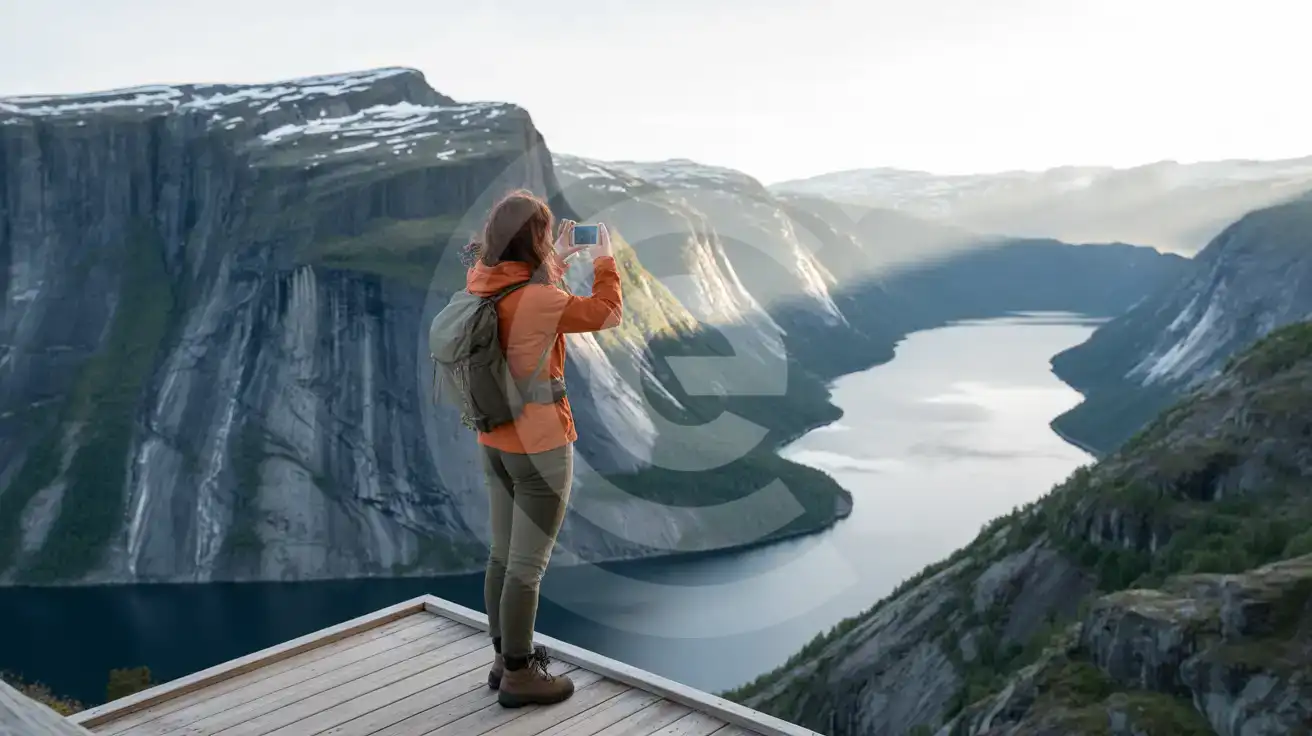
Exploring Norway's Northern Reaches
Compare eSIM Providers for Norway
eSIMno | Local SIM / Operator | Roaming | |
|---|---|---|---|
| FEATURES | |||
| Setup time | Few minutes | Store visit + paperwork | Auto |
| No local ID needed | Online checkout | Local ID required | Use home account |
| Speed | 4G/LTE; 5G in some areas | Carrier-grade | Partner-dependent |
| Travel support | English support 24/7 | Operator shops and call centre | Home carrier hours |
| Keep home number | Dual SIM | Replaces it | Same number |
| Cost predictability | Fixed price | Bills can spike | Bill-shock risk |