

Quick Facts
- Capital
- Valletta
- Language
- Maltese
- Currency
- Euro (EUR, €)
- Time Zone
- Central European Standard Time (UTC+1)
- Dialing Code
- +356
- Power Plug
- Type G (3-pin rectangular, common in UK and several Asian markets)
- Emergency
- 112
- eSIMno Networks
- GO, Melita, Vodafone
How to Get Your eSIM
- Pick Your Malta Data Plan
Choose from 1GB to 20GB options based on your trip length. A week exploring Valletta, Mdina, and Gozo typically needs 3-5GB for maps, tickets, and photo uploads. - Complete the 2-Minute Purchase
Checkout takes under two minutes. Your eSIM QR code and installation instructions arrive by email within seconds — save them before boarding. - Install Over WiFi at Home
Scan the QR code while still on your home network. The profile installs in under a minute. Label it 'Malta Data' in your phone settings for easy switching. - Activate After Landing at Luqa
Once your aircraft reaches the gate, switch off airplane mode and enable data roaming on the eSIM line. Your phone connects to GO, Melita, or Vodafone within seconds. - Keep Your Home SIM for Calls
Your original number stays active for incoming calls and texts. Use WhatsApp, FaceTime, or Telegram over eSIM data for outgoing calls — avoid roaming charges on your home line.
Traveler Tips
- Book Hypogeum tickets 4-6 weeks ahead online — only 80 visitors enter daily, and your QR confirmation is the only entry proof accepted at the door.
- The Tallinja bus app shows live arrivals for all Malta routes; the €1.50 single fare (€3 in summer) is paid by tapping a contactless card or buying through the app.
- Download offline Google Maps for Malta and Gozo before visiting underground sites like the Catacombs of St. Paul — cellular signal drops completely below ground.
- Bolt and eCabs apps both operate across Malta; compare prices before booking, especially for the 25-minute ride from Luqa airport to Sliema (expect €15-20).
- The Gozo Channel ferry from Ċirkewwa departs every 45 minutes in summer; check the live schedule on their app since weather delays are common in winter months.
Why Data Matters Across Malta
Malta rewards spontaneous exploration, and spontaneous exploration demands real-time data. The X4 express bus from Luqa airport to Valletta runs every 30 minutes — miss one and you're standing in Mediterranean sun for half an hour unless the Tallinja app shows the X7 to Sliema arriving sooner. Bolt and eCabs both serve the airport, but surge pricing spikes during cruise-ship arrivals at the Grand Harbour; checking both apps from the arrivals hall saves €5-8 on the ride to your hotel.
Inside Valletta's 400-year-old fortifications, attractions cluster within a 15-minute walk, but opening hours vary wildly — St. John's Co-Cathedral closes at 4:30 PM on weekdays while the National Museum of Archaeology stays open until 7 PM. Pulling schedules mid-stroll beats discovering locked doors. The Hypogeum in Paola requires a QR ticket scanned at the entrance; the underground site has zero WiFi and zero cell signal, so load your confirmation before descending the stairs. Same for the Catacombs of St. Paul in Rabat — your eSIMno plans for Malta keep you connected above ground, but offline downloads are essential for anything subterranean.
Day trips to Gozo and Comino multiply the data demand. The Gozo Channel ferry from Ċirkewwa to Mġarr takes 25 minutes; live departure boards in the app save the 45-minute wait if a crossing is full. Once on Gozo, the Citadella in Victoria and Ramla Bay sit 8 kilometers apart with infrequent buses connecting them — rideshare apps or Google Maps transit directions make the difference between efficient exploration and wasted hours. Comino's Blue Lagoon has no infrastructure at all: book your boat return through one of the licensed operators (check times on their mobile sites) or risk getting stranded when the last launch leaves at 5 PM.
About Malta & What Travelers Come For
Gateway to the Mediterranean
Malta sits 80 kilometers south of Sicily, a limestone archipelago of three inhabited islands — Malta, Gozo, and Comino — with a combined population under 520,000. Valletta, the capital, earned UNESCO World Heritage status for its intact Baroque streetscape, while the entire archipelago holds more churches per square kilometer than any nation on Earth. English and Maltese share official status, making navigation effortless for most travelers.
What Travelers Come For
The Hypogeum of Ħal-Saflieni draws prehistory enthusiasts to the only underground temple complex in the world, carved 5,000 years ago. St. John's Co-Cathedral in Valletta houses two Caravaggio masterpieces and a marble-inlaid floor covering 400 knights' tombs. Mdina's silent medieval streets offer car-free wandering through honey-colored palazzos, while the Three Cities — Birgu, Senglea, and Cospicua — deliver fortress views without the Valletta crowds. On Gozo, the Citadella fortification and Dwejra's coastal cliffs (where the Azure Window once stood) reward the ferry crossing. Comino's Blue Lagoon is pure turquoise swimming between May and October.
When to Visit
Peak season runs June through September with temperatures above 30°C and packed Blue Lagoon boats. Shoulder months (April-May, October) offer comfortable 20-25°C weather and thinner crowds at Valletta attractions. Winter brings occasional rain but mild 15°C days ideal for walking the fortifications without the summer heat.
Getting Around Malta
Airport Transfers
Malta International Airport in Luqa sits 8 kilometers from Valletta and 10 kilometers from Sliema. The X4 express bus reaches Valletta's City Gate terminus in 25 minutes; the X2 serves Sliema and St. Julian's in 35-40 minutes. Both run every 30 minutes from 5:30 AM until 11 PM, with fares around €4 for the express routes. Bolt and eCabs rideshares reach Valletta in 15 minutes and Sliema in 20 minutes, typically €12-18 depending on traffic and surge.
Public Transit
The Tallinja bus network covers the entire main island with a hub-and-spoke system radiating from Valletta. Single rides cost €1.50 in winter and €2-3 in summer peak season; the Tallinja card or contactless payment works on all routes. Key tourist routes include the 41/42 loop through Mdina and Rabat, the 222 coastal route to Marsaxlokk, and the X1 express to Ċirkewwa ferry terminal for Gozo crossings. Buses can be infrequent after 9 PM.
Island Hopping
Gozo Channel ferries depart Ċirkewwa for Mġarr harbour every 45 minutes in summer, hourly in winter. The 25-minute crossing costs €4.65 round-trip (paid on return). From Mġarr, buses reach Victoria's Citadella in 20 minutes. Comino has no ferry terminal — private boat operators from Ċirkewwa, Sliema, and Bugibba run Blue Lagoon trips for €15-25 return including beach time. Book morning departures to secure a spot before the lagoon fills with day-trippers.
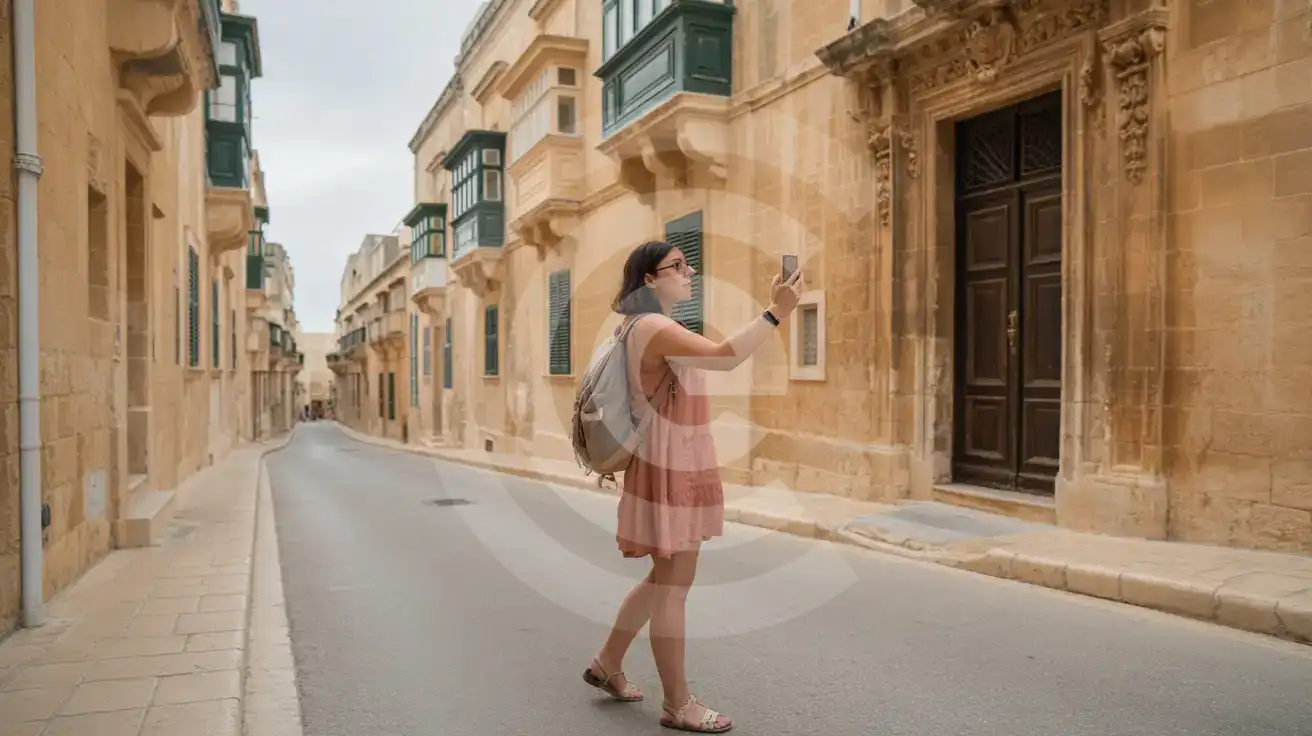
Exploring Malta's Ancient Streets
Compare eSIM Providers for Malta
eSIMno | Local SIM / Operator | Roaming | |
|---|---|---|---|
| FEATURES | |||
| Setup time | Few minutes | Store visit + paperwork | Auto |
| No local ID needed | Online checkout | Local ID required | Use home account |
| Speed | 4G/LTE; 5G in some areas | Carrier-grade | Partner-dependent |
| Travel support | English support 24/7 | Operator shops and call centre | Home carrier hours |
| Keep home number | Dual SIM | Replaces it | Same number |
| Cost predictability | Fixed price | Bills can spike | Bill-shock risk |