

Quick Facts
- Time Zone
- Mountain Standard Time (UTC-7, no DST)
- Dialing Code
- +52
- Currency
- Mexican Peso (MXN, $)
- Power Plug
- Type A, B (flat 2-pin, common across North America)
- Language
- Spanish (Español)
- Emergency
- 911 (general)
- eSIMno Networks
- Movistar
How to Get Your eSIM
- Pick your Mexico data plan
Choose the data allowance that fits your trip length — a weekend at Cabo San Lucas or a two-week road trip down Highway 1. Plans start at a few days and scale up. - Install over home WiFi before your flight
Scan the QR code or tap the installation link while you're still on reliable internet. The profile downloads in under two minutes and sits dormant until you activate it. - Board your flight with the eSIM ready
Your phone now holds two profiles: your home SIM for calls and the eSIMno data line for Mexico. Airplane mode keeps both quiet during the flight. - Activate after landing at SJD
Once the aircraft reaches the gate, switch off airplane mode. Your eSIM detects the Movistar network and connects automatically — before you even stand up to grab your bag. - Use data through immigration, customs, and beyond
By the time you reach the semáforo fiscal button and walk past the timeshare gauntlet, your phone is pulling shuttle tracking, resort directions, and live group chat without a single kiosk stop.
Traveler Tips
- Immigration queues at Terminal 2 peak between 11:00 and 14:00 when U.S. flights stack up — having data lets you message your shuttle driver with real-time updates on your wait.
- Uber cannot legally pick up at the SJD curb; walk to the Pemex gas station outside the airport gate if you want rideshare, or use the authorized taxi kiosk inside Terminal 2.
- Keep your home SIM active for incoming calls — your eSIMno plan is data-only, so voice stays on your original number while WhatsApp, FaceTime, and Google Meet handle outbound calls over data.
- The free airport WiFi requires registration and slows under heavy load — your eSIM bypasses the captive portal entirely.
- Terminal 1 (domestic) and Terminal 2 (international) are not connected airside; allow 2+ hours for any connection that requires re-checking bags and clearing security again.
- Download offline maps for the Tourist Corridor and Cabo San Lucas before departure — cell signal dips in some canyon stretches along Highway 1.
Why You Need an eSIM at SJD
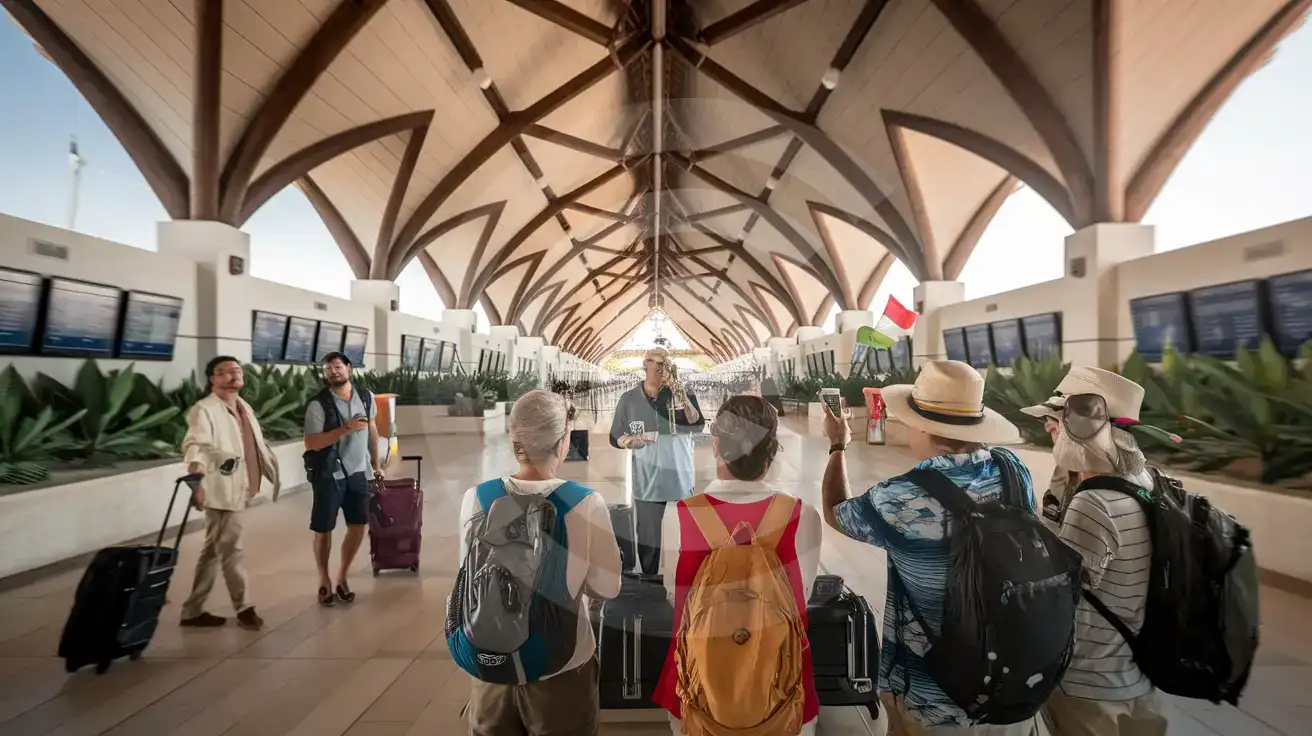
Los Cabos International Airport funnels millions of passengers through Terminal 2 each year, and the arrival flow tests your phone from the moment you power off airplane mode. Immigration booths stretch across a wide hall, but the queue snakes back toward the jet bridges when multiple American, Delta, and United flights land within the same hour. Your eSIM keeps you connected while you wait — forwarding gate-change alerts if you have a same-day connection, messaging the shuttle driver with your position in line, or checking whether your resort offers curbside pickup at Door 2 or Door 4.
After baggage claim, you pass the random customs inspection and enter a corridor of timeshare sales agents. Keep walking. The official taxi kiosk sits just before the exit doors, where you pay fixed-zone fares in advance — around $35-50 to San José del Cabo, $70-100 to Palmilla or Chileno Bay, and $90-120 to the marina in Cabo San Lucas. With data, you can pull up the resort's transfer instructions, compare the kiosk quote against a pre-booked shuttle confirmation, or check the Uber workaround route to the Pemex station outside the gate.
Ground transport from SJD is road-only — no metro, no rail link, no ferry pier. Highway 1 connects the airport to San José del Cabo (13 km, 15-25 minutes) and the Tourist Corridor resorts before reaching Cabo San Lucas (30 km, 35-50 minutes in light traffic). eSIMno plans for Los Cabos International Airport, Los Cabos, Mexico keep Google Maps live for turn-by-turn directions, Waze open for traffic alerts, and WhatsApp ready for the group chat asking whether you made it through customs yet.
Visiting Los Cabos International Airport
SJD operates two main passenger terminals plus a private-aviation facility. Terminal 2 handles the bulk of international traffic — American, Delta, United, Alaska, JetBlue, Southwest, Air Canada, WestJet, and British Airways — while Terminal 1 serves domestic carriers including Aeroméxico, Volaris, and VivaAerobus connecting to Mexico City, Guadalajara, and Monterrey. The terminals sit about 600 meters apart, connected by a free shuttle bus every 15-20 minutes or an 8-10 minute walk along a covered path.
Dining options concentrate airside in Terminal 2 after security: Ruth's Chris Steak House, Margaritavilla, Cabo Coffee Company, tequila-and-mezcal bars, Johnny Rockets, and several taquerías serving Baja-style fish tacos. The Mera Lounge (Priority Pass, LoungeKey) offers hot food, open bar, and showers for roughly $45-60 at the door. Currency exchange counters from CIBanco and Global Exchange operate in arrivals, though ATMs from Banorte, BBVA, and Santander offer better rates. The rental-car center sits across the access road from Terminal 2, with Hertz, Avis, Sixt, Enterprise, and local operators available — mandatory Mexican liability insurance is sold at every counter.
Arriving at SJD
Compare eSIM Options at Los Cabos International Airport
eSIMno | Local SIM / Operator | Roaming | |
|---|---|---|---|
| FEATURES | |||
| Setup time | Few minutes | Does not work until registration is complete | Auto |
| No local ID needed | Online checkout | Passport plus a live face check | Use home account |
| Speed | 4G/LTE on Telcel and AT&T | One network only | Partner-dependent |
| Travel support | English support 24/7 | Spanish-language service | Home carrier hours |
| Keep home number | Dual SIM | Replaces it | Same number |
| Cost predictability | Fixed price | Prepaid, no bill shock | Bill-shock risk |