

Quick Facts
- Capital
- Jerusalem
- Language
- Hebrew (עברית)
- Currency
- Israeli Shekel (ILS, ₪)
- Time Zone
- Israel Standard Time (UTC+2)
- Dialing Code
- +972
- Power Plug
- Type H
- Emergency
- 100 (police), 101 (ambulance), 102 (fire)
- eSIMno Networks
- Hot Mobile, Pelephone
How to Get Your eSIM
- Pick Your Israel Data Plan
Choose the package that matches your trip length — a 5-day Tel Aviv beach break needs less data than a 14-day circuit through Jerusalem, Haifa, and Eilat. Plans range from 1 GB quick-visit packs to 10 GB+ for heavy streamers and remote workers. - Install Over Home WiFi Before Departure
Scan the QR code from your confirmation email while still connected to stable WiFi at home. The profile loads in under 2 minutes on iPhone (Settings → Cellular → Add eSIM) or Android (Settings → Network → SIMs). No physical card, no tray tool, no airport scramble. - Label the Line for Easy Switching
Rename the new profile 'Israel Data' or 'Travel' so you can toggle it instantly when you land. Keep your home SIM active for incoming calls and texts — the eSIM handles all internet traffic. - Activate After Landing at Ben Gurion
Once the aircraft reaches the gate and the seatbelt sign clicks off, disable airplane mode. Your phone registers on Hot Mobile or Pelephone within 30 seconds — by the time you reach passport control, Maps is already routing you to baggage claim. - Stay Connected Nationwide
Your eSIMno plan works from the beaches of Tel Aviv to the Galilee highlands, from Eilat's Red Sea resorts to the Negev desert. One plan, full country coverage — no roaming toggles, no add-on purchases mid-trip.
Traveler Tips
- Shabbat runs Friday sunset to Saturday night — public transit stops in Jerusalem and most shops close. Have your hotel address saved offline and a Gett ride pre-booked before sundown.
- Ben Gurion security is thorough; arrive 3 hours early for international departures. Use the wait time to download offline Hebrew phrasebooks and confirm your return transfer.
- Dead Sea resorts cluster around Ein Bokek, 90 minutes from Jerusalem by car. Data stays strong for navigation but save your hotel pin offline — cell gaps appear in the steep descent.
- Dual-SIM setup keeps your home number live for incoming calls while all data routes through eSIMno. Outgoing calls work best over WhatsApp or FaceTime using eSIM data — avoid native dialer roaming charges.
- Restaurants use 2eat and Tabit for reservations; both apps need data for confirmation QR codes. Book your Jerusalem Old City dinner before leaving Tel Aviv so the code is ready at the gate.
- Israel Railways runs a direct 18-minute express from Ben Gurion to Tel Aviv HaHagana — fare around ₪15. Check live departure boards on the Israel Railways app the moment you clear customs.
Why Data Matters Across Israel
Israel packs extraordinary density into a small footprint — Tel Aviv's startup towers sit 70 km from Jerusalem's 3,000-year-old alleys, and the Dead Sea floats 430 meters below sea level barely an hour from either. Every transition demands real-time logistics. Gett and Yango quote surge pricing dynamically; a 5-minute refresh at Ben Gurion arrivals can save ₪40 on the ride to Rothschild Boulevard. Google Maps with live traffic reroutes you around the frequent highway slowdowns on Route 1 between Tel Aviv and Jerusalem, shaving 20 minutes off a trip that can balloon to 90 minutes during rush hour.
City-Hopping Without WiFi Hunting
Jerusalem's Old City quarters — Jewish, Christian, Muslim, Armenian — form a labyrinth where even locals consult navigation apps. Your timed-entry QR for the Western Wall Tunnels, booked through the Kotel Heritage Foundation site, won't load on the spotty municipal WiFi near Jaffa Gate. In Tel Aviv, Carmel Market vendors accept Bit and PayBox mobile payments; without data, you're stuck hunting an ATM that dispenses shekels. Haifa's Carmelit subway — the world's shortest metro at 1.8 km — connects the German Colony to the Baháʼí Gardens entrance in 6 minutes, but live departure times only show on the official Haifa transit app.
Desert, Sea, and Highlands
Eilat's Red Sea promenade runs 2.5 km from the Egyptian border to the Jordanian crossing at Aqaba. Snorkel operators along Coral Beach confirm bookings via WhatsApp; no data means no confirmation screenshot at the gate. Up north, the Golan Heights trails around Mount Hermon climb to 2,000 meters — Waze handles the hairpin approach roads better than any paper map. eSIMno plans for Israel keep you covered from sea level to summit, border to border, without a single carrier-shop detour.
About Israel & What Travelers Come For
Israel sits at the crossroads of three continents, a sliver of land where Mediterranean beaches meet desert canyons and ancient history collides with cutting-edge innovation. The country stretches 470 km from the Lebanese border to the Red Sea resort of Eilat, yet its east-west span rarely exceeds 115 km — compact enough to cross in a day, dense enough to explore for weeks.
Gateway Cities
Tel Aviv anchors the coastal plain with 14 km of sandy beach, Bauhaus-era architecture in the White City UNESCO zone, and a 24-hour café culture along Rothschild Boulevard. Jerusalem, 60 km inland and 800 meters higher, draws pilgrims to the Western Wall, the Church of the Holy Sepulchre, and the Al-Aqsa Mosque compound. Haifa cascades down Mount Carmel to a busy port, its terraced Baháʼí Gardens descending 19 levels to the German Colony below. Eilat sits at the country's southern tip, a year-round beach destination where Red Sea coral reefs meet desert mountains.
What Travelers Come For
Pilgrimage routes trace 2,000 years of Jewish, Christian, and Muslim heritage across Jerusalem, Bethlehem, and Nazareth. Adventure seekers float in the Dead Sea, hike Masada at sunrise, and mountain-bike the Negev craters. Food travelers hunt hummus legends in Jaffa and shakshuka joints in Carmel Market. Tech tourists explore Tel Aviv's startup scene — second only to Silicon Valley in density — while history buffs wander Caesarea's Roman amphitheater and Acre's Crusader tunnels.
When to Visit
Spring (March–May) and autumn (September–November) bring mild temperatures ideal for hiking and city exploration. Summer heat peaks above 35°C in the desert but stays pleasant on Tel Aviv's coast. Winter rains green the Galilee hills while Eilat remains warm enough for diving year-round.
Getting Around Israel
Ben Gurion International Airport (TLV) handles the vast majority of international arrivals, sitting midway between Tel Aviv and Jerusalem. Israel Railways runs a direct line from the airport terminal to Tel Aviv's four central stations — HaHagana, HaShalom, Savidor-Merkaz, and University — with trains departing every 20 minutes and reaching HaHagana in 18 minutes. Fares run around ₪15 one-way. The high-speed rail link to Jerusalem's Yitzhak Navon station covers the 50 km in 24 minutes; trains leave roughly every 30 minutes during peak hours.
Public Transit
Tel Aviv's light rail Red Line opened in 2023, running 24 km from Petah Tikva through the city center to Bat Yam. Buses remain the backbone — Dan and Egged operate routes across the Gush Dan metropolitan area. Jerusalem's tram (Red Line and under-construction Blue Line) threads from Mount Herzl through the Old City periphery to Pisgat Ze'ev. Haifa's Carmelit subway connects six stations over 1.8 km, supplemented by the Metronit bus rapid transit running to the northern suburbs.
Rideshare & Inter-City Rail
Gett dominates the Israeli ride-hail market; Yango operates as a secondary option. Both apps require data for real-time quotes and driver tracking. Israel Railways connects Tel Aviv, Haifa, Be'er Sheva, and Nahariya on electrified mainlines running every 20–30 minutes during the day. Sherut shared taxis fill gaps on Shabbat when trains and buses stop — find departure points at the Central Bus Station in each city. Car rentals are plentiful at Ben Gurion; the 6-hour drive from Tel Aviv to Eilat via Route 90 along the Dead Sea is a classic road-trip itinerary.
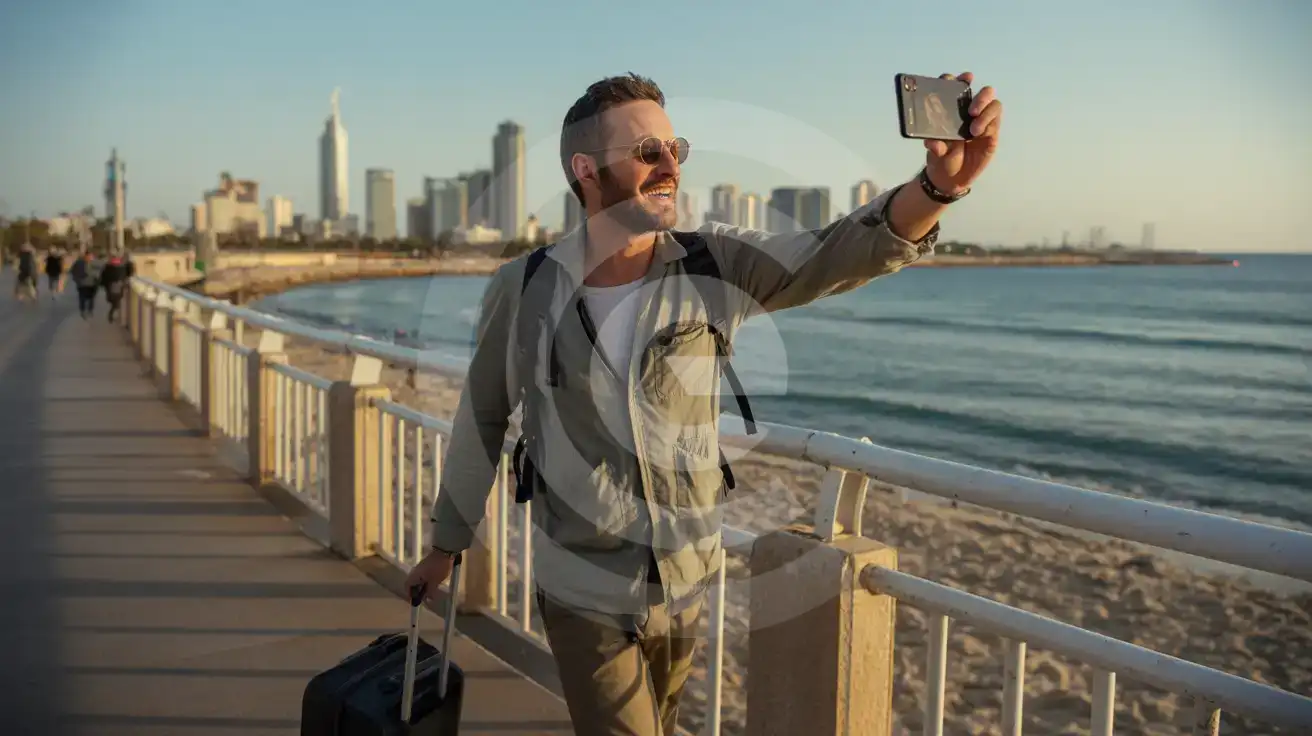
Tel Aviv Beachfront
Compare eSIM Providers for Israel
eSIMno | Local SIM / Operator | Roaming | |
|---|---|---|---|
| FEATURES | |||
| Setup time | Few minutes | Store visit + paperwork | Auto |
| No local ID needed | Online checkout | Local ID required | Use home account |
| Speed | 4G/LTE; 5G in some areas | Carrier-grade | Partner-dependent |
| Travel support | English support 24/7 | Operator shops and call centre | Home carrier hours |
| Keep home number | Dual SIM | Replaces it | Same number |
| Cost predictability | Fixed price | Bills can spike | Bill-shock risk |