

Quick Facts
- Language
- Japanese (日本語)
- Currency
- Japanese Yen (JPY, ¥)
- Time Zone
- Tokyo Standard Time (UTC+9)
- Dialing Code
- +81
- Power Plug
- Type A (flat 2-pin, common in Japan and North America; voltage is 100V in Japan, lower than the 110-120V of the US)
- Emergency
- 110 (police), 119 (fire / ambulance)
- eSIMno Networks
- KDDI
How to Get Your eSIM
- Choose Your Hokkaido Data Plan
Select a Japan eSIM package based on your trip length — 7-day plans suit a Sapporo-Otaru-Niseko loop, while 14-day options cover extended Hokkaido exploration plus connections to Honshu. - Install Over WiFi Before Your Flight
Scan the QR code at home or your departure airport lounge. The profile downloads in under 2 minutes and sits dormant until you activate — no last-minute fumbling at New Chitose baggage claim. - Activate After Landing at New Chitose
Once the captain clears phone use, switch off airplane mode. Your eSIM connects to KDDI automatically — by the time you reach the JR Hokkaido ticket counter, Google Translate and Hyperdia are already loading. - Set eSIM as Primary Data Line
In your phone's cellular settings, assign the eSIM for mobile data while keeping your home SIM active for incoming calls. Both lines run in parallel — no swapping, no confusion. - Explore Hokkaido and Beyond
Your Japan plan covers every prefecture. Ski Niseko, soak in Noboribetsu onsen, catch the shinkansen to Tokyo — one eSIM, nationwide reach, zero roaming surprises.
Traveler Tips
- JR Rapid Airport trains depart New Chitose every 15 minutes for Sapporo Station (37 minutes, ¥1,150) — check live platform assignments on the Hyperdia app before heading downstairs.
- Susukino's neon-lit blocks stay busy until 4 AM; Google Maps walking directions beat guesswork when bar-hopping between Tanuki-koji and the ramen alleys.
- Niseko United's four interconnected resorts share one lift pass — download the resort app to track real-time lift wait times and grooming reports across Hirafu, Hanazono, Niseko Village, and Annupuri.
- Otaru Canal photos peak at blue hour (30 minutes after sunset) when the gas lamps ignite — set a phone alarm so you're positioned at the Asakusa Bridge viewpoint on time.
- Keep your home SIM active for incoming calls; place outgoing calls via WhatsApp or FaceTime over your eSIM data to avoid roaming voice charges.
Why Data Matters Across Hokkaido
Hokkaido's geography stretches 83,450 square kilometers — larger than Ireland — and public transit thins quickly outside Sapporo. The JR Hokkaido network connects major hubs, but seat reservations on limited-express trains like the Kamui (Sapporo to Asahikawa, 85 minutes) or the Hokuto (Sapporo to Hakodate, 3 hours 50 minutes) require the JR East app or a ticket-machine transaction that flows faster with live translation. Real-time schedule updates matter when winter storms delay departures; push notifications beat platform announcements you can't read.
Sapporo: Underground Arcades and Transit Apps
Sapporo's three subway lines (Namboku, Tozai, Toho) intersect at Odori Station beneath the 1.5-kilometer Odori Park. The Pole Town and Aurora Town underground shopping arcades extend the network; Google Maps indoor navigation prevents wrong-exit confusion. Nijo Market's 60+ seafood stalls accept cash only — currency-converter apps help budget the ¥3,000–¥5,000 kaisendon (seafood rice bowl) splurge. Rideshare apps like Japan Taxi fill gaps when the Susukino bars empty at 2 AM and subway service has stopped.
Niseko and Furano: Ski Resorts and Mountain Roads
The drive from New Chitose to Niseko covers 100 kilometers of Route 230 through Nakayama Pass — live traffic and chain-requirement alerts on Google Maps beat static signage. Niseko United's four-resort app tracks lift queues, avalanche closures, and grooming schedules across 2,191 acres of terrain. Furano Ski Resort sits 2 hours northeast; the Furano Ropeway schedule and peak-hour wait times load on the resort dashboard. Data keeps your group chat synced when half the party wants powder laps and the other half wants onsen soaks at Hilton Niseko Village.
Day Trips: Otaru, Asahiyama Zoo, Lake Toya
Otaru Canal sits 40 minutes by JR from Sapporo — the return train timetable loads instantly when you're ready to leave the sushi street. Asahiyama Zoo (Asahikawa, 1 hour 25 minutes by limited express) requires timed-entry booking for the penguin walk (December–March, 11 AM and 2:30 PM slots); your confirmation QR lives on your phone. Lake Toya's volcanic caldera and Shikotsu-Toya National Park trails demand offline map caching before you lose signal — but eSIMno plans for Hokkaido, Japan keep you connected at the lake's visitor center and the Usuzan Ropeway summit station where KDDI macro towers hold coverage.
About Hokkaido & What Travelers Come For
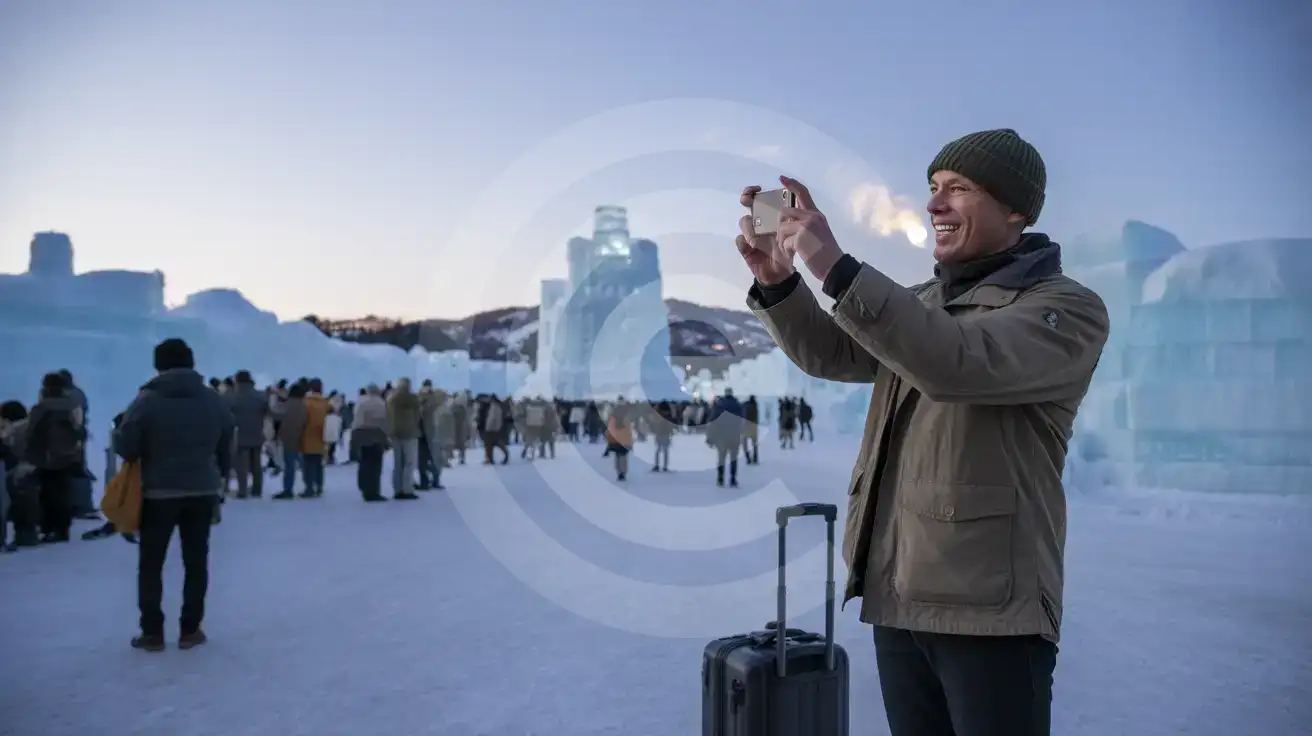
Japan's northernmost main island trades Honshu's urban density for volcanic peaks, dairy farms, and some of Asia's deepest powder snow. Sapporo anchors the region with 2 million residents, a grid-pattern downtown, and the annual Sapporo Snow Festival (early February) that draws 2 million visitors to Odori Park's ice sculptures.
Neighborhoods at a Glance
Odori & Tanuki-koji — Sapporo's commercial core stretches from Sapporo Station south to Susukino. The 1.5-kilometer Odori Park splits the grid; Tanuki-koji's covered arcade runs parallel with 200+ shops. Susukino — Hokkaido's largest entertainment district packs ramen alleys, izakayas, and neon signage into a 1-square-kilometer zone south of Odori. Otaru — a 40-minute JR ride northwest, the former herring-fishing port now draws visitors to its canal-side warehouses, glasswork studios, and sushi street (Otaru Sushiya-dori). Niseko — 2 hours southwest of Sapporo by car, the four-resort ski area averages 15 meters of annual snowfall and attracts powder pilgrims from across Asia and Oceania.
What Travelers Come For
Winter visitors chase Niseko's legendary powder, the illuminated Otaru Canal, and the Sapporo Beer Museum for Genghis Khan lamb barbecue paired with draft pours. Summer draws hikers to Lake Toya's caldera trails and the lavender fields of Farm Tomita in Furano. Year-round, Asahiyama Zoo ranks among Japan's top zoological parks for its behavioral-enrichment exhibits (penguin walk, polar-bear dive pool). Seafood dominates: Sapporo's Nijo Market, Hakodate's morning market, and Otaru's sushi row serve uni, crab, and salmon roe at source-proximity prices.
When to Visit
Ski season runs December through April; February's Snow Festival fills every Sapporo hotel. Summer (June–August) brings wildflower blooms, hiking weather, and the Yosakoi Soran Festival's 30,000 dancers. Shoulder months (May, September–November) offer thinner crowds and autumn foliage in Jozankei Onsen, 50 minutes southwest of Sapporo by bus.
Getting Around Hokkaido
Hokkaido's scale rewards advance planning — distances between highlights run 100–300 kilometers, and public transit thins outside Sapporo.
Airport Transfers
New Chitose Airport (CTS) handles international and domestic arrivals. JR Rapid Airport trains reach Sapporo Station in 37 minutes (¥1,150, every 15 minutes). Airport buses serve Niseko (3 hours, ¥2,600–¥3,500 depending on operator) and downtown Sapporo (80 minutes, ¥1,100). Rental-car counters cluster in the arrivals hall; winter rentals include studded tires by regulation.
Public Transit
Sapporo's subway (Namboku, Tozai, Toho lines) covers the urban core; fares run ¥210–¥380 depending on distance. JR Hokkaido limited-express trains connect Sapporo to Asahikawa (85 minutes, ¥4,690 reserved), Hakodate (3 hours 50 minutes, ¥8,910 reserved), and Otaru (40 minutes, ¥750 unreserved). The JR Hokkaido Rail Pass (5-day flex, ¥19,000) pays off for multi-city itineraries. IC cards (Kitaca, Suica) work on Sapporo subway and JR local trains — tap to board, tap to exit.
Driving & Rideshare
Self-drive dominates outside Sapporo. Route 230 to Niseko, Route 5 along the Sea of Japan coast, and the Doto Expressway to Obihiro all require real-time traffic and chain-requirement alerts in winter. Japan Taxi and GO Taxi apps summon cabs in Sapporo; rural areas rely on pre-booked shuttles or hotel transfers. Parking at ski resorts runs ¥500–¥1,000 per day; Google Maps flags lot availability at peak hours.
Sapporo Snow Festival at Odori Park
Compare eSIM Providers in Hokkaido
eSIMno | Local SIM / Operator | Roaming | |
|---|---|---|---|
| FEATURES | |||
| Setup time | Few minutes | Counter pickup or pre-order by post | Auto |
| No local ID needed | Online checkout | Passport scan since April 2026 | Use home account |
| Speed | 4G/LTE on KDDI + Softbank; 5G in some areas | Carrier-grade | Partner-dependent |
| Travel support | English support 24/7 | Japanese-language service | Home carrier hours |
| Keep home number | Dual SIM | Data-only: no Japanese number | Same number |
| Cost predictability | Fixed price | Prepaid, fixed term | Bill-shock risk |