

Quick Facts
- Capital
- Quito
- Language
- Spanish (Español)
- Currency
- US Dollar (USD, $)
- Time Zone
- Cuba Standard Time (UTC-5)
- Dialing Code
- +593
- Power Plug
- Type A + B
- Emergency
- 911 (general)
- eSIMno Networks
- Movistar
How to Get Your Ecuador eSIM
- Choose Your Data Plan
Select from 7-day, 15-day, or 30-day Ecuador plans based on whether you're doing a quick Quito visit or a full Galápagos expedition. Plans include Movistar 4G LTE coverage nationwide. - Complete Your Purchase
Check out in under 2 minutes. You'll receive your eSIM QR code and installation instructions via email immediately — no shipping, no waiting. - Install Before Your Flight
Scan the QR code on your iPhone or Android while connected to home WiFi. The profile downloads in seconds. Do this at home, not at 35,000 feet. - Activate After Landing in Ecuador
Once your plane reaches the gate at Mariscal Sucre or José Joaquín de Olmedo, switch off airplane mode. Your eSIM connects to Movistar automatically — Uber, Maps, and WhatsApp work before you reach the arrivals hall. - Keep Your Home Number Active
Your phone runs both SIMs simultaneously. Incoming calls reach your home number normally. Use WhatsApp, FaceTime, or Google Meet over your eSIMno data for outgoing calls — avoid roaming charges on your home carrier.
Traveler Tips for Ecuador
- Quito sits at 2,850 meters elevation — download offline maps before arrival so you're not waiting on slow-loading tiles while adjusting to altitude.
- Galápagos inter-island ferries (Santa Cruz to Isabela: $30, 2 hours) sell tickets at the dock starting 6 AM — having data lets you check availability and weather cancellations before walking to the pier.
- Uber operates in Quito and Guayaquil but not in smaller cities — download inDriver as a backup rideshare app before leaving home.
- Ecuador uses US dollars, so your existing currency converter app shows you local prices without exchange math — one less thing to calculate when negotiating at Otavalo market.
- Activate your eSIM profile the night before departure, not at the boarding gate — airport WiFi congestion can slow the QR scan when you're rushing.
- Cell coverage drops in remote Amazon lodges — screenshot your booking confirmation and lodge coordinates while you still have signal in Coca or Tena.
Why Data Matters Across Ecuador
Ecuador packs Andean peaks, Pacific beaches, Amazon jungle, and the Galápagos into a country smaller than Colorado — and each zone has its own connectivity demands. In Quito's historic center, Google Maps navigation through one-way colonial streets saves 20 minutes of wrong turns between Plaza Grande and the Basílica del Voto Nacional. The Teleferico cable car to Cruz Loma (4,100 meters) has minimal WiFi at the summit — your eSIM keeps the camera uploads flowing while you photograph the Cotopaxi volcano 50 kilometers south.
Coast and Highlands
Guayaquil's Malecón 2000 riverfront spans 2.5 kilometers with restaurants, museums, and the landmark Moorish Clock Tower. Real-time Uber availability shows surge pricing patterns around Parque Seminario (the iguana park) during lunch hours. The 4-hour bus ride from Guayaquil to Cuenca on Transportes Ecuador costs $12-15 and runs every 30 minutes — checking seat availability on RedBus before reaching the terminal beats standing in the Cooperativa de Transportes queue.
Galápagos Logistics
The Galápagos archipelago requires advance planning that falls apart without data. Baltra Airport (GPS) sits on a separate island from Puerto Ayora on Santa Cruz — the ferry crossing ($1) plus bus ($5) takes 45 minutes total, and having Google Maps open helps you find the correct dock on arrival. Day tours to Bartolomé Island, Seymour Norte, or Santa Fe book through agencies along Avenida Charles Darwin — WhatsApp confirmations and QR tickets beat paper printouts in the equatorial humidity. eSIMno plans for Ecuador work across all inhabited islands including San Cristóbal and Isabela, keeping your snorkeling photos uploading to cloud backup while you're still drying off at Tortuga Bay.
About Ecuador & What Travelers Come For
Gateway Cities
Quito serves as the primary international gateway, with Mariscal Sucre International Airport (UIO) sitting 18 kilometers east of the colonial center in Tababela. The Aeroservicios shuttle runs every 30 minutes to Parque Bicentenario ($8, 45 minutes). Guayaquil's José Joaquín de Olmedo International (GYE) handles flights to the Galápagos and serves as the coastal hub — Metrovía bus Line 1 connects the airport area to downtown in 40 minutes for $0.30.
What Travelers Come For
The Galápagos Islands draw wildlife enthusiasts to see giant tortoises at the Charles Darwin Research Station, blue-footed boobies on Española, and marine iguanas basking on Fernandina's lava fields. On the mainland, Quito's UNESCO-listed colonial center features the golden altars of La Compañía church and the Mitad del Mundo equator monument 23 kilometers north. Cuenca's cobblestone streets, flower markets, and Panama hat workshops make it Ecuador's cultural heart. Adventure travelers head to Cotopaxi National Park for glacier hiking or Baños for waterfall rappelling and thermal baths. The Amazon basin around Tena and Coca offers jungle lodges, indigenous community visits, and wildlife spotting along the Napo River.
When to Visit
Ecuador's climate varies by altitude rather than season. Quito stays spring-like year-round (15-21°C), with drier months from June through September. The Galápagos has two seasons: warm and wet (January-May) with calmer seas for snorkeling, and cool and dry (June-December) with nutrient-rich currents bringing marine life closer to shore. Peak tourist months — July, August, and late December — see higher Galápagos cruise prices and fuller day-tour boats.
Getting Around Ecuador
Airport Transfers
From Quito's Mariscal Sucre Airport, the Aeroservicios shuttle departs from the arrivals hall every 30 minutes to Parque Bicentenario ($8, 45-50 minutes depending on traffic). Taxis charge a flat rate of $25-30 to La Mariscal or the historic center. Uber operates at UIO — request from the designated rideshare pickup zone outside arrivals. In Guayaquil, Metrovía Line 1 buses run along Avenida de las Américas toward downtown ($0.30, 40 minutes). Airport taxis to the Malecón 2000 area cost $5-8.
Domestic Flights
LATAM and Avianca operate the Quito-Guayaquil route (45 minutes, $60-120 one-way). Galápagos flights depart from both cities — TAME, LATAM, and Avianca serve Baltra (GPS) and San Cristóbal (SCY). Round-trip Galápagos airfare runs $350-500 plus the $100 Galápagos National Park entry fee collected on arrival.
Inter-City Buses
Ecuador's bus network connects every major city through the terminal terrestre system. Quito's Quitumbe terminal serves southern routes — Cuenca ($12-15, 10 hours), Guayaquil ($10-12, 8 hours), Baños ($6, 3.5 hours). Cooperativa Reina del Camino and Transportes Ecuador run the most frequent schedules. Book through RedBus or at the terminal; assigned seating and air conditioning are standard on ejecutivo-class coaches.
Local Transit
Quito's Ecovía, Trole, and Metrobús lines run dedicated lanes through the city ($0.25 per ride). The Teleférico cable car ($8.50 round-trip) climbs to Cruz Loma in 10 minutes. Guayaquil's Metrovía covers the main urban corridors. Cuenca is walkable within the historic center; taxis anywhere in town cost $2-4.
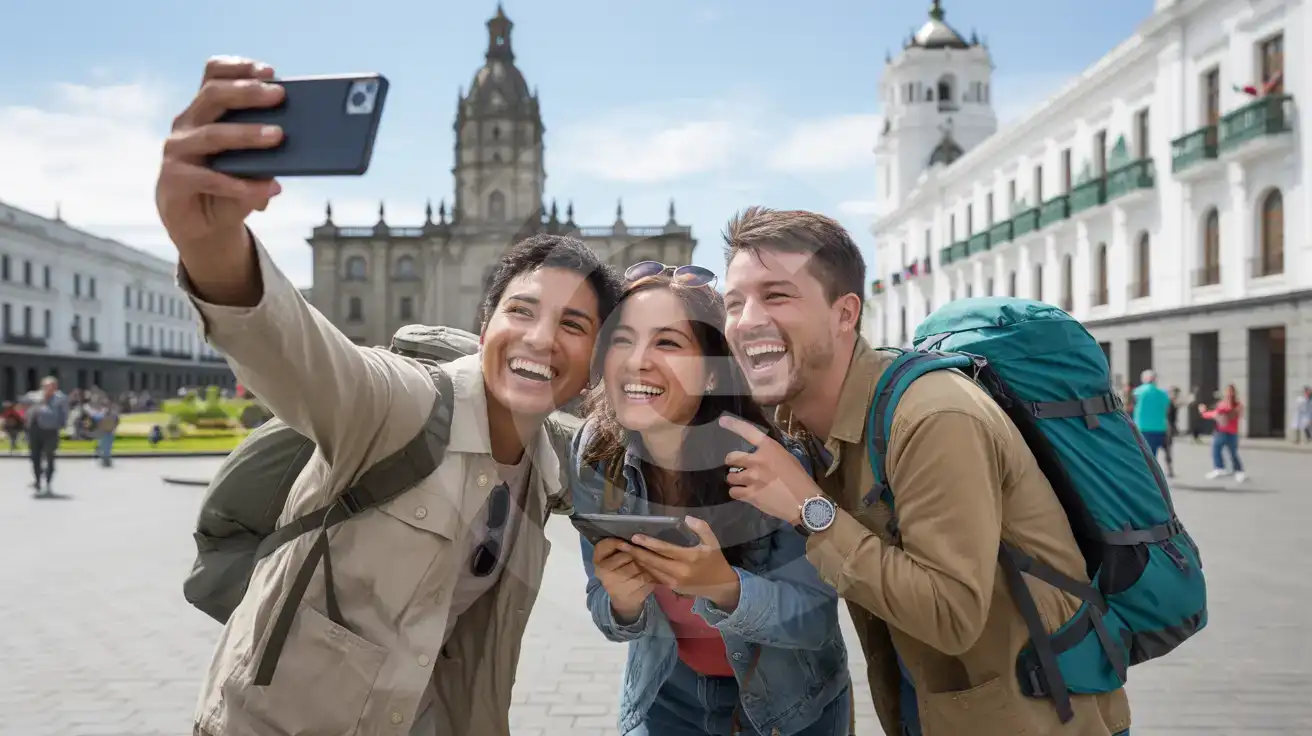
Quito Colonial Center
Compare eSIM Providers for Ecuador
eSIMno | Local SIM / Operator | Roaming | |
|---|---|---|---|
| FEATURES | |||
| Setup time | Few minutes | Store visit + paperwork | Auto |
| No local ID needed | Online checkout | Local ID required | Use home account |
| Speed | 4G/LTE; 5G in some areas | Carrier-grade | Partner-dependent |
| Travel support | English support 24/7 | Operator shops and call centre | Home carrier hours |
| Keep home number | Dual SIM | Replaces it | Same number |
| Cost predictability | Fixed price | Bills can spike | Bill-shock risk |