

Quick Facts
- Language
- Arabic (عربي)
- Currency
- Egyptian Pound (EGP, E£)
- Time Zone
- E. Europe Standard Time (UTC+2)
- Dialing Code
- +20
- Power Plug
- Type C, E, F (round 2-pin, common across most of Europe)
- Emergency
- 122 (police), 123 (ambulance), 180 (fire)
- eSIMno Networks
- Etisalat
How to Get Your eSIM
- Choose Your Egypt Data Plan
Pick a plan that matches your Cairo itinerary — light browsing for a weekend at the pyramids, or heavier data for streaming and video calls during a longer stay. All plans work nationwide. - Install at Home Before Your Flight
Download the eSIM profile over your home WiFi the night before departure. The QR code arrives instantly by email, and installation takes 2 minutes on iPhone or Android. - Keep Your Home SIM Active
Your phone's dual-SIM mode lets your home number receive calls and texts while the eSIMno plan handles all data. No need to swap physical cards or lose your number. - Activate After Landing at Cairo International
Once you taxi to the gate at Terminal 2, switch off airplane mode. Your phone connects to the Etisalat network within seconds — fast enough to load your Uber pickup location before you reach the arrivals hall. - Navigate Cairo Immediately
Pull up Google Maps directions to your hotel, confirm your Grand Egyptian Museum entry slot, and check live traffic on the Ring Road — all before you've cleared the terminal doors.
Traveler Tips
- Download offline maps for Giza, Downtown, and Islamic Cairo before departure — cellular signal weakens inside the pyramid complexes and the covered bazaar corridors of Khan El Khalili.
- Uber and Careem both operate in Cairo; compare live pricing between apps before booking, especially near the pyramids at sunset when surge pricing hits.
- The Grand Egyptian Museum requires timed-entry tickets booked online — have your QR code ready on-screen before joining the security queue to avoid fumbling at the gate.
- Cairo's Metro Line 3 connects Heliopolis to Downtown in 25 minutes for around 8 EGP — load the official Cairo Metro app for real-time station updates.
- WhatsApp is the default communication app across Egypt; restaurant reservations, tour confirmations, and hotel concierge requests all run through it.
Why Data Matters in Cairo
Cairo's sprawl demands constant navigation. The 15km stretch from Cairo International to the Giza Plateau crosses the Nile twice, threads through Heliopolis, skirts Tahrir Square, and exits via the Ring Road — a route that changes travel time from 40 minutes to 2 hours depending on traffic. Google Maps with live traffic becomes your essential co-pilot, rerouting around sudden jams near Qasr El Nil Bridge or construction delays on the 6th October corridor.
Ride Apps Replace Meter Negotiations
Uber and Careem transformed Cairo transport. Both apps show upfront pricing, GPS-tracked routes, and driver ratings — eliminating the haggling that once defined every taxi ride. Surge pricing spikes predictably: pyramids at sunset (4-6 PM), Downtown during Thursday evening rush, and anywhere near Cairo Festival City Mall on weekends. Checking both apps before committing saves 30-40% on identical routes.
Timed-Entry Tickets and QR Codes
The Grand Egyptian Museum, the Egyptian Museum in Tahrir, and the Giza Pyramid Complex all offer timed-entry tickets that bypass general admission queues. Your confirmation arrives as a QR code by email — load it on-screen before you join the security line. Inside the Grand Egyptian Museum, the galleries span 480,000 square meters; audio guide apps and exhibit maps all require active data.
Translation Bridges the Gap
Arabic script dominates street signs, restaurant menus, and Metro station displays. Google Translate's camera mode turns a confusing menu at a Downtown koshari stand into readable English in seconds. Even basic transactions — asking directions, confirming prices, understanding a driver's question — become smoother with instant translation ready on your phone. eSIMno plans for Cairo, Egypt keep all these tools live from the moment you land.
About Cairo & What Travelers Come For
Neighborhoods at a Glance
Downtown Cairo (Wust El-Balad) anchors the city center with its 19th-century European-style architecture, the Egyptian Museum on Tahrir Square, and the dense commercial energy of Talaat Harb Street. Zamalek occupies Gezira Island in the Nile — quieter, greener, home to embassies, boutique hotels, and the Cairo Opera House. Islamic Cairo spreads east of Downtown, where Al-Azhar Mosque, the Sultan Hassan Mosque, and the labyrinthine alleys of Khan El Khalili create a medieval cityscape still inhabited and active. Giza sits west of the Nile, dominated by the plateau where the Great Pyramid, the Sphinx, and the Grand Egyptian Museum draw millions annually. Heliopolis extends northeast toward the airport, mixing Art Deco villas with modern malls like City Stars.
Top Things Travelers Come For
The Great Pyramid of Giza remains the defining image of Egypt — 4,500 years old, 146 meters at original height, and still the largest of the Giza trio. The Grand Egyptian Museum, opened in 2023, houses Tutankhamun's treasures across exhibition halls larger than most airports. Khan El Khalili's copper workshops, spice stalls, and jewelry vendors have operated since the 14th century. The Saladin Citadel of Cairo offers panoramic views over medieval Cairo from its limestone ramparts. Felucca sunset sails on the Nile, sound-and-light shows at the pyramids, and day trips to Saqqara's Step Pyramid round out the itinerary.
When to Visit
October through April brings cooler temperatures (15-25°C) ideal for outdoor sightseeing. Summer months (June-August) push past 40°C, limiting midday activity to air-conditioned museums and malls. Ramadan shifts restaurant hours and crowd patterns — evening iftars create festive street atmospheres but daytime services slow. Friday afternoons see reduced business hours across the city.
Getting Around Cairo
Airport Transfers
Cairo International Airport sits 22km northeast of Downtown. Uber and Careem pickups happen at designated zones outside each terminal — the app guides you to the exact pillar number. Expect 45-90 minutes to Downtown depending on traffic, with fares fluctuating based on demand. The Cairo Airport Shuttle Bus runs to Tahrir Square and Ramses Station, departing every 30 minutes and costing significantly less than rideshare.
Metro and Public Transit
Cairo Metro operates three lines connecting Heliopolis, Downtown, Giza, and Old Cairo. Line 1 runs north-south through Tahrir and Giza; Line 2 crosses east-west; Line 3 links the airport zone to Attaba. Fares start at 8 EGP for short trips. Trains run 5:30 AM to midnight, with peak-hour crowding between 7-9 AM and 4-7 PM. Women-only cars occupy the middle of each train.
Rideshare and Taxis
Uber and Careem dominate urban transport. Both apps work identically — enter destination, confirm price, track arrival. White metered taxis still operate but require negotiation skills and Arabic; rideshare apps eliminate that friction entirely. For pyramid visits, some travelers hire a private driver for half-day rates, booking through hotel concierges or WhatsApp-based tour operators.
Walking and River Transport
Downtown and Zamalek reward walkers, though summer heat and traffic-choked crossings limit comfort. The Nile taxi service connects Zamalek to Maadi with stops at the Four Seasons dock and the Corniche — a scenic alternative when road traffic jams. Felucca boats offer leisure cruises rather than point-to-point transport.
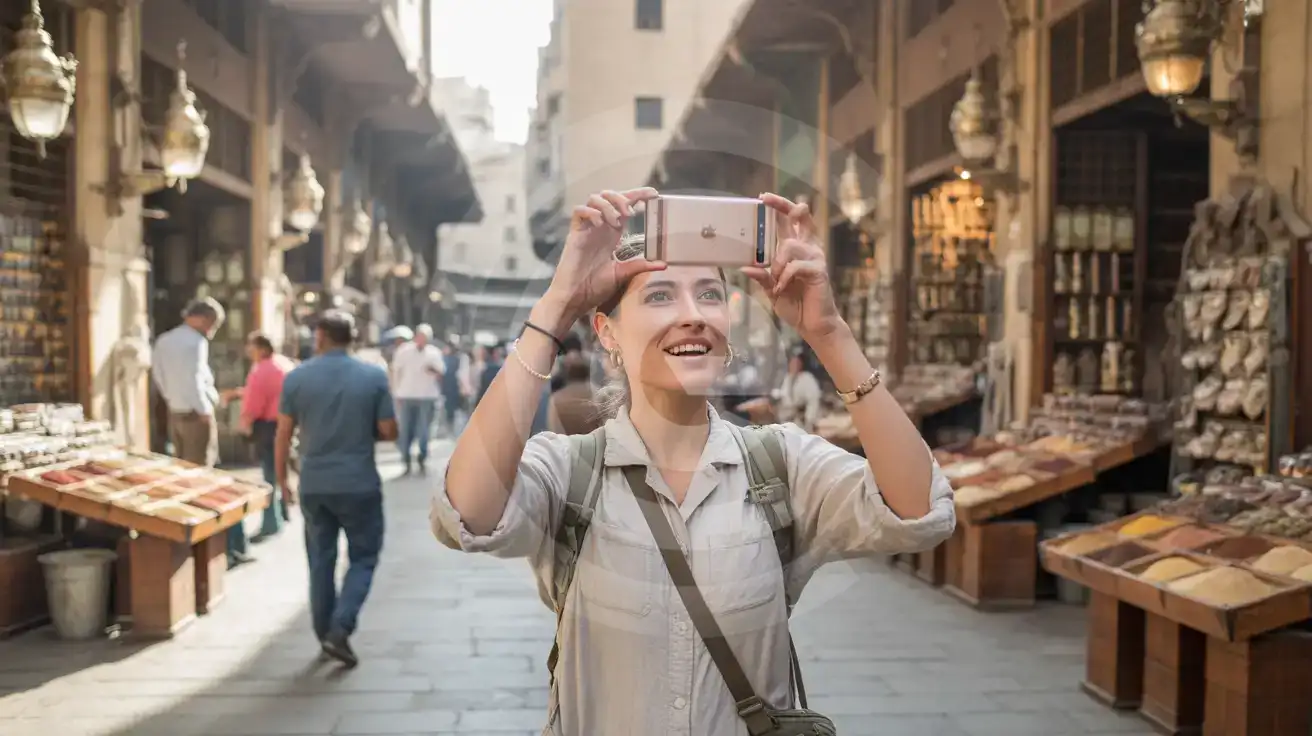
Khan El Khalili Bazaar
Compare eSIM Providers in Cairo
eSIMno | Local SIM / Operator | Roaming | |
|---|---|---|---|
| FEATURES | |||
| IMEI registration | No Egyptian SIM to register | Your phone is logged for customs; a 90-day clock starts | Never required |
| Setup time | Few minutes | Bought in person, with your passport | Auto |
| No local ID needed | Online checkout | Your passport is copied and tied to the SIM | Use home account |
| Speed | 4G/LTE; 5G in some areas | Carrier-grade | Partner-dependent |
| Travel support | English support 24/7 | Arabic-language service | Home carrier hours |
| Keep home number | Dual SIM | Replaces it | Same number |
| Cost predictability | Fixed price | Prepaid, no bill shock | Bill-shock risk |