

Quick Facts
- Capital
- Sofia
- Language
- Bulgarian (български)
- Currency
- Bulgarian Lev (BGN, лв)
- Time Zone
- E. Europe Standard Time (UTC+2)
- Dialing Code
- +359
- Power Plug
- Type C, E, F (round 2-pin, common across most of Europe)
- Emergency
- 112
- eSIMno Networks
- A1, Telenor, Vivacom
How to Get Your eSIM
- Pick your Bulgaria data plan
Choose from 1GB to 20GB options based on your trip length. A week in Sofia and the Black Sea coast runs comfortably on 5-10GB with maps, translation, and photo uploads. - Complete checkout and check your inbox
You'll receive a QR code and activation instructions within minutes. Save the email — you'll need it during installation. - Install over home WiFi before your flight
Scan the QR code in Settings > Cellular > Add eSIM (iPhone) or Settings > Connections > SIM Manager (Android). The profile installs in under 2 minutes. - Keep airplane mode on during the flight
Your eSIM stays dormant until you tell it to connect. No accidental roaming charges while cruising at altitude. - Switch off airplane mode after landing at Sofia Airport
By the time you're walking through Terminal 2 arrivals, your phone is connected to A1, Telenor, or Vivacom — whichever signal is strongest. Pull up metro directions to Serdika station immediately.
Traveler Tips
- Sofia Airport's Terminal 2 handles international arrivals — follow signs to the M4 metro platform directly below the terminal; trains run every 10-15 minutes toward the city center.
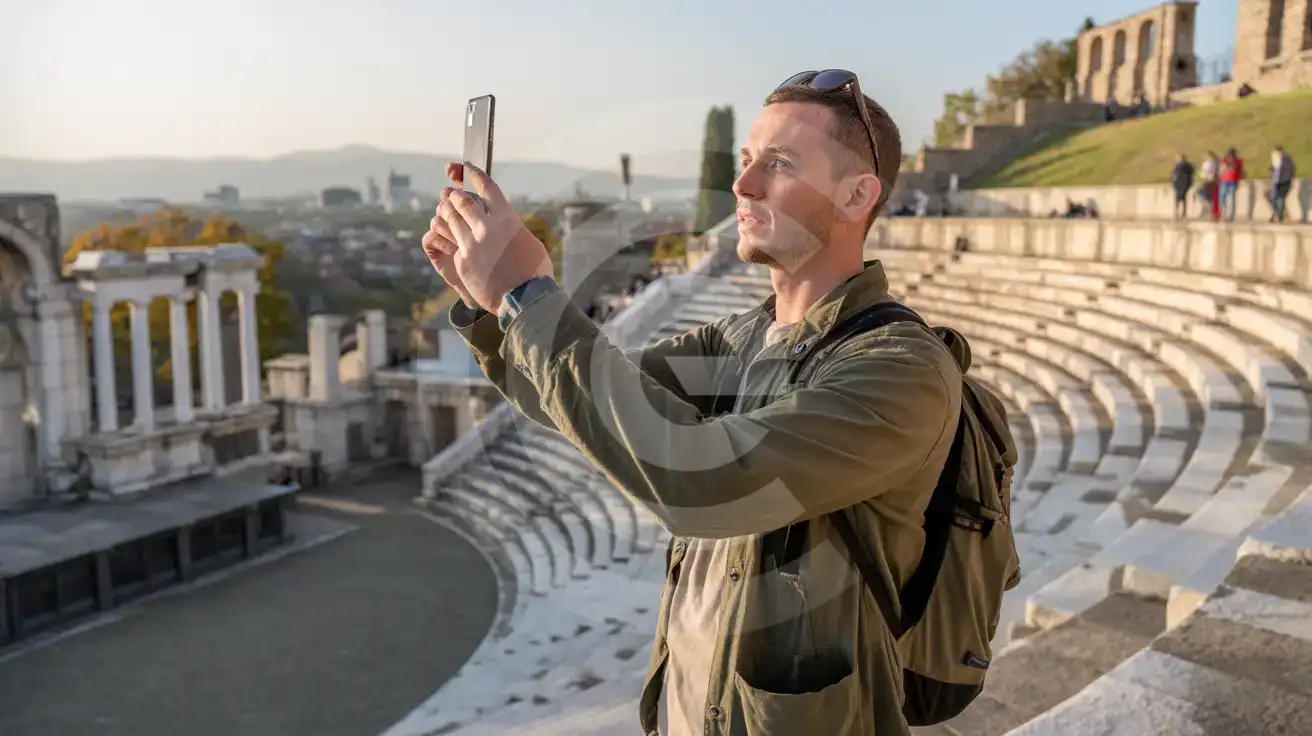
- Plovdiv's Old Town cobblestones and steep hills drain phone batteries fast with constant GPS use; carry a portable charger for full-day walks through the Roman amphitheater district.
- TaxiMe and Yellow Taxi apps work better than street hails in Sofia — drivers respond within 3-5 minutes in central zones, and the app shows the fare estimate upfront.
- Bulgarian Cyrillic script appears on most street signs and menus outside tourist zones; Google Translate's camera mode handles real-time translation over your eSIM data.
- Keep your home SIM active for incoming calls — it receives them normally while eSIMno handles all data. Use WhatsApp or FaceTime for outgoing calls to avoid roaming charges on your home line.
Why Data Matters Across Bulgaria
Bulgaria's public transit runs almost entirely on digital infrastructure now. Sofia's metro accepts contactless payment at turnstiles — tap your phone or card at the M1, M2, M3, or M4 entry gates and the fare deducts automatically. The Sofia Urban Mobility Center app shows real-time arrivals for trams, buses, and the metro across all four lines. Without data, you're guessing at schedules posted only in Bulgarian or waiting at unmarked stops.
Outside the capital, the data demands multiply. Plovdiv's Kapana creative district spans dozens of narrow streets where Google Maps becomes essential for finding specific galleries, cafés, and the Roman Stadium entrance at Dzhumaya Square. The Rila Monastery — 120 km south of Sofia — sits in a mountain valley where tour buses drop visitors for 2-3 hour windows; confirming your return pickup via WhatsApp or Viber beats hoping the driver remembers. Black Sea towns like Varna and Burgas stretch along coastal roads where rideshare apps (TaxiMe, Maxim) outperform flagging cabs on the beach promenade.
Restaurant bookings, attraction tickets, and event passes increasingly require QR codes sent to your phone. The Ancient Plovdiv app offers timed-entry slots for the Roman Theatre during summer festivals. Wine tours in the Thracian Valley confirm pickup locations via SMS or messaging apps. eSIMno plans for Bulgaria cover every carrier zone from Sofia's urban core to the ski runs at Bansko — one activation, no mid-trip SIM swaps, no hunting for WiFi hotspots when you need directions most.
About Bulgaria & What Travelers Come For
Gateway Cities
Sofia serves as the primary international gateway, with direct flights from London, Frankfurt, Vienna, and Istanbul landing at Sofia Airport's Terminal 2. Plovdiv — 150 km southeast — draws travelers to Bulgaria's second city for its Roman ruins and 2019 European Capital of Culture legacy. Varna and Burgas anchor the Black Sea coast, each with regional airports handling summer charter traffic from across Europe.
What Travelers Come For
The Alexander Nevsky Cathedral in Sofia ranks among the largest Eastern Orthodox cathedrals in the world, its golden domes visible across the city center. Plovdiv's Roman Theatre — still hosting summer concerts — seats 7,000 in a 2nd-century amphitheater carved into Nebet Tepe hill. Rila Monastery, a UNESCO World Heritage Site founded in the 10th century, sits 1,147 meters above sea level in the Rila Mountains. Winter travelers head to Bansko and Borovets for ski slopes served by modern gondola lifts; summer visitors spread across Sunny Beach, Golden Sands, and the quieter coves near Sozopol.
When to Visit
June through September brings peak beach season along the Black Sea, with water temperatures reaching 24-26°C by August. Sofia stays pleasant from April through October, though summer afternoons push past 30°C. Ski season runs December through March at Bansko and Borovets, with lift queues shortest on weekday mornings.
Getting Around Bulgaria
Airport Transfers
Sofia Airport sits 10 km east of the city center. The M4 metro line connects Terminal 2 directly to Serdika station in the historic core — the ride takes 18-22 minutes depending on transfer timing. Taxis from the official rank outside arrivals run a flat rate to central Sofia; confirm the meter is running or agree on the fare before departure. TaxiMe and Yellow Taxi apps show fare estimates upfront.
Public Transit
Sofia's metro network spans four lines covering the central districts, airport, and major bus stations. Trams and buses fill the gaps — the Sofia Urban Mobility Center app displays real-time vehicle positions across all modes. Plovdiv lacks a metro but runs an extensive bus network; routes 20 and 26 connect the central train station to the Old Town district. Inter-city buses operated by Union Ivkoni and Biomet run hourly between Sofia and Plovdiv (2 hours), Sofia and Varna (6-7 hours), and coastal routes between Varna and Burgas (2 hours).
Rideshare & Inter-City Rail
TaxiMe dominates the rideshare market in Sofia, Plovdiv, and Varna — the app handles payment in Bulgarian lev and shows driver ratings before pickup. Bulgarian State Railways (BDZ) connects Sofia to Plovdiv in 2.5 hours and to Varna in 7-8 hours; the Sofia Central Station sits one metro stop from Serdika. For ski resorts, private shuttle services run from Sofia Airport directly to Bansko (2.5-3 hours) — booking via messaging apps or operator websites is standard.
Connected in Plovdiv
Compare eSIM Providers for Bulgaria
eSIMno | Local SIM / Operator | Roaming | |
|---|---|---|---|
| FEATURES | |||
| Setup time | Few minutes | Store visit + paperwork | Auto |
| No local ID needed | Online checkout | Local ID required | Use home account |
| Speed | 4G/LTE; 5G in some areas | Carrier-grade | Partner-dependent |
| Travel support | English support 24/7 | Operator shops and call centre | Home carrier hours |
| Keep home number | Dual SIM | Replaces it | Same number |
| Cost predictability | Fixed price | Bills can spike | Bill-shock risk |