

Quick Facts
- Language
- Valencian (Español)
- Currency
- Euro (EUR, €)
- Time Zone
- Central European Time (UTC+1, UTC+2 summer)
- Dialing Code
- +34
- Power Plug
- Type C, E, F (round 2-pin, common across most of Europe)
- Emergency
- 112
- eSIMno Networks
- Movistar, Orange
How to Get Your eSIM
- Pick Your Spain Data Plan
Choose from 1GB to 20GB options based on your Bilbao trip length — a long weekend exploring the Guggenheim and Casco Viejo needs less than a week-long Basque Country road trip. - Complete the 2-Minute Purchase
Checkout takes under two minutes. Your eSIM profile and QR code arrive instantly in your email inbox. - Install Over WiFi at Home
Scan the QR code from your phone's settings before you leave for the airport. The profile installs in seconds while you're still on your home network. - Activate After Landing in Bilbao
Once your flight taxis to the gate at Bilbao Airport, switch off airplane mode. Your phone connects to Movistar or Orange within seconds — Metro Bilbao directions load before you reach the terminal exit. - Keep Your Home SIM for Calls
Your eSIMno plan handles all data — maps, tickets, translations, rideshare apps. Your home SIM stays active for incoming calls and texts without roaming charges on the data side.
Traveler Tips
- The Guggenheim releases timed-entry slots online — your phone's QR code is your ticket, and the museum's WiFi inside covers only the lobby, not the galleries where you'll want to translate Basque artist names.
- Metro Bilbao runs two lines (L1 and L2) with Barik contactless cards available at station machines; real-time arrival screens sync with Google Maps when you have data.
- Pintxos bars in Casco Viejo don't take reservations for counter service, but prime dinner slots at sit-down restaurants like Mina (1 Michelin star) fill via Resy or direct WhatsApp — book 3-5 days ahead.
- Bilbao's microclimates shift fast — rain rolls in from the Bay of Biscay without warning, and Uber/Cabify surge pricing spikes when locals abandon outdoor terraces simultaneously.
- The Bizkaibus A3247 from the airport accepts contactless payment but doesn't announce stops in English — your Maps app tracking the route beats guessing at unfamiliar Basque place names.
Why Data Matters in Bilbao
Bilbao's compact center rewards walkers, but the city's hilly terrain and the Nervión River crossings make real-time navigation essential. Walking from the Guggenheim to the San Mamés Stadium looks straightforward on a static map — 2.3 km along the riverfront — but involves a confusing fork where Gran Vía splits from Alameda de Mazarredo. Google Maps with live GPS keeps you on the pedestrian promenade instead of accidentally climbing toward the Funicular de Artxanda.
Transit and Rideshare
Metro Bilbao's two lines converge at Casco Viejo station, where the L1 toward Etxebarri and L2 toward Basauri split underground. The Barik card works across metro, tram, and Bizkaibus routes, but checking remaining balance and planning multi-leg journeys happens on the Bilbaocard app or Google Maps transit mode. Free Now and Cabify both operate here; during Aste Nagusia festival week in August, surge pricing after midnight near Plaza Nueva makes pre-booking through the app 20-30 minutes ahead the difference between €8 and €25 to Abando.
Museums and Reservations
The Guggenheim's timed-entry system means your confirmation email becomes your access pass — the scanner at the entrance reads the QR directly from your screen. The eSIMno plans for Bilbao, Spain keep that ticket accessible without hunting for the museum's lobby-only WiFi. Smaller venues like the Bilbao Fine Arts Museum and the Itsasmuseum maritime museum accept walk-ins, but checking current hours on your phone beats arriving to a closed door on a Monday.
Food and Language
Pintxos culture runs on visual selection — you point at what looks good on the bar counter — but sit-down Basque cuisine at places like Azurmendi (3 Michelin stars, 15 km outside the city) or Nerua inside the Guggenheim requires advance booking through their websites or Resy. The Basque language appears on street signs, menus, and transit announcements alongside Spanish; Google Translate's camera mode decodes unfamiliar terms like 'txuleta' (bone-in ribeye) or 'kokotxas' (hake cheeks) while you're standing at the Mercado de la Ribera stalls.
About Bilbao & What Travelers Come For
Bilbao anchors Spain's Basque Country, a region with its own language, culinary traditions, and fierce cultural identity 100 km west of the French border. The city's transformation from industrial port to architectural showcase began with the Guggenheim Museum Bilbao opening in 1997 — Frank Gehry's titanium-clad curves drawing millions of visitors and coining the term 'Bilbao Effect' for museum-driven urban renewal.
Neighborhoods at a Glance
Casco Viejo — the medieval old town on the east bank of the Nervión — packs seven original streets (Siete Calles) with pintxos bars, the Gothic Santiago Cathedral, and the Mercado de la Ribera's 10,000 square meters of fresh produce and seafood stalls. Across the river, Ensanche's 19th-century grid houses the Gran Vía shopping corridor, the Moyúa plaza hub, and most business hotels. Abandoibarra — the former shipyard district — now hosts the Guggenheim, the Euskalduna Conference Centre, and the riverside promenade locals jog at sunrise.
Top Things Travelers Come For
The Guggenheim dominates itineraries, but Bilbao delivers beyond the museum. Athletic Club's San Mamés Stadium — one of only three Spanish clubs never relegated from La Liga — fills 53,289 seats on match days with a famously passionate crowd. The Bizkaia Bridge (Puente Bizkaia), a UNESCO-listed transporter bridge 13 km downstream in Portugalete, carries pedestrians across the Nervión in a hanging gondola. Day trips reach San Sebastian in 100 km (1 hour 15 minutes by Euskotren), the wine cellars of La Rioja Alavesa in 45 minutes by car, or the pilgrimage town of Guernica — subject of Picasso's famous painting — in 35 km northeast.
When to Visit
Summer (June-September) brings Aste Nagusia festival week in mid-August, when the city shuts down for nine days of concerts, fireworks, and all-night pintxos crawls. Spring and fall offer mild temperatures (15-22°C) and thinner museum crowds. Winter stays wet — Bilbao averages 1,200mm of annual rainfall — but the covered Mercado de la Ribera and indoor Guggenheim galleries reward rainy-day visitors.
Getting Around Bilbao
Bilbao Airport (BIO) sits 12 km north of the city center in Loiu. The Bizkaibus A3247 runs every 20 minutes to Plaza Moyúa and the Termibus station (30-40 minutes, around €3). Taxis queue outside arrivals with metered fares running €25-35 to Casco Viejo depending on traffic. Free Now and Cabify both serve the airport — request pickup at the designated rideshare lane outside Door 1.
Metro and Tram
Metro Bilbao's two lines cover 43 km with stations designed by Norman Foster — the glass-canopy 'fosteritos' entrances are landmarks themselves. L1 runs from Etxebarri through Casco Viejo to the beach suburb of Plentzia; L2 branches toward Basauri from San Inazio. The Euskotren tram (EuskoTran) loops through Abandoibarra past the Guggenheim to Atxuri station, connecting to regional trains toward San Sebastián. Barik contactless cards (€3 card fee, then top-up) work across all modes and cut single-ride prices roughly 40% versus cash tickets.
Walking and Rideshare
The historic core from Casco Viejo to the Guggenheim spans 2 km along the riverfront — flat, scenic, and walkable in 25 minutes. Beyond the river, hills rise sharply; the Funicular de Artxanda climbs 770 meters to a viewpoint overlooking the entire valley (runs every 15 minutes, included on Barik). For longer distances or late-night returns from Ensanche bars, Cabify and Free Now apps show real-time pricing and driver availability. Bilbao's bike-share system (Bilbaobizi) requires local registration, making rideshare apps more practical for short-stay visitors.
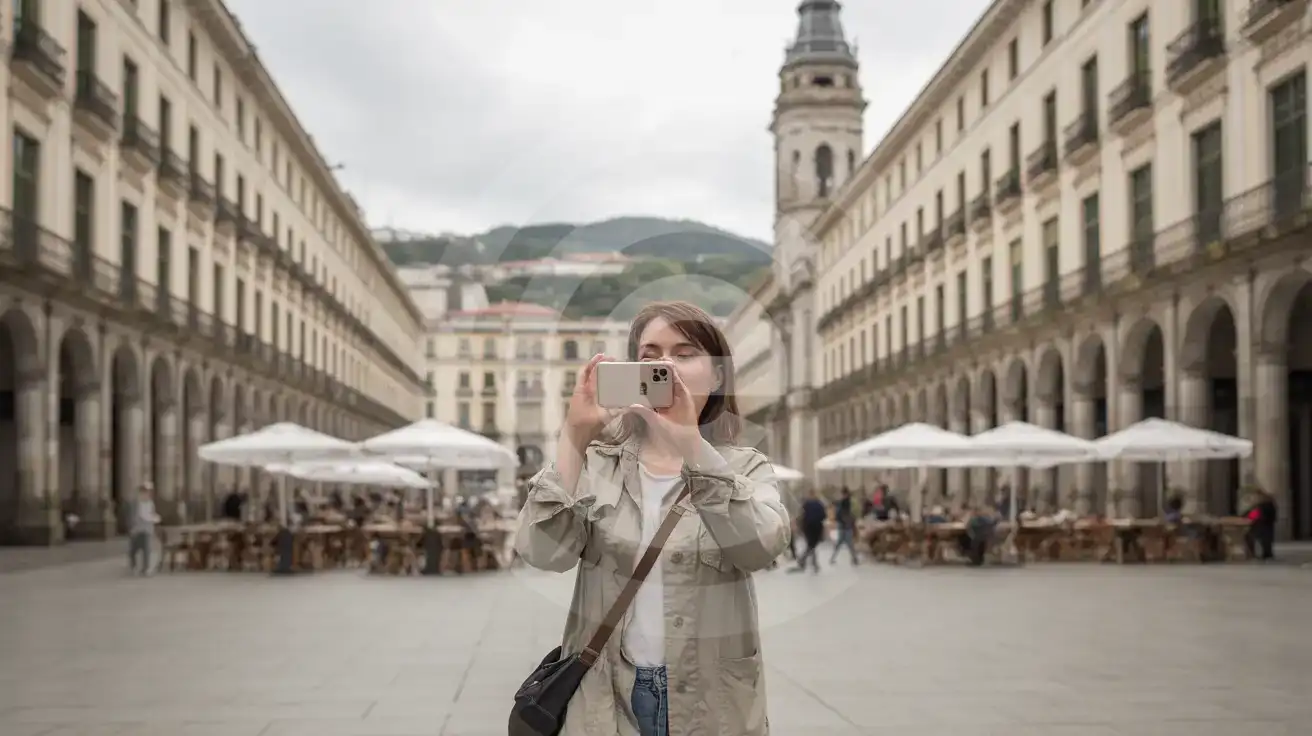
Bilbao's Historic Heart
Compare eSIM Providers in Bilbao
eSIMno | Local SIM / Operator | Roaming | |
|---|---|---|---|
| FEATURES | |||
| Setup time | Few minutes | Registered in store before the SIM works | Auto |
| No local ID needed | Online checkout | Photo ID required by law at purchase | Use home account |
| Speed | 4G/LTE on Movistar and Orange; 5G in some areas | One network only | Partner-dependent |
| Travel support | English support 24/7 | Spanish-language service | Home carrier hours |
| Keep home number | Dual SIM | Replaces it | Same number |
| Cost predictability | Fixed price | Prepaid, no bill shock | Bill-shock risk |