
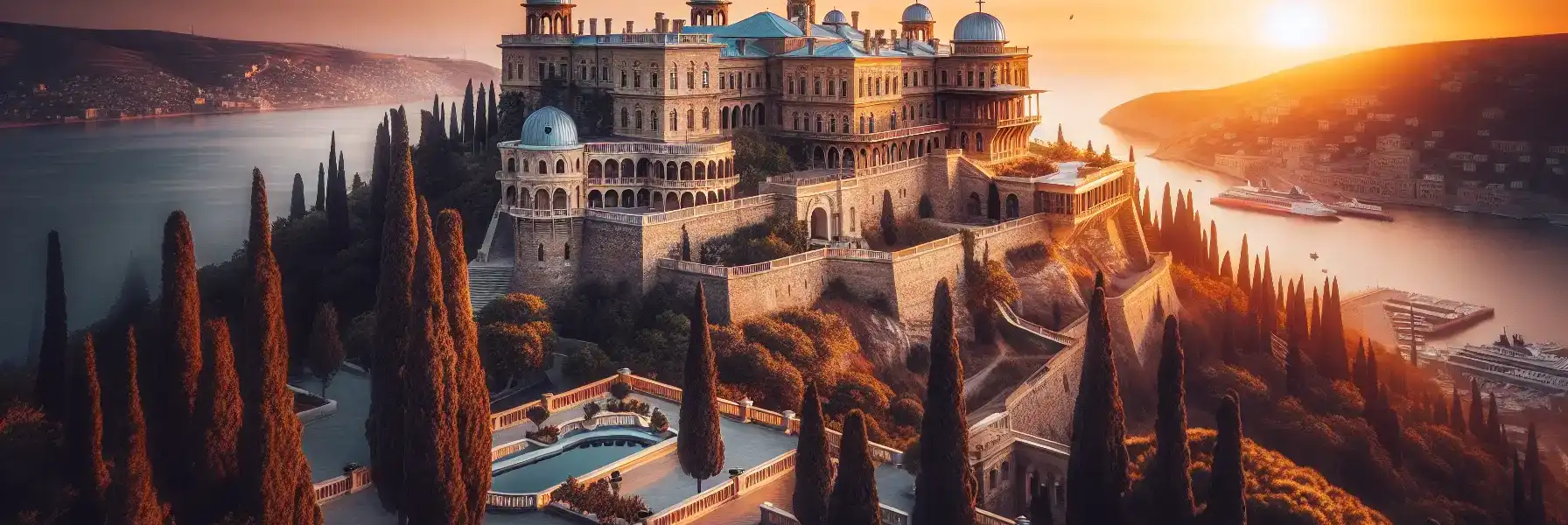
Quick Facts
- Address
- Cankurtaran, 34122 Fatih/Istanbul, in the Sultanahmet district on the historic peninsula
- Opening Hours
- Usually open daily except Tuesdays; commonly around 09:00-18:00 in summer and shorter winter hours, often closing around 16:45. Last admission is typically about 1 hour before closing.
- Holiday Closures
- Closed on Tuesdays and usually on the first day of Ramazan Bayramı and Kurban Bayramı
- Tickets
- Main palace, Harem, and Hagia Irene can be ticketed separately; combined admission is commonly the best option. Expect roughly 1,500-2,000 TRY for the combined ticket, though prices change frequently.
- Official Site
- Official Turkish museum ticketing platform (Müze) and the Turkish Ministry of Culture and Tourism museum pages
- Closest Transit
- T1 tram to Gülhane for the shortest approach, or Sultanahmet for a short walk past Hagia Sophia
- Time Needed
- Minimum 3 hours; 4-5 hours for a fuller visit including the Harem, Treasury, terraces, and slower gallery time
- Dress Code
- No formal requirement like a working mosque, but modest dress is appropriate, especially near the Sacred Relics rooms; shoulders and knees covered is sensible
- Photography
- Generally allowed without flash in many courtyards and some interiors; forbidden in the Sacred Relics rooms and restricted around Treasury displays. Tripods require permission.
- eSIMno Networks
- Türk Telekom, Vodafone
About Topkapi Palace Museum
Topkapı Palace was never meant to be a single monumental block in the European palace sense. That matters the minute you step inside. Built between about 1460 and 1478 on the orders of Sultan Mehmed II, just after the Ottoman conquest of Constantinople in 1453, it was conceived as a layered imperial compound on Sarayburnu, the dramatic headland where the Golden Horn, the Bosphorus, and the Sea of Marmara meet. Few royal sites anywhere were placed with such confidence. The old acropolis of Byzantium had already claimed the point for strategic reasons, and the Ottomans understood its symbolism just as clearly.
The palace served for roughly four centuries as the main residence and administrative heart of the Ottoman Empire. From the late 15th century until the mid-19th century, decisions affecting lands across southeastern Europe, western Asia, and North Africa passed through these courtyards. At its height, the complex housed as many as 4,000 people: the sultan and his family, the Valide Sultan, concubines, princes, pages, eunuchs, administrators, guards, craftsmen, and servants. What survives today is not just a royal home but a functioning machine of empire, arranged in degrees of privacy and access.
That arrangement is one of the keys to understanding the site. Topkapı unfolds through four main courtyards, each more restricted than the one before, plus the vast Imperial Harem tucked to one side. Visitors pass from semi-public space into increasingly ceremonial and intimate realms. The First Courtyard worked almost like an outer precinct. The Second Courtyard was the administrative zone, with kitchens, council spaces, and formal movement. The Third Courtyard held the inner palace, treasury, library, and relic rooms. The Fourth Courtyard opened into pavilions and terraces, where imperial seclusion met extraordinary views.
The palace was not static. Successive sultans enlarged, repaired, and restyled it over nearly 400 years, which is why the architecture feels cumulative rather than perfectly uniform. The original chief architect is traditionally identified as Atik Sinan, but many later interventions reshaped the complex, including major work by Sinan after the kitchen fire of 1574. Earthquakes, fires, court politics, and changing tastes all left their mark.
Its role changed decisively in the 19th century, when Sultan Abdülmecid I moved the court to Dolmabahçe Palace around 1856, preferring a more European mode of residence on the Bosphorus. Topkapı’s political centrality faded after that. Then came another transformation: following the abolition of the Ottoman sultanate, Mustafa Kemal Atatürk decreed the complex a museum in 1924, making it one of the earliest museums of the Turkish Republic.
Today the palace covers around 700,000 square meters and forms part of UNESCO’s Historic Areas of Istanbul inscription from 1985. Yet the real power of Topkapı is not its size alone. It is the way statecraft, domestic life, faith, ceremony, and geography all meet in one place. You are not only seeing Ottoman civil architecture. You are walking through the rooms where dynastic life unfolded, where the Sacred Relics were enshrined after Selim I’s conquest of Egypt in 1517, and where the empire represented itself to the world. It feels expansive, but also surprisingly human once you notice the tiled chambers, narrow passages, shaded porticoes, and view terraces that pull the city constantly back into the story.
Highlights & Must-See
Topkapı rewards selective attention. There is a lot here, and trying to treat every room equally usually leads to fatigue by the middle of the visit. A better approach is to know the anchors in advance.
The Imperial Harem (Harem-i Hümayun) is the section most visitors talk about afterward, and for good reason. Entered through the Carriage Gate off the Second Courtyard, it was home to the sultan’s mother, wives, concubines, children, and the eunuchs who guarded and administered the space. The scale alone is striking: around 400 rooms formed an interior world with hierarchy built into every threshold. Inside, the Imperial Hall stands out for its domed volume and throne alcove, while the Privy Chamber of Murad III draws attention for its superb İznik tiles and decoration associated with Sinan’s period. The Twin Kiosk (Çifte Kasırlar) is another memorable stop, especially for visitors interested in princely confinement and palace domestic history rather than only treasure objects.
The Imperial Treasury (Hazine) in the Third Courtyard is the palace at its most dazzling. It occupies the former Conqueror’s Pavilion and contains the pieces nearly everyone comes to see. The Topkapı Dagger, set with three large emeralds, is a magnet. So is the Spoonmaker’s Diamond (Kaşıkçı Elması), an 86-carat stone displayed among other jewel-encrusted ceremonial objects. Add the Throne of Ahmed I and the gold-worked insignia of sovereignty, and you get a concentrated lesson in how imperial power was staged materially.
The Privy Chamber and the Sacred Relics (Hırka-i Saadet Dairesi) give the palace its emotional and spiritual center. These rooms hold relics associated with the Prophet Muhammad, including the mantle, a tooth, hairs from his beard, his standard, and a footprint, along with swords attributed to the first four caliphs. The atmosphere is different from elsewhere in the palace. Visitors move more quietly, and the continuous Quran recitation heard inside adds a sense of ritual continuity rather than museum detachment. Even travelers who come for architecture often find this section unexpectedly affecting.
The Bab-üs Saade, or Gate of Felicity, is easy to underestimate if you rush through it. Don’t. Positioned between the Second and Third Courtyards, it was the threshold into the inner palace and one of the most symbolically loaded spaces in the complex. Sultans were enthroned here, and the sacred banner was brought out before military campaigns. Its form is restrained compared with some European ceremonial gateways, but that restraint is part of its authority.
The Palace Kitchens (Saray Mutfakları) along the Second Courtyard deserve proper time. Expanded by Sinan after the 1574 fire, the long line of domes and chimneys is one of the palace’s most recognizable silhouettes. Inside are collections that many people don’t expect to be this strong: Chinese celadons, Ming blue-and-white porcelain, Japanese Imari, and Ottoman silverware. It is one of the world’s great palace porcelain displays, and it quietly broadens the story of Topkapı from Ottoman court life to global trade, diplomacy, and taste.
Then there is the palace at its most open and scenic: the Fourth Courtyard. The Baghdad Pavilion (Bağdat Köşkü), built around 1639 under Murad IV to commemorate the conquest of Baghdad, is one of the finest small structures in the complex, tile-clad and richly finished. The Revan Pavilion has a similar intimacy. Nearby, the İftariye Canopy and terrace edge deliver one of the classic panoramas of Istanbul: the Golden Horn sweeping inward, the Bosphorus running north, and Galata visible across the water. It is one of those views that resets your sense of the city.
Several smaller details are worth looking for between the major stops: the Tower of Justice rising above the Harem side, the calm geometry of the courtyards themselves, and the surviving traces of how daily life was organized by rank and access. Topkapı is most memorable when you let the spectacular objects and the spatial logic work together. The diamonds and daggers are famous, yes. But the palace really comes alive when you understand where those objects sat within a larger system of ceremony, control, seclusion, devotion, and display.
Visit Strategy
Topkapı can be either graceful or exhausting depending on timing. The difference is usually about two hours. Arriving right at opening is the simplest upgrade you can make to the experience. On a weekday, especially Wednesday or Thursday, the first hour often feels noticeably calmer in the courtyards and at the key indoor sections. By late morning, group tours thicken around the Treasury, Sacred Relics, and Harem, and circulation slows in all the narrow places.
If you only remember one rule, make it this: buy tickets in advance and get inside early. Prices shift, but online purchase through the official museum system is worth it in high season, and international visitors using Museum Pass Istanbul can save both money and queue time if they are visiting several state museums. The Harem requires separate access unless you buy a combined ticket, and most visitors should. Skipping it saves money but leaves out one of the palace’s most revealing sections.
How long should you allow? Three hours is the practical minimum for the main palace if you move with purpose and do not linger long in the collections. Add the Harem, slower viewing in the kitchens and Treasury, and time on the terraces, and you are closer to four or even five hours. People often underestimate this because the map looks compact. It isn’t. The walking is not difficult, but there is a lot of stopping, turning, and waiting in specific rooms.
A strong route for most visitors is to enter, orient quickly in the First Courtyard, then proceed to the Second Courtyard and make an early decision about the Harem. If it is still quiet, do the Harem first before the bigger wave of tours arrives. After that, return to the main route for the kitchens and administrative core, then cross the Bab-üs Saade into the Third Courtyard for the Treasury and Sacred Relics. Finish in the Fourth Courtyard when your attention starts to tire. The open air and Bosphorus views are the perfect final note.
Late afternoon can also work, particularly after about 15:30 in summer, when some day-trip groups have moved on. The trade-off is time pressure. If you start too late, you will end up speed-walking through rooms that deserve more patience. In winter, with shorter closing hours, this matters even more.
Photography rules are straightforward in principle but uneven in practice. You can usually take photos without flash in the courtyards, many outdoor areas, and some interior spaces, including much of the Harem. But photography is not allowed in the Sacred Relics rooms, and restrictions apply around Treasury displays. Staff may intervene quickly if a visitor ignores signage. Tripods and professional gear need permission, and selfie sticks are best left packed away. Even where photos are allowed, dim interiors and moving crowds mean this is not a place to spend all day composing shots.
Dress is another simple point. Topkapı is a museum, not an active mosque, so there is no formal headscarf requirement. Still, modest clothing is respectful, especially if you are entering the Sacred Relics area. Covered shoulders and knees are sensible. Comfortable shoes matter more than anything else. The palace grounds involve stone surfaces, thresholds, and a lot of standing.
One practical observation from recent visits: the jump from the calm tree-lined approach near Gülhane to the dense flow around the palace gates can be abrupt, and phone signal is often more useful than palace signage once the district gets busy. If you’re linking the palace with other Sultanahmet stops later in the day, keep your map, ticket confirmation, and return route ready before you enter. It saves fiddling around at the gate when everyone else is doing the same.
Highlights & Visit Strategy
Must-See Works & Where to Find Them
Start with the palace’s clearest headline objects. In the Imperial Treasury in the Third Courtyard, look for the Topkapı Dagger, the 86-carat Spoonmaker’s Diamond, and the Throne of Ahmed I. These are the most famous works in the collection and the rooms with the heaviest dwell time. In the Privy Chamber / Sacred Relics rooms, also in the Third Courtyard, the key draws are the Mantle of the Prophet, relics associated with the Prophet Muhammad including a tooth and beard hairs, and the swords attributed to the first four caliphs. In the Second Courtyard, the Palace Kitchens hold major collections of Chinese celadon, Ming blue-and-white porcelain, Japanese Imari, and Ottoman silver. Inside the Imperial Harem, reached from the Second Courtyard through the Carriage Gate, prioritize the Imperial Hall, the Privy Chamber of Murad III, and the Twin Kiosk. Architecturally, do not skip the Bab-üs Saade (Gate of Felicity) between the Second and Third Courtyards, then finish in the Fourth Courtyard with the Baghdad Pavilion, the Revan Pavilion, and the terrace near the İftariye Canopy.
Recommended Visit Sequence by Time Available
90 minutes: This is a compressed visit, but still workable if your day is crowded. Move directly through the First Courtyard, pause briefly in the Second, then prioritize the Third Courtyard for the Treasury and Sacred Relics. End with a fast walk to the Fourth Courtyard terraces for the Bosphorus view. Skip the Harem unless it is a major personal priority, because it will absorb too much of your time.
3 hours: This is the sweet spot for many visitors. Enter at opening, go to the Harem first, then return to the Second Courtyard for the kitchens. Cross the Gate of Felicity into the Third Courtyard for the Treasury and Sacred Relics, then finish in the Fourth Courtyard. This gives you the right balance of architecture, dynastic life, and ceremonial collections without turning the visit into a march.
Full day: A full day allows a much richer pace. Add long stops in the kitchens, slower reading in the Harem rooms, repeated terrace breaks, and time in the free-access outer areas including the surroundings of Hagia Irene and the former mint zone in the First Courtyard. If you enjoy museum detail, you can easily spend five hours here, then continue to the Istanbul Archaeological Museums downhill in Gülhane Park.
Audio Guide & App Tips
Availability changes, so check the official platform close to your travel date, but visitors should expect some form of official audio guidance or app support, often in multiple languages, with English usually available. These guides are most useful in the Harem and Treasury, where room names and dynastic context matter more than the labels alone suggest. If you prefer to use your phone, download anything you need before entering the more crowded core of Sultanahmet. Screens are hard to manage when you are in a queue, and battery drains faster than people expect on a museum-heavy day. Offline maps of the historic peninsula help too, especially if you plan to continue to Basilica Cistern, the Blue Mosque, or the Grand Bazaar afterward.
Photography Rules
Photography is generally permitted without flash in many outdoor sections, courtyards, and selected interiors, including much of the Harem route. Restrictions are strict in the Sacred Relics rooms, where photography is forbidden, and around the Treasury, where display photography is limited or prohibited depending on the room. Flash is a bad idea everywhere inside. Tripods and professional equipment require permission, and selfie sticks are better avoided because corridors are narrow and staff can stop you. If your main goal is architectural photography, aim for the Fourth Courtyard terraces and the kitchen exteriors earlier in the day before foot traffic builds.
Quiet Galleries & Crowd-Avoidance Tips
The densest clusters usually form between 11:00 and 14:00 in the Harem, Treasury, and Sacred Relics sequence. To dodge that, begin with the Harem at opening or leave it for the last stretch of the day if you are arriving late. The Palace Kitchens often feel less compressed than the Treasury and are a smart refuge during peak tour-group waves. The Fourth Courtyard also breathes better than the core ceremonial rooms, so if you hit a wall of people in the Third Courtyard, move onward and come back later. Another good trick is to linger in transitional spaces rather than only chasing the famous objects. The arcades, gates, and terrace edges often thin out first, and they are central to understanding the palace anyway.
Nearby Attractions & Logistics
Topkapı sits in one of the easiest parts of Istanbul for building a strong half-day or full-day route on foot. The palace gate opens almost directly into a cluster of major monuments, but the order matters if you want to keep energy levels intact.
The nearest companion visit is the Istanbul Archaeological Museums, roughly a 3-minute walk downhill through the Gülhane side. If you’ve just spent hours in Ottoman court spaces, the shift into sarcophagi, classical sculpture, and the Tiled Kiosk is excellent. It also feels calmer than many visitors expect. Hagia Sophia is about a 5-minute walk from the palace’s main gate, and the Basilica Cistern sits roughly 8 minutes away beyond it. The Blue Mosque is another 10 minutes across Sultanahmet Square. In theory, these are all close. In practice, queue times can turn “nearby” into a very long afternoon, so choose two major interiors rather than trying to conquer all of them in one push.
For food, the palace area gives you two realistic options: stay close and eat with a view, or walk slightly off the heaviest tourist track. Konyalı Restaurant within the palace zone is known for its outlook over the water, and the lanes around Caferiye Sokak have rooftop terraces where lunch can reset the day. If you just need something quick before the next site, a simit and tea stop near the tram line is often the smarter move.
Transit is simple. The T1 tram is the workhorse for most visitors, with Gülhane the closest stop and Sultanahmet a very easy alternative. From Eminönü ferry terminal, it’s about a 12-minute uphill walk through Gülhane Park. Taxis can be useful early or late in the day, but traffic on the historic peninsula is rarely efficient enough to beat walking for these short distances.
If you have one full day in the area, a sensible rhythm is this: Topkapı and the Harem first, lunch nearby, then the Archaeological Museums in the afternoon. Save Hagia Sophia and the Basilica Cistern for later only if lines are moderate and your feet are still cooperating. The Grand Bazaar is around a 15-minute walk west via Divan Yolu, but it deserves different energy entirely. Better to leave that for another morning than to reach it already museum-tired.
Why Data Matters at Topkapi Palace Museum
Topkapı is one of those places where your phone quietly does a lot of work. You’ll likely use it before you even enter: checking ticket details, confirming whether you need the Harem add-on, pulling up the T1 tram stop, or finding the right gate if you’ve come in from Gülhane rather than Sultanahmet. Later, it helps again with translation, museum info, navigation to the Archaeological Museums, or a quick route check down to Eminönü ferries.
We’ve also found that Sultanahmet can be deceptively simple on paper and oddly fiddly in real life. Streets curve, queues swell, and plans change fast when one landmark is packed and another suddenly looks manageable. Having data ready means less hovering outside the palace walls trying to reload directions. If you want that sorted before your museum day, you can explore eSIMno plans for Istanbul and connect on local partner networks as soon as you arrive. It’s a small bit of prep, but around a complex this popular, it makes the day feel smoother.
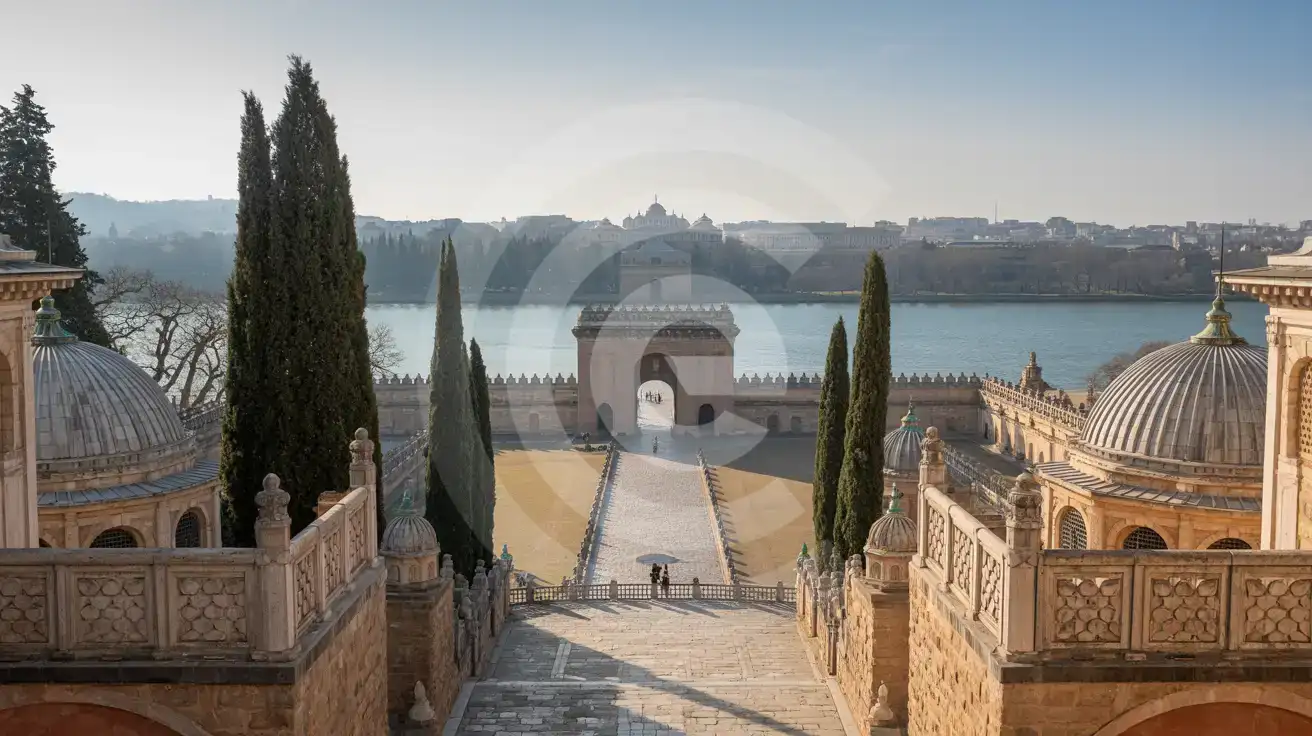
Topkapi Palace Atmosphere
Compare WiFi Options at Topkapi Palace Museum
 Recommended Recommended | Local SIM / Operator | Roaming | |
|---|---|---|---|
| FEATURES | |||
| Setup time | Few minutes | Store visit + paperwork | Auto |
| No local ID needed | Online checkout | Local ID required | Use home account |
| Speed | 4G/5G | Carrier-grade | Partner-dependent |
| Travel support | English support 24/7 | {0} only | Home carrier hours |
| Keep home number | Dual SIM | Replaces it | Same number |
| Cost predictability | Fixed price | Bills can spike | Bill-shock risk |
| PRICING | |||
Typical pricing | See plans below | — | — |
PRICING — PICK YOUR ESIMNO PLAN
Destination overview
Frequently Asked Questions
Usually, yes. The Imperial Harem has its own admission unless you buy a combined ticket that includes the main palace, the Harem, and often Hagia Irene. Most visitors should choose the combined option, because the Harem is one of the most important parts of the complex and adds real context to the rest of the palace.
A rushed visit can be done in about 2 to 3 hours, but that only covers the essentials. For a satisfying visit including the Harem, Treasury, Sacred Relics, kitchens, and Fourth Courtyard terraces, allow 4 hours. If you like reading labels and lingering in architectural spaces, 5 hours is completely reasonable.
Photography is generally allowed without flash in many outdoor spaces and some interiors, but not everywhere. It is strictly forbidden in the Sacred Relics rooms, and restrictions apply inside the Treasury areas. Tripods and professional equipment require permission. Always follow room signage and staff instructions, because the rules are enforced.
Arrive right at opening and head first either to the Harem or, if that line is already forming, to the Third Courtyard before tour groups build up. The busiest period is often from around 11:00 to 14:00. Wednesdays and Thursdays tend to be calmer than weekends, and late afternoon can also be quieter if you still have enough time before closing.
Yes. Hagia Irene sits within the First Courtyard area of the Topkapı complex. It is one of Istanbul’s oldest surviving Byzantine churches and is often included in combined ticket options, though ticket arrangements can change. Even if you do not enter, the exterior is easy to see while moving through the outer precinct.
There is no strict dress code in the museum sense, but modest clothing is the respectful choice, especially for the Sacred Relics section. Covered shoulders and knees are a good baseline. Comfortable shoes are much more important than people think, because you will be walking over stone surfaces and standing for long stretches.
Yes, especially in spring, summer, and major holiday periods. Online purchase can save time at the entrance and makes it easier to lock in your plan before you reach Sultanahmet. It also means you can spend less time sorting logistics on the pavement outside. If you want your ticket confirmations, maps, and tram directions ready on your phone, grabbing an eSIMno plan before your flight is a practical way to avoid hunting for airport SIM options after landing.
Featured eSIM plans
Turk Mobile

Turk Mobile
Turk Mobile
Turk Mobile
Turk Mobile
Turk Mobile