
Dates checked on October 4, 2026 · Source
At a Glance
- Event date
- Friday, January 15, 2027
- City & venue
- Chiba (Greater Tokyo) — Makuhari Messe, Mihama-ku
- Nearest airport
- Narita International Airport — about 35-45 minutes by airport bus or 45-60 minutes by train to Kaihin-Makuhari / venue area
- Where to stay
- Makuhari / Kaihin-Makuhari for convenience; Tokyo Station / Ginza side for broader dining and easier city access
- Tickets
- Usually about ¥3,000-¥4,500 for public days; business or preview access may differ
- eSIMno Networks
- KDDI, Softbank
Registration & Badges
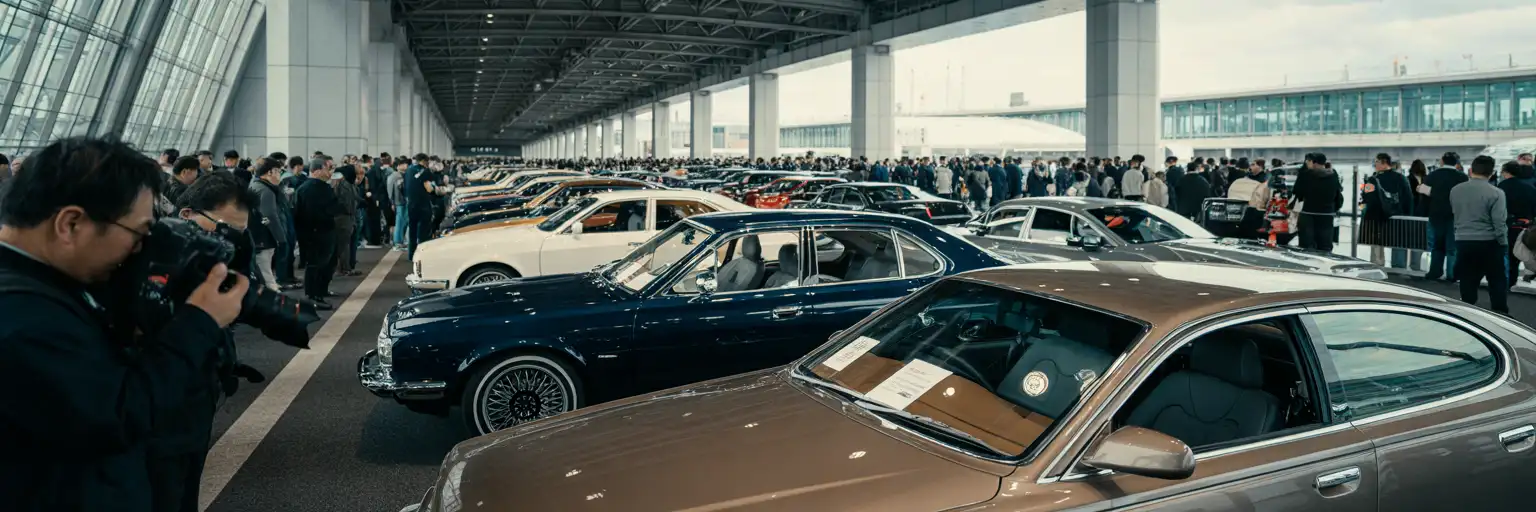
This is not a sleepy trade fair. It is one of the world's best-known custom car and aftermarket shows, and the mood is closer to a launch-heavy automotive sprint than a relaxed showroom walk.
Why people actually come
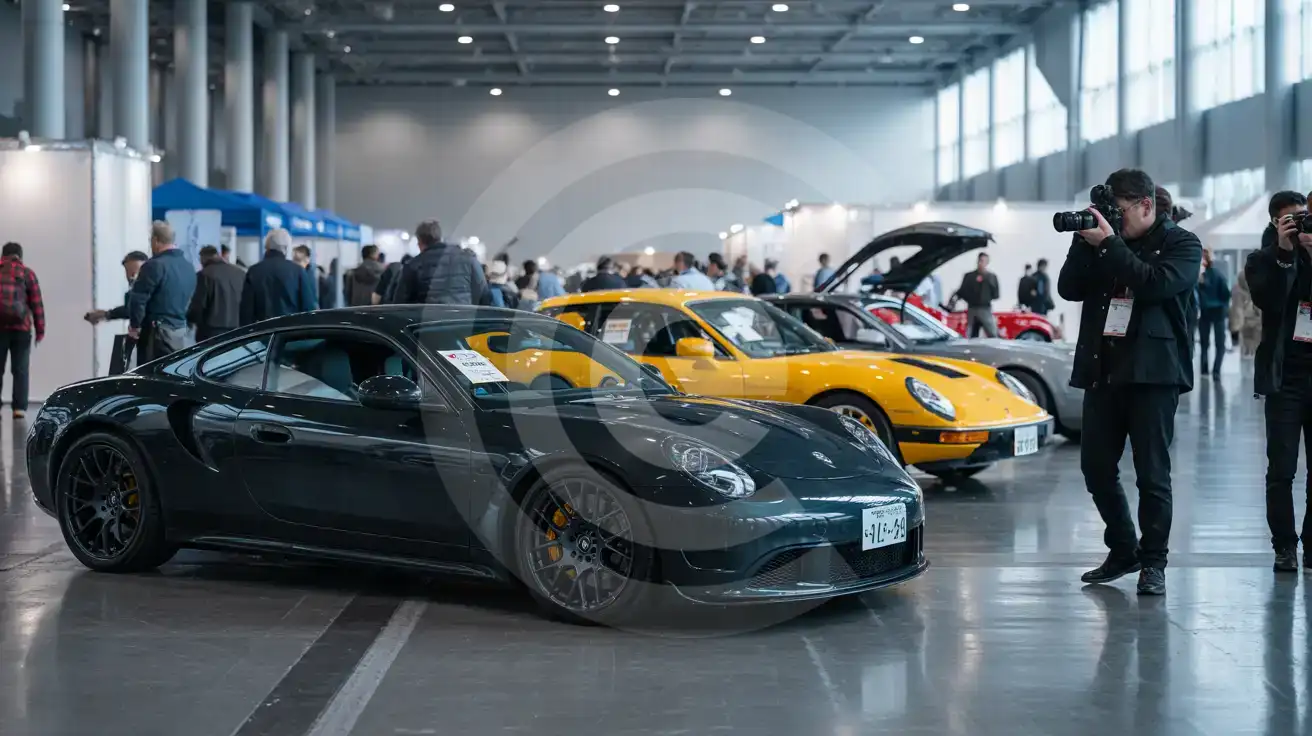
Visitors come for major vehicle debuts, tuning culture, aftermarket sourcing, and international automotive networking. That mix is what makes the event special: you get serious B2B conversations in the same halls where enthusiasts are crowding around widebody builds and content creators are shooting reels every few minutes.
Who should be here
If you're an auto industry buyer, distributor, media visitor, tuner, or just a committed car enthusiast, this one makes sense. The schedule is compact, usually spread across 3 days, so people tend to move fast. Typical public-day hours are roughly 9:00 to 19:00 on the opening day and around 9:00 to 18:00 on following days, though organisers can adjust by edition. Gate opening often starts shortly before the published hall hours, so arriving 30-45 minutes early is smart if you care about being first through popular stands.
What the scale feels like
Makuhari Messe can handle very large exhibitions across multiple halls, and Tokyo Auto Salon often draws attendance in the hundreds of thousands across the run. That is why this event carries broad global recognition despite its tight schedule: dense exhibitor activity, lots of cameras, and very little dead space. First held in 1983, it has become a flagship Japan auto event rather than just a local enthusiast gathering.
Getting Around the Halls
Ask anyone who's done this trip properly and they'll tell you the same thing: the venue choice matters almost as much as your ticket.
Airport to venue
The likely venue is Makuhari Messe in Chiba, the usual home for the show. From Narita, the easiest route is often an airport limousine bus to the Makuhari area, typically around 35-45 minutes depending on traffic. By rail, expect about 45-60 minutes with a transfer. From Haneda, budget roughly 45-70 minutes by bus or train.
Train lines that matter
The key station is Kaihin-Makuhari on the JR Keiyo Line, around a 5-10 minute walk to Makuhari Messe. If you're staying in central Tokyo, trains from Tokyo Station onto the Keiyo Line are the usual play; the ride is often about 30-40 minutes. Some travelers also arrive via the JR Sobu Line to Makuhari-Hongo, then switch to a local bus for the venue.
Taxi and local movement
From Kaihin-Makuhari Station, a taxi is short and usually around ¥800-¥1,500. From Tokyo Station or Ginza, you're more likely looking at roughly ¥10,000-¥16,000 depending on time and traffic. Ride-hailing in Japan often works through taxi apps rather than private rideshare in the way some visitors expect, so having GO or Uber Taxi set up helps.
Where to stay
- Makuhari / Kaihin-Makuhari: best for early entry and late exits. You can walk back to your hotel in 10-15 minutes instead of battling the evening crowd.
- Tokyo Station / Marunouchi: good if this is part work trip, part city stay. Easy JR access, more restaurants, more polished business hotels.
- Ginza: a comfortable base if you want dinners, department stores, and a smoother evening scene after hall hours.
Where to Meet, Eat and Stay
Long hall days make nearby food choices weirdly important. You'll feel it by mid-afternoon.
Near the venue
Kaihin-Makuhari has practical options inside Plena Makuhari and around the station, plus the Mitsui Outlet Park Makuhari area for quick meals between venue sessions. For something local and warming in winter, look for ramen, tonkatsu, or curry rice spots around the station zone. If you're entertaining clients, hotel restaurants in the Makuhari bay area are often the least stressful choice once the show ends.
Better evening neighborhoods
If you're staying in Tokyo proper, Nihonbashi and Ginza work well for post-show dinners. Think sushi counters, izakaya alleys, and department-store food halls when you need a fast but reliable dinner. Yurakucho is a great shout too: under-the-tracks izakaya streets there are ideal for informal meetups with suppliers or media friends.
What to do beyond the event
Don't spend the whole trip indoors. In Chiba City, the seaside stretch around Makuhari Seaside Park gives you a quick reset after the noise of the halls. If you have a free half day, head into Tokyo for Kanda's car-parts-adjacent enthusiast vibe and old-school eateries, or walk around Odaiba where the futuristic bayfront setting suits the automotive mood surprisingly well.
One practical favorite: Toyosu Senkyaku Banrai is a fun stop if you want seafood, snacks, and a very Tokyo-style food detour without committing to a full formal dinner. It also works nicely before an evening return to central Tokyo.
Staying Connected at Tokyo Auto Salon
Here is the honest version: venue Wi-Fi at a show like this is rarely the thing we would trust for a full day. The halls are busy, people are uploading video constantly, and your phone ends up doing a lot more than maps.
At Tokyo Auto Salon, data matters for QR ticket access, exhibitor maps, live posting, messaging your group when you split across halls, checking train times from Kaihin-Makuhari, and sending photos or clips while the build you just saw is still in front of you. If you're covering the event properly, 3GB to 5GB per day is a realistic range; creators can burn through more.
Japan's urban coverage is strong, and eSIMno connects through KDDI and Softbank, which is useful around the Makuhari bay area and on the JR routes back into Tokyo. If you want your data sorted before wheels-down, you can explore eSIMno plans for Japan and skip dealing with airport SIM counters during a busy arrival window.
Makuhari Fair-Day Atmosphere
Compare Connectivity for Tokyo Auto Salon 2026
 Recommended Recommended | Local SIM / Operator | Roaming | |
|---|---|---|---|
| FEATURES | |||
| Setup time | Few minutes | Store visit + paperwork | Auto |
| No local ID needed | Online checkout | Local ID required | Use home account |
| Speed | 4G/LTE; 5G in some areas | Carrier-grade | Partner-dependent |
| Travel support | English support 24/7 | Operator shops and call centre | Home carrier hours |
| Keep home number | Dual SIM | Replaces it | Same number |
| Cost predictability | Fixed price | Bills can spike | Bill-shock risk |
| PRICING | |||
Typical pricing | See plans below | — | — |
PRICING — PICK YOUR ESIMNO PLAN
Featured eSIM plans
Japan Mobile

Japan Mobile
Japan Mobile
Japan Mobile
Japan Mobile
Japan Mobile
Japan Mobile
Japan Mobile


