
Dates checked on October 4, 2026 · Source
At a Glance
- Event date
- Friday, April 9, 2027
- City & venue
- Suzuka, Mie Prefecture — Suzuka Circuit
- Nearest airport
- Chubu Centrair International Airport — about 75 to 100 minutes to the venue area by train/car
- Where to stay
- Nagoya Station area or Yokkaichi
- Tickets
- Approx. ¥10,000 to ¥80,000+ depending on day, stand, and hospitality
- eSIMno Networks
- KDDI, Softbank
Why This Race Matters
Some grands prix are about nightlife. Suzuka is about the track.
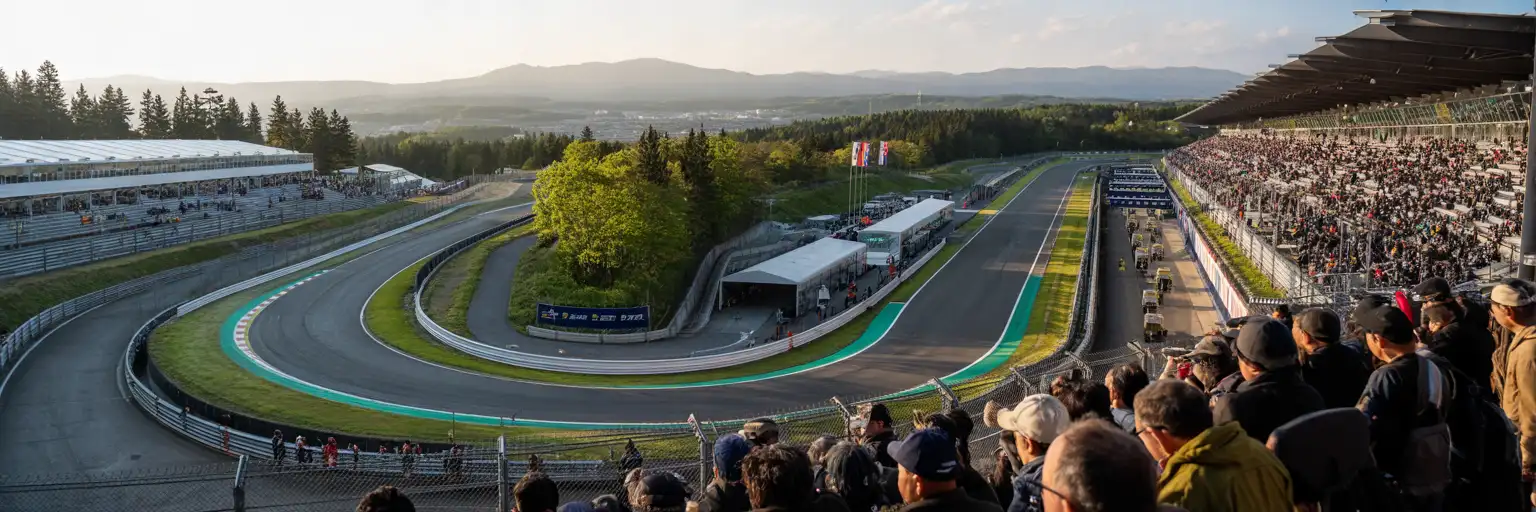
That’s the big reason fans travel internationally for this one. The Japanese GP has the prestige, the iconic corners, and the kind of global Formula 1 atmosphere that turns a race weekend into a motorsport trip people build a year around. It was first held in Japan in 1976, and Suzuka has been central to that story for decades.
This is the standout motorsport event in Japan, with strong overseas demand and broad media attention every year. You feel that in the crowd: hardcore F1 followers, photography-focused spectators carrying long lenses, fan groups in team colours, and premium hospitality guests treating it like a special-occasion weekend rather than just another sporting event.
What to expect
- Usually a 3-day race weekend from Friday to Sunday
- Track activity often starting around 08:00 to 09:00
- Main days typically running until about 17:00 to 18:00
- Gates commonly opening early, often around 07:00 to 08:00 depending on the day
- Attendance across the weekend that can push well above 200,000 in strong years
If you’re coming for a motorsport pilgrimage, a premium sports weekend, or a friend-group trip built around one famous circuit, this is exactly your kind of event.
Schedule, Tickets and Best Viewing Areas
Here’s the honest version: ticket choice at Suzuka shapes your whole experience.
How the days usually run
Friday is for practice and getting your bearings. Saturday brings qualifying energy and fuller grandstands. Sunday is the long day, with the biggest transport pressure before and after the race. If you like photographing cars, early sessions often give you a little more breathing room around the circuit before the peak crowd arrives.
Typical ticket range
Expect roughly:
- Single-day entry from about ¥10,000 to ¥20,000 for simpler access options
- Reserved grandstand seats often around ¥20,000 to ¥50,000+
- Premium packages and hospitality from about ¥80,000 upward, often much higher
Prices move a lot by stand, inclusion, and how early you book.
Where fans like to watch
- S Curves area: one of the classic spots for seeing rhythm and car balance
- Degner and hairpin sections: good for photographers who want drama and braking action
- Main straight grandstands: best for pit-building atmosphere, starts, and podium access feel
Suzuka Circuit’s full capacity is often quoted a little above 150,000, but race-weekend totals are higher because attendance is counted across multiple days. Book early if you want specific corners. The best seats don’t hang around.
Getting to Suzuka on Race Weekend
Most international fans arrive through Nagoya, and that’s usually the easiest play.
From the airport
Chubu Centrair International Airport is the nearest major airport. To reach the Suzuka area, many travelers take the Meitetsu airport line into Nagoya, then transfer to Kintetsu services toward Shiroko Station, the usual rail gateway for the circuit. Total travel time is typically about 75 to 100 minutes, depending on connections. By taxi or private car, expect around 80 to 100 minutes in light traffic and much longer during peak race windows.
From central Nagoya
From Nagoya Station to Shiroko Station, Kintetsu Limited Express or other Kintetsu trains usually take about 40 to 55 minutes. From there, shuttle buses to Suzuka Circuit often take another 15 to 25 minutes, though queues can stretch that on Sunday.
Where to stay
- Nagoya Station area: easiest for rail connections, lots of hotel stock, good for first-timers
- Yokkaichi: closer to the circuit, usually around 20 to 30 minutes by train toward Shiroko
- Suzuka itself: convenient, but rooms are limited and get booked early
Taxi fares vary a lot with traffic, but a ride from Shiroko Station to the circuit area can be around ¥2,500 to ¥4,500. From central Nagoya, think more like ¥18,000 to ¥30,000+ depending on timing. For pre-race evenings, Nagoya’s Sakae district is better for restaurants and bars; for easier mornings, stay near Nagoya Station.
Beyond the Track: Food and Side Trips
If you only do the circuit and leave, you’ll miss a good part of why this trip works so well.
What to eat
Nagoya has one of Japan’s most distinctive local food scenes. Start with miso katsu at Yabaton in the Sakae area, try hitsumabushi grilled eel at Atsuta Horaiken, and don’t skip tebasaki chicken wings at places like Furaibo or Sekai no Yamachan. Around stations and department-store dining floors, you’ll also find quick bowls of kishimen flat noodles that are perfect before an early train.
Closer to the circuit, expect practical race-day food rather than destination dining, so many fans make dinner plans in Nagoya or Yokkaichi instead.
What to do before or after
- Atsuta-jingu: one of Nagoya’s most important shrines. Go early in the morning if you want calm before a busy race day.
- Osu Shopping District: a fun mix of arcades, street snacks, vintage shops, and temple grounds. Good for a half-day if your flight timing leaves you a spare afternoon.
- Nagoya Castle: worth it for the grounds and city history, but check opening hours if you’re fitting it around train plans.
One practical note we always end up giving friends: don’t leave Japan without learning a couple of station words like “norikae” for transfer. On race weekend, that tiny bit of confidence helps more than you’d think.
Staying Connected at Suzuka Circuit
Race weekends are phone-heavy in a very specific way. You’re not just scrolling — you’re pulling up QR tickets at the gate, checking live timing, messaging friends in different grandstands, watching shuttle updates from Shiroko, and uploading photos when everyone else is doing exactly the same thing.
At Suzuka, that usually means network congestion at the obvious moments: gate opening, pre-race build-up, the post-race exit, and around the station bottlenecks. Venue Wi-Fi isn’t something we’d plan around. Treat it as a bonus, not your main option.
A realistic data budget for a 3-day trip is around 3 GB to 8 GB if you’re using maps, translation, transport apps, team content, and regular photo sharing. If you stream video or post lots of clips from the stands, you’ll want more. For a simpler setup, it’s worth checking eSIMno plans for Japan before you fly so your phone is ready as soon as you land, with access through KDDI and Softbank.
That matters most on Sunday, when one missed train message can cost you 30 minutes.
Compare Connectivity for Formula 1 Japanese Grand Prix
 Recommended Recommended | Local SIM / Operator | Roaming | |
|---|---|---|---|
| FEATURES | |||
| Setup time | Few minutes | Store visit + paperwork | Auto |
| No local ID needed | Online checkout | Local ID required | Use home account |
| Speed | 4G/LTE; 5G in some areas | Carrier-grade | Partner-dependent |
| Travel support | English support 24/7 | Operator shops and call centre | Home carrier hours |
| Keep home number | Dual SIM | Replaces it | Same number |
| Cost predictability | Fixed price | Bills can spike | Bill-shock risk |
| PRICING | |||
Typical pricing | See plans below | — | — |
PRICING — PICK YOUR ESIMNO PLAN
Featured eSIM plans
Japan Mobile

Japan Mobile
Japan Mobile
Japan Mobile
Japan Mobile
Japan Mobile
Japan Mobile
Japan Mobile


