

Quick Facts
- Airport WiFi
- Useful for quick messages, bookings, and light browsing after landing
- Mobile Data
- Usually better for rideshare requests, maps, and moving between airport, resort, and event venues
- Best Time to Rely on WiFi
- While seated in the terminal or settled in a hotel room on a trusted network
- Best Time to Use Mobile Data
- At pickup curbs, on Las Vegas Boulevard, inside busy resort corridors, and during major event surges
- eSIMno Networks
- AT&T, T-Mobile
WiFi or mobile data in Vegas?
Here's the short version: airport WiFi is fine for low-stakes tasks, but Las Vegas is a city where your connection gets tested while you're in motion. You might land at Harry Reid International Airport, head straight to Luxor Hotel and Casino, then cross town later for a show, a dinner booking, or a meeting near the Las Vegas Convention Center. That's where mobile data usually feels more dependable.
WiFi still has a place. If you're sitting near the gate, waiting at baggage claim, or back in your room at The Venetian Resort Las Vegas, using WiFi can save mobile data. But if you're trying to load maps outside the terminal, confirm a ride, or pull up a QR ticket while walking through a crowded property, mobile data is often the less frustrating option.
A simple cost breakdown helps too. Airport and hotel WiFi may be free, but the tradeoff can be slower speeds or extra login friction. International roaming from your home carrier can get expensive fast. An eSIM usually lands in the middle: paid, yes, but predictable. If you want to sort that out before arrival, you can explore eSIMno plans for McCarran International Airport, Las Vegas.
How to Connect
- 1. At Harry Reid International Airport arrivals, start with the task in front of you
If you just need to check a hotel confirmation or send a quick arrival message from the terminal, airport WiFi is usually enough. If you're ordering a rideshare from the pickup area or comparing taxi wait times outside, switch to mobile data before you leave the building so maps and app refreshes don't lag at the curb. - 2. On the ride toward the Las Vegas Strip, keep mobile data on
This is the moment for live navigation, driver messages, and checking which entrance your resort actually uses. Around large properties like Luxor Hotel and Casino or The Venetian Resort Las Vegas, arrival points can be less obvious than they look on a booking app, so mobile data is the safer choice while you're moving. - 3. In busy indoor zones like The Forum Shops at Caesars or Grand Canal Shoppes, choose based on movement
If you're stopping for coffee and the venue offers a trusted connection, WiFi can work well for uploads or a quick video call. If you're actively navigating between shops, meeting someone, or jumping between indoor and outdoor areas, stay on mobile data to avoid repeated sign-ins and dropped sessions. - 4. At hotel check-in or event entry, use the most stable option available
Checking into a resort near the Strip or heading into a packed venue near the Las Vegas Convention Center often means opening booking emails, QR codes, or registration details in a queue. If hotel WiFi hasn't been set up yet, mobile data is usually faster. Once you're in your room or seated at the venue, then WiFi becomes the better data-saving option.
Tips
- If you're arriving during CES, NAB Show, Black Hat USA, or Formula 1 weekend, expect public networks and app-based transport services to feel busier than usual right after landing.
- Vegas resort interiors can interrupt your signal in odd ways. If a page hangs inside a casino or shopping complex, walk a little closer to an exterior entrance or open atrium before retrying.
- Save your hotel booking, event QR code, and first-night address in your phone wallet or notes app before landing. It helps if you hit a login page or weak signal at exactly the wrong moment.
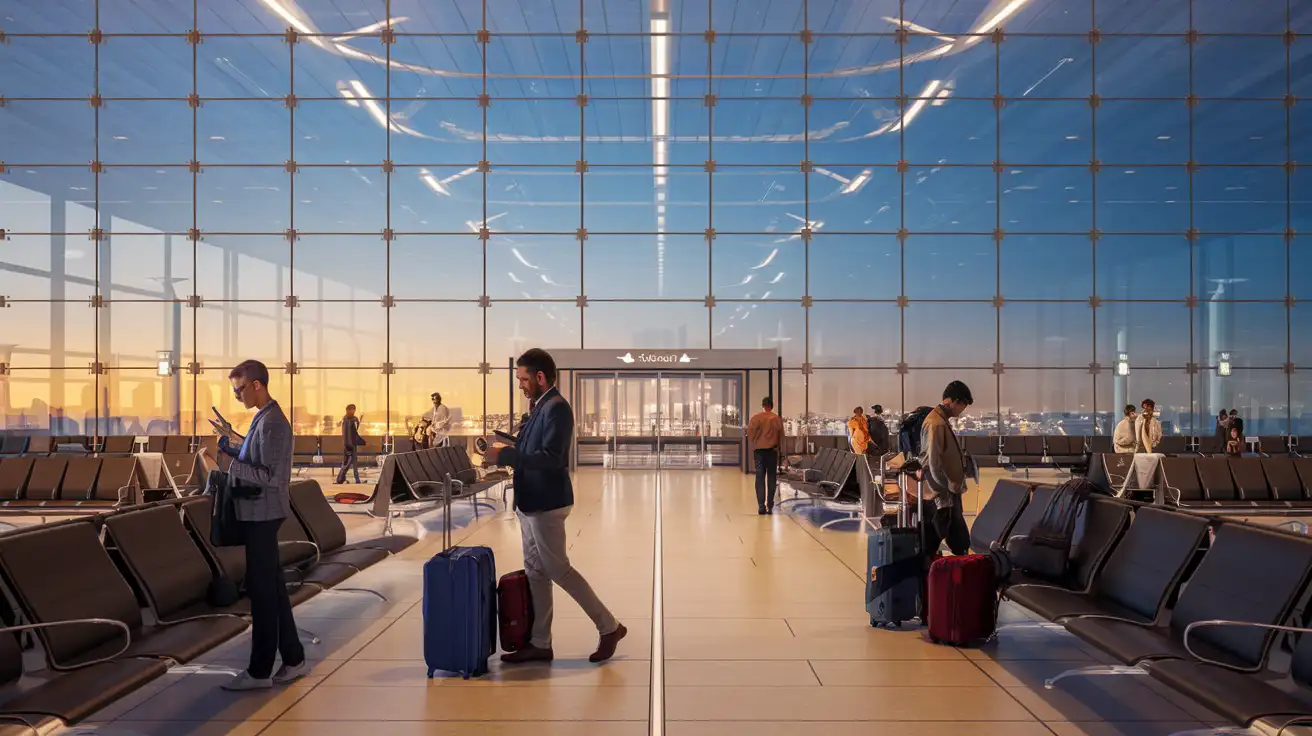
Arrival connection moment
A simple cost breakdown
Free WiFi sounds like the obvious winner, and sometimes it is. If you're staying put at the airport or in a hotel room, it can cover the basics at no extra cost. The catch is that free networks can be slower during peak periods, may require repeated logins, and aren't always ideal for anything time-sensitive.
Home-carrier roaming is the option many travelers forget to price properly. A few map checks, ride requests, and photo uploads can turn into a surprisingly expensive day if your plan charges high international rates or throttles speed.
An eSIM gives you a clearer middle ground. You pay upfront, know what you're getting, and can use data the moment you need it most: airport pickup, Strip transfers, convention arrivals, and late-night navigation back to your hotel. For a short Vegas trip, that predictability is often worth more than chasing free WiFi from place to place.
Compare WiFi Options at Harry Reid International Airport
 Recommended Recommended | Local SIM / Operator | Roaming | |
|---|---|---|---|
| FEATURES | |||
| Setup time | Few minutes | Store visit + paperwork | Auto |
| No local ID needed | Online checkout | Local ID required | Use home account |
| Speed | 4G/LTE; 5G in some areas | Carrier-grade | Partner-dependent |
| Travel support | English support 24/7 | Operator shops and call centre | Home carrier hours |
| Keep home number | Dual SIM | Replaces it | Same number |
| Cost predictability | Fixed price | Bills can spike | Bill-shock risk |
| PRICING | |||
Typical pricing | See plans below | — | — |
PRICING — PICK YOUR ESIMNO PLAN
Destination overview
Frequently Asked Questions
Featured eSIM plans
American Mobile

American Mobile
American Mobile
American Mobile
American Mobile
American Mobile