
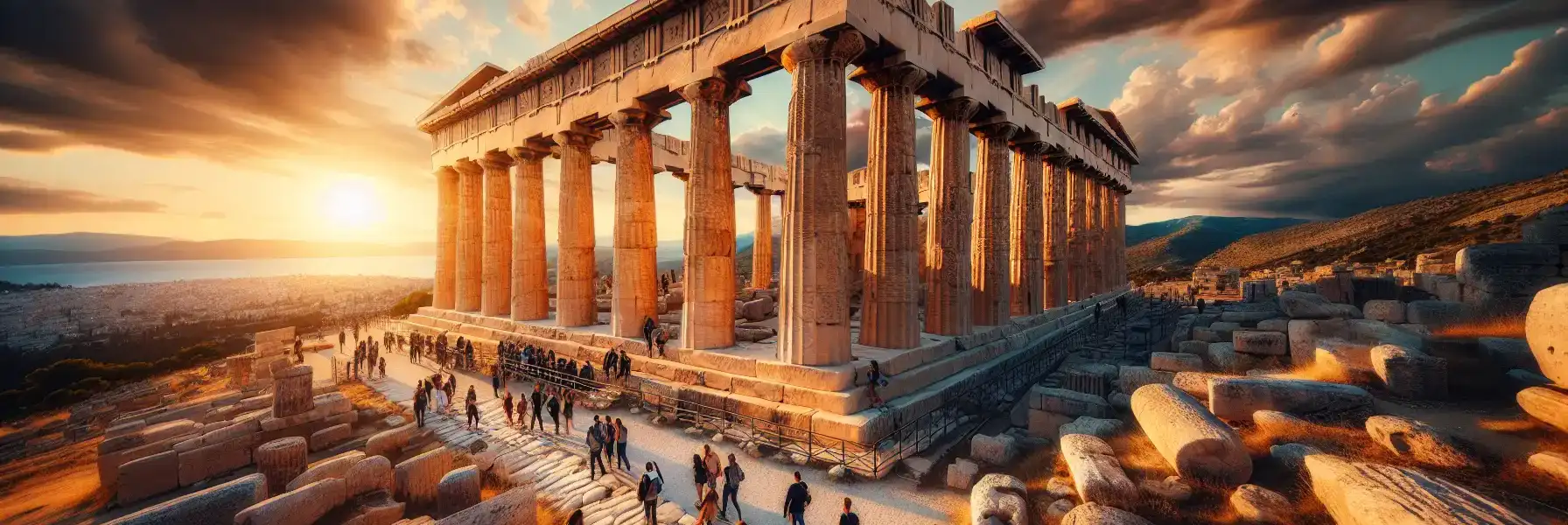
Quick Facts
- Address
- Acropolis Archaeological Site, Athens 105 58, Greece
- Nearest Metro
- Acropoli Station (Line 2, red line) — 5-minute walk
- Hours (Summer)
- 8:00 AM – 8:00 PM (April–October)
- Hours (Winter)
- 8:00 AM – 5:00 PM (November–March)
- Ticket Price
- €20 winter / €30 peak season (single site)
- Combined Ticket
- €30 — includes 7 sites, valid 5 days
- Free Entry Days
- March 6, April 18, May 18, October 28, first Sunday Nov–Mar
- Average Visit Duration
- 2–3 hours (Acropolis only) / 5–6 hours (with museum)
- UNESCO Status
- Inscribed 1987
- Elevation
- 156 metres above sea level
- Official Website
- odysseus.culture.gr
- eSIMno Networks
- Cosmote, Vodafone, Wind
About the Acropolis of Athens
The word acropolis simply means 'high city' in Greek, and dozens of ancient settlements had one. But when anyone says 'the Acropolis' without qualification, they mean this one — the flat-topped limestone outcrop that has anchored Athenian identity for at least five thousand years.
Deep Time Before the Temples
Archaeological evidence shows continuous habitation on the rock since the Neolithic period, roughly 4000 BCE. By the Mycenaean Bronze Age (1600–1100 BCE), the Acropolis functioned as a fortified palace complex, surrounded by Cyclopean walls — massive limestone blocks fitted without mortar that you can still see in places along the northern slope. When Mycenaean civilization collapsed around 1100 BCE, the site transitioned from royal residence to sacred precinct. The goddess Athena, protector of the city that would eventually bear her name, became the rock's primary divine tenant.
The Persian Destruction and Periclean Rebuilding
The temples you see in photographs today didn't exist before 480 BCE. That year, Persian forces under Xerxes I occupied Athens and systematically destroyed the sanctuaries on the Acropolis, including an earlier Parthenon that was still under construction. The Athenians swore an oath not to rebuild the ruined temples but to leave them as memorials to Persian sacrilege.
That oath lasted about thirty years. By 449 BCE, with the Persian threat diminished and Athenian imperial power at its zenith, the statesman Pericles convinced the assembly to redirect tribute money from the Delian League — an alliance of Greek city-states nominally created to defend against Persia — toward a spectacular building program on the Acropolis. The treasury of a defensive alliance became the construction budget for a propaganda monument celebrating Athenian supremacy. Not everyone approved; Pericles' political opponents accused him of 'gilding and adorning our city like a wanton woman.' He did it anyway.
The Architects and the Master Sculptor
Pericles assembled extraordinary talent. The architects Iktinos and Kallikrates designed the Parthenon; Mnesikles designed the Propylaea gateway. Overseeing the entire sculptural program — the pediments, the metopes, the continuous Ionic frieze — was Pheidias, antiquity's most celebrated sculptor. Pheidias also created the colossal chryselephantine (gold and ivory) statue of Athena Parthenos that stood inside the Parthenon's cella. At roughly 12 metres tall, covered in over a thousand kilograms of removable gold plates and ivory panels depicting skin, the statue was one of the wonders of the ancient world. It no longer exists; we know it only through small Roman copies and written descriptions.
The Long Afterlife
After the Classical era, the Acropolis passed through many hands. Roman emperors added minor structures and carted off artworks. Early Christians converted the Parthenon into a church dedicated to the Theotokos (Virgin Mary), removing the cult statue and painting over some sculptural reliefs. When the Ottoman Empire took Athens in 1458, the Parthenon became a mosque, complete with a minaret built into the southwest corner.
The catastrophic explosion of 1687 occurred during the Morean War. Venetian forces under Francesco Morosini besieged the Acropolis, and the Ottomans stored gunpowder inside the Parthenon, assuming the enemy wouldn't shell a former church. They were wrong. A direct hit ignited the magazine, blowing out the interior columns and the roof, killing hundreds, and reducing the building to the skeletal ruin visible today.
Lord Elgin's removal of sculptures between 1801 and 1812 — the so-called Elgin Marbles, now in the British Museum — remains perhaps the most contested act of cultural appropriation in history. Greece has demanded their return since independence in the 1830s. The debate continues.
Restoration in the Modern Era
Since the 1970s, the Acropolis Restoration Service has undertaken painstaking conservation work. Teams dismantle structurally unstable sections, replace rusted iron clamps (inserted in earlier restoration attempts) with non-corrosive titanium, and patch missing marble blocks using freshly quarried Pentelic marble from the same Mount Pentelicus quarries the ancients used. The work is slow by design — accuracy matters more than speed. Walk the site today and you'll see cranes, scaffolding, and workers in hard hats: the Acropolis is a living project, not a frozen monument.
Highlights & Must-See
The Acropolis is compact enough to walk in two hours but dense enough to reward an entire morning. These are the named structures and features that deserve your attention.
The Parthenon
Everything else on the rock exists in the Parthenon's gravitational field. Completed in 438 BCE and dedicated to Athena Parthenos (Athena the Virgin), the temple measures roughly 69.5 by 30.9 metres at its base and originally supported 46 outer Doric columns, each 10.4 metres tall. What makes the Parthenon exceptional isn't just its scale — it's the optical refinements the architects built into every surface.
The stylobate (the platform the columns rest on) curves upward slightly in the center, countering the optical illusion that would make a perfectly flat surface appear to sag. The columns themselves exhibit entasis — a subtle bulge at mid-height that prevents them from looking pinched. Corner columns are slightly thicker and tilted inward because columns against open sky appear thinner and more splayed than those seen against the building behind them. Every measurement is off by a calculated fraction. Nothing is truly straight, level, or parallel — and that's exactly the point.
You cannot enter the Parthenon. Visitors walk around its exterior perimeter, which actually provides better views of the sculptural program's remaining fragments than an interior visit would.
The Erechtheion and the Porch of the Caryatids
North of the Parthenon, the Erechtheion is an architecturally odd building — asymmetrical, multi-level, built to accommodate several sacred sites on uneven ground. It was completed around 406 BCE, during the latter years of the Peloponnesian War when Athens was already declining. The temple housed the ancient olivewood cult statue of Athena Polias (Athena of the City), the most sacred object in Athens, as well as shrines to Poseidon-Erechtheus and Hephaestus.
The building's most famous feature is the Porch of the Caryatids on the south side: six draped female figures serving as columns, supporting the porch roof on their heads. The ones you see today are replicas; five of the originals are in the Acropolis Museum (climate-controlled to prevent further deterioration), and one is in the British Museum. Standing before the porch, notice how each figure shifts her weight slightly differently, creating subtle variety within the symmetrical arrangement.
The Propylaea
You enter the sacred precinct through the Propylaea, a monumental gateway designed by Mnesikles and built between 437 and 432 BCE. The structure consists of a central passageway flanked by Doric and Ionic colonnades — a rare mixing of orders that anticipates Hellenistic architectural experimentation. The north wing once housed the Pinakotheke, an early picture gallery displaying painted votive tablets.
As you walk through the central passage, the Parthenon suddenly reveals itself through the east doorway. This framing effect was intentional. Ancient visitors processed through the Propylaea during the Panathenaic festival, bearing offerings to Athena. The architects designed their first glimpse of her temple as a dramatic unveiling.
The Temple of Athena Nike
Perched on a bastion just southwest of the Propylaea, this tiny Ionic temple (roughly 8 by 5.5 metres) was completed around 420 BCE and dedicated to Athena Nike (Athena as goddess of victory). Its sculptural frieze depicted battles between Greeks and Persians and among Greeks themselves — the historical and mythological wars that defined Athenian identity.
The temple was completely dismantled by the Ottomans in 1686 to build a gun battery, then reconstructed in the 1830s, then dismantled and reconstructed again between 1935 and 1940 when earlier restoration errors became apparent, then conserved once more between 2000 and 2010. It's been taken apart and reassembled more times than IKEA furniture.
The Theatre of Dionysus
On the southern slope, the Theatre of Dionysus is where Greek tragedy was born. Aeschylus, Sophocles, Euripides, and Aristophanes premiered their works here during the annual festival of Dionysus, the god of wine and ecstatic experience. The stone seating you see today dates mostly to the 4th century BCE (after the great tragedians' lifetimes), with Roman modifications. The theatre could hold approximately 17,000 spectators.
Look for the front row of marble throne-chairs, reserved for priests and dignitaries. The central throne, more elaborate than the others, belonged to the priest of Dionysus.
The Odeon of Herodes Atticus
Adjacent to the Theatre of Dionysus but built six centuries later (161 CE), the Odeon was a gift to Athens from the wealthy Roman senator Herodes Atticus in memory of his wife. Originally roofed, the structure seated approximately 5,000 and was used for musical performances rather than drama.
Unlike the Theatre of Dionysus, the Odeon still hosts live performances. During the annual Athens Epidaurus Festival (June–August), you can attend concerts, opera, and dance performances under the stars, with the Parthenon illuminated above. Tickets sell out weeks in advance for major acts.
Areopagus Hill (Mars Hill)
Just northwest of the Propylaea, this bare limestone outcrop served as the meeting place of the ancient Athenian council of elders and later as a homicide court. In Christian tradition, it's where the Apostle Paul delivered his sermon to the Athenians (Acts 17:22–31), attempting to convert them by identifying their altar 'to an unknown god' with the Christian deity.
The rock surface is dangerously slippery, worn smooth by centuries of feet. It's also one of the best sunset viewpoints in Athens, with unobstructed sightlines to the Parthenon, the Ancient Agora, and the modern city beyond.
The Beulé Gate
Named for the French archaeologist who excavated it in 1852, this late Roman gate (3rd century CE) now serves as the primary entrance from the west. It was built using blocks cannibalized from an earlier monument — a common Roman practice. Walking through, you're stepping on repurposed history.
Visit Strategy
The Acropolis receives several million visitors annually, and on peak summer days the narrow paths can feel like a conga line. Timing, ticket strategy, and entrance choice make the difference between a meditative experience and a frustrating one.
Best Time to Visit
Arrive at opening — 8:00 AM year-round. The first hour is magical: cooler temperatures, fewer crowds, better light for photography. By 10:00 AM, tour buses start disgorging passengers at the main entrance, and by noon the rock is packed. If you can't make the early slot, late afternoon (two hours before closing) offers a second window. Summer closing time around 8:00 PM means you can catch golden hour on the summit.
Seasonally, late April through mid-May and late September through October are ideal: warm but not scorching, with manageable crowd levels. July and August bring crushing heat (often exceeding 35°C) and peak tourist density. There's essentially no shade on the summit — the temples were designed for open-air worship, not visitor comfort.
Ticket Strategy
The combined multi-site ticket (€30) is almost always the better deal if you plan to visit even two additional sites over five days. It covers the Acropolis plus the Ancient Agora, Roman Agora, Hadrian's Library, Kerameikos, the Olympieion, and Aristotle's Lyceum. Purchasing it in advance online (through the official Hellenic Ministry of Culture e-ticketing platform) lets you skip the physical ticket line.
Important: the Acropolis Museum requires a separate ticket (€15 in peak season). It's not included in the combined archaeological site pass.
Free admission days (March 6, April 18, May 18, last weekend of September, October 28, and first Sunday of each month from November through March) sound appealing but create sardine-can conditions. If you want space to breathe and photograph, pay the admission fee on a regular day.
Which Entrance to Use
The main (west) entrance near the Beulé Gate handles the bulk of visitors and has longer queues. The secondary entrance on the southern slope near the Theatre of Dionysus is often significantly less crowded, especially mid-morning when bus tours funnel everyone through the west side. If you've pre-purchased tickets online, the south entrance is faster.
Recommended Duration
Allow 2–2.5 hours for the Acropolis archaeological site itself. This gives you time to circumnavigate the Parthenon, explore the Erechtheion and Temple of Athena Nike, descend to the Theatre of Dionysus, and sit on Areopagus Hill for sunset views. If you're a photography enthusiast or architecture nerd, budget three hours.
Add another 2–2.5 hours for the Acropolis Museum, ideally immediately after descending from the rock while the context is fresh. A full morning-to-early-afternoon immersion (8:00 AM to 1:00 PM) combining both sites is deeply satisfying and leaves the afternoon free for Plaka, the Ancient Agora, or a cold Mythos beer on a shaded rooftop.
Photography Rules
Personal photography without flash is allowed throughout the site. Tripods, drones, and professional equipment (as defined somewhat vaguely by the authorities) require advance written permission from the Ephorate of Antiquities of Athens — not something most tourists bother with, but technically required for anything beyond a handheld camera or phone.
The best angles are from the southeast corner of the Parthenon (where the remaining pediment sculpture catches morning light), from the Propylaea looking east (the classic reveal shot), and from Areopagus Hill or Filopappou Hill looking back at the entire complex.
Dress and Footwear
High heels are illegal on the Acropolis — literally prohibited under Greek law to protect the monuments. This isn't a fashion complaint; the polished marble surfaces are dangerously slippery, and a stumble could damage 2,500-year-old stonework (or your ankle). Wear sturdy closed-toe shoes with rubber soles.
There's no religious dress code as there would be at a functioning temple or church, but remember you're walking on sacred ground that people still care about. Dress respectfully. More practically: bring a hat, sunscreen, sunglasses, and water. Refill stations are limited, and dehydration at the summit is a real risk in summer.
Accessibility
An elevator operates on the north slope (accessed from the Peripatos walkway) for visitors with mobility impairments, providing access to the summit plateau. However, the summit itself involves uneven stone surfaces, steps, and slopes — not fully wheelchair-accessible even with the elevator. Contact the site in advance for specific accommodations.
Best Time to Visit & Photographer's Guide
The Acropolis transforms dramatically depending on when you see it. Light, crowds, and weather conspire to create radically different experiences hour by hour and month by month.
Month-by-Month Crowd & Weather
January–February: Athens' quietest months. Temperatures hover between 7°C and 13°C, with occasional rain. The Acropolis feels almost private, especially on weekday mornings. Shorter hours (closing at 5:00 PM) limit afternoon photography options, but the soft winter light flatters the marble.
March–April: Spring awakens the city. Wildflowers bloom on the southern slopes, and temperatures climb into the comfortable 15°C–22°C range. Crowds build toward Easter, which brings both Greek and international visitors. The week after Orthodox Easter tends to dip again before the summer surge begins.
May–June: Prime season begins. May offers warm days (22°C–28°C) without the brutal heat of July. June extends daylight past 9:00 PM, perfect for late entries. Crowds are significant but not yet overwhelming. Early June, before European school holidays, is a sweet spot.
July–August: Peak everything. Temperatures regularly exceed 35°C, sometimes reaching 40°C. Shade doesn't exist on the summit. Crowds peak between 10:00 AM and 4:00 PM. If you must visit in these months, arrive at 8:00 AM sharp, finish by 10:30 AM, and spend midday in air-conditioned museums or tavernas.
September–October: The heat breaks, the crowds thin, and the light turns golden. Late September to mid-October is arguably the best time to visit Athens. Temperatures return to the pleasant 20°C–28°C range, extended summer hours (8:00 PM closing) remain in effect through October, and the angled autumn sun creates dramatic shadows across the Parthenon's columns.
November–December: Off-season returns. Shorter days (sunset around 5:00 PM by December), cooler temperatures, and occasional rain. Virtually no queues. December 25–26 and January 1 closures aside, winter visits offer intimate access most travelers never experience.
Best Time of Day
8:00 AM – 9:30 AM (Golden Hour Post-Sunrise): The Parthenon faces east, so morning light illuminates the surviving east pediment and the interior colonnade. This is the photographer's hour: warm tones, long shadows, manageable crowds. The marble seems to glow from within.
10:00 AM – 4:00 PM (Midday Overhead Sun): Harsh light flattens detail, heat intensifies, crowds peak. Acceptable for general tourism; suboptimal for photography. If you're here during this window, focus on the shadier Theatre of Dionysus area on the southern slope.
5:00 PM – Closing (Golden Hour / Sunset): The western facade of the Parthenon catches the setting sun, creating the iconic orange-gold postcard shot. Areopagus Hill fills with photographers and picnickers waiting for the moment. In summer (8:00 PM closing), you can be on the summit during actual golden hour; in winter (5:00 PM closing), you'll need to watch sunset from outside the gates — Filopappou Hill across the valley is the classic alternative.
After Dark (Blue Hour): The site closes, but the Parthenon remains lit against the night sky. Photograph from Filopappou Hill, the Areopagus (if you descend before closing), or rooftop bars in Monastiraki and Plaka. The illuminated temple floating above the city is perhaps the single most recognizable image of Athens.
Best Photo Spots
1. Southeast Corner of the Parthenon: Standing at the southeastern angle, you capture the temple's full flank with the remaining eastern pediment visible and Mount Hymettus rising behind. Morning light is ideal.
2. The Propylaea Looking East: Frame the Parthenon through the Propylaea's central doorway — the same dramatic reveal ancient pilgrims experienced. Works best in morning light when the Parthenon glows and the sun is behind you.
3. Areopagus Hill (Mars Hill): Five minutes northwest of the entrance, this low rocky outcrop offers unobstructed side-angle views of the entire Acropolis complex. Sunset is the classic moment, but it's also excellent for blue-hour shots after the site closes.
4. Filopappou Hill: Across the shallow valley west of the Acropolis, Filopappou (also called the Hill of the Muses) provides the definitive distant view — the Parthenon and Erechtheion silhouetted against sunrise or illuminated at night. The 15-minute uphill walk from Dionysiou Areopagitou Street is worth the effort.
5. Acropolis Museum Terrace: The third-floor Parthenon Gallery has floor-to-ceiling glass oriented directly toward the temple. Combine artifact study with sightline photography — the juxtaposition of original metopes inside and the building itself outside is powerful.
6. A for Athens Rooftop Bar: In Monastiraki Square, this bar's rooftop offers a direct north-facing view of the Acropolis illuminated at night, cocktail in hand. It's touristy, it's crowded, and the view is legitimately spectacular.
7. The Pnyx: West of the Acropolis, this hillside served as the meeting place of the Athenian democratic assembly. The speaker's platform (bema) offers a unique angle back toward the Parthenon with relatively few other visitors.
Drone & Tripod Rules
Drones are prohibited over the archaeological site without explicit authorization from the Ephorate of Antiquities — permissions rarely granted and requiring weeks of advance application. Enforcement is real; guards will ask you to land and may confiscate equipment.
Tripods fall into a gray zone. Small travel tripods used discreetly for personal photography generally go unquestioned. Larger professional rigs attract attention and may require the same permit process. If challenged, comply politely; arguing with site guards accomplishes nothing.
Hidden Sub-Spots Most Tourists Miss
The Sanctuary of Asklepios: On the south slope between the Theatre of Dionysus and the Odeon, this healing sanctuary dedicated to the god of medicine is easy to walk past. The foundations, altars, and sacred spring remain — a quieter alternative to the crowded summit.
The Klepsydra Spring: Near the northwest corner of the rock, this ancient water source supplied the Acropolis during sieges. Accessible via the Peripatos path, it's marked but rarely visited.
The Cave of Pan: Below the north slope, this shallow grotto was sacred to the pastoral god Pan after he allegedly helped the Athenians at the Battle of Marathon. Visible from the Peripatos walking path circling the Acropolis base.
The Stairway Niches of the Propylaea: As you climb the marble steps through the Propylaea, look left and right for small niches carved into the walls — these once held votive offerings. Most visitors charge straight through; pause and examine the details.
The Monument of Agrippa: Just before the Propylaea, a tall rectangular pedestal originally supported a bronze chariot sculpture. The pedestal survives; the chariot doesn't. It's a good example of how Roman patrons inserted themselves into Greek sacred spaces — and how easily the Romans are forgotten.
Nearby Attractions & Logistics
The Acropolis doesn't exist in isolation. The surrounding slopes, streets, and museums form an interconnected archaeological and cultural zone that rewards extended exploration.
Acropolis Museum (5-Minute Walk)
Immediately south of the archaeological site at 15 Dionysiou Areopagitou Street, the Acropolis Museum opened in 2009 to house artifacts excavated from the rock. Designed by Bernard Tschumi and Michalis Photiadis, the building hovers above an active excavation site visible through glass floors in the lobby.
The collection includes the original Caryatids from the Erechtheion (displayed in climate-controlled cases), archaic korai sculptures with traces of original paint, fragments of the Parthenon's pediments, metopes, and frieze panels, and the haunting Moschophoros (Calf-Bearer) from the 6th century BCE. The top-floor Parthenon Gallery aligns precisely with the temple itself, visible through panoramic windows — the surviving frieze sections displayed alongside plaster casts of the pieces held in London, making the absence viscerally clear.
Allow 2–2.5 hours. Separate ticket required (€15 peak season). The rooftop restaurant offers Parthenon views over decent Greek cuisine.
Ancient Agora & Temple of Hephaestus (10-Minute Walk)
Descend the northern slope and you're in the Ancient Agora — the civic, commercial, and judicial heart of Classical Athens. Socrates debated here. The jury that condemned him met here. The Stoa of Attalos, a reconstructed 2nd-century BCE colonnaded building, now houses the Museum of the Ancient Agora with artifacts from daily life: pottery, coins, jury ballots, even a child's commode.
The Temple of Hephaestus, overlooking the Agora from a low hill, is one of the best-preserved ancient Greek temples anywhere — roofed, mostly intact, standing since around 449 BCE. It predates the Parthenon by a few years and uses the same Pentelic marble, offering a sense of what the Parthenon might look like had it not been blown up.
Included in the combined multi-site ticket.
Plaka & Anafiotika (Adjacent)
The Plaka district wraps around the northern and eastern slopes of the Acropolis — a labyrinth of neoclassical mansions, Byzantine churches, and tourist-trap tavernas. It's kitschy in places but genuinely atmospheric, especially in the early morning before the souvenir shops open.
Within Plaka, tucked against the rock itself, Anafiotika is a hidden enclave of whitewashed Cycladic-style houses. Workers from the island of Anafi built these homes in the 19th century during the construction of King Otto's palace, recreating their island village beneath the Acropolis walls. The narrow lanes feel transplanted from Santorini. Quiet, beautiful, wildly photogenic, and overlooked by most tourists who stick to the main Plaka streets below.
Monastiraki Square (10-Minute Walk)
North of the Agora, Monastiraki is Athens' flea-market district — antique shops, vinyl record stalls, and the atmospheric Tzistarakis Mosque (now a ceramics museum). On Sundays, the sprawl of vendors along Ifestou Street expands into a proper street market. The square itself offers north-facing views up to the Acropolis and is ringed by rooftop bars capitalizing on the vista.
Syntagma Square (15-Minute Walk)
Athens' central plaza sits 15 minutes northeast via Ermou Street (the main pedestrian shopping corridor). Watch the changing of the Evzones guard at the Tomb of the Unknown Soldier every hour on the hour — the choreographed high-stepping in traditional uniforms is oddly hypnotic. Syntagma Metro Station (Lines 2 and 3) displays archaeological finds uncovered during construction.
Getting There & Away
Metro: Acropoli Station (Line 2, red line) is a 5-minute walk to the southern slope entrance. Monastiraki Station (Lines 1 and 3) is 10 minutes to the northern approach via the Ancient Agora.
Walking: From Syntagma Square, the pedestrianized Dionysiou Areopagitou street runs along the southern base of the Acropolis — a flat, pleasant 15–20-minute walk passing the Acropolis Museum and eventually connecting to Thission.
Taxi/Ride-Hailing: Drop-off near the main western entrance is possible but traffic and pedestrianization make it awkward. Walking from Syntagma or Monastiraki is usually faster than sitting in a taxi.
Suggested Day Itinerary
8:00 AM: Arrive at the Acropolis south entrance at opening. Spend 2–2.5 hours on the summit.
10:30 AM: Descend to the Acropolis Museum. Spend 2 hours among the Caryatids and Parthenon frieze.
12:30 PM: Lunch at one of the tavernas along Dionysiou Areopagitou or in upper Plaka.
2:00 PM: Explore Plaka and Anafiotika on foot.
4:00 PM: Walk through the Ancient Agora and visit the Temple of Hephaestus.
6:00 PM: Climb Areopagus Hill or Filopappou Hill for sunset views back toward the Parthenon.
7:30 PM: Dinner in Monastiraki or Psyrri, then a rooftop cocktail watching the illuminated Acropolis.
Why Data Matters at the Acropolis
The Acropolis itself doesn't require connectivity — the Parthenon will still be standing whether or not you have signal. But everything around the experience does.
Ticket queues change by the hour. The official Hellenic Ministry of Culture e-ticketing site lets you purchase timed entries, but checking real-time crowd reports (Google Maps' 'busy times' graph, TripAdvisor forums, even Twitter/X) helps you decide whether the south entrance is emptier than the west on any given morning. That check requires data.
Navigation through Plaka's maze of lanes, finding the hidden staircase to Anafiotika, or locating the entrance to the Sanctuary of Asklepios on the southern slope all become simpler with working maps. Google Translate handles the occasional Greek-only signage. Ride-hailing apps (Uber operates in Athens alongside local apps like Beat) need connectivity to function.
If you're attending an Athens Epidaurus Festival performance at the Odeon of Herodes Atticus, mobile tickets live on your phone. No signal, no entry.
An eSIMno plan connects you to Cosmote, Vodafone, or Wind — Greece's major carriers — from the moment you land at Athens International Airport. No hunting for SIM card kiosks, no passport photocopies, no language barriers at a phone shop. Install before departure, activate on arrival, and your navigation, translation, and ticket apps just work. Connectivity won't make the Parthenon more beautiful. But it makes everything around visiting smoother.
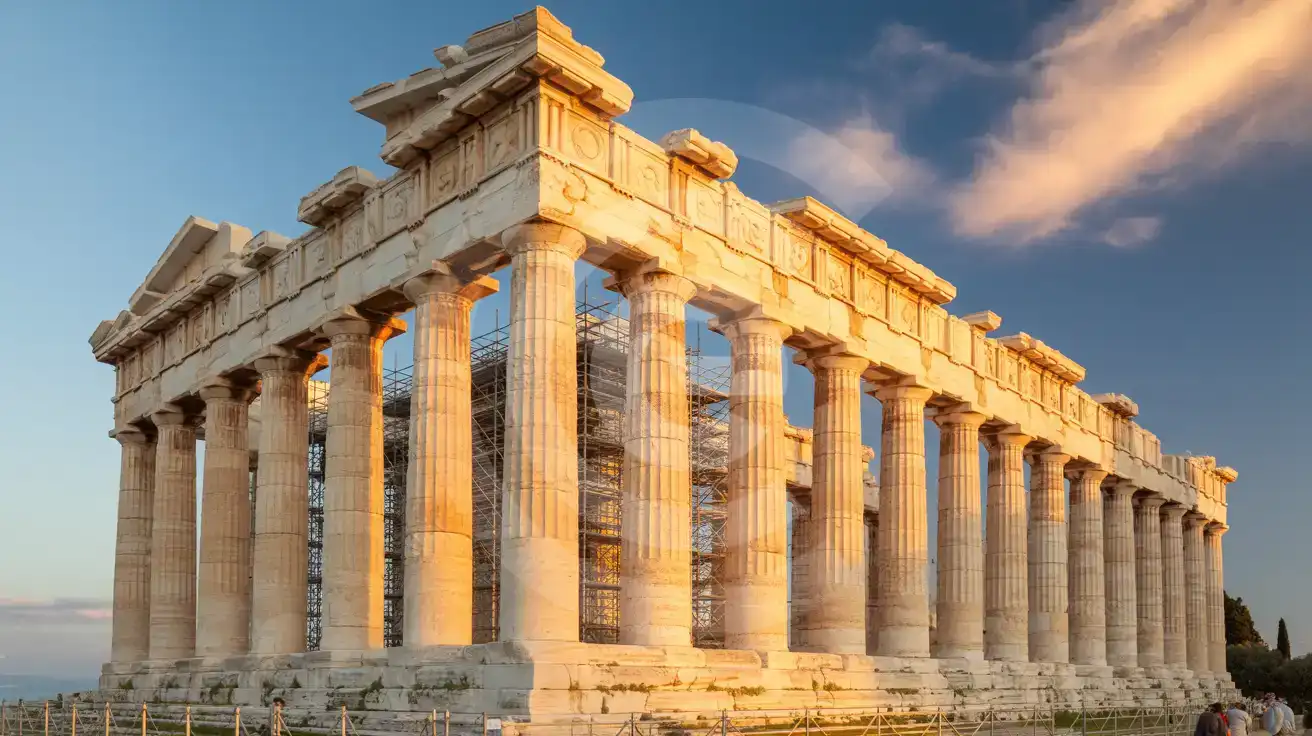
The Parthenon at Golden Hour
Compare WiFi Options at Acropolis Of Athens
 Recommended Recommended | Local SIM / Operator | Roaming | |
|---|---|---|---|
| FEATURES | |||
| Setup time | Few minutes | Store visit + paperwork | Auto |
| No local ID needed | Online checkout | Local ID required | Use home account |
| Speed | 4G/5G | Carrier-grade | Partner-dependent |
| Travel support | English support 24/7 | {0} only | Home carrier hours |
| Keep home number | Dual SIM | Replaces it | Same number |
| Cost predictability | Fixed price | Bills can spike | Bill-shock risk |
| PRICING | |||
Typical pricing | See plans below | — | — |
PRICING — PICK YOUR ESIMNO PLAN
Destination overview
Frequently Asked Questions
Small backpacks and daypacks are permitted, but larger bags, suitcases, and bulky items must be left at the cloakroom near the main entrance. There's no charge for the cloakroom service. Security screening at the entrance is similar to airport procedures — bags go through X-ray machines, and you walk through a metal detector.
Yes. Greek law explicitly bans high heels and stilettos on the Acropolis to protect the ancient marble surfaces from damage. Guards at the entrance enforce this rule. Wear sturdy closed-toe shoes with rubber soles — the polished marble paths are extremely slippery even in flat footwear.
Shade is virtually nonexistent on the summit plateau. The temples were designed for open-air worship, not visitor comfort. A few small water refill stations exist near the entrances, but they're not always functional. Bring your own water (at least 1 liter per person in summer), a hat, and sunscreen. Dehydration and heat exhaustion are genuine risks in July and August.
Small handheld tripods used discreetly for personal photography generally go unquestioned, but larger professional tripods may require advance permission from the Ephorate of Antiquities. Drones are prohibited without explicit authorization, which is rarely granted and requires weeks of advance application. Enforcement is active — guards will ask you to land and may confiscate equipment.
Cell coverage at the Acropolis is generally good on all three major Greek carriers. The easiest approach is to set up an eSIMno plan before your trip — it connects to Cosmote, Vodafone, or Wind networks and activates the moment you land at Athens airport. No SIM card swapping, no passport copies at a phone shop, and your Google Maps and e-tickets work immediately.
No. The €30 combined ticket covers seven archaeological sites (Acropolis, Ancient Agora, Roman Agora, Hadrian's Library, Kerameikos, the Olympieion, and Aristotle's Lyceum) but the Acropolis Museum requires a separate ticket — approximately €15 in peak season. The museum is administered by a different entity than the archaeological sites.
An elevator on the north slope (accessed via the Peripatos walkway) provides access to the summit plateau for visitors with mobility impairments. However, the summit itself involves uneven stone surfaces, steps, and slopes that are not fully wheelchair-accessible even with the elevator. Contact the site administration in advance to discuss specific accommodations and current elevator operating status.
Yes — the Odeon hosts concerts, opera, and dance performances during the annual Athens Epidaurus Festival from June through August. Performances take place under the stars with the illuminated Parthenon visible above. Tickets sell out weeks in advance for major acts and must be purchased through the festival's official website. Mobile tickets require a working internet connection for entry.
Featured eSIM plans
Greek Mobile

Greek Mobile
Greek Mobile
Greek Mobile
Greek Mobile
Greek Mobile