

 Hajj 2027 eSIM: stay connected in Makkah, Mina and Arafat
8 plans · From $6.90 · QR code instantly by email
- Mobily network
- No ID check
- Top-up available
- Validity starts on activation
SaudiMobile

SaudiMobile
SaudiMobile
SaudiMobile
SaudiMobile
SaudiMobile
SaudiMobile
SaudiMobile


Hajj 2027 ready
Stay in touch with family and your group throughout Hajj — your data is ready the moment you land.
- Install at homeBefore you fly, on Wi-Fi
- Land in Jeddah or MadinahTurn off airplane mode
- Connect to MobilyUsually within seconds
- Plans for stays of several weeks
- No ID registration
- Your home number and WhatsApp stay the same
At a glance
- Network
- Mobily (Saudi Arabia)
- Coverage
- Makkah, Mina, Arafat, Muzdalifah, Madinah, Jeddah and across Saudi Arabia
- Setup
- Before you fly — QR code arrives instantly by email
- Validity
- Starts when the eSIM connects to the network, not on the day you buy
- ID
- Not required
- Your home number
- Stays active (dual SIM); your WhatsApp number does not change
- Plan type
- Data only — no Saudi number, calls or SMS
- Hotspot
- No extra charge; shared data counts toward your plan
How much data do you need for Hajj?
A Hajj stay is longer than Umrah, usually 2 to 6 weeks. With maps, messaging and photo sharing, most travelers use 0.5–1 GB a day; daily video calls push that higher.
- Up to 30 days, messages and maps: 10 GB · 30 days
- Up to 30 days, daily video calls with family: 20 GB · 30 days
- Longer than 30 days: 50 GB · 90 days — one plan for the whole trip
If a 30-day plan expires, you can add a top-up to the same eSIM — no new QR code needed. For city and network details, see Saudi Arabia eSIM; for Umrah, see Umrah eSIM.
Step by step: install at home, connect on arrival
- Check your phone
Your phone must support eSIM and be carrier-unlocked. If Settings shows an "Add eSIM" option, you are ready. - Choose your plan
The QR code and install link reach your inbox within minutes. - Install at home on Wi-Fi
Scan the QR code or tap the install link. Give the eSIM line a name such as "Hajj". - Connect when you land
After landing, turn off airplane mode, select the eSIM for mobile data and turn on Data Roaming for this line. Connecting usually takes a few seconds. - Set up your home line
Keep data roaming off on your home SIM; the line can stay on for calls and SMS.
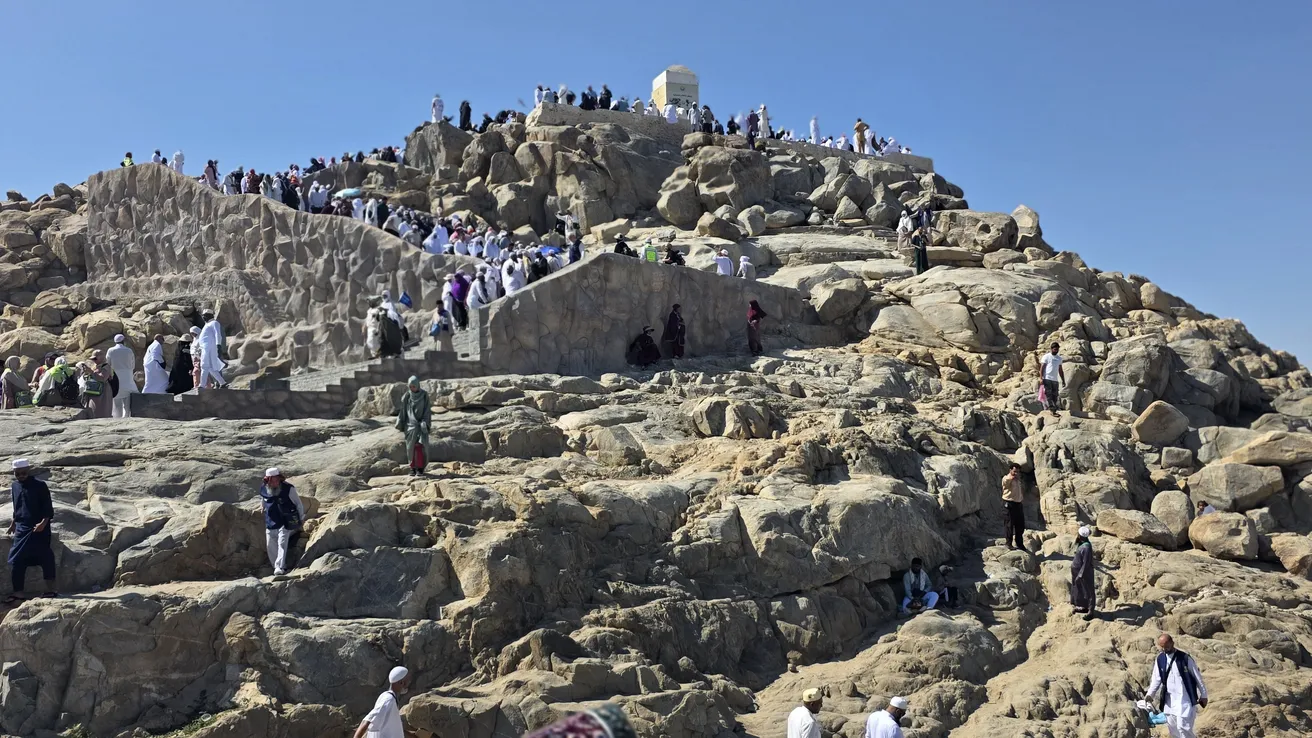
Arafat: Jabal al-Rahmah
When is Hajj 2027?
Hajj takes place in Dhul Hijjah, the last month of the Islamic calendar. Based on the Umm al-Qura calendar, the Day of Arafah in 2027 (1448 AH) is expected on Saturday 15 May 2027, with Eid al-Adha on 16 May. The exact date is announced after the crescent is sighted at the end of Dhul Qadah and may shift by a day.
- Arrival: most pilgrims arrive in the weeks before Hajj, depending on their group's schedule.
- Length of stay: usually 2 to 6 weeks, including the days in Madinah. Choose your data plan for the whole stay.
Your group or authorised Hajj provider confirms your flight dates and whether you visit Makkah or Madinah first; always check the official announcement.
Preparing for Hajj: registration, visa and vaccination
Registration
Each country receives a Hajj quota from Saudi Arabia. Depending on where you live, you register through your national Hajj authority or, in many countries in Europe, the Americas and Australia, through the official Nusuk Hajj platform and an authorised Hajj provider.
Visa and Hajj permit
Hajj can only be performed with an official Hajj visa and permit; it cannot be performed on a tourist or Umrah visa, and Saudi authorities enforce heavy penalties for Hajj without a permit. Keep the Hajj card (Nusuk card) issued by the Saudi authorities with you at all times; it is checked at the holy sites.
Vaccination and health
Saudi Arabia requires a meningococcal (ACWY) vaccination for pilgrims, given at least 10 days before arrival. If you have a chronic condition, bring enough medication for the whole trip together with your prescription.
The days of Hajj step by step
The pillars of Hajj include ihram, standing at Arafah and Tawaf al-Ifadah. The main days of Hajj span five days:
- 8 Dhul Hijjah — Day of Tarwiyah: pilgrims in ihram move to Mina and spend the night in the tents.
- 9 Dhul Hijjah — Day of Arafah: the standing (wuquf) at Arafat in the afternoon, the heart of Hajj. After sunset pilgrims move to Muzdalifah, spend the night there and collect pebbles.
- 10 Dhul Hijjah — Eid al-Adha: stoning of Jamarat al-Aqabah in Mina, the sacrifice, shaving or trimming the hair and leaving ihram. Tawaf al-Ifadah can be performed from this day.
- 11–13 Dhul Hijjah — Days of Tashreeq: pilgrims stay in Mina and stone the three Jamarat each day.
- Farewell Tawaf: performed before leaving Makkah.
For full guidance and supplications, follow a trusted Hajj guide or your group's scholar, who will lead you through each step.
Staying in touch in Mina and Arafat
During the days of Hajj, millions of people gather in a few square kilometres. At that density every network slows down; no line, eSIM included, is immune. To be prepared:
- Save your tent location: thousands of tents in Mina look alike. Save your tent number, group name and map location on your phone and take a screenshot.
- Download maps in advance: download Makkah, Mina, Arafat and Muzdalifah as offline maps so you can find your way when data is slow.
- Agree on a meeting point: decide before you travel where to meet if you get separated; do not rely on your phone alone.
- Send important messages at quieter times: the afternoon of Arafah and the stoning times are the busiest.
- Protect your battery: sockets are hard to find in Mina and Arafat; carry a fully charged power bank.
Ready before you leave
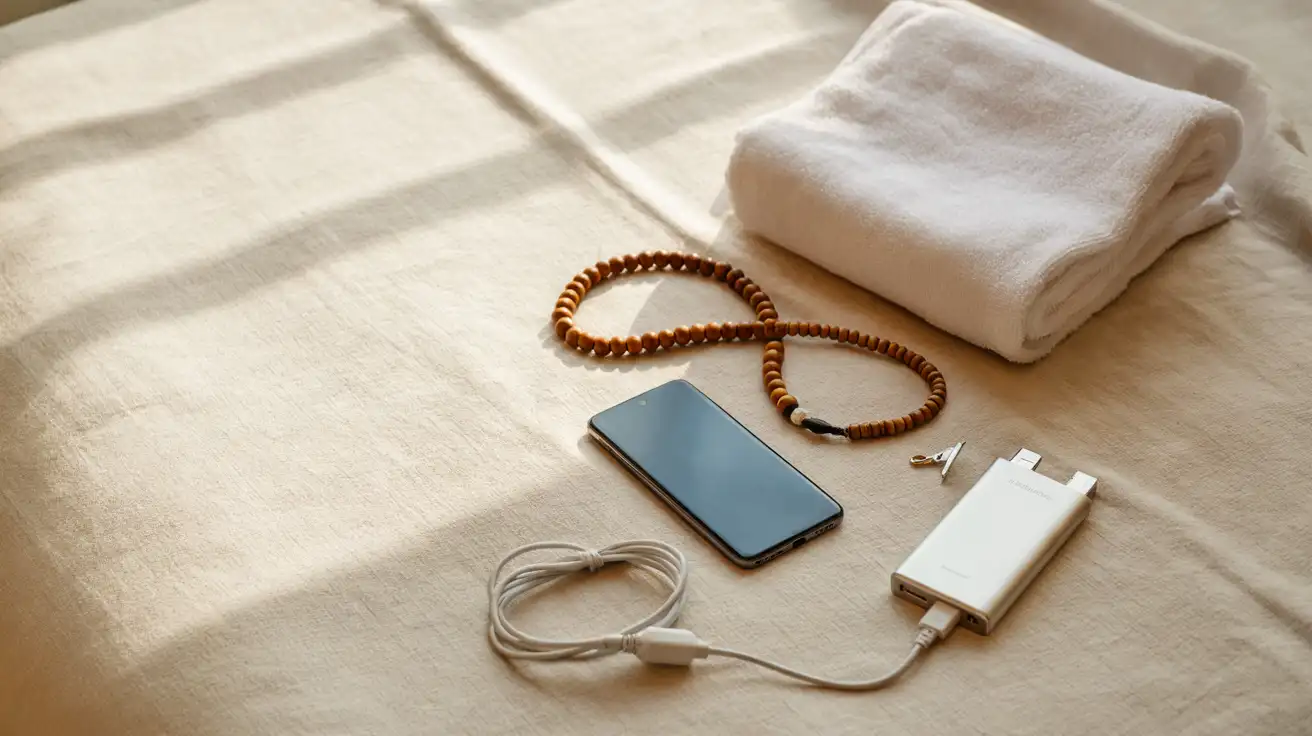
Tips for staying online during Hajj
- WhatsApp is tied to your number, not your SIM: once the eSIM gives you data, you chat and video call with the same number.
- Your bank's verification SMS keep arriving on your home SIM (dual SIM). Charges for incoming calls and SMS depend on your home carrier's roaming terms.
- Group announcements, bus times and meeting points are usually shared in WhatsApp groups; join your group before you travel.
- Crowds slow the network in Mina and Arafat; download offline maps and screenshot your tent number.
- In May, Makkah passes 40 °C and phones overheat too. Keep your phone out of direct sun and your power bank charged. Saudi Arabia uses Type G sockets (3-pin, UK style).
- Traveling with your spouse or parents? You can share data from your phone, but each person having their own eSIM keeps you reachable if you get separated in the crowds.
Checklist before you fly
- Valid passport; Hajj visa and permit arranged by your provider
- Meningococcal (ACWY) vaccination certificate with your passport
- Phone supports eSIM and is carrier-unlocked
- eSIM installed and named
- A copy of the QR code saved on another device or printed
- Data roaming off on your home SIM
- Joined your group's WhatsApp group
- Offline maps of Makkah, Mina, Arafat and Muzdalifah downloaded
- Power bank and Type G plug adapter packed
Internet for Hajj: eSIM vs roaming vs local SIM
eSIMno | Local SIM / Operator | Roaming | |
|---|---|---|---|
| FEATURES | |||
| Setup time | Few minutes | Activated in person at an stc branch after you arrive | Auto |
| No local ID needed | Online checkout | Local ID required | Use home account |
| Speed | 4G/LTE on the Mobily network | Carrier-grade | Partner-dependent |
| Travel support | English support 24/7 | Operator shops and call centre | Home carrier hours |
| Keep home number | Dual SIM | Replaces it | Same number |
| Cost predictability | Fixed price | Prepaid; prices include 15% VAT | Bill-shock risk |
| PRICING | |||
Typical pricing | See plans below | — | $12-18 / day Typical daily roaming rate; varies by home carrier |