
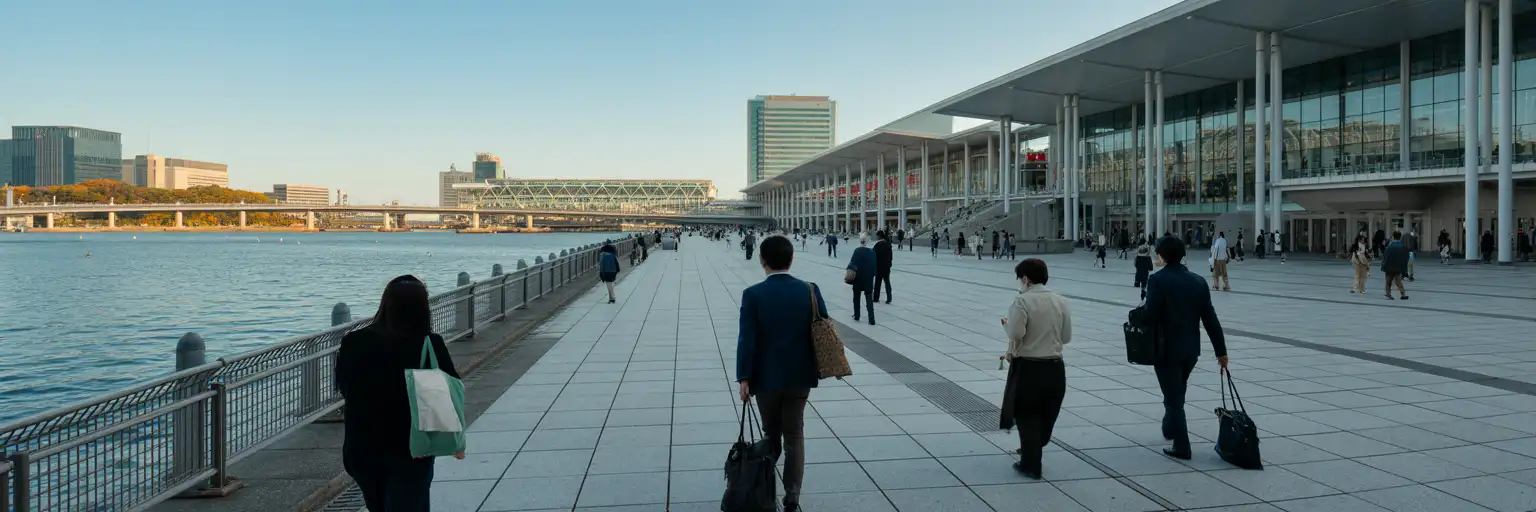
Quick Facts
- Event date
- Thursday, September 24, 2026
- Likely venue area
- Tokyo Big Sight, Ariake, Tokyo Bay
- How long it usually runs
- 4 days total, typically 2 trade days followed by 2 public days
- Typical hall hours
- Approx. 10:00-18:00; final day often ends earlier around 17:00
- Registration / doors
- Plan to arrive 30-45 minutes before your first appointment for badge pickup and security
- Expected attendance
- Roughly 100,000+ visitors across the full run in strong years
- Ticket range
- Trade visitors often register in advance; public day tickets are commonly around ¥1,000-¥1,500, subject to 2026 confirmation
- From Haneda Airport
- About 14 km; 25-40 min by taxi or 35-50 min by rail
- From central Tokyo Station area
- About 8-10 km; 25-35 min by train, 20-30 min by taxi outside peak traffic
- Nearest transit
- Yurikamome Line to Tokyo Big Sight Station; Rinkai Line to Kokusai-tenjijo Station
- Typical taxi fare
- From Ginza/Shimbashi area roughly ¥3,500-¥6,500 depending on traffic and late-night surcharges
- eSIMno Networks
- KDDI, Softbank
Why This Event Pulls the Right Crowd
Some trade fairs are broad enough to feel unfocused. This one really isn’t. Tourism EXPO Japan is Japan’s flagship travel trade fair, and that matters because the people in the halls are there for a reason: destination marketing, travel partnerships, and actual tourism business development. You’re not wandering through random stands hoping for a useful conversation. You’re walking into a venue packed with tourism decision-makers.
That’s also why the mix of attendees is so specific. We’re talking tourism boards, OTAs, airlines, hotels, travel tech firms, and media — the exact crowd most travel brands want to meet in one place. If your work involves partnerships, market representation, airline relations, hotel contracting, or destination storytelling, this is the kind of event where your calendar fills quickly and your follow-up list gets long.
What makes it worth the flight is relevance. Tourism EXPO Japan concentrates the travel industry into one venue in a way that saves time and creates better-quality meetings. You can have a formal buyer conversation at 10:30, bump into a national tourism team at noon, and end up at a waterfront dinner with media or DMO contacts after the show. It’s built for networking, but not the vague kind. The useful kind.
Getting There and Working the Tokyo Bay Rhythm
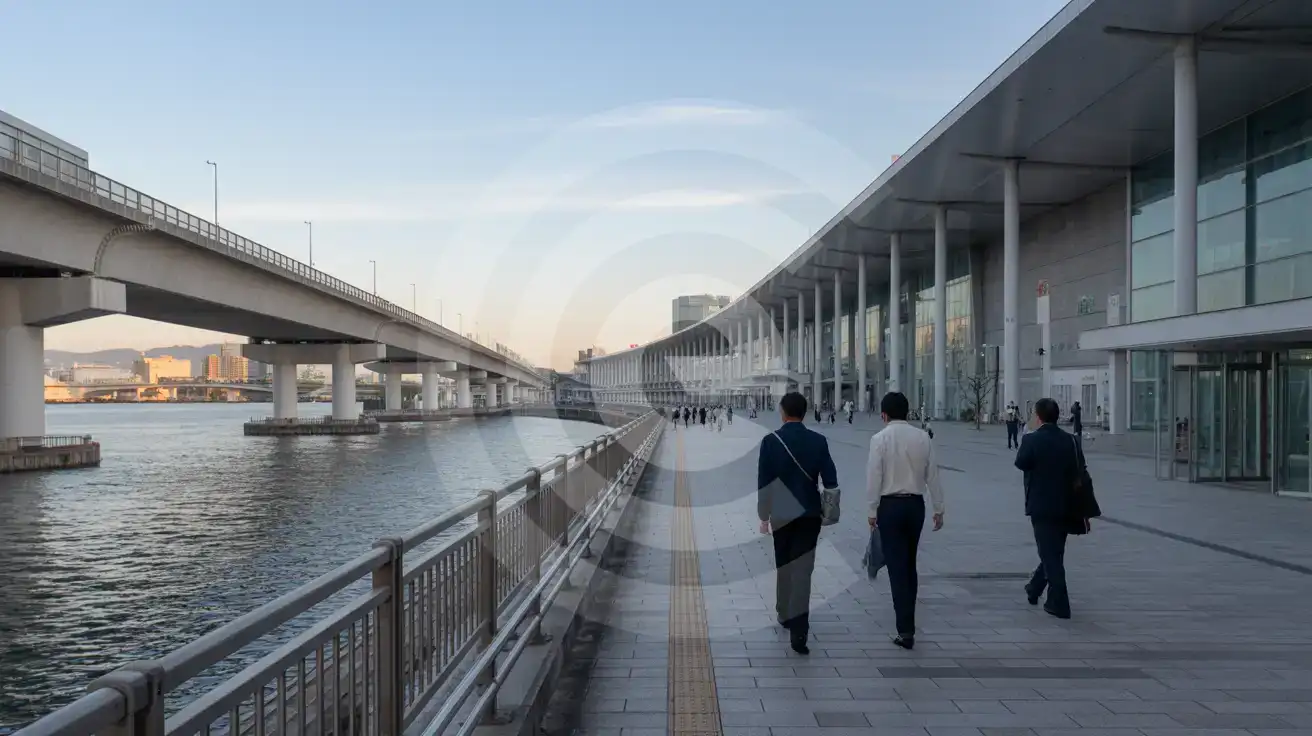
The likely venue for Tourism EXPO Japan 2026 is Tokyo Big Sight in Ariake, which is the natural fit for an event of this scale. It’s one of Tokyo’s biggest exhibition hubs, and it works well for international delegates because the transport links are straightforward once you know the bay-area logic.
Flying in, Haneda is the easy airport. By taxi, the ride to Ariake is often 25 to 40 minutes depending on expressway traffic. By public transport, expect around 35 to 50 minutes using combinations through Shinagawa, Shimbashi, or Tennozu Isle. Narita is farther out — usually 60 to 90 minutes if connections behave, longer in heavy traffic by road. If your schedule is packed on arrival day, Haneda saves real energy.
For rail access, the two stations to remember are Tokyo Big Sight Station on the Yurikamome Line and Kokusai-tenjijo Station on the Rinkai Line. The Yurikamome is useful from Shimbashi and gives you those elevated bay views on the way in. The Rinkai Line is often better if you’re staying around Shinjuku, Shibuya, or Osaki.
Where should you stay? Ariake and Odaiba are the low-stress options if you want to walk or make a very short train ride. Shimbashi is a smart middle ground: more restaurants, easy Yurikamome access, and a more Tokyo feel after hours. Ginza works well too if you want polished business hotels and a 20- to 30-minute taxi run outside the worst rush. For teams that expect evening client dinners, Nihonbashi and Tokyo Station are practical because they connect well across the city while keeping airport transfers manageable.
One small but very real tip: Tokyo rush hours are not the moment to improvise. A live maps app helps you decide whether the Yurikamome, Rinkai Line, or a taxi actually wins that morning. If you want data ready before your first platform change, explore eSIMno plans for Japan before you fly.
Tokyo Bay Expo Mood
What To Do After the Badges Come Off
You probably won’t have huge sightseeing windows during this trip, so the trick is picking places that fit around a trade-fair schedule instead of fighting it.
First, teamLab Planets in Toyosu is close enough to the bay area to work as a pre-dinner detour if you’ve got a lighter afternoon. Book a timed slot, wear trousers you can roll up, and don’t count on venue WiFi for ticket retrieval at the door. Keep the QR handy on your phone.
For food, head to Tsukishima for monjayaki. It’s one of the most Tokyo things you can do without turning the evening into a long cross-city mission. Monja Street has multiple specialist spots, and it’s ideal for informal industry dinners because the pace is relaxed and people stay talking.
If you want something faster and more old-school, Toyosu Senkyaku Banrai is worth a look for seafood-focused bites near the market area. Over by Ginza and Yurakucho, you can go classic with sushi, or keep it simple with an izakaya under the tracks around Yurakucho for a less polished, more fun post-show meal.
Have an extra morning? Walk the gardens at Hama-rikyu. It’s one of those spots that resets your head before another full day of appointments, and it pairs nicely with a water-bus idea if you’re making a leisurely start. Another good option is Odaiba Seaside Park for a quick waterfront breather before heading back to your hotel. And if you want a sharp contrast to the exhibition halls, Kiyosumi Shirakawa is great for specialty coffee and a quieter neighborhood feel.
Don’t leave Tokyo without trying at least one proper bowl of ramen after 21:00. Late dinners are normal here, and some of the best trip conversations happen after the formal agenda is over.
Staying Connected During a Trade-Fair Week
Trade fairs create a very specific kind of phone dependence. At Tourism EXPO Japan, you’re not just checking messages. You’re pulling up badge confirmations, scanning QR entry emails, finding booth numbers, saving contact details, sending your live location to a buyer, checking train delays, and maybe uploading social content from the floor before the day is even over.
That’s where crowded venue WiFi can get annoying fast. It may work fine at 09:15 and feel very different once the halls fill. We’ve seen this pattern at big expo venues again and again: the first thing to fail is not your patience, it’s the little task you assumed would take 10 seconds. Opening a registration email. Loading a map pin. Syncing a CRM note. Sending a file. Tiny jobs, but they stack up.
For this event, mobile data matters most in four moments: right after landing, during morning entry, in the midday meeting crush, and after 18:00 when everyone is trying to choose the same trains and the same dinner district at once. A stable connection helps with Google Maps, Japan transit apps, translation, and group chats when your team splits across the venue.
If that sounds familiar, it’s a good sign to sort it out before departure. You can explore eSIMno plans for Japan so your phone is ready for Ariake station exits, last-minute table bookings, and all those follow-up messages you promised to send before the night is over.
How to Connect for This Specific Expo Trip
- Before departure: save the essentials offline
Screenshot your registration confirmation, hotel address in Japanese, and the route to Tokyo Big Sight from your arrival airport. If your inbox decides to load slowly at the venue entrance, you’ll still move. - On arrival at Haneda or Narita: get data working before the first train change
The transfer into Tokyo often means platform decisions, timetable checks, and one eye on team messages. Having your phone connected before you leave the airport makes the move into Ariake or Shimbashi much calmer. - On show morning: use mobile data for badge lookup and hall navigation
Arrive 30 to 45 minutes early, especially on opening day. That gives you time for registration lines, security, and a final booth-map check without relying on busy public WiFi. - After halls close: keep your connection for dinner shifts and contact follow-up
The event day rarely ends at the venue doors. You’ll likely be heading to Tsukishima, Ginza, or Yurakucho, sharing pins, changing reservations, and sending ‘good to meet you’ messages while details are still fresh.
Useful Little Things That Save Time
- Tokyo taxis are clean and reliable, but for Tokyo Big Sight they make most sense early morning, late evening, or when carrying booth materials; in peak traffic, trains often win.
- If you’re meeting Japanese partners for dinner, being 5 minutes early still counts as on time. Being 10 minutes late without a message feels different here.
- Keep some cash on hand even though cards are widely accepted. Smaller food spots and older-style izakaya choices can still surprise you.
Compare Connectivity for Tourism EXPO Japan 2026
 Recommended Recommended | Local SIM / Operator | Roaming | |
|---|---|---|---|
| FEATURES | |||
| Setup time | Few minutes | Store visit + paperwork | Auto |
| No local ID needed | Online checkout | Local ID required | Use home account |
| Speed | 4G/LTE; 5G in some areas | Carrier-grade | Partner-dependent |
| Travel support | English support 24/7 | Operator shops and call centre | Home carrier hours |
| Keep home number | Dual SIM | Replaces it | Same number |
| Cost predictability | Fixed price | Bills can spike | Bill-shock risk |
| PRICING | |||
Typical pricing | See plans below | — | — |
PRICING — PICK YOUR ESIMNO PLAN
Destination overview
Frequently Asked Questions
Featured eSIM plans
Japan Mobile

Japan Mobile
Japan Mobile
Japan Mobile
Japan Mobile
Japan Mobile
Japan Mobile
Japan Mobile