
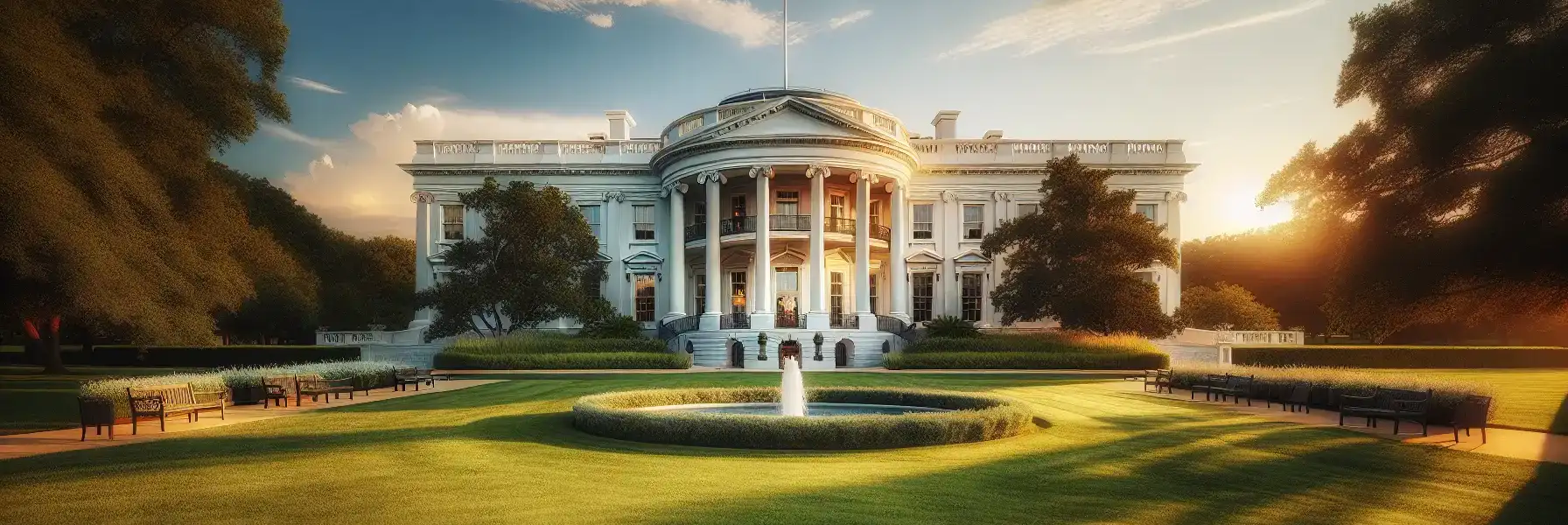
Quick Facts
- Address
- 1600 Pennsylvania Avenue NW, Washington, D.C. 20500
- Tour Hours
- Tuesday–Saturday, 8:00 a.m.–12:30 p.m. (subject to change)
- Admission
- Free (advance request required)
- Tour Request Lead Time
- 21 days to 3 months in advance
- Visitor Center Hours
- Daily 7:30 a.m.–4:00 p.m. (no reservation needed)
- Nearest Metro Stations
- McPherson Square, Federal Triangle, Metro Center
- Official Website
- whitehouse.gov
- eSIMno Networks
- AT&T, T-Mobile, Verizon
About The White House
Every American president since John Adams has called 1600 Pennsylvania Avenue home, yet the man who commissioned it — George Washington — never spent a single night within its walls. The timeline tells the story: Washington approved Irish-born architect James Hoban's design in 1792 after a public competition, construction began that same year using Aquia Creek sandstone quarried in Virginia, and the building wasn't habitable until November 1800, eight months after Washington's death.
Hoban drew inspiration from Leinster House in Dublin, blending Palladian symmetry with Georgian restraint to create what was then the largest house in the United States. The result was a three-story neoclassical residence painted white to seal the porous sandstone — though the 'White House' name wouldn't become official until Theodore Roosevelt added it to presidential stationery in 1901.
Fire, Reconstruction, and Rebirth
The building's current form owes as much to disaster as to original design. In August 1814, during the War of 1812, British forces under Admiral George Cockburn set fire to the residence, leaving only the exterior walls standing. First Lady Dolley Madison famously ordered Gilbert Stuart's full-length portrait of George Washington cut from its frame and evacuated before the flames arrived — the same painting that hangs in the East Room today.
Hoban returned to oversee reconstruction, and President James Monroe moved back in by 1817. The South Portico followed in 1824, the North Portico in 1829. But the building's most dramatic transformation came in the twentieth century. Theodore Roosevelt commissioned McKim, Mead & White in 1902 to create the West Wing, separating presidential offices from family quarters. Then, between 1948 and 1952, structural failures forced President Harry Truman to authorize a complete gut renovation — workers removed everything but the exterior walls and rebuilt the interior around a new steel frame. The residence you tour today is essentially a 1952 reconstruction wearing 1800s skin.
The Complex Today
The White House complex encompasses far more than the Executive Residence visitors tour. The West Wing houses the Oval Office, Cabinet Room, Roosevelt Room, and the Situation Room — all closed to public access. The East Wing, traditionally home to the First Lady's offices, contains the public tour entrance. The Old Executive Office Building (now Eisenhower Executive Office Building) sits adjacent on 17th Street, its French Second Empire architecture housing most White House staff.
The National Park Service administers the site as part of President's Park, a designation that includes the Ellipse, Lafayette Square, and the surrounding grounds. The building was declared a National Historic Landmark in 1960. Its image appears on the reverse of the twenty-dollar bill, and its address remains the most recognized in American politics.
Highlights & Must-See
Public tours follow a self-guided route through the Ground Floor and State Floor of the Executive Residence, entering through the East Wing and exiting near the North Portico. The entire walk takes roughly 45 minutes, though you'll want to linger in several rooms.
The East Room
This is the largest room in the White House — 80 feet long, 37 feet wide — and it carries more historical weight per square foot than perhaps any other interior in America. Seven presidents have lain in state here, including Abraham Lincoln in 1865 and John F. Kennedy in 1963. The room has hosted weddings (including those of presidential daughters Lynda Bird Johnson and Tricia Nixon), press conferences, bill signings, and state receptions. Above the mantel at the east end hangs Gilbert Stuart's 1797 full-length portrait of George Washington, the painting Dolley Madison saved from British flames. The room's current appearance dates largely to the 1902 Roosevelt renovation, with its classical columns, Bohemian glass chandeliers, and white-and-gold color scheme.
The Green Room
Originally intended as a dining room, this State Parlor now serves as a reception area decorated in — unsurprisingly — green silk wall coverings. The room's furniture reflects American Federal style from the early 1800s, and the walls display landscapes by nineteenth-century American painters. Thomas Jefferson used this space as a dining room during his presidency; today it often serves for small teas and intimate gatherings before state dinners.
The Blue Room
The oval shape of this room directly influenced the design of the Oval Office in the West Wing. Decorated in French Empire style under President James Monroe, the Blue Room serves as the principal reception room for guests arriving at formal events. Every December, the official White House Christmas tree stands here — a tradition dating to 1961. The room's blue silk fabric, gilded furniture, and French motifs create one of the most photographed interiors in American politics.
The Red Room
Smaller and more intimate than the Blue Room, the Red Room serves as a parlor decorated in American Empire style with red silk walls and nineteenth-century furniture. First Ladies have traditionally used this room for small receptions and teas. The Gilbert Stuart portrait of Dolley Madison hangs here — fitting, given her role in saving the house's most famous painting during the 1814 fire.
The State Dining Room
Located at the west end of the State Floor, this room seats approximately 140 guests for state dinners — the formal diplomatic occasions that represent the pinnacle of White House entertaining. G.P.A. Healy's portrait of Abraham Lincoln hangs above the mantel, one of the most reproduced presidential images in American history. The room underwent significant changes during the Theodore Roosevelt renovation, expanding to its current dimensions and receiving the English oak paneling that defines its character.
The Cross Hall and Entrance Hall
These marble-columned corridors connect the State Rooms and serve as the primary circulation spine of the State Floor. Presidential portraits line the walls — you'll pass images of Kennedy, Reagan, Clinton, and both Bushes. The Cross Hall runs east-west, while the Entrance Hall provides the formal approach from the North Portico. During state dinners, this corridor transforms into a reception space where guests mingle before entering the State Dining Room.
Exterior Views
Even visitors without tour reservations can appreciate the White House from public vantage points. The North Façade, with its iconic North Portico and columned entrance, faces Pennsylvania Avenue and is visible from Lafayette Square. The South Façade, with its curved South Portico and views toward the Washington Monument, can be seen from the Ellipse and E Street NW. The iron fencing surrounding the grounds was installed in 1833; the fountain on the South Lawn dates to 1871.
Visit Strategy
Visiting the White House requires more advance planning than almost any other attraction in Washington. Understanding the ticket process, timing, and security requirements will determine whether you actually step inside or simply photograph the fence line.
Securing Tour Access
There is no walk-up entry. There are no tickets for sale. U.S. citizens must request tours through their Member of Congress — specifically, through the office of their Representative or one of their two Senators. Each congressional office has a staff member who handles White House tour requests, and they'll need your full legal name, date of birth, Social Security number (for citizens), and country of birth. Submit requests 21 days to 3 months in advance; earlier is better, especially for peak spring and summer dates.
Foreign nationals follow a different path. You must contact your country's embassy in Washington, D.C., which will submit the request on your behalf through diplomatic channels. Processing times vary by embassy, and approval is not guaranteed. Start this process as early as possible — ideally when you book your flights.
All tour requests undergo Secret Service screening. Your government-issued photo ID must match the name submitted exactly. Discrepancies mean denial at the gate.
Best Time to Visit
Tours run Tuesday through Saturday, typically 8:00 a.m. to 12:30 p.m., though hours shift based on official White House schedules. The first tour slots — 8:00 and 8:30 a.m. — tend to have smaller crowds and fresher air. By 11:00 a.m., the State Floor can feel congested.
Seasonally, late March through mid-April coincides with the National Cherry Blossom Festival, when the Tidal Basin's trees peak and Washington fills with visitors. September and October offer cooler weather, lower humidity, and thinner crowds. Avoid inauguration week (late January following presidential elections), federal holidays, and periods when Congress is in recess — tour availability drops during these windows.
Security and Prohibited Items
Security screening rivals airport checkpoints. Prohibited items include backpacks larger than 17 inches by 12 inches by 6 inches, tripods, monopods, selfie sticks, camera bags, video cameras, tablets larger than 3 inches thick, food, beverages, strollers, and weapons of any kind. Essentially, bring your phone, your ID, and nothing else.
Personal photography with cell phones and cameras with lenses under 3 inches is permitted on the tour route. Video recording is prohibited inside the residence. Flash photography is not allowed in certain rooms. There's no bag check — if you bring a prohibited item, you'll be turned away.
Recommended Duration
The self-guided tour takes approximately 45 minutes. Budget additional time for security screening (15-20 minutes), potential queue delays, and the walk from Metro. If you're starting at the White House Visitor Center first, add another 30-45 minutes for exhibits and the 14-minute film. Total time commitment: 2 to 2.5 hours for a thorough experience.
The White House Visitor Center Alternative
If you can't secure a residence tour, the Visitor Center at 1450 Pennsylvania Avenue NW requires no reservation and offers substantial content. Exhibits cover White House architecture, presidential families, the Oval Office, and the building's operational history. A 14-minute film provides context you won't get on the tour itself. Open daily 7:30 a.m. to 4:00 p.m., free admission. It's not the same as walking through the East Room, but it's far better than nothing.
Site Walk-Through & Photographer's Guide
The White House rewards photographers who understand light, angles, and the difference between public viewpoints and tour interiors. This section breaks down the optimal sequence for both casual snapshots and serious compositions.
Recommended Walk Sequence
Start your day at Lafayette Square, directly north of the White House across Pennsylvania Avenue. Arrive by 7:00 a.m. for soft morning light on the North Façade — the columned North Portico faces east-northeast, catching warm tones in the first hour after sunrise. After photographing from the square, walk east along Pennsylvania Avenue past the Treasury Building to 15th Street, then south to the Ellipse for South Façade views. The South Portico's curved colonnade photographs best in late morning when direct sunlight illuminates the curved form. If you have a residence tour scheduled, return north to the East Wing entrance by your appointed time.
Post-tour, head south through the Ellipse toward the Washington Monument. This path offers the classic telephoto compression shot: White House foregrounded against the Monument's obelisk. Continue south to the National Mall for afternoon activities, returning to Lafayette Square at golden hour (roughly 6:00-7:30 p.m. in summer, 4:00-5:30 p.m. in winter) when warm light paints the North Façade again.
Key Structures to Spend Time At
The North Portico: This is the money shot — the image on the twenty-dollar bill, the backdrop for every presidential address from the north side. The best unobstructed views come from the northwest corner of Lafayette Square, near the statue of Rochambeau. A 70-200mm lens compresses the portico beautifully; wider angles include too much fence and security infrastructure.
The South Portico: The curved colonnade and Truman Balcony (added in 1948) face the Ellipse and Washington Monument. Access the viewing area from E Street NW between 15th and 17th Streets. Morning light works best; by afternoon, the sun swings west and the façade falls into shadow.
Lafayette Square: The park itself merits attention beyond its viewpoint function. The equestrian Andrew Jackson statue at center has stood since 1853. Four corner statues honor foreign Revolutionary War allies: Lafayette, Rochambeau, Kosciuszko, and von Steuben. St. John's Episcopal Church on the north side — the 'Church of the Presidents' since 1816 — has hosted every sitting president since James Madison.
The Eisenhower Executive Office Building: Next door to the West Wing on 17th Street, this French Second Empire granite pile (completed 1888) photographs dramatically at sunset when warm light catches its mansard roofs and columns. The building isn't open for tours, but its exterior architecture rivals the White House itself for visual interest.
The Treasury Building: East of the White House on 15th Street, this Greek Revival structure features the most impressive colonnade in Washington outside the Lincoln Memorial. The north façade faces Pennsylvania Avenue; the south façade overlooks Hamilton Place.
Best Photo Spots & Lighting Times
Morning (7:00-9:00 a.m.): Lafayette Square for North Façade shots with warm sidelight. The Andrew Jackson statue makes a strong foreground element.
Midday (10:00 a.m.-2:00 p.m.): South Façade from the Ellipse; harsh overhead light works better on the white sandstone than on most buildings.
Golden Hour (varies by season): Return to Lafayette Square for the softest light. The North Portico glows amber 30 minutes before sunset.
Blue Hour (20 minutes post-sunset): The White House exterior lights illuminate, creating balanced exposures between artificial lighting and fading sky. Tripods are permitted on public sidewalks but not inside the fence line.
Restoration & Excavation Status
The White House undergoes continuous maintenance managed by the National Park Service and General Services Administration. Exterior stonework restoration is ongoing — the original Aquia Creek sandstone requires periodic repointing and cleaning. Interior renovations happen during presidential transitions or summer recesses, typically affecting rooms not on the public tour route. Security infrastructure upgrades have added barriers and bollards around the perimeter over the past two decades, affecting some historic sight lines. The most visible recent addition is the reinforced fence system completed in 2019, raising the north fence from 6.5 to 13 feet.
Souvenirs & On-Site Shopping
The White House Visitor Center gift shop offers the best selection of official merchandise: presidential seal items, White House Christmas ornaments (annual collector's editions dating back decades), books on presidential history, and replica furniture pieces. The Christmas ornaments make genuinely unique gifts — each year's design commemorates a specific president or historical theme. Skip the generic patriotic merchandise available from street vendors along Pennsylvania Avenue; the Visitor Center items carry official White House Historical Association branding and support preservation efforts. Coffee table books on White House architecture and First Family history range from $20 to $75.
Nearby Attractions & Logistics
The White House sits at the northern edge of monumental Washington, with the nation's most concentrated collection of memorials, museums, and government buildings within easy walking distance. Planning a full day around your White House visit makes logistical sense.
Walking Distance Attractions
The Washington Monument (10 minutes south): The 555-foot marble obelisk dominates the Mall axis. Free timed-entry tickets are available through recreation.gov up to 30 days in advance; same-day tickets release at the Washington Monument Lodge starting at 8:30 a.m. The elevator ride to the 500-foot observation level takes 70 seconds and offers views in every direction.
The Lincoln Memorial (25 minutes southwest): Daniel Chester French's 19-foot seated Lincoln anchors the western end of the Reflecting Pool. No tickets required; open 24 hours. Sunrise and sunset visits offer the best light and smallest crowds.
The National Mall Museums: The Smithsonian's free museums line the Mall between 3rd and 14th Streets. The National Museum of American History (flag that inspired the Star-Spangled Banner), National Museum of Natural History (Hope Diamond), and National Air and Space Museum (Wright Flyer, Apollo 11 capsule) are the highest-traffic options. All open at 10:00 a.m. daily.
Ford's Theatre (10 minutes northeast): The site of Lincoln's assassination operates as both a working theater and a museum. The theater itself requires timed-entry tickets; the museum in the basement is free. Across the street, the Petersen House where Lincoln died opens to visitors.
Metro Connections
Three stations serve the White House area on different lines:
McPherson Square (Blue/Orange/Silver): Exit at 14th and I Streets, walk south two blocks. Closest to Lafayette Square.
Federal Triangle (Blue/Orange/Silver): Exit at 12th Street and Pennsylvania Avenue, walk west along Pennsylvania. Best for the Visitor Center.
Metro Center (Red/Blue/Orange/Silver): The system's central transfer hub at 12th and G Streets, 10-minute walk southwest to the White House.
From Reagan National Airport, take the Blue or Yellow Line to Metro Center (approximately 20 minutes). From Dulles International, the Silver Line runs to Metro Center (approximately 55 minutes from Dulles station, plus 15-minute shuttle from terminals).
Food Options
The White House area is government office territory, light on dining but heavy on coffee shops and quick-service lunch spots. For better options, walk 10 minutes north to the Penn Quarter/Chinatown neighborhood (8th and H Streets area) where restaurants range from José Andrés's Jaleo to fast-casual options. Lafayette Square itself has limited dining — the Hay-Adams Hotel's Off the Record bar offers upscale drinks and appetizers with a political clientele.
Why Data Matters at The White House
The White House neighborhood operates on security protocols that can scramble plans with zero notice. Presidential motorcades close Pennsylvania Avenue without warning. Tour schedules shift based on diplomatic events you won't know about until you arrive. The Visitor Center's hours change seasonally. Having reliable mobile data transforms these disruptions from crises into minor inconveniences.
Real-time traffic apps reroute you around Secret Service closures. Google Maps walking directions calculate the fastest path from Metro Center to your tour entrance. Translation apps help international visitors navigate the congressional request process. And when you're photographing the North Façade at golden hour, you'll want to upload shots before the light fades.
An eSIMno plan for the United States connects you to AT&T or T-Mobile networks the moment your plane touches down at Dulles or Reagan National. No hunting for airport SIM kiosks, no carrier stores in a city you don't know yet. Your phone works American-style — high-speed data, reliable coverage across the National Mall — from the second you clear customs.
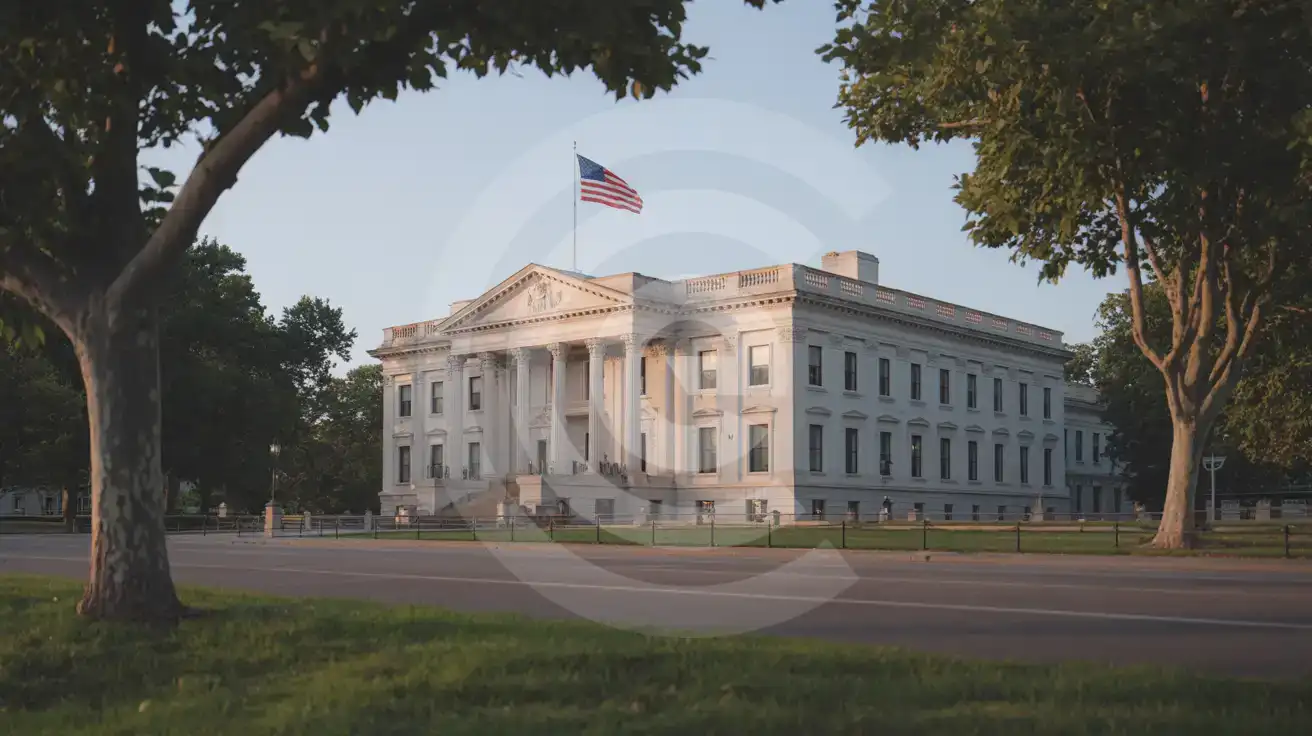
The White House North Façade
Compare WiFi Options at The White House
 Recommended Recommended | Local SIM / Operator | Roaming | |
|---|---|---|---|
| FEATURES | |||
| Setup time | Few minutes | Store visit + paperwork | Auto |
| No local ID needed | Online checkout | Local ID required | Use home account |
| Speed | 4G/LTE; 5G in some areas | Carrier-grade | Partner-dependent |
| Travel support | English support 24/7 | Operator shops and call centre | Home carrier hours |
| Keep home number | Dual SIM | Replaces it | Same number |
| Cost predictability | Fixed price | Bills can spike | Bill-shock risk |
| PRICING | |||
Typical pricing | See plans below | — | — |
PRICING — PICK YOUR ESIMNO PLAN
Featured eSIM plans
American Mobile

American Mobile
American Mobile
American Mobile
American Mobile
American Mobile


