
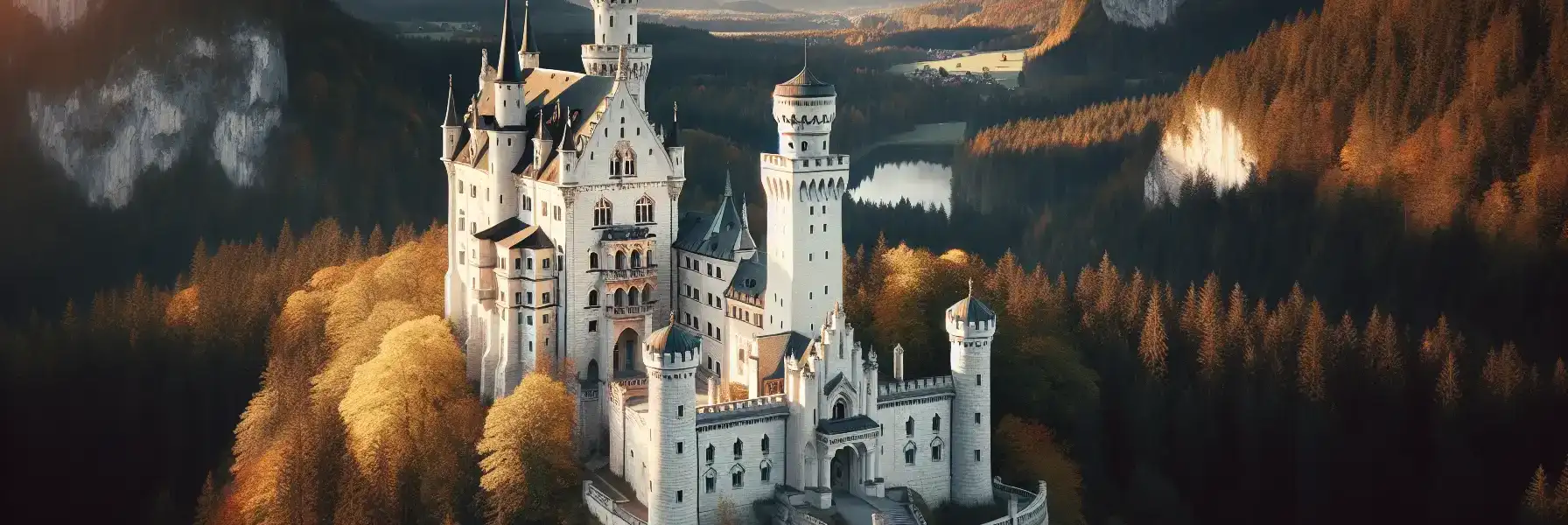
Quick Facts
- Address
- Neuschwansteinstraße 20, 87645 Schwangau, Germany
- Summer Hours
- 9:00–18:00 (late March–mid October)
- Winter Hours
- 10:00–16:00 (mid October–late March)
- Adult Ticket
- €18 (online) / €20 (on-site)
- Tour Duration
- 30–35 minutes guided
- Closed
- 1 Jan, Shrove Tuesday, 24-25 Dec, 31 Dec
- Nearest Station
- Füssen (then Bus 73/78)
- Official Site
- hohenschwangau.de
- eSIMno Networks
- O2, T-Mobile, Vodafone
About Neuschwanstein Castle
Neuschwanstein Castle exists because one Bavarian king refused to accept that the age of chivalry had ended. Ludwig II commissioned this palace in 1868, laid the foundation stone on September 5, 1869, and spent the next seventeen years pouring royal funds into a theatrical vision of medieval kingship that had never actually existed. The castle wasn't designed by an architect in the conventional sense — Christian Jank, a Munich stage designer known for his opera sets, created the initial drawings. Eduard Riedel translated Jank's theatrical fantasies into structural plans, later succeeded by Georg von Dollmann and Julius Hofmann as costs spiraled and Ludwig's demands intensified.
The irony of Neuschwanstein is that Ludwig built it as a private refuge from public life, yet he occupied it for only 172 days before his death in June 1886. The palace was unfinished when he died — only fourteen rooms were completed, with the Throne Hall lacking its intended throne and entire wings existing only as sketches. Within six weeks of Ludwig's body being recovered from Lake Starnberg under circumstances that remain officially unexplained, the Bavarian government opened Neuschwanstein to paying visitors to begin recovering the massive debts the king had accumulated.
That commercial imperative has never stopped. Today the castle receives approximately 1.4 million visitors annually, making it one of the most visited palaces in Europe. The Bavarian Palace Department (Bayerische Schlösserverwaltung) administers the site with German efficiency: timed entry tickets, strictly guided tours, and clear crowd management protocols. The castle's global recognition comes partly from its location — the towers rising above the Pöllat Gorge against an Alpine backdrop — and partly from its afterlife as the acknowledged inspiration for the Sleeping Beauty Castle at Disneyland. Walt Disney reportedly visited in 1935, and the influence on his Magic Kingdom designs is undeniable.
Architecturally, Neuschwanstein represents Romanesque Revival filtered through operatic romanticism. The white limestone facade, the round towers, the red brick foundations, the integration of medieval defensive features that served no defensive purpose — all of it was theater. Ludwig wasn't building a fortress; he was building a three-dimensional tribute to Richard Wagner's operas and to the Germanic legends Wagner dramatized. The Lohengrin swan motif appears throughout the castle. Scenes from Tannhäuser and Parsifal cover entire walls. Walking through Neuschwanstein is walking through Ludwig's imagination, frozen at the moment of his death.
Highlights & Must-See Rooms
The Throne Hall (Thronsaal)
Spanning the third and fourth floors of the Palas, the Throne Hall represents Ludwig's most ambitious interior. The design references the Allerheiligen-Hofkirche in Munich and the Hagia Sophia in Constantinople — an unusual blend for a Bavarian palace. Byzantine-style murals depict six canonized kings ascending toward a Christ in Majesty painting in the apse. The mosaic floor, composed of over two million stones, features animals and plants in intricate patterns. Most haunting: the alcove where Ludwig's throne was meant to stand remains empty. The gold and ivory throne was never completed before his death, leaving a void at the heart of his grandest room.
The Singers' Hall (Sängersaal)
This hall occupies the entire fourth-floor eastern wing, modeled directly on the Sängersaal at Wartburg Castle in Thuringia — the legendary site of the medieval song contest dramatized in Wagner's Tannhäuser. But Ludwig's version exceeds the original in scale and elaboration. Frescoes covering the walls illustrate the Parzival legend, tracing the Grail knight's journey from ignorance to enlightenment. The room was designed for performance, though Ludwig rarely hosted public events; he preferred private concerts or no audience at all.
The King's Bedroom
Fourteen woodcarvers spent more than four years creating the elaborate late Gothic bed canopy and wall paneling. Every surface is carved oak, depicting tracery, pinnacles, and figures drawn from Germanic legend. The murals tell the story of Tristan and Isolde across multiple panels. A technological surprise: the washstand receives running water piped from a natural spring above the castle — a modern convenience hidden within medieval aesthetics.
The Grotto
Between the study and living room, Ludwig installed an artificial stalactite cave complete with waterfall and colored electric lighting. The Grotto references the Venusberg scene from Tannhäuser, where the knight Tannhäuser dwells in hedonistic captivity with the goddess Venus. Ludwig could adjust the lighting to simulate different times of day. The effect remains startling — walking from a formal study into a theatrical cave, then emerging into a sitting room.
The Study and Living Room
Ludwig's working spaces reflect the swan motif from Lohengrin. Silk wall coverings, painted ceiling panels, and carved furniture all incorporate swan imagery. The study's centerpiece: a large painting depicting the Lohengrin legend, the swan knight arriving to defend the innocent. Ludwig identified deeply with this figure of the pure knight burdened by royal duty.
The Dressing Room
Violet silk wall hangings and paintings depicting the life of the medieval poet Walther von der Vogelweide. The room demonstrates Ludwig's layered iconographic program — every space dedicated to a different thread of Germanic cultural mythology.
The Dining Room
Here the Wartburg connection continues, with murals showing the legendary song contest between Wolfram von Eschenbach and other medieval poets. A mechanical table — the Tischlein-deck-dich — could supposedly be lowered to the kitchen below and raised with prepared food, allowing Ludwig to dine without servants present. The mechanism was never fully completed.
The Adjutant's Room and Servants' Rooms
Rarely discussed but important for understanding the castle's incomplete state. While Ludwig's personal rooms received obsessive attention, the staff quarters remained functional and plain. The castle was designed for the king's fantasy, not operational efficiency.
Visit Strategy
Ticket Strategy
The single most important decision for your Neuschwanstein visit: book tickets online in advance through the official Hohenschwangau ticket center (hohenschwangau.de). Same-day tickets sell out routinely by mid-morning during summer months, often before 10:00. Online reservations cost €18 versus €20 at the window, and more importantly, they guarantee your entry time. You'll select a specific tour slot when booking — take this seriously. Miss your window by more than ten minutes and your ticket becomes void with no refund.
Combination tickets covering both Neuschwanstein and neighboring Hohenschwangau Castle offer better value and historical context. The dual-castle ticket runs approximately €28-30 and automatically schedules your Hohenschwangau tour two to three hours before Neuschwanstein, allowing time for the uphill walk between sites.
Recommended Duration
Budget a full day from Munich. The train journey takes approximately two hours each direction. Once in Hohenschwangau, allow 30-40 minutes to walk uphill to the castle from the ticket center (or take the shuttle bus, which deposits you near Marienbrücke). The guided tour lasts 30-35 minutes. Factor in time for Marienbrücke photography, exploring the castle grounds, and potentially visiting the Hohenschwangau Castle and Museum of the Bavarian Kings.
A realistic schedule: 7:30 train from Munich, arrive Füssen around 9:40, bus to Hohenschwangau by 10:00, Hohenschwangau Castle tour at 10:30, walk up to Neuschwanstein, tour at 13:00 or 13:30, Marienbrücke and grounds until 15:00, Museum of the Bavarian Kings and Alpsee stroll, 17:00 bus back to Füssen, 18:00 train to Munich arriving around 20:00.
Crowd Avoidance
The first morning entry slots (9:00-10:30) draw smaller groups. The period immediately after lunch (13:00-14:00) sees a slight dip as tour groups break for meals. Late afternoon slots work if you're staying overnight in Füssen or Schwangau. Avoid 11:00-12:30 entirely during summer — this is peak tour bus arrival time.
Shoulder seasons offer dramatically better experiences. Late April through May provides spring weather without school-holiday crowds. October combines autumn foliage with thinning visitor numbers and the possibility of early snow on the peaks. January and February are coldest but quietest, though Marienbrücke may be closed due to ice.
Photography Rules
Interior photography and filming are strictly prohibited on the guided tour. This rule is enforced. Exterior photography is unlimited, including from Marienbrücke and throughout the castle grounds. Large bags and backpacks must be stored in lockers at the castle entrance (small coin deposit required, refunded). Bring a small crossbody bag for essentials.
Accessibility
The castle presents significant accessibility challenges. The uphill approach involves steep grades and uneven surfaces. The shuttle bus helps with the ascent but still requires walking from the drop-off point. Interior tours involve multiple staircases with no elevator access. Visitors with mobility limitations should contact the Bavarian Palace Department in advance — alternative arrangements may be possible for certain areas.
Best Time to Visit & Photographer's Guide
Month-by-Month Crowd & Weather
January–February: The quietest months. Expect temperatures between -5°C and 5°C, frequent snow on the ground, and occasional closures of Marienbrücke due to ice. Tour groups thin dramatically. The castle against fresh snow presents a fairy-tale image, but shorter daylight hours limit photography windows. Winter hours (10:00-16:00) apply.
March–April: Transitional weather with unpredictable conditions. Snow may linger on higher elevations while the valley greens up. Crowds begin building toward Easter. Late April offers a sweet spot: spring light, emerging foliage, and pre-summer visitor numbers. Summer hours typically begin late March.
May–June: Arguably the best months for photography. Long daylight hours, lush green forests, wildflowers in the Alpine meadows, and manageable crowds outside weekends. June brings school groups as the academic year ends — weekdays before mid-June are ideal.
July–August: Peak season. Expect 6,000+ daily visitors, sold-out tickets by 9:00, queues at every vantage point, and tour groups cycling through every 5-10 minutes. The weather is warmest (20-28°C), the light harsh at midday. If you must visit in August, book the earliest possible slot and commit to arriving when the ticket center opens.
September: Crowds taper as European schools resume. Weather remains pleasant, early autumn colors begin appearing on the lower slopes. An excellent month for photographers.
October: Peak autumn foliage typically arrives mid-to-late October, transforming the forested hillside into gold and amber. Cooler temperatures (8-15°C), occasional fog in the valley, and significantly reduced crowds. Winter hours may begin mid-month.
November–December: Low season with potential for snow, fog, and limited daylight. Christmas market season draws some visitors to the region. The castle is closed December 24, 25, and 31, and January 1.
Best Time of Day
Sunrise (6:00-8:00 summer): The castle faces roughly northeast, meaning direct sunrise light doesn't illuminate the famous facade. However, the soft pre-dawn and golden-hour light from Marienbrücke creates atmospheric shots with mist rising from the gorge. You won't have interior access this early, but photographers can position for exterior shots before crowds arrive.
Mid-morning (9:00-11:00): The facade receives good side-lighting. This coincides with the earliest tour slots, so combine an interior visit with exterior photography immediately after.
Midday (11:00-14:00): Harsh overhead light and maximum crowds. Not ideal for photography unless shooting details in open shade or waiting for clouds to diffuse the sun.
Late afternoon (15:00-18:00): Warm side-light on the towers. The sun moves to illuminate the western facade portions. Crowds thin as day-trippers begin returning to Munich. This is prime time for Marienbrücke shots if you have flexibility.
Blue hour (30 minutes after sunset): The castle isn't dramatically illuminated, but residual twilight against a blue sky can produce moody images. You'll need a tripod (permitted on exterior grounds after tours end).
Best Photo Spots
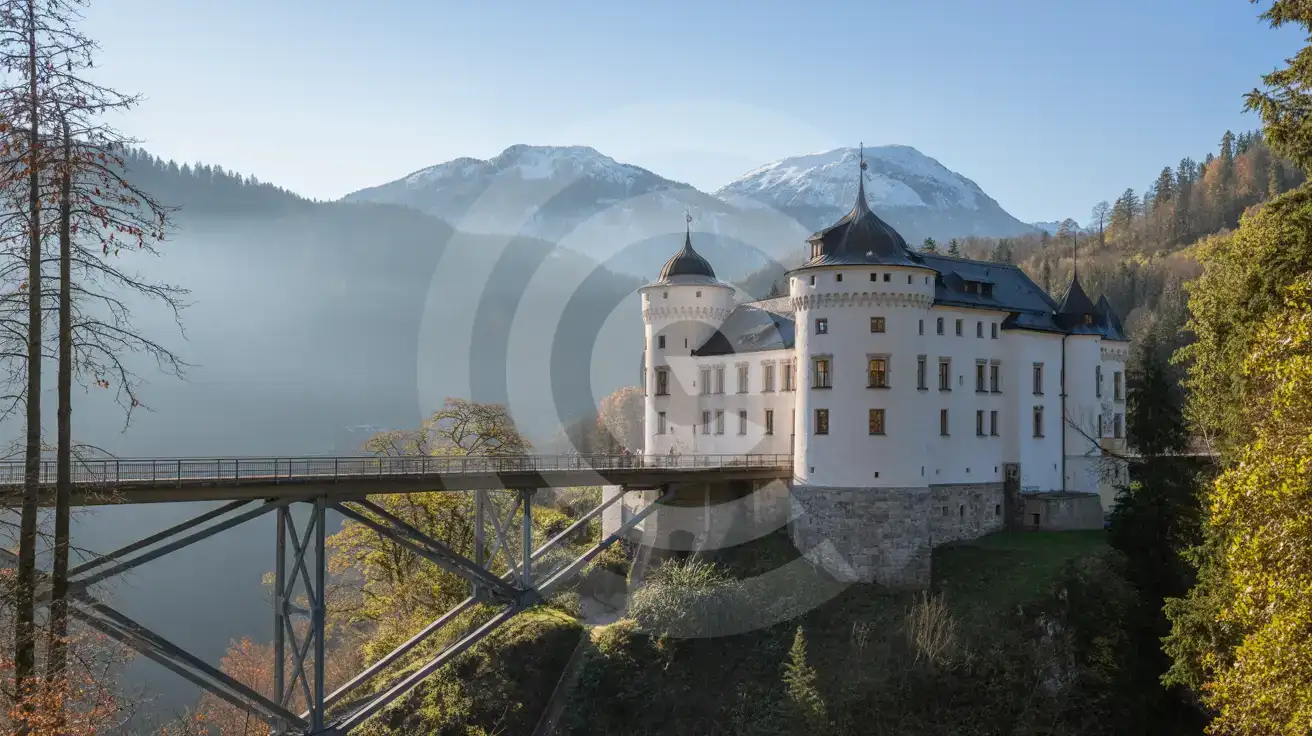
1. Marienbrücke (Mary's Bridge): The iconic vantage point, 90 meters above the Pöllat Gorge. This steel bridge provides the classic frontal view of the castle against the Alpine backdrop. Arrive early — by 10:00 in summer, the bridge becomes crowded with selfie-takers blocking sightlines. The walk from the upper shuttle bus stop takes about 10 minutes.
2. Pöllat Gorge Trail (Pöllatschlucht): When open (closures for rockfall maintenance are common), this trail descends from Marienbrücke through the gorge below the castle. Unique low-angle perspectives of the towers rising above the waterfall. Check current status at the ticket center.
3. The Upper Courtyard: After your interior tour, linger in the courtyard area. The red brick gatehouse and the Palas facade photograph well from here, and crowds disperse quickly as groups move to their next activity.
4. The Approach Path Near the Horse Carriage Turn: About two-thirds up the walking path from the village, a bend offers an angled view of the castle emerging from the trees. Less photographed than Marienbrücke, more intimate.
5. Alpsee Shoreline: The lake below Hohenschwangau village reflects both castles on calm mornings. A 15-minute walk from the ticket center along the shoreline path provides Neuschwanstein framed by forest with the Alpsee in the foreground.
6. Schwanseepark: The park below Hohenschwangau offers a more distant but unobstructed view of Neuschwanstein. Good for telephoto compression shots stacking the castle against mountain ridges.
7. The Road to Tegelberg: Driving or hiking toward the Tegelbergbahn cable car station reveals southeastern angles of the castle. Less accessible without a vehicle but rewarding for dedicated photographers.
Drone & Tripod Rules
Drone flights are prohibited over the castle grounds and surrounding protected landscape without special permit. Enforcement is active. Tripods are not permitted inside the castle (photography is banned anyway) but are allowed on exterior grounds, Marienbrücke, and public trails after normal tour hours. During peak visiting times, tripod use on crowded Marienbrücke may be impractical.
Hidden Sub-Spots Most Tourists Miss
The Lower Gatehouse Passage: Most visitors hurry through the lower entrance gate. Pause in the vaulted passage — the framed view upward toward the main building creates a dramatic tunnel effect.
The Western Terrace: After exiting the interior tour, most visitors turn right toward Marienbrücke. Turn left instead and explore the western terrace area with views toward the Forggensee reservoir.
The Fountain Courtyard: A small courtyard with a fountain between the Palas and the Ladies' Building (never completed). Quieter than the main upper courtyard.
The View from Hohenschwangau Castle: Most visitors do Hohenschwangau before Neuschwanstein. But the terrace at Hohenschwangau offers a unique across-valley perspective on Ludwig's fairy-tale creation — especially atmospheric at dusk.
The Tegelberg Summit: For the truly committed, the Tegelbergbahn cable car (about 4 km from Hohenschwangau) ascends to 1,720 meters. On clear days, Neuschwanstein appears as a white speck in the valley below, contextualized within the full Alpine panorama.
Nearby Attractions & Logistics
Hohenschwangau Castle
A 15-minute walk across the valley from the Neuschwanstein ticket center, Hohenschwangau was Ludwig II's childhood home. His father, King Maximilian II, reconstructed this 12th-century ruin in the 1830s, creating a Neo-Gothic residence filled with Biedermeier furniture and wall paintings depicting Germanic legends — the very legends Ludwig would later monumentalize at Neuschwanstein. The interiors feel more lived-in, more human-scale. Understanding Ludwig's upbringing here illuminates the obsessions that drove his later building projects.
Museum of the Bavarian Kings
Five minutes on foot from the ticket center, this modern museum on the Alpsee shore traces the Wittelsbach dynasty from medieval origins through Ludwig II's tragic end. Personal effects include Ludwig's coronation robe, furniture from his residences, and a reconstruction of the royal dining table. The museum provides historical context that the castle tours, necessarily focused on rooms and architecture, cannot fully deliver.
The Alpsee
This clear Alpine lake sits immediately below the ticket center. A roughly 5-kilometer path circles the shoreline, offering swimming areas in summer and rowboat rentals. The lake provides a cool respite after hours of castle exploration, and the reflections of both castles on calm mornings reward early risers.
Füssen Old Town
The train terminus town deserves an hour if your schedule permits. The Hohes Schloss, a late-Gothic palace above the old town, contains a regional art gallery. St. Mang's Abbey, founded in the 8th century, features Baroque interiors and a local history museum. The pedestrianized Reichenstraße offers cafes, bakeries, and shops selling traditional Bavarian crafts.
Getting There from Munich
Take a regional train from München Hauptbahnhof to Füssen — approximately 2 hours on the Bayerische Regiobahn or DB service. Trains depart roughly hourly, with connections sometimes requiring a change in Buchloe. From Füssen Bahnhof, RVA Bus 73 or 78 reaches Hohenschwangau / Neuschwanstein Castles in about 10 minutes. Buses coordinate with train arrivals. Purchase a Bayern-Ticket for unlimited regional transport if traveling in a group — it covers both the train and the bus.
By car, exit the A7 Autobahn at Füssen and follow signs to Schwangau/Hohenschwangau. Large paid parking lots serve the castle area (approximately €8-10 per day). Summer weekends fill early.
Where to Eat
Options near the castles are limited and tourist-oriented. Hotel Müller, adjacent to the Hohenschwangau ticket center, offers Bavarian standards (Schweinshaxe, Spätzle, Weißwurst) in a dining room with views toward Neuschwanstein. Schlossrestaurant Neuschwanstein, partway up the castle approach path, provides quick meals and terrace seating. For better quality and prices, eat in Füssen proper — Gasthof Krone near the Rathaus serves traditional dishes in a centuries-old building, while Café Prinz offers coffee and cakes in the old town.
Why Data Matters at Neuschwanstein Castle
Neuschwanstein sits in a mobile connectivity gap that catches visitors off guard. The Hohenschwangau valley is rural Bavaria, not downtown Munich — WiFi options are scarce, and café hotspots won't reach you on the forested approach path or at Marienbrücke when you're trying to upload that perfect shot. Your timed entry ticket exists as a QR code on your phone; if you can't load it, you're negotiating with staff while your tour group enters without you.
The logistics compound the problem. Train schedules from Munich require real-time checking when connections run tight. Google Maps navigation from the Füssen station to the correct bus stop saves confusion. Translation apps help with German-only signage at the ticket center. And when you're standing on Marienbrücke watching the light shift, you want your photos backing up to the cloud rather than filling your limited phone storage.
An eSIMno plan connecting through T-Mobile, O2, or Vodafone keeps you reliably online throughout the Bavarian Alps — from Munich Hauptbahnhof through the valley villages to the castle grounds themselves. Activate before departure, and the connectivity question simply disappears from your planning.
The Fairy-Tale Silhouette
Compare WiFi Options at Neuschwanstein Castle
 Recommended Recommended | Local SIM / Operator | Roaming | |
|---|---|---|---|
| FEATURES | |||
| Setup time | Few minutes | Store visit + paperwork | Auto |
| No local ID needed | Online checkout | Local ID required | Use home account |
| Speed | 4G/LTE; 5G in some areas | Carrier-grade | Partner-dependent |
| Travel support | English support 24/7 | Operator shops and call centre | Home carrier hours |
| Keep home number | Dual SIM | Replaces it | Same number |
| Cost predictability | Fixed price | Bills can spike | Bill-shock risk |
| PRICING | |||
Typical pricing | See plans below | — | — |
PRICING — PICK YOUR ESIMNO PLAN
Featured eSIM plans
German Mobile

German Mobile
German Mobile
German Mobile
German Mobile
German Mobile
German Mobile
German Mobile


