

Dates checked on October 3, 2026 · Source
At a Glance
- Event date
- Tuesday, February 9, 2027
- City & venue
- New Orleans — citywide, with the main Mardi Gras Day action centered on Uptown parade routes, St. Charles Avenue, Canal Street, the French Quarter and the CBD
- Nearest airport
- Louis Armstrong New Orleans International Airport (MSY) — typically 25-35 minutes by taxi to the CBD/French Quarter, 35-45 minutes to Uptown in heavy festival traffic
- Where to stay
- French Quarter or Central Business District for walkability; Lower Garden District for easier Uptown parade access
- Tickets
- Free entry for public parade viewing; grandstand packages and private events vary widely, often about US$60-250+
- eSIMno Networks
- AT&T, T-Mobile, Verizon
What to Expect
Here’s the thing about Mardi Gras Day: you don’t arrive at one venue and settle into one seat. You step into a whole city running at carnival volume. That’s exactly why foreign visitors come — for a globally recognized carnival atmosphere, yes, but also for a uniquely local cultural experience that doesn’t feel manufactured. It’s messy, musical, packed, funny, and very New Orleans.
The shape of the day
The main day is the peak of an annual season that has roots going back to the early 1700s in colonial Louisiana, with organized krewes and parades developing in the 19th century. On the big day, crowds often begin claiming curb space by around 7:00-8:00, though some spectators are out earlier. Major viewing stretches along St. Charles Avenue and Canal Street stay active from morning into late afternoon, and the French Quarter remains busy well into the night.
Expected attendance is hard to pin to one official figure because the celebration is citywide, but across the carnival period New Orleans typically receives hundreds of thousands of visitors, with Mardi Gras Day itself among the busiest dates of the year. If you’re a carnival traveler, a culture seeker, a friend-group trip planner, or a first-time U.S. leisure visitor who wants one iconic event rather than a generic city break, this is the right kind of chaos.
What it feels like on the ground
- Uptown: family-heavy in parts, especially farther up St. Charles.
- CBD and Canal Street: denser, louder, faster-moving crowds.
- French Quarter: costumes, street energy, balcony scenes, and very little personal space by midday.
One honest observation: even people who say they’re “not parade people” usually get pulled in after 20 minutes once the bands start coming through.
First-Timer Mistakes to Avoid
Let’s start with the trap nearly everyone falls into: assuming New Orleans moves normally on Mardi Gras Day. It doesn’t.
Getting there from the airport
Louis Armstrong New Orleans International Airport is the main gateway. A taxi from MSY to the French Quarter or CBD usually runs about US$36 flat for up to 2 passengers before extras, while rideshare is often around US$35-60 depending on surge. In festival traffic, allow 25-35 minutes to downtown and up to 45 minutes if streets are already closing near Uptown.
Public transport exists, but with luggage and parade-day road restrictions, most visitors do better with a direct airport transfer. Once you’re checked in, switch to walking and streetcars.
Where to stay
If this is your first Mardi Gras, book one of these areas:
- French Quarter: best if nightlife matters more than sleep.
- CBD/Warehouse District: good hotel stock, easier airport access, walkable to Canal Street.
- Lower Garden District: smart for parade-route access without being stuck deep in the Quarter.
Avoid staying too far out unless you really know the city. A cheap room can turn expensive fast if you’re paying US$25-50 for repeated rides that still can’t get through barricades.
Named transport that actually helps
The historic St. Charles Streetcar is useful before closures tighten, especially for Uptown edges, and the Canal Streetcar helps around downtown. RTA buses run too, but routes can be diverted. Ferries across the Mississippi can be handy if you’re staying on the West Bank, though service timing matters. Download the Le Pass transit app and keep an eye on live service changes.
And one more mistake to avoid: wearing shoes you only trust for dinner. You may easily walk 15,000 to 25,000 steps in a day here.
How to Spend Your Day
Want a Mardi Gras plan that doesn’t feel rushed? Build it around neighborhoods, not checklists.
Morning: pick your parade zone
Start Uptown if you want a more traditional parade-watching setup. Head out early, bring water, and expect the best curb spots to be taken long before lunchtime. If you prefer a denser, more high-energy scene, move toward Canal Street and the CBD later in the morning.
Midday: eat like you’re in New Orleans
Don’t drift into generic festival food if you can help it. Go for local staples nearby:
- Central Grocery area, French Quarter: muffuletta territory.
- Domilise’s in Uptown: po’boys worth the detour if timing allows.
- Café du Monde in the Quarter: beignets, but go early or expect a queue.
- Jackson Square surroundings: gumbo, jambalaya, and quick crawfish dishes during carnival season.
If you want a proper sit-down meal, the Warehouse District and lower Magazine Street usually give you more breathing room than the tightest Quarter blocks.
After the parades
Don’t leave without at least one non-parade stop. Walk through Frenchmen Street for live music after dark; it’s more performance-focused than Bourbon Street. Visit Backstreet Cultural Museum if you want the story behind Mardi Gras Indians and neighborhood traditions — it adds depth to what you’re seeing on the street. And if you need a breather, City Park is a real reset, especially if you’ve had 8 straight hours of noise and beads.
Mini tip: Jackson Square looks best in the softer light near late afternoon, and that’s also when a lot of first-time visitors realize they finally have the photos they came for.
Staying Connected at Mardi Gras
Crowd density is the reason mobile data matters here. In the French Quarter and along major parade stretches, public Wi-Fi is rarely what you’ll want to rely on, and hotel networks don’t help much once you’re outside. You’ll likely use your phone for route changes, rideshare pickup pins, restaurant waits, parade tracking, and the very practical job of finding your friends after someone wanders off for a drink.
QR-based bookings matter too. While the parade viewing itself is free in most areas, plenty of travelers use digital confirmations for hotel check-in, attraction entry, airport rides, or grandstand access. Uploading photos and short videos from packed streets can also chew through data faster than expected — 2 GB to 5 GB over a long carnival weekend is pretty normal, and heavy social posting can go well beyond that.
If you’d rather arrive ready, it helps to explore eSIMno plans for the United States before the trip. In New Orleans, eSIMno connects through AT&T, T-Mobile, and Verizon, which is useful when one part of town feels more congested than another during peak parade hours.
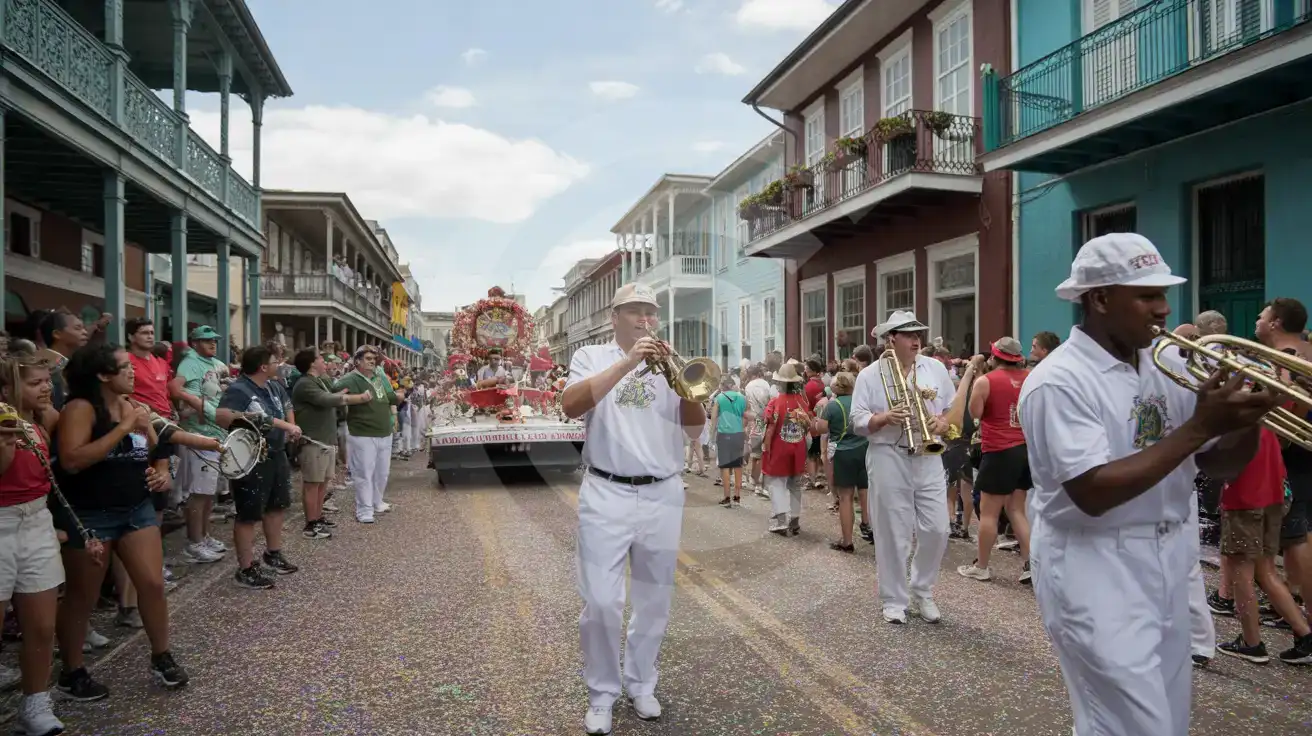
Festival Street Scene
Compare Connectivity for Mardi Gras Day
 Recommended Recommended | Local SIM / Operator | Roaming | |
|---|---|---|---|
| FEATURES | |||
| Setup time | Few minutes | Store visit + paperwork | Auto |
| No local ID needed | Online checkout | Local ID required | Use home account |
| Speed | 4G/LTE; 5G in some areas | Carrier-grade | Partner-dependent |
| Travel support | English support 24/7 | Operator shops and call centre | Home carrier hours |
| Keep home number | Dual SIM | Replaces it | Same number |
| Cost predictability | Fixed price | Bills can spike | Bill-shock risk |
| PRICING | |||
Typical pricing | See plans below | — | — |
PRICING — PICK YOUR ESIMNO PLAN
Featured eSIM plans
American Mobile

American Mobile
American Mobile
American Mobile
American Mobile
American Mobile


