
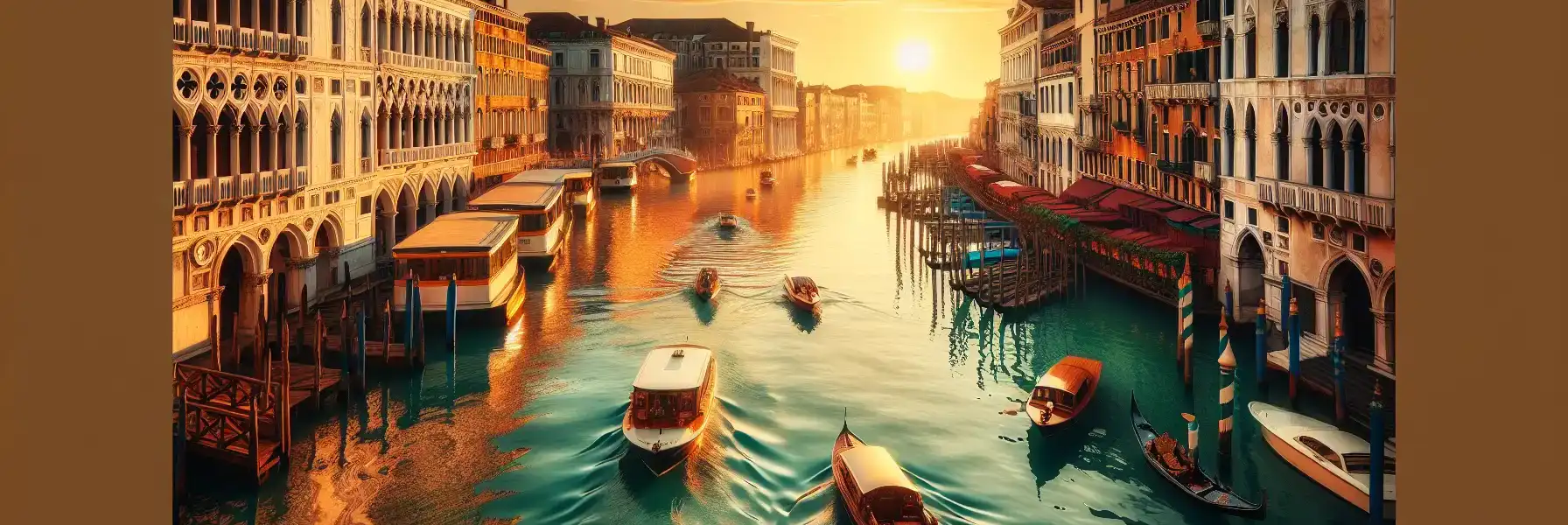
Quick Facts
- Length
- 3.8 kilometers
- Width
- 30-90 meters
- Depth
- Approximately 5 meters average
- Bridges Crossing
- 4 (Rialto, Accademia, Scalzi, Costituzione)
- Transit Operator
- ACTV (Azienda del Consorzio Trasporti Veneziano)
- Vaporetto Single Ticket
- €9.50 (75 minutes)
- 24-Hour Travel Card
- ~€25
- Line 1 Duration
- 40-45 minutes end to end
- Nearest Train Station
- Venezia Santa Lucia (directly on canal)
- Official Transit Info
- actv.avmspa.it
- eSIMno Networks
- Vodafone, Wind Tre
About the Grand Canal
The Grand Canal is not merely a waterway — it is the reason Venice exists in its current form. This reverse-S-shaped channel snakes through the historic center, dividing the city's six sestieri into two halves and serving as the principal thoroughfare for a city built on 118 small islands. Where other medieval cities constructed grand boulevards and market squares, Venice poured its wealth into the canal's banks, lining them with palazzi designed to impress anyone arriving by water.
Origins and Medieval Development
The canal follows a natural channel that existed long before Venice became a city. Early settlers fleeing barbarian invasions on the Italian mainland established communities on the lagoon islands in the 5th and 6th centuries, and the waterway connecting these settlements gradually became the commercial heart of what would grow into a maritime empire. By the 9th century, when the Doge's seat moved permanently to the Rialto area, the Grand Canal had established its role as Venice's main street.
The palaces that line both banks today largely date from the 13th through 18th centuries — the period when Venice dominated Mediterranean trade and Venetian merchants accumulated fortunes that rivaled those of kings. These weren't merely homes; they were statements of power, designed with ornate façades facing the water because the canal was where visitors arrived, where trade goods moved, and where a family's prestige was judged.
Architectural Timeline on the Water
Floating down the Grand Canal is like watching European architectural history unfold in sequence. Byzantine influences appear in the oldest surviving structures, recognizable by their round arches and decorative stonework imported from the eastern Mediterranean. The Ca' d'Oro, completed around 1430, represents the pinnacle of Venetian Gothic — its delicate pointed arches and marble tracery once covered in gold leaf that gave the palace its name. Renaissance symmetry arrived with structures like the Palazzo Grimani, while Baroque exuberance exploded in churches like Santa Maria della Salute, Baldassare Longhena's massive domed offering built after the plague of 1630.
A Working Waterway
Despite its museum-like appearance, the Grand Canal remains an active commercial and transit corridor. Vaporetti (water buses) carry commuters and tourists. Water taxis shuttle passengers willing to pay premium fares. Delivery barges transport everything from construction materials to groceries — Venice has no roads, so everything arrives by water. Ambulance boats race to emergencies. Garbage collection happens by boat. Even hearses are boats. The canal pulses with the practical rhythms of a city that never developed any other way to move.
The water itself presents constant challenges. Tidal flows from the Adriatic push in and out twice daily, creating currents that generations of boatmen have learned to read. Acqua alta — the high water phenomenon most common from November through January — can raise levels by a meter or more, flooding the fondamente (walkways) along the banks and submerging ground floors of palaces. Climate change has intensified these floods, and the MOSE barrier system at the lagoon entrances now deploys to protect the city during extreme events.
Highlights and Must-See Along the Canal
The Grand Canal presents its treasures in sequence, and knowing what to watch for transforms a boat ride into a guided tour through Venetian history. These ten highlights deserve your attention as you float past.
Ponte di Rialto
The Rialto Bridge dominated Grand Canal crossings for centuries as the only permanent span. The current stone structure, completed in 1591 by Antonio da Ponte after a design competition that attracted entries from Michelangelo and Palladio, replaced earlier wooden versions including one that famously collapsed under the weight of a wedding party. The bridge's single arch spans 28.8 meters, lined with shops that have operated continuously since the bridge opened. The views from its central portico remain the most photographed on the canal.
Rialto Markets
Immediately west of the bridge on the San Polo side, the Rialto Markets have operated since medieval times. The Pescaria — the fish market — occupies a neo-Gothic loggia built in 1907, though fish has been sold on this spot for over a thousand years. Adjacent, the Erberia sells produce from the Venetian hinterland. Arrive before noon; fishmongers pack up by 12:00, and the best selection disappears by 10:00. This is where Venetians actually shop, not a tourist recreation.
Ca' d'Oro (Galleria Franchetti)
The 'Golden House' earned its name from the gilding that once covered its intricate Gothic façade — traces remain visible if you look carefully at the carved stonework. Built between 1428 and 1430 for the Contarini family, it represents the apex of Venetian Gothic residential architecture. The interior now houses the Galleria Giorgio Franchetti, including Mantegna's haunting San Sebastiano and works by Titian and Van Dyck. The dedicated vaporetto stop makes access easy.
Palazzo Grassi
This neoclassical palace, the last grand palazzo constructed on the Grand Canal before the Republic fell in 1797, now serves as one of Venice's premier contemporary art venues. French billionaire François Pinault acquired and renovated the building to display his collection, with Japanese architect Tadao Ando designing the interior conversion. Major temporary exhibitions rotate through the dramatic galleries.
Ca' Rezzonico
The massive Baroque palace on the Dorsoduro bank houses the Museum of 18th-Century Venice, offering a rare chance to see palazzo interiors as they appeared during Venice's final century as an independent republic. Giambattista Tiepolo's ceiling frescoes alone justify the visit. The building itself, begun by Baldassare Longhena and completed by Giorgio Massari, exemplifies the theatrical grandeur Venetian nobles demanded.
Peggy Guggenheim Collection
Palazzo Venier dei Leoni stands out as the only single-story building on this stretch of the canal — it was never finished beyond the ground floor, which suited American heiress Peggy Guggenheim perfectly when she purchased it in 1949. Her collection of 20th-century art includes major works by Picasso, Pollock, Ernst, Dalí, and Magritte. Marino Marini's sculpture Angel of the City greets boats from the canal-side terrace with anatomically explicit enthusiasm.
Basilica di Santa Maria della Salute
Longhena's masterpiece dominates the canal's southeastern approach, its massive dome and scrolling buttresses creating one of Venice's most recognizable silhouettes. The church was built as a thanksgiving offering after the devastating plague of 1630 killed nearly a third of Venice's population. The sacristy contains major Titian canvases, and the annual Festa della Salute on November 21 sees a temporary pontoon bridge constructed across the Grand Canal for the procession.
Ponte dell'Accademia
The wooden bridge near the canal's southern end offers arguably the best photographic vantage point on the entire waterway. Looking northeast, the Salute's dome frames the distance while palace façades line both banks. The current structure dates only to 1985 — supposedly temporary but now a beloved fixture. Just beside it, the Gallerie dell'Accademia houses the finest collection of Venetian painting anywhere.
Palazzo Ducale and the Punta della Dogana
The Grand Canal empties into the Bacino di San Marco, the broad basin where the Doge's Palace and the bell tower of San Marco rise on one side and the triangular Punta della Dogana juts out on the other. The Dogana — the old customs house — now serves as another Pinault contemporary art venue. This is where Venice reveals its full theatrical grandeur, the cumulative effect of palaces, churches, and open water creating a scene that stopped visitors in their tracks for centuries.
Ponte della Costituzione
Santiago Calatrava's 2008 addition remains controversial among Venetians, its sleek modern lines jarring against medieval and Renaissance neighbors. Critics complain about the glass steps (slippery when wet, problematic for wheeled luggage) and the €11.8 million cost overruns. Supporters appreciate the first new Grand Canal crossing in 75 years and its sweeping connection between Piazzale Roma and the train station area.
Visit Strategy
Experiencing the Grand Canal well requires understanding timing, ticketing, and positioning — the difference between fighting crowds on a packed vaporetto and gliding past palaces in golden light with room to breathe.
Best Times to Visit
The canal transforms with the light. Early morning — before 8:00 — offers mirror-calm water, palazzo reflections unbroken by boat wakes, and vaporetti with actual empty seats. Serious photographers set up on the Accademia Bridge around 7:00 in summer for soft light on the Salute dome. The hour before sunset bathes everything in gold, and the transition to artificial light as palaces illuminate their façades creates a different magic entirely.
Seasonally, April through early June and September through October balance pleasant weather with manageable crowds. July and August bring crushing tourist volumes and humid heat that makes extended outdoor time uncomfortable. November through January risk acqua alta flooding — dramatic to witness if you're prepared (bring knee-high waterproof boots), miserable if you're not. The Venice Carnival (two weeks before Lent) transforms the canal into a stage for costumed parades, spectacular but extremely crowded.
Vaporetto Strategy
The Line 1 ride from Piazzale Roma or Ferrovia (Santa Lucia station) to San Marco–San Zaccaria is the essential Grand Canal experience — 14 stops, roughly 45 minutes, and every major palace visible. Here's how to do it right:
Board at the terminus. Piazzale Roma or Ferrovia lets you stake out position before the boat fills. The stern (poppa) seats face backward but offer completely unobstructed views on both sides. The bow requires standing but provides forward-facing drama. Avoid the enclosed middle section if you want photographs.
Understand the ticket system. Single tickets cost €9.50 and remain valid for 75 minutes, including unlimited transfers. For any multi-day visit, the tourist travel cards pay off quickly: approximately €25 for 24 hours, €35 for 48 hours, €65 for 72 hours, covering all ACTV waterbuses and mainland buses. Purchase at Venezia Unica machines at Piazzale Roma, Ferrovia, or major vaporetto stops. Validate at the yellow gates before boarding — inspectors check regularly, and the on-the-spot fine runs €60 plus the ticket cost.
Know Line 2. The faster alternative makes limited stops (Piazzale Roma, San Marcuola, Rialto, San Tomà, Accademia, San Marco) and takes roughly 25 minutes. Useful when you're trying to get somewhere rather than sightsee.
Duration Planning
A single Line 1 ride provides the overview. But the Grand Canal rewards return visits. Allocate 2-3 hours minimum for a first pass: one vaporetto ride down the full length, a walk across the Rialto Bridge with a stop at the markets, and time to linger at the Accademia Bridge viewpoint. Adding the Ca' d'Oro museum or the Peggy Guggenheim Collection extends this to a half-day. A complete exploration of every major palazzo interior would require multiple days.
Photography Rules and Practicalities
Outdoor photography along the canal is unrestricted — the canal itself is public space and the palace exteriors are fair game from any vantage point. Individual museums and palace interiors have their own policies; the Peggy Guggenheim Collection prohibits photography in galleries, while Ca' Rezzonico permits it without flash. Drones are banned throughout Venice's historic center.
The biggest photographic challenges are physical: vaporetti vibrate, creating blur at slower shutter speeds; reflections off the water can blow out highlights; and the constantly changing light requires attention. A small, fast zoom lens handles the variety better than fixed primes. Morning and evening light avoid the harsh midday shadows that make the narrow side canals look flat.
Avoiding the Worst Crowds
Cruise ship days spike visitor numbers dramatically. Ships dock at the Marittima terminal at the canal's northwestern end, and passengers flood the route between Piazzale Roma, Rialto, and San Marco between roughly 9:00 and 17:00. Check cruise schedules online (port authorities publish them); days with multiple large ships in port are significantly more congested. The period immediately after cruise passengers reboard — typically after 17:00 — sees a noticeable drop in density.
Tour Options and Booking Strategy
The Grand Canal accommodates everything from €2 traghetto crossings to multi-hundred-euro private experiences. Understanding what each option delivers helps match the experience to your budget and interests.
Tour Variants
Vaporetto self-guided: The most economical option. Your €9.50 ticket or tourist pass grants access to the same water the gondoliers use. Line 1's slow pace and frequent stops let you observe everything without commentary — bring a good guidebook or download a walking tour app that works offline.
Traghetto crossings: For €2 (cash to the gondoliere), these shared standing-room gondola ferries cross at points where bridges are distant. Operating routes include Santa Sofia to the Rialto Market, San Tomà, and Santa Maria del Giglio. Locals ride them routinely; tourists often don't know they exist. The crossing takes about two minutes and offers the gondola experience without the €90 minimum.
Gondola tours: The official tariff set by the Istituzione per la Conservazione della Gondola runs approximately €90 for 30 minutes daytime (until 19:00) and €110 for evening rides, for up to 5 passengers. These are fixed prices, though some gondoliers attempt to negotiate higher. Stands operate at San Marco, Rialto, Santa Maria del Giglio, and numerous other points. Most gondola routes include the Grand Canal plus smaller side canals where the intimacy of Venice reveals itself. Singing gondoliers cost extra.
Private water taxi tours: Water taxis can be chartered for customized routes, typically running €150-250 per hour depending on the boat and itinerary. This delivers speed and flexibility the vaporetti can't match — useful for reaching specific palazzi or timing arrival for sunset at a particular viewpoint.
Sunset and evening tours: Specialized operators run evening group boat tours timed for golden hour, often combining the Grand Canal with aperitivo service aboard. These typically run €60-100 per person and book up during peak season. The advantage over a DIY vaporetto ride: guaranteed good position and often champagne.
Combination museum and boat packages: Some tour operators bundle vaporetto transfers with skip-the-line access to waterfront museums like the Ca' d'Oro or Peggy Guggenheim Collection. Prices vary widely; evaluate whether the time savings justify the premium over buying tickets separately.
Established Operators
Venice-based operators with consistent reputations include Walks of Italy, which runs small-group tours combining canal transit with guided palace visits; Context Travel, which focuses on expert-led, intellectually substantive tours; and Avventure Bellissime for private boat charters. ACTV handles all public vaporetto service. For gondolas, the Ente Gondola represents the approximately 400 licensed gondoliers; their official app lists authorized stands and current availability.
What to Bring and Wear
Dress for weather and potential spray. The vaporetto stern seats expose you to wind and occasional water; a light jacket serves even in summer. Comfortable shoes matter for the boarding and disembarking process — gangways can be narrow and wet. Sunglasses reduce glare off the water for both comfort and photography. A small crossbody bag keeps belongings secure as you move around the boat; pickpockets occasionally work the crowded vaporetto stops though the crime rate overall remains low.
Hydration matters in summer — bring water, as vendors at vaporetto stops charge premium prices. Sunscreen is essential; the reflective water amplifies UV exposure. If you're planning to enter churches or museums along the route, carry a scarf or cover-up for bare shoulders.
Best Season and Time of Day
Spring (April-May) and early fall (September-October) optimize weather and crowd levels. Summer heat combines with peak tourism for the least pleasant conditions, though the longest daylight hours enable early morning and late evening visits when temperatures drop. Winter offers the most dramatic light — low-angle sun creates long shadows on palazzo façades — but requires accepting acqua alta risk and earlier sunsets.
For photography, the hours around sunrise and sunset remain unmatched. Midday works for general sightseeing but produces harsh shadows that flatten the canal's dimensionality. Evening lights transforming the palaces after dark create a different experience entirely, though visibility into palace details decreases.
Booking Lead Time and Cancellation Policy Patterns
Public vaporetti require no booking — purchase tickets at machines or counters and board the next available boat. Gondola rides generally don't require advance booking except during Carnival and other peak events; simply approach a stand when ready.
Private tours and specialty experiences benefit from booking 2-3 days ahead in shoulder season, 1-2 weeks ahead during summer and holidays. Most operators allow free cancellation until 24-48 hours before departure. Check policies carefully for small operators, as some apply stricter terms. The Peggy Guggenheim Collection and other museums along the canal offer timed-entry tickets that should be booked online during busy periods.
Nearby Attractions and Logistics
The Grand Canal touches nearly every major Venetian destination, making it the natural spine for any Venice itinerary.
Piazza San Marco and Environs
The canal's southeastern mouth opens onto the Bacino di San Marco, with Piazza San Marco a two-minute walk from the San Marco–Vallaresso or San Marco–San Zaccaria vaporetto stops. The Basilica di San Marco, Palazzo Ducale (Doge's Palace), Campanile, and Museo Correr cluster around the square. The Bridge of Sighs connects the Doge's Palace to the prison and is visible from the Ponte della Paglia just east of the palace. Allow a full day to properly explore this area; the Palazzo Ducale alone merits 2-3 hours.
Dorsoduro Cultural Mile
The southern bank from the Accademia to the Salute concentrates artistic wealth. The Gallerie dell'Accademia holds the definitive collection of Venetian painting — Bellini, Titian, Tintoretto, Veronese — and requires 2-3 hours minimum. The Peggy Guggenheim Collection and Ca' Rezzonico sit within a 10-minute walk of each other. The Punta della Dogana at the very tip now houses Pinault's contemporary collection. This stretch works beautifully as a morning or afternoon focused on art.
Rialto Area
Beyond the bridge and markets, the surrounding streets harbor some of Venice's best bacari — the traditional wine bars serving cicchetti (small plates). All'Arco on Calle dell'Ochialer opens at 7:00 for market workers and remains excellent through late morning. Cantina Do Mori, operating since 1462, pours ombre (small glasses of wine) in a room unchanged for generations. Walk two or three calli (alleys) away from the tourist-oriented Grand Canal frontage to find prices and authenticity that the waterfront restaurants can't match.
Transit Connections
Venezia Santa Lucia station sits directly on the Grand Canal at its northwestern end. Trenitalia and Italo trains connect to Milan (approximately 2 hours 15 minutes), Florence (approximately 2 hours), Rome (approximately 3 hours 45 minutes), and other Italian cities with high frequency. From the station, Line 1 and Line 2 vaporetti run the full canal length; the journey to San Marco takes 35-45 minutes depending on the line.
From Marco Polo Airport (approximately 13 km from the city center), the Alilaguna ferry service runs Linea Blu, Arancio, and Rossa routes into Venice, taking 60-90 minutes depending on the route and stopping point for approximately €15 one-way. ATVO and ACTV airport buses reach Piazzale Roma in 20-25 minutes for approximately €10. Water taxis offer direct service to Grand Canal hotels for €100-120. From Treviso Airport (used by some low-cost carriers), ATVO buses connect to Piazzale Roma in approximately 70 minutes.
Walking the Canal Banks
Unlike most of its length, portions of the Grand Canal can be walked along the fondamente (waterside walkways). The stretch from the train station toward the Rialto on the Cannaregio side offers continuous walking, as does the Dorsoduro bank from the Accademia toward the Salute. These walks provide different perspectives than the vaporetto — you're at water level rather than above it, and the pace allows lingering at particular façades.
Why Data Matters on the Grand Canal
Venice's layout defeats every intuition developed in grid-planned cities. Streets end at water. Bridges appear where maps suggest none. Vaporetto schedules matter urgently when you're watching the last boat of the night approach a stop. Reliable mobile data transforms potential frustration into seamless navigation.
The specific moments when connectivity proves valuable along the Grand Canal multiply quickly: checking real-time ACTV vaporetto arrivals when two competing boats approach the stop, confirming museum opening hours before committing to a 20-minute walk through labyrinthine calli, translating Italian menus at waterfront restaurants, uploading a sunset shot of the Salute before the light changes. Google Maps and offline navigation work — until they don't, when a sudden acqua alta flood requires real-time routing around submerged paths.
An eSIMno plan connecting through Vodafone or Wind Tre delivers local network speeds without the airport SIM queue or the activation headaches. Install before departure, activate when you land, and you're checking vaporetto schedules before your train even reaches Santa Lucia station.
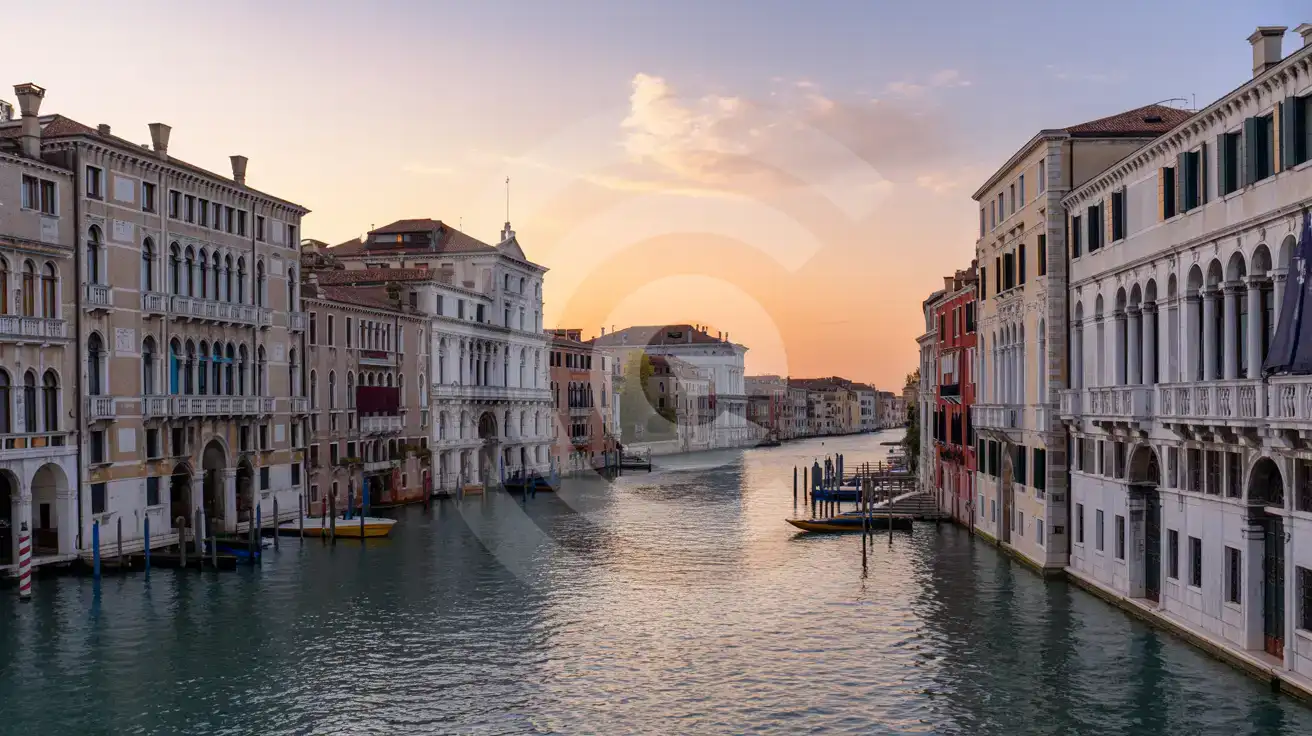
Grand Canal at Sunset
Compare WiFi Options at Grand Canal
 Recommended Recommended | Local SIM / Operator | Roaming | |
|---|---|---|---|
| FEATURES | |||
| Setup time | Few minutes | Store visit + paperwork | Auto |
| No local ID needed | Online checkout | Local ID required | Use home account |
| Speed | 4G/LTE; 5G in some areas | Carrier-grade | Partner-dependent |
| Travel support | English support 24/7 | Operator shops and call centre | Home carrier hours |
| Keep home number | Dual SIM | Replaces it | Same number |
| Cost predictability | Fixed price | Bills can spike | Bill-shock risk |
| PRICING | |||
Typical pricing | See plans below | — | — |
PRICING — PICK YOUR ESIMNO PLAN
Featured eSIM plans
Italian Mobile

Italian Mobile
Italian Mobile
Italian Mobile
Italian Mobile
Italian Mobile
Italian Mobile
Italian Mobile


