
Quick Facts
- 2027 Start Date
- Thursday, September 2, 2027
- Typical Festival Length
- 11 days (usually early to mid-September)
- Founded
- 1932
- Main Venue Area
- Venice Lido, around Palazzo del Cinema and Palazzo del Casinò
- Typical Screening Hours
- About 08:30-23:30, depending on day and program
- Typical Door Opening
- Usually 20-30 minutes before each screening
- Expected Attendance
- Roughly 100,000+ admissions/visits across the festival period, depending on edition
- Public Ticket Range
- Approximately €10-€25 for standard screenings; premium gala screenings can be higher
- Marco Polo Airport to Lido
- About 14 km by water; roughly 70-90 minutes by Alilaguna boat, or 50-75 minutes by road plus vaporetto
- Venice City Centre to Lido
- About 15-25 minutes by vaporetto from San Zaccaria
- Main Transport Lines
- Vaporetto lines 1, 5.1, 5.2, 6 and Alilaguna Blue Line (seasonal schedules vary)
- Taxi Fare Guide
- Water taxi from airport to Lido roughly €120-€160; land taxi from airport to Piazzale Roma about €40-€55
- eSIMno Networks
- Vodafone, Wind Tre
Why This Event Feels Different
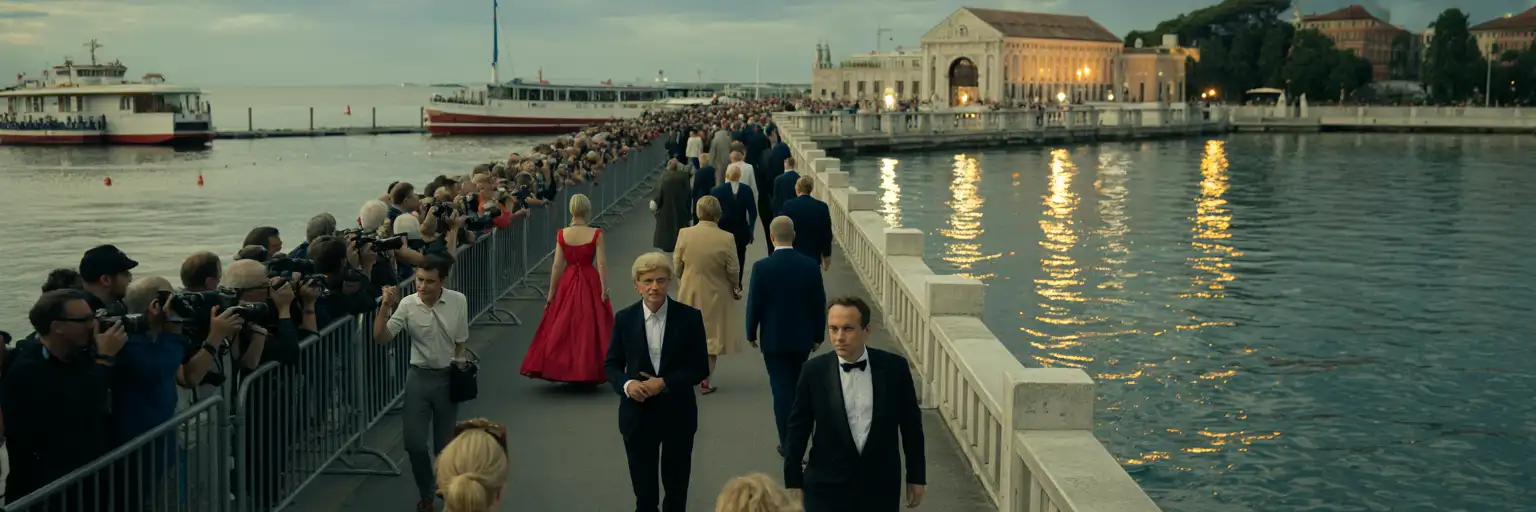
Some festivals are all about scale. Venice is about concentration. The Venice International Film Festival, hosted by La Biennale di Venezia on the Lido, packs huge global attention into a fairly compact island setting. That's what gives it its pull. You get the prestige of one of the world's best-known film festivals, but you experience it in a place where screenings, hotel bars, beach stretches, and red-carpet energy all sit close together.
People travel here for a reason: it's a top-tier global film event with serious international media attention and real celebrity appeal. You'll see film students queuing beside journalists, industry delegates moving between screenings, and luxury travelers treating the festival as the centerpiece of a late-summer Italian escape. That mix is part of the charm. It doesn't feel like a generic city festival dropped into random venues; it feels like the entire Lido has been tuned to one frequency for around 11 days.
If you're wondering who should attend, the answer is pretty broad but very specific in mood: film lovers, industry attendees, media, luxury travelers, and culture-focused visitors. And if you're choosing this event over others, the appeal is obvious. You get red-carpet prestige, Venice's destination value, and a more intimate festival geography than Cannes or Berlin. It's glamorous, yes. But it's also surprisingly practical once you understand the Lido rhythm.
Getting There and Moving Around the Lido
The key thing to know is that the festival's likely focal point is the Venice Lido waterfront around the Palazzo del Cinema and Palazzo del Casinò. That's where a lot of the action, arrivals, and public interest cluster. If you're flying in, Venice Marco Polo Airport is the main airport to use. The most festival-friendly transfer is usually the Alilaguna Blue Line boat toward Lido, which often takes about 70 to 90 minutes depending on stops and waiting time. If you're in a hurry and the budget allows, a private water taxi to the Lido is much faster door to door, but expect around €120 to €160.
Coming from central Venice? From the San Zaccaria side, vaporetto rides to Lido are typically around 15 to 25 minutes. The lines you’ll keep seeing are 1, 5.1, 5.2, and 6, though schedules can shift by season and time of day. Save the ACTV app or current timetable before festival week starts. Evening departures after big premieres can get crowded fast.
For accommodation, stay close to the event if screenings are your priority. Lido Santa Maria Elisabetta is the smartest base because it puts you near the vaporetto terminal and the festival zone. The Gran Viale Santa Maria Elisabetta area is especially useful for cafés, casual dinners, and late returns. If Lido prices jump, look at the Castello side of Venice near San Zaccaria for a simpler boat commute. We wouldn't stay far out on the mainland unless budget is the main driver; those extra transfers feel longer after a 22:30 screening.
One personal note: the Lido looks relaxed in the morning, almost beach-town calm, and then by late afternoon the whole place tightens up around arrivals, queues, and premiere chatter. That's when live transport data matters most. If you want your route checks and last-minute screening changes working properly, it's worth having data sorted in advance with eSIMno plans for Italy.
The Lido Festival Atmosphere
What to Do Between Screenings
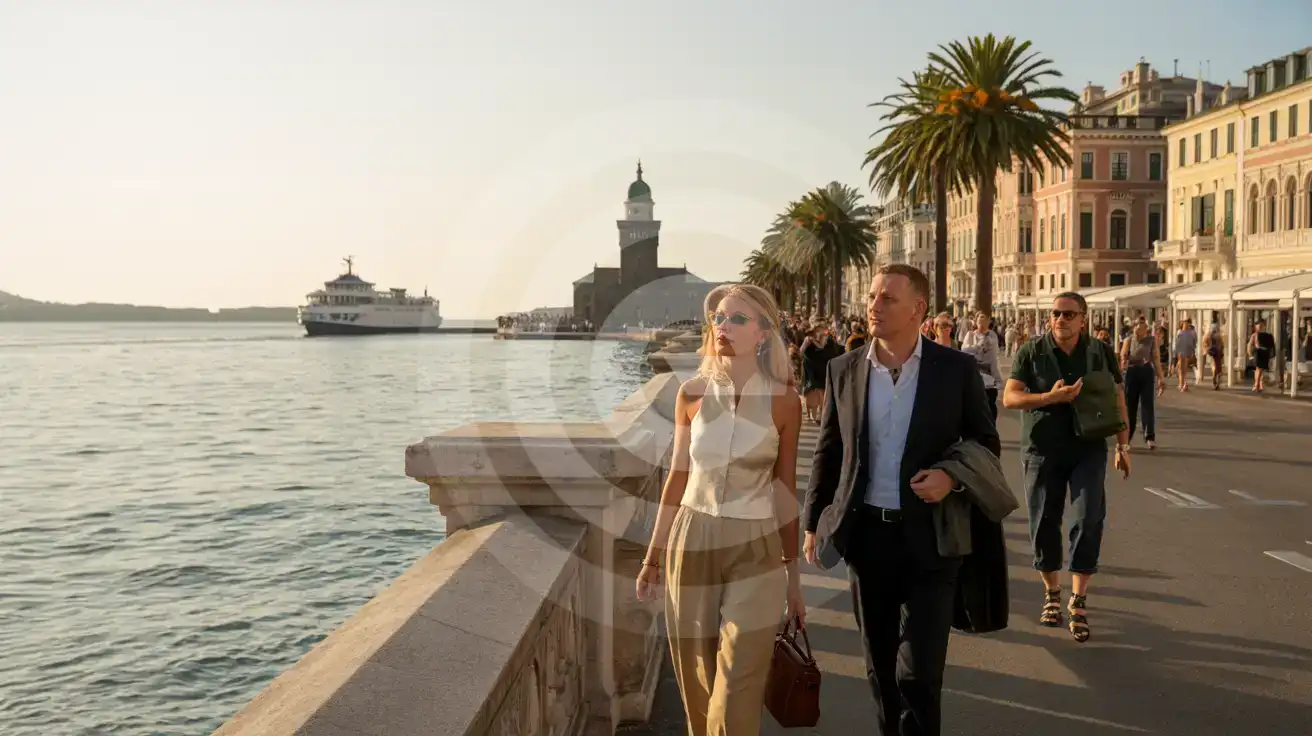
You don't need to flee into central Venice every free hour. The best version of this trip leans into the Lido's own rhythm. Start with Venice Lido Beach. Even a quick 45-minute break can reset you after a morning press slot or a packed public screening. Early September is usually warm enough for a beach walk, and the light in the late afternoon is excellent if you're posting photos before dinner.
For food, stay local to the venue area first. Around Gran Viale Santa Maria Elisabetta, you'll find plenty of casual spots for cicchetti, seafood pasta, and aperitivo without losing half your day in transit. Look for classics like sarde in saor, baccalà mantecato, and risotto al nero di seppia. If you want something more old-school Venetian after the screenings, take the boat over and head toward the Via Garibaldi area in Castello, where dinner tends to feel less polished and more lived-in than the grand canalside addresses.
If you do cross into Venice proper, keep it targeted. The Peggy Guggenheim Collection is a smart pre-festival or post-screening stop for anyone already in an arts mindset, and it works best if you book the earlier part of the day before lines build. Teatro La Fenice is another good add-on, not because it's obvious, but because it fits the same audience: people who like their travel with a little ceremony. And for a quieter cultural detour, Scuola Grande di San Rocco rewards anyone willing to trade crowds for a room full of dramatic Tintoretto panels.
Don't leave without doing at least one simple Lido evening walk after the formalities ease off. Away from the photographers and barriers, the island starts feeling almost residential again. That's the side of festival Venice people remember.
Staying Connected During Festival Days
Film festivals are phone-heavy in a very specific way. You're not just checking maps. You're scanning QR tickets, refreshing screening schedules, opening email confirmations, messaging friends about spare seats, and watching the vaporetto clock after a late finish. On big premiere evenings, venue Wi-Fi can slow down or become awkward to rely on just when everyone is uploading clips and checking updates at once.
The Lido adds another layer because you're moving on and off an island. Miss one boat and you can lose 20 minutes. Miss the wrong late-night connection and the return feels much longer. That's where mobile data stops being a nice extra and starts being part of the plan. We especially like having service ready before arrival so the airport transfer is sorted without hunting for a shop. If you still need to set that up, you can explore eSIMno plans for Italy before you fly.
There are a few moments where good connectivity really pays off: downloading ticket emails when a booking app stalls, checking if line 5.1 or 5.2 is the faster return for your side of Venice, posting photos while you're still near the waterfront, or coordinating with friends who are queueing for another screening two buildings away. Add in translation tools, restaurant bookings, and backup boarding passes, and your data use climbs quickly without feeling dramatic. Until it does.
How to Connect for a Smoother Festival Week
- Before takeoff, set up your data plan
The useful moment isn't after you've reached your hotel. It's at Marco Polo Airport, when you need boat times, a taxi decision, and the exact route to the Lido. Have your eSIM ready before departure so your first transfer works on arrival. - Save the transport tools you'll actually use
For this event, that means current vaporetto schedules, the airport boat option, your hotel pin, and the festival venue area around Palazzo del Cinema. Screenshot your evening return route too, especially if your screening ends after 22:00. - Keep ticket emails and QR codes easy to reach
Festival entry often moves faster if your confirmation is already downloaded. Don't assume venue Wi-Fi will behave when hundreds of people are refreshing inboxes at the same time. - Plan for the red-carpet bottleneck
Late afternoon and evening are when the Lido gets busier, both on foot and online. If you're meeting friends, share a precise pin near the vaporetto stop or a café on Gran Viale instead of saying 'outside the cinema.'
Useful Festival-Week Notes
- Budget more time than the map suggests: a 15-minute boat crossing can become 35 minutes once queueing and boarding are added.
- If you're chasing red-carpet views, arrive at least 45 to 60 minutes before the high-profile evening window; the best free spectator spots fill early.
- Pack one smarter layer than you think you'll need. Early September is warm, but sea breeze on late boat rides can catch you out after midnight.
Compare Internet Plans in Venice
 Recommended Recommended | Local SIM / Operator | Roaming | |
|---|---|---|---|
| FEATURES | |||
| Setup time | Few minutes | Store visit + paperwork | Auto |
| No local ID needed | Online checkout | Local ID required | Use home account |
| Speed | 4G/LTE; 5G in some areas | Carrier-grade | Partner-dependent |
| Travel support | English support 24/7 | Operator shops and call centre | Home carrier hours |
| Keep home number | Dual SIM | Replaces it | Same number |
| Cost predictability | Fixed price | Bills can spike | Bill-shock risk |
| PRICING | |||
Typical pricing | See plans below | — | — |
PRICING — PICK YOUR ESIMNO PLAN
Destination overview
Frequently Asked Questions
Featured eSIM plans
Italian Mobile

Italian Mobile
Italian Mobile
Italian Mobile
Italian Mobile
Italian Mobile
Italian Mobile
Italian Mobile