

Quick Facts
- Best setup for most travelers
- Use WiFi indoors for light tasks and mobile data for maps, tickets, messaging, and moving around the city
- Airport WiFi
- Available at Josep Tarradellas Barcelona-El Prat Airport, useful for arrival basics but not ideal as your only connection plan
- Typical free WiFi quality
- Good in many hotels and some museums, less reliable in crowded tourist zones and during peak hours
- Good mobile-data moments
- Airport arrival, La Rambla and Boqueria crowds, beach days, train transfers at Barcelona Sants, and cruise-port departures
- eSIMno Networks
- Movistar, Orange
WiFi vs Mobile Data in Barcelona
Barcelona is easy to enjoy with just a phone in your hand, but not every connection option is equally useful. Hotel WiFi can be perfectly decent for planning the day, backing up photos, or making a video call before dinner. Public or café WiFi is more hit-and-miss. In busy areas like La Rambla, the Gothic Quarter, and around Mercat de la Boqueria, you may get a signal but still wait too long for maps, ticket QR codes, or ride apps to load.
Mobile data usually wins the moment you’re in motion. That matters in Barcelona because many days involve constant short hops: metro to Sagrada Família, bus toward Park Güell, a walk down Passeig de Gràcia, then maybe sunset near Barceloneta. If your plans include event venues or trade fairs like Mobile World Congress Barcelona or Integrated Systems Europe, expect heavier network demand around transport hubs and venue exits too.
A simple rule works well here: use trusted WiFi when you’re settled indoors, and keep mobile data as your default for anything time-sensitive. If you want to set that up before the trip, explore eSIMno plans for Barcelona.
How to Connect
- 1. Landing at Josep Tarradellas Barcelona-El Prat Airport
Airport WiFi is fine for a quick message home, checking baggage info, or confirming your Aerobús route into the city. But if you need to book a ride, open hotel directions, or message someone while moving between terminals and transport, mobile data is the smoother choice. This is the best moment to have your eSIM already active rather than depending on airport login screens. - 2. Entering the crowd around Mercat de la Boqueria and La Rambla
This is where free WiFi becomes less useful in practice. You’re walking, crossing streets, checking restaurant reviews, and maybe trying to keep an eye on your route back toward Plaça de Catalunya. In a dense, fast-moving area like this, mobile data beats stopping to ask for a password or waiting for a weak hotspot to connect. - 3. Ferry or cruise transfer at the Port of Barcelona
If you’re arriving by cruise or heading out through the port, don’t assume port-side WiFi will cover every step. Transfers, terminal changes, and luggage movement are much easier when your phone can instantly pull up boarding details, taxi apps, or directions toward Barceloneta or the city center. Mobile data is the safer option here. - 4. Hotel check-in near Passeig de Gràcia, Barceloneta, or Plaça d'Espanya
Once you’re in the room, hotel WiFi is usually the best place for heavier tasks like cloud backups, streaming, or downloading offline maps for the next day. We’d still keep mobile data on for the walk back out, especially if you’re heading to Casa Milà, the Magic Fountain of Montjuïc, or a late dinner in the Gothic Quarter.
eSIM Setup and Cost Breakdown
Setting up an eSIM for Barcelona is usually quick:
1) Buy your plan before departure or on arrival over WiFi.
2) Scan the QR code from your provider on an eSIM-compatible phone.
3) Install the plan and label it something obvious like Spain Data.
4) Turn on data roaming for that eSIM if prompted.
5) Set it as your mobile data line and test maps or messaging before leaving the airport or hotel.
As for cost, free WiFi in Barcelona can reduce your data use, but it rarely replaces mobile service completely. A budget traveler using hotel WiFi heavily and only light mobile data for maps and chat may spend very little beyond a small data plan. A typical city-break traveler using navigation, social apps, ticketing, and some photo uploads should expect to rely on mobile data every day. Business travelers and event attendees usually need the most dependable setup, especially around Fira-linked congress traffic and station transfers.
The hidden cost of relying only on free WiFi isn’t always money. It’s time: waiting for login pages, repeating searches, or standing outside a café just to load directions. That’s why many travelers prefer to sort data in advance with eSIMno.
Tips
- Download offline maps before heading into the Gothic Quarter. The narrow lanes are beautiful, but they’re not where you want to be troubleshooting a weak connection.
- If you’re spending the day at Barceloneta Beach or Platja de la Nova Icària, don’t count on beachside WiFi for anything urgent. Bring mobile data and a charged battery.
- At Barcelona Sants, sort your ticket, platform info, and onward route before the train crowd builds. Station WiFi may exist, but mobile data is much faster when you’re in a rush.
Connected in the City
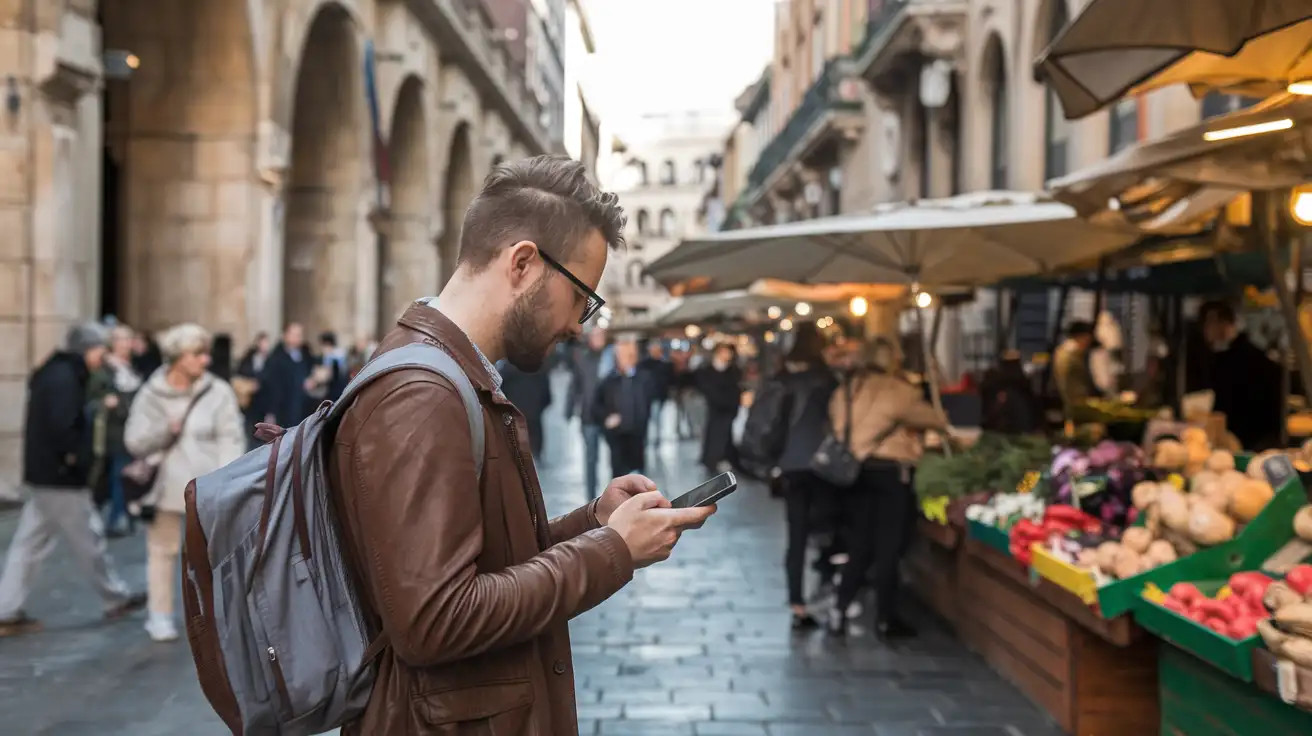
Compare Internet Plans in Barcelona
 Recommended Recommended | Local SIM / Operator | Roaming | |
|---|---|---|---|
| FEATURES | |||
| Setup time | Few minutes | Store visit + paperwork | Auto |
| No local ID needed | Online checkout | Local ID required | Use home account |
| Speed | 4G/LTE; 5G in some areas | Carrier-grade | Partner-dependent |
| Travel support | English support 24/7 | Operator shops and call centre | Home carrier hours |
| Keep home number | Dual SIM | Replaces it | Same number |
| Cost predictability | Fixed price | Bills can spike | Bill-shock risk |
| PRICING | |||
Typical pricing | See plans below | — | — |
PRICING — PICK YOUR ESIMNO PLAN
Featured eSIM plans
Spain Mobile

Spain Mobile
Spain Mobile
Spain Mobile
Spain Mobile
Spain Mobile
Spain Mobile
Spain Mobile


