
Quick Facts
- Best for short airport waits
- Airport or mall WiFi for basic messaging and email
- Best for maps and ride apps
- Mobile data, especially outside malls and hotels
- Typical free WiFi quality
- Good in airports, hotels, and major malls; less dependable in transit and crowded outdoor areas
- Good to know
- Intercity travel between Dubai, Abu Dhabi, Sharjah, and desert areas is where mobile data becomes much more useful
- eSIMno Networks
- DU
WiFi vs Mobile Data in the UAE
The UAE looks hyper-connected on the surface, and in many ways it is. You’ll find free WiFi in big airports, upscale hotels, shopping centers, and some cafés. For a quick upload from Dubai Mall, checking your boarding gate at Zayed International Airport, or sending a message from a hotel in Downtown Dubai, that can be perfectly fine.
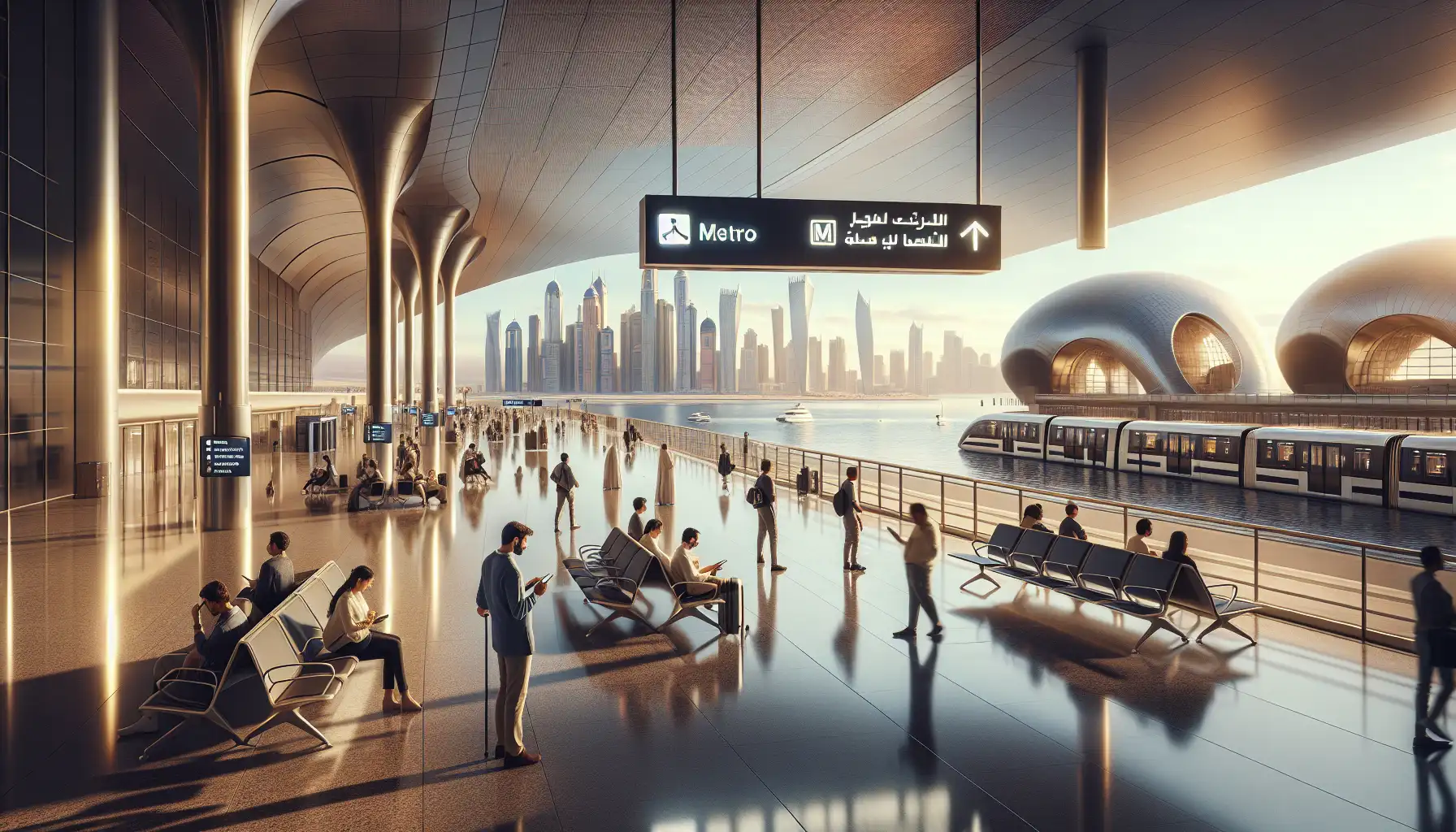
But travel days here aren’t built around sitting still. You might leave DXB, hop on the Metro, switch to a taxi in Business Bay, then head to Jumeirah or Deira. Or you might land in Abu Dhabi and spend the day moving between Saadiyat, the Corniche, and Yas Island. In those in-between moments, WiFi usually drops out of the picture. Mobile data is what keeps maps loading, ride-hailing apps working, and restaurant searches from turning into guesswork.
Cost matters too. Free WiFi is free, obviously, but the trade-off is time, sign-in friction, and uneven speed. A local eSIM is usually the cleaner option if you know you’ll be moving around a lot. If that sounds like your trip, you can explore eSIMno plans for United Arab Emirates before departure and skip the airport SIM counter entirely.
How to Connect
- 1. Landing at Dubai International Airport or Zayed International Airport
Use airport WiFi for the first few minutes if you just need to message family, pull up your hotel booking, or check baggage info. If you’re ordering a Careem, checking Metro timing from DXB, or heading straight onto Sheikh Zayed Road, switch to mobile data early so you’re not stuck on a login page outside the terminal. - 2. Walking through Deira Gold Souk or Al Fahidi after arrival
This is where the WiFi-vs-data decision gets real. In older districts and busy market lanes, public WiFi is patchy and not worth planning around. If you’re comparing directions between Al Ras Metro Station, the spice market, and an abra crossing on Dubai Creek, mobile data is the safer choice. - 3. Ferry or water transfer moments at Dubai Marina or Dubai Creek
If you’re boarding a ferry, water taxi, or abra and trying to coordinate timing, don’t count on nearby venue WiFi. Use mobile data before departure so your ticket, map, and messages stay available once you’re moving across the water. - 4. Hotel check-in in Downtown Dubai, JBR, or Abu Dhabi Corniche
Once you’re inside the hotel, WiFi usually becomes useful again for heavier tasks like backups, video calls, or downloading offline maps for the next day. We’d still keep mobile data active for the walk outside, especially in tower-heavy areas where you may leave the building and need directions immediately.
Practical Tips
- Airport and mall WiFi are fine for light use, but don’t build your whole day around them if you’ll be moving between neighborhoods.
- If you’re planning a Dubai-Abu Dhabi day trip, assume mobile data will be more useful than public WiFi for most of the journey.
- Download Metro maps, hotel confirmations, and key attraction tickets before heading into older souk areas or onto the water.
- Hotel WiFi in the UAE is often good enough for streaming, but speeds can dip in the evening when everyone is back in their rooms.
- If your phone supports eSIM, setting it up before departure is usually faster than sorting connectivity after a long overnight flight.
What It Usually Costs
Here’s the simple breakdown. Free WiFi costs nothing, but you pay in convenience: repeated sign-ins, inconsistent speed, and dead spots once you leave major indoor venues. Hotel WiFi is usually included, though some premium properties still separate basic and high-speed access. Café WiFi can be decent, but it’s not something we’d trust for a full day of navigation.
Mobile data is where the UAE gets more predictable. Local tourist options can work well, but airport purchase prices and plan structures aren’t always the easiest thing to compare when you’re tired. An eSIM lets you sort that out in advance, often with a clearer idea of your data allowance and no need to swap a physical SIM. For most travelers, the real value isn’t just price per gigabyte. It’s being able to land, open maps, book a ride, and move on.
I’ve noticed this especially in Dubai: the city feels frictionless right up until your connection hesitates for thirty seconds while you’re standing between a Metro exit and the wrong side of a multilane road. That’s a small delay, but in the heat, it feels much longer.
Connected Between Stops
Compare Connectivity Options for UAE
 Recommended Recommended | Local SIM / Operator | Roaming | |
|---|---|---|---|
| FEATURES | |||
| Setup time | Few minutes | Store visit + paperwork | Auto |
| No local ID needed | Online checkout | Local ID required | Use home account |
| Speed | 4G/LTE; 5G in some areas | Carrier-grade | Partner-dependent |
| Travel support | English support 24/7 | Operator shops and call centre | Home carrier hours |
| Keep home number | Dual SIM | Replaces it | Same number |
| Cost predictability | Fixed price | Bills can spike | Bill-shock risk |
| PRICING | |||
Typical pricing | See plans below | — | — |
PRICING — PICK YOUR ESIMNO PLAN
Featured eSIM plans
Emirati Net

Emirati Net
Emirati Net
Emirati Net
Emirati Net
Emirati Net
Emirati Net
Emirati Net


