

Quick Facts
- Best option for most travelers
- eSIM mobile data for maps, translation, payments, and station navigation
- Free WiFi availability
- Good at airports, hotels, chain cafés, and some major stations; inconsistent once you are moving
- Typical public WiFi trade-off
- Useful for short sessions, but logins, time limits, and congestion are common
- Best time to set up connectivity
- Before landing or while waiting at Tokyo International Airport
- eSIMno Networks
- KDDI, Softbank
What actually works in Tokyo
Tokyo is excellent at infrastructure and oddly fussy about internet access. You can absolutely find free WiFi, but it often works best when you are stationary: in your hotel, at the airport, inside a café, or waiting in a large station concourse. The moment you start changing trains, hunting for the right department-store exit, or comparing restaurant options on the go, mobile data becomes much more useful.
That matters because Tokyo days rarely stay in one place. You might start near the Imperial Palace, head to Ueno Park, then finish in Roppongi Hills or around Tokyo Dome. Public WiFi can support a few low-pressure moments. It is much less dependable for live navigation, ride-hailing, QR tickets, or translation when you are trying to order lunch quickly.
If you want the simplest setup, explore eSIMno plans for Tokyo before departure and arrive with data ready to go.
How to Connect
- 1. Arriving at Tokyo International Airport
Use airport WiFi for a quick check if you need it, but this is the best moment to switch to mobile data before leaving the terminal. Once you are heading for the train or bus into the city, having your own connection makes route changes, ticket apps, and hotel messages much easier. - 2. Changing trains at Tokyo Station
Tokyo Station is huge, busy, and full of exits that can send you the wrong way if your map stalls. Station WiFi may be available, but for live navigation between lines or finding the correct Marunouchi or Yaesu side, mobile data is the safer choice. - 3. Mid-morning at Tsukiji Outer Market
This is a classic Tokyo moment where public WiFi is not the thing to rely on. You will likely be comparing food spots, checking cashless payment options, translating menus, and messaging travel companions while walking. Mobile data wins here every time. - 4. Hotel check-in around Shinjuku or Park Hyatt Tokyo
Once you are checked in, hotel WiFi is usually fine for backups, uploads, and evening planning. Keep mobile data active for the walk back out, though, especially if you are heading to Shibuya Scramble Crossing, Meiji Jingu, or a late train connection.
Smart connection tips for Tokyo
- Download offline maps for Tokyo before you land. Even with good data, underground station areas can feel confusing when you are rushing between lines.
- Keep a translation app and your hotel address saved locally. This helps around older neighborhoods near Sensō-ji or when showing directions to a taxi driver.
- If you are attending a major event like FOODEX JAPAN or Japan IT Week Spring, do not assume venue WiFi will be fast enough for calls or file sharing during peak hours.
- Use hotel WiFi for large uploads and updates at night, then rely on mobile data during the day for maps, messaging, and ticket access.
Tokyo on-the-go connectivity
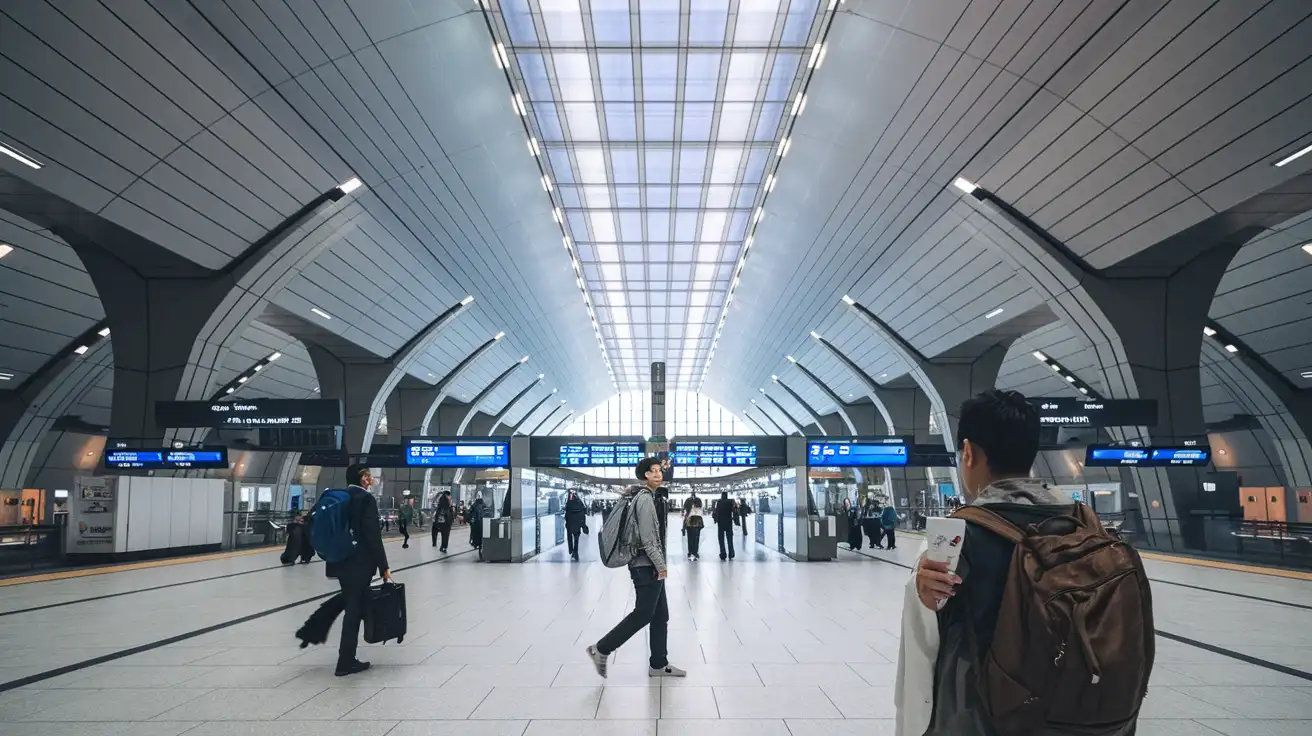
Cost breakdown: free WiFi, pocket WiFi, SIM, and eSIM
Free WiFi: Usually free, of course, but the real cost is time and reliability. You may need repeated logins, and speeds can dip in crowded places.
Pocket WiFi: Often a decent option for groups, but rental fees, pickup and return logistics, battery management, and loss penalties add friction. For a short Tokyo trip, that can feel like one more thing to manage.
Physical SIM: Works well if your phone supports it and you do not mind swapping cards. The downside is setup time after arrival and the hassle of storing your home SIM safely.
eSIM: Usually the easiest balance of cost and convenience for solo travelers and short stays. You buy it before the trip, activate it on your phone, and skip the airport counter. We like this option in Tokyo because the city moves fast; your connection should too. If you want a simple setup, eSIMno lets you sort it out before you start navigating platforms and crossings.
As a rough guide, free WiFi costs nothing but can be limiting, pocket WiFi is often the priciest once rental extras are included, and eSIM plans tend to land in the practical middle with much less hassle.
Compare Internet Plans in Tokyo
 Recommended Recommended | Local SIM / Operator | Roaming | |
|---|---|---|---|
| FEATURES | |||
| Setup time | Few minutes | Store visit + paperwork | Auto |
| No local ID needed | Online checkout | Local ID required | Use home account |
| Speed | 4G/LTE; 5G in some areas | Carrier-grade | Partner-dependent |
| Travel support | English support 24/7 | Operator shops and call centre | Home carrier hours |
| Keep home number | Dual SIM | Replaces it | Same number |
| Cost predictability | Fixed price | Bills can spike | Bill-shock risk |
| PRICING | |||
Typical pricing | See plans below | — | — |
PRICING — PICK YOUR ESIMNO PLAN
Featured eSIM plans
Japan Mobile

Japan Mobile
Japan Mobile
Japan Mobile
Japan Mobile
Japan Mobile
Japan Mobile
Japan Mobile


