
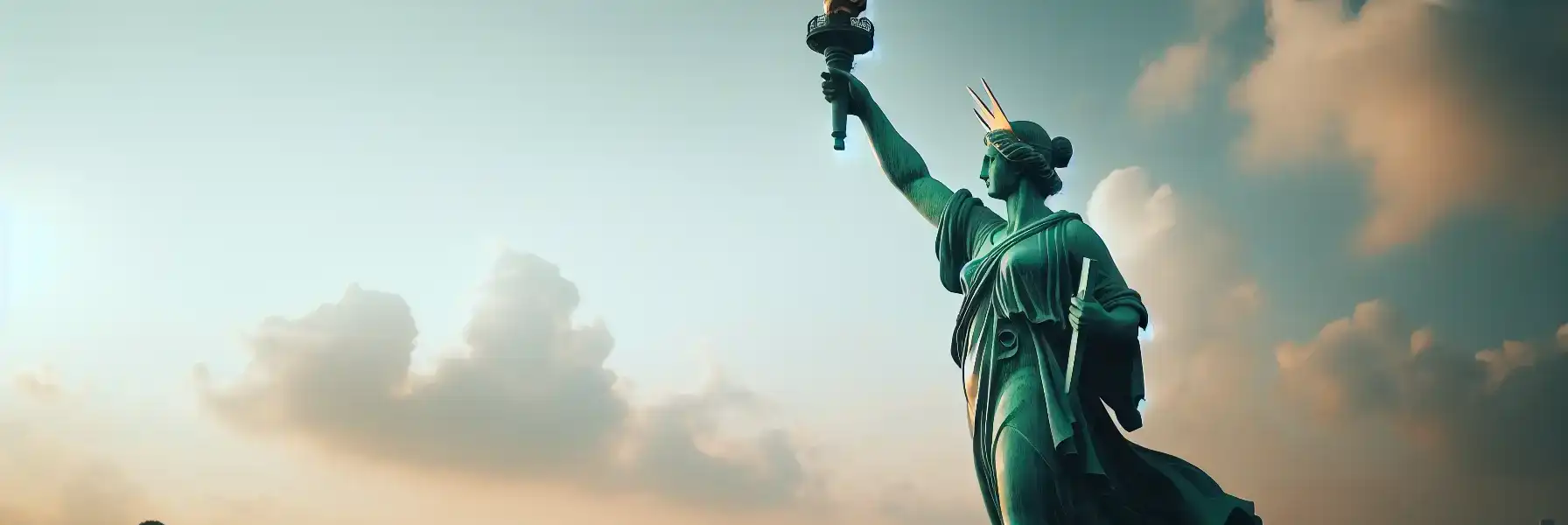
Quick Facts
- Address
- Liberty Island, New York, NY 10004
- Hours
- Daily 9:00 AM – 5:00 PM (seasonal variations)
- Closed
- December 25
- Ferry Ticket (Adult)
- ~$25 (includes Ellis Island)
- Crown Reserve Ticket
- ~$24.50 (book 2-4 months ahead)
- Pedestal Reserve Ticket
- ~$24.30
- Statue Height
- 305 ft (93 m) ground to torch
- Crown Stairs
- 162 steps from pedestal top
- Dedicated
- October 28, 1886
- UNESCO Status
- World Heritage Site (1984)
- Ferry Operator
- Statue City Cruises (official NPS concessioner)
- Manhattan Departure
- Battery Park, Castle Clinton
- NJ Departure
- Liberty State Park, Jersey City
- Nearest Subway
- Bowling Green (4, 5), South Ferry (1), Whitehall St (R, W)
- Official Website
- nps.gov/stli
- eSIMno Networks
- AT&T, T-Mobile, Verizon
About the Statue of Liberty
The Statue of Liberty — officially Liberty Enlightening the World — arrived in New York Harbor as 214 copper-packed crates in June 1885, the culmination of a two-decade Franco-American collaboration that would permanently reshape how both nations understood the symbolism of freedom. French sculptor Frédéric Auguste Bartholdi conceived the figure in the early 1870s as a gift commemorating the alliance forged during the American Revolution, though the project's deeper roots stretched back to conversations about abolition and democratic ideals between Bartholdi and anti-slavery activist Édouard de Laboulaye.
Engineering and Construction
The statue's copper skin — just 3/32 of an inch thick, roughly the depth of two pennies stacked — required an internal skeleton capable of handling harbor winds and supporting 62,000 pounds of metal. Gustave Eiffel, fresh from designing the iron framework for other ambitious structures and years before his Parisian tower, engineered an innovative iron armature that allowed the copper exterior to move independently while remaining anchored to a central pylon. Richard Morris Hunt designed the granite pedestal, raising an additional $300,000 through a fundraising campaign that included contributions from schoolchildren and Joseph Pulitzer's newspaper appeal.
Dedication and Early Years
President Grover Cleveland dedicated the statue on October 28, 1886, before a crowd that included French dignitaries, veterans, and thousands of spectators lining the harbor. The figure depicts Libertas, the Roman goddess of liberty, her right arm raising a gilded torch while her left cradles a tabula ansata inscribed with JULY IV MDCCLXXVI — the date of American independence. At her feet, partially visible from certain angles on the pedestal level, lie a broken chain and shackle, symbolizing the end of tyranny and, for many, the abolition of slavery that had concluded just two decades earlier.
The Immigration Connection
For the roughly 12 million immigrants who arrived at nearby Ellis Island between 1892 and 1954, Lady Liberty was the first recognizable American landmark visible from steerage decks. This accident of geography — the statue predating Ellis Island's opening by six years — permanently fused the monument with the immigrant narrative. Emma Lazarus's 1883 sonnet The New Colossus, mounted on a bronze plaque inside the pedestal in 1903, articulated what the statue had come to represent: "Give me your tired, your poor, / Your huddled masses yearning to breathe free." The poem wasn't written for the dedication; it was composed for an auction raising pedestal funds, yet its lines became inseparable from the statue's meaning.
Restoration and Modern Era
By the statue's centennial in 1986, decades of weathering had transformed the original copper brown to the distinctive green patina visitors recognize today, while internal corrosion threatened structural integrity. A $87 million restoration replaced the iron armature with stainless steel, installed a new torch covered in 24-karat gold leaf, and upgraded visitor facilities. The original 1886 torch — removed during restoration — now anchors the Statue of Liberty Museum that opened in 2019, giving visitors their first opportunity to stand beside the copper-and-glass artifact that once topped the most famous arm in America.
Highlights and Must-See
Liberty Island packs its most significant experiences into a compact footprint, but knowing which moments matter — and which ticket tier unlocks them — transforms a routine monument visit into something genuinely memorable.
The Crown
The crown observation level sits 162 narrow spiral stairs above the pedestal, accessible only to visitors who've secured Crown Reserve tickets weeks or months in advance. The climb happens through a double-helix staircase that spirals up through the statue's interior, passing Eiffel's iron armature close enough to touch (though you shouldn't). Twenty-five windows arranged around the crown's seven rays offer views toward Lower Manhattan, Brooklyn, Governors Island, and the Verrazzano-Narrows Bridge. Capacity is limited to roughly ten visitors at a time, making this one of New York's most intimate landmark experiences. Children must be at least 4 feet tall to climb. The ascent isn't for those uncomfortable in tight, warm spaces — summer temperatures inside the statue run significantly higher than outside.
The Pedestal Observation Deck
For visitors without crown access, the pedestal level offers the best combination of views and accessibility. Located roughly ten stories up, the observation deck wraps 360 degrees around the statue's base, providing clear sightlines to Ellis Island, the Jersey City waterfront, the Bayonne Bridge in the distance, and the full Lower Manhattan skyline from One World Trade Center to the Brooklyn Bridge. Inside the pedestal, you can look directly up into the statue's interior and see Eiffel's skeletal framework — the geometric latticework that makes the whole structure possible. Elevator access makes this level wheelchair-friendly.
The Statue of Liberty Museum
Opened in May 2019, this 26,000-square-foot museum replaced the cramped exhibits formerly housed in the pedestal. The Immersive Theater runs a ten-minute film tracing the statue's conception, fabrication in Bartholdi's Paris workshop, and transatlantic journey. The Engagement Gallery contains full-scale copper replicas of Liberty's face and foot, allowing visitors to appreciate details invisible from ground level — the texture of her hair, the proportions of her sandaled toes. But the museum's emotional anchor is the Inspiration Gallery, where the original 1886 torch sits in climate-controlled glory. This copper-and-amber-glass artifact, replaced during the 1984-1986 restoration, spent nearly a century illuminating the harbor. Standing beside it, you understand the statue's scale differently than any exterior view can convey.
Fort Wood
The eleven-pointed star-shaped fortification supporting the pedestal predates the statue by decades, constructed between 1808 and 1811 as part of New York Harbor's coastal defenses. Walking the perimeter of Fort Wood offers the most photographed angle of the statue — looking straight up from the base with the copper figure towering overhead — while also providing harbor views in every direction. The star points align with bastions that once held cannon emplacements; now they frame perfect compositions of Lady Liberty against sky.
Emma Lazarus Plaque
The bronze tablet bearing The New Colossus sits inside the pedestal's entrance, a modest monument within a monument. The 1883 sonnet wasn't widely known during the statue's early decades; its lines gained prominence only in the 1930s and 1940s as immigration debates intensified. Standing before the plaque, reading "I lift my lamp beside the golden door," connects the statue's abstract symbolism to the specific experiences of families who passed this way.
The Grounds and Promenade
Even without any reserved ticket tier, the island grounds reward exploration. The flagpole plaza, the harbor-facing promenades, and the secondary viewing angles between the museum and pedestal all offer perspectives unavailable from the ferry or from Manhattan's waterfront. Bring a picnic — though food options exist on-island, they're limited and expensive — and find a bench facing the skyline. The statue isn't going anywhere.
Ellis Island and the Great Hall
Your ferry ticket includes Ellis Island, and skipping it means missing half of what makes a harbor day meaningful. The Main Building's Registry Room — where immigration inspectors processed arrivals in a space designed to handle 5,000 people daily — remains architecturally stunning, with its vaulted Guastavino tile ceiling and rows of benches. The American Family Immigration History Center allows visitors to search passenger manifests and arrival records. Finding an ancestor's name on a ship's list, with their age and occupation recorded in a clerk's handwriting, transforms Ellis Island from a museum into something personal.
Baggage Room and Dormitory
Beyond the Great Hall, lesser-visited sections of Ellis Island reward those who explore. The Baggage Room, where immigrants collected their belongings before boarding ferries to Manhattan or trains to points west, still contains period luggage and trunks. The dormitory floors — where detainees awaiting medical clearance or legal hearings slept in tiered bunks — offer a more somber perspective than the triumphant Registry Room narrative sometimes suggests.
Visit Strategy
The Statue of Liberty punishes improvisation. Arriving at Battery Park at 11:00 AM on a July Saturday without advance tickets means joining a security line that snakes along the waterfront, boarding a ferry packed shoulder-to-shoulder, and reaching Liberty Island when the pedestal queue has already grown past comfortable. Here's how to avoid that scenario.
Book Crown Tickets Immediately
Crown Reserve tickets release on a rolling basis, typically becoming available for dates 4-6 months in advance. During peak summer months, they sell out within days of release. If climbing the 162 steps to the crown matters to you, check the Statue City Cruises website the moment your travel dates firm up. There's no secondary market, no day-of availability, no workaround. Crown access happens by advance reservation or not at all.
Pedestal Reserve as Your Backup
Pedestal tickets offer a more flexible booking window — usually available 1-3 weeks ahead except during holiday weekends — while still guaranteeing interior access and observation deck views. If crown tickets have sold out for your dates, pedestal access provides 90% of the experience. Book these before assuming you can secure them day-of; they disappear during peak season too.
Choose the First Ferry
The 9:00 AM departure from Battery Park (or sometimes 8:30 AM during extended summer hours) is the single most important tactical decision you'll make. First-ferry passengers reach Liberty Island before the crowds, tour the museum with breathing room, and have the best chance of completing both Liberty and Ellis Islands without rushing. By mid-morning, security lines at Battery Park can exceed 45 minutes. By noon, the ferry itself becomes standing-room-only.
Manhattan vs. Jersey City Departure
Most visitors depart from Battery Park in Lower Manhattan, but Liberty State Park in Jersey City offers a quieter alternative with shorter security lines, ample parking, and a different perspective on the approach. The trade-off: reaching Liberty State Park requires NJ Transit's Hudson-Bergen Light Rail or a car, making it less convenient for visitors based in Manhattan. For those staying in Hoboken or Jersey City, however, it's often the smarter choice.
Ideal Duration
Budget 4-5 hours minimum for a complete visit: 90-120 minutes on Liberty Island (museum, grounds, pedestal or crown), 90-120 minutes on Ellis Island (Great Hall, Immigration Museum, records search), plus ferry transit time. Rushing either island diminishes the experience. If you have only 2-3 hours total, prioritize Liberty Island and accept that Ellis Island will need its own dedicated trip.
Seasonal Considerations
Late September through early November and March through May offer the best balance of manageable crowds, pleasant weather, and clear air for photography. Summer brings extended hours but also school groups, humidity, and interior temperatures inside the statue that can exceed 90°F. Winter reduces crowds dramatically but shortens daylight and occasionally cancels ferries during severe weather. Thanksgiving week and the December holidays see lighter-than-expected traffic if you're flexible.
Photography Rules
Cameras and phones are permitted throughout the island, museum, and pedestal. The crown's narrow staircase prohibits tripods, large backpacks, and selfie sticks for practical safety reasons — there's simply no room. Flash photography is discouraged in museum galleries but not explicitly banned. The best exterior photographs happen in late afternoon when westward light illuminates the statue's face while the Manhattan skyline glows behind you during the return ferry.
What You Can't Bring
Airport-style security screening at Battery Park (or Liberty State Park) means large bags, coolers, and anything prohibited on aircraft won't make it through. Small backpacks and purses are fine. Leave oversized luggage at your hotel. Weapons, glass bottles, and drones are prohibited. There's no bag storage at the ferry terminal — if security rejects your item, you'll need to return to your hotel.
Site Walk-Through and Photographer's Guide
The ferry deposits you at Liberty Island's arrival dock on the northeast side of the island, facing the statue's left profile. What you do in the next ten minutes shapes your entire visit — and the quality of your photographs.
Recommended Walk Sequence
Resist the urge to walk directly toward the statue. Instead, turn right (south) along the promenade and complete a counterclockwise loop of the island's perimeter before entering any buildings. This accomplishes two things: you'll see the statue from every angle in relatively uncrowded conditions, and you'll end at the museum entrance — the logical starting point for the interior experience — with the statue behind you. Most visitors beeline for the pedestal entrance, creating congestion there while leaving the southern promenade nearly empty. After your perimeter walk, enter the museum. Spend 30-45 minutes in the Inspiration, Engagement, and Immersive Theater galleries. Then proceed to the pedestal or crown (if you have reserved access), and finally explore Fort Wood's star-shaped perimeter at ground level before returning to the ferry dock.
Key Structures to Spend Time At
The Original Torch (Museum): Stand at the railing surrounding the 1886 torch and examine the amber glass panels and copper framework. Notice the repair patches from various maintenance eras. This artifact carried the flame for 98 years; take five minutes rather than glancing and moving on.
Engagement Gallery Face Replica: The full-scale copper reproduction of Liberty's face allows close inspection of Bartholdi's modeling technique — the texture of her lips, the proportions of her nose, the stylized curls of her hair. Place your hand beside her cheek for scale.
Eiffel Armature Viewpoint (Pedestal): Inside the pedestal, look upward through the transparent floor panels at Eiffel's iron skeleton. The geometric web of puddled iron and later stainless steel replacements demonstrates why this structure survived a century of harbor weather.
Fort Wood Bastions: The eleven points of the star-shaped fort each offer slightly different compositions. The bastion directly facing Manhattan provides the classic upward shot with minimal foreground clutter. The bastions facing south capture the Verrazzano-Narrows Bridge in the background.
Emma Lazarus Plaque Alcove: The bronze tablet sits in a small interior space that most visitors walk past quickly. Pause here. Read the entire sonnet, not just the famous final lines.
Best Photo Spots and Lighting Times
Sunrise: Not accessible to general visitors (island opens at 9:00 AM), but photographers with media credentials occasionally arrange special access. The statue faces southeast, making morning light ideal for full-face illumination.
Mid-Morning (9:30-11:00 AM): Soft light, minimal harsh shadows, and thinner crowds than midday. Best window for detail shots of the crown, face, and torch.
Midday: Avoid if possible. Overhead sun creates unflattering shadows under the crown's rays and washes out copper detail.
Late Afternoon (3:00-5:00 PM): Golden hour begins earlier on the island than in Manhattan because the open harbor allows unobstructed western light. The statue's copper takes on warm tones, and the Manhattan skyline behind the arrival dock photographs beautifully during the return ferry.
The Ferry Approach: The best single photograph of the statue comes from the ferry itself, roughly 200 yards out, before docking. Position yourself on the ferry's starboard (right) side during the approach for an unobstructed composition. On the return trip, the stern offers final views with Liberty growing smaller against the New Jersey horizon.
Restoration and Excavation Status
The 2019 museum represented the most significant addition to Liberty Island since the 1986 centennial restoration. As of recent years, ongoing maintenance focuses on pedestal stonework and dock infrastructure rather than the statue itself. The crown staircase receives periodic closures for cleaning and safety inspections, typically during winter months when visitor numbers are lowest. Ellis Island's south side — containing the hospital complex and other support buildings — remains in stabilized ruin condition, accessible only through hard-hat tours arranged separately from standard ferry tickets. Check the National Park Service website for current closure notices before your visit.
Souvenirs and On-Site Shopping
The main gift shop on Liberty Island stocks the expected range of foam crowns, miniature statues, and Ellis Island-branded merchandise. Worth buying: the Statue of Liberty National Monument passport stamp (free if you bring your own National Parks passport book), high-quality coffee-table books about the statue's history and restoration, and reproduction Emma Lazarus postcards. Worth skipping: the generic "I Love NY" merchandise available cheaper in Chinatown, the overpriced plush torches, and anything that looks like it was manufactured without connection to the monument's actual story. Ellis Island's gift shop focuses more heavily on genealogy resources, including guides to using the American Family Immigration History Center and books about specific ethnic immigration waves.
Nearby Attractions and Logistics
Because Liberty Island floats in the harbor, "nearby" means the attractions clustered around Battery Park once you've returned to Manhattan — and the transit options that connect this corner of Lower Manhattan to the rest of the city.
Battery Park and Castle Clinton
The 25-acre park where your ferry departs contains its own National Monument: Castle Clinton, an 1811 sandstone fortification that served successively as a defensive battery, an entertainment venue (where Jenny Lind performed for P.T. Barnum in 1850), an immigrant processing station (before Ellis Island), and an aquarium. Today it functions as the ferry ticket office and a small museum. The East Coast Memorial — eight granite monoliths honoring merchant marines lost in the Atlantic during World War II — faces the harbor nearby. The SeaGlass Carousel, housed in a nautilus-shaped pavilion, offers a sculptural alternative to traditional carousels, with bioluminescent-inspired fish rather than horses.
The 9/11 Memorial and Museum
A 10-15 minute walk north along Greenwich Street or West Street brings you to the twin reflecting pools occupying the original World Trade Center tower footprints. The names of the 2,983 victims are inscribed in bronze parapets surrounding each pool. The adjacent underground museum, requiring a separate timed ticket, contains artifacts, oral histories, and the "Survivors' Stairs" escalator. One World Observatory atop One World Trade Center offers 360-degree views from 1,250 feet, including a perspective on Liberty Island that contextualizes your earlier visit.
Wall Street and the Financial District
Broadway runs north from Battery Park through the Financial District. Federal Hall, a block east on Wall Street, marks where George Washington took the presidential oath in 1789 and now houses a museum on the site of the original U.S. Capitol. Trinity Church, at Broadway and Wall Street, contains Alexander Hamilton's grave in its churchyard. The Charging Bull and Fearless Girl sculptures attract crowds on the Broadway median near Bowling Green. The New York Stock Exchange building at 11 Wall Street — with its iconic Corinthian columns — is viewable from the street but not open to public tours.
Staten Island Ferry
The free Staten Island Ferry departs from Whitehall Terminal, adjacent to Battery Park, and provides a 25-minute harbor crossing with views of the Statue of Liberty, Ellis Island, and the Manhattan skyline. For visitors who didn't book Liberty Island ferry tickets, this offers the next-best views of Lady Liberty from the water — though you can't disembark on the island itself.
Transit Options
Lower Manhattan's transit density makes reaching Battery Park straightforward from anywhere in the city. The 1 train terminates at South Ferry, directly adjacent to the ferry terminal. The 4 and 5 trains stop at Bowling Green, a 3-minute walk. The R and W trains stop at Whitehall Street-South Ferry, equally close. The Fulton Street transit hub, serving the A/C, J/Z, 2/3, and 4/5 trains, is a 10-minute walk north. PATH trains from New Jersey arrive at the World Trade Center station, roughly 15 minutes on foot. From the Upper East or West Side, budget 30-40 minutes by subway.
Suggested Day Itinerary
Catch the 9:00 AM ferry from Battery Park. Spend 90-120 minutes on Liberty Island: perimeter walk, museum, pedestal (or crown). Continue to Ellis Island for 90-120 minutes: Great Hall, Immigration Museum, records search if you have family research prepared. Return to Manhattan by 2:00-2:30 PM. Walk north through Battery Park to the 9/11 Memorial (30 minutes, free). Grab a late lunch at one of the cafés facing the memorial pools or inside the Oculus shopping concourse (Eataly Downtown, Shake Shack, various options). If energy permits, continue to the One World Observatory for sunset views (book tickets in advance), or walk east to the South Street Seaport and across the Brooklyn Bridge as evening light turns the Manhattan skyline golden.
Why Data Matters at the Statue of Liberty
Liberty Island sits in New York Harbor, which means your phone depends on cellular coverage rather than building WiFi. AT&T and T-Mobile both provide solid signal across the island, the ferry, and Ellis Island — but you need an active data connection to use them. Here's where that matters.
The ferry schedule shifts seasonally, and checking real-time departure updates from the island saves you from rushing or waiting unnecessarily. The Ellis Island immigration record search works best if you've already looked up family names on Ancestry or FamilySearch databases before arriving — pulling those records while standing in the History Center requires data. Battery Park to your next destination involves subway navigation, and the MTA's live arrival times make the difference between catching a train and watching it leave.
With an eSIMno plan for the United States, you're connected to AT&T and T-Mobile networks the moment you activate — no SIM card kiosk, no airport queue, no fumbling with physical trays while managing luggage and ferry schedules. The harbor day involves enough logistics already; your phone connection shouldn't add to the complexity.
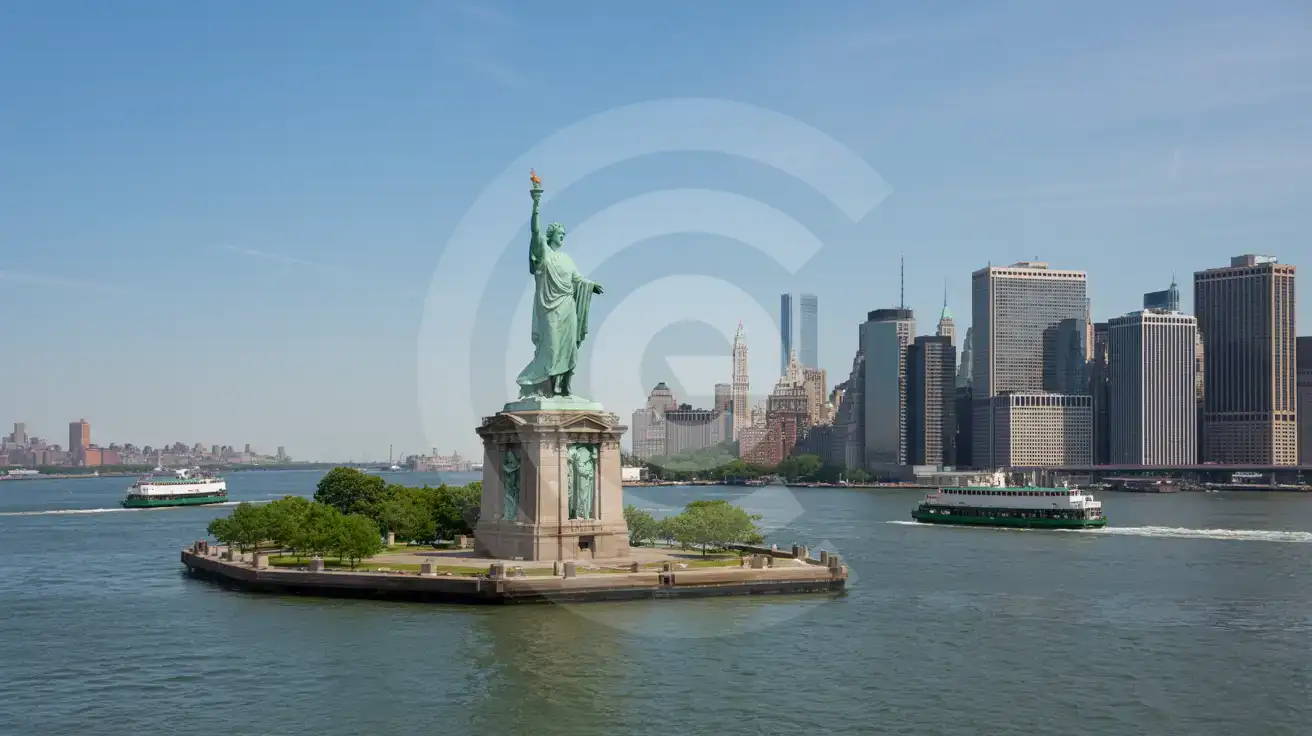
Liberty Island Harbor View
Compare WiFi Options at Statue of Liberty
 Recommended Recommended | Local SIM / Operator | Roaming | |
|---|---|---|---|
| FEATURES | |||
| Setup time | Few minutes | Store visit + paperwork | Auto |
| No local ID needed | Online checkout | Local ID required | Use home account |
| Speed | 4G/LTE; 5G in some areas | Carrier-grade | Partner-dependent |
| Travel support | English support 24/7 | Operator shops and call centre | Home carrier hours |
| Keep home number | Dual SIM | Replaces it | Same number |
| Cost predictability | Fixed price | Bills can spike | Bill-shock risk |
| PRICING | |||
Typical pricing | See plans below | — | — |
PRICING — PICK YOUR ESIMNO PLAN
Featured eSIM plans
American Mobile

American Mobile
American Mobile
American Mobile
American Mobile
American Mobile


