
Quick Facts
- Best for
- History lovers, art fans, long walkers, and travelers who like changing plans mid-day
- Pace
- Busy around headline sights, calmer in hilltop gardens, church interiors, and residential corners
- Good bases
- Near Roma Termini for transport, around Piazza Barberini for central access, or Trastevere for evening atmosphere
- Local rhythm
- Early starts help at major landmarks; evenings are ideal for piazzas, aperitivo, and neighborhood wandering
- eSIMno Networks
- Vodafone, Wind Tre
Start with the Rome everyone dreams about
The Colosseum, Roman Forum, and Palatine Hill still deserve the hype. They’re not just famous; they give you the clearest sense of how enormous ancient Rome once was. If you walk this area slowly, you start noticing the details people rush past: broken columns framed by umbrella pines, the Arch of Constantine catching late light, and the way modern traffic circles the ruins as if history and daily life have agreed to share the same block.
From there, Rome opens outward in layers. The Pantheon still has that jaw-drop effect, but so does stepping into Santa Maria della Vittoria and finding theatrical Baroque drama in a relatively compact church. Piazza Navona, Trevi Fountain, and the Spanish Steps are classic stops for a reason, yet they work best if you treat them as part of a wandering route rather than isolated photo missions. Rome is richer when you leave room for detours.
If you want a phone-ready day that stays flexible, explore eSIMno plans for Rome before you go. It helps when a timed entry shifts, a bus reroute appears, or you suddenly decide to trade one landmark for another.
The quieter Rome is often the one you remember
Aventine Hill is a great reset after the central crowds. The area feels greener, slower, and more residential, and the views back across the city are worth the climb. Not far away, the Bocca della Verità draws quick visits, but the wider neighborhood rewards a longer look, especially if you like Rome when it feels less staged.
Janiculum Hill is another favorite for that reason. The panorama is broad, the air feels lighter, and the route down toward Trastevere gives you one of the nicest transitions in the city. I still think one of Rome’s best small pleasures is hearing scooters below while the skyline stays all domes and stone above you. It’s a very specific Roman contrast.
Then there’s Domus Romane di Palazzo Valentini, which many travelers miss entirely. It’s one of those places that makes the city’s layers literal, not metaphorical. Add the Catacombs of San Callisto or the Baths of Caracalla if you want a version of Rome that feels more spacious and less compressed by crowds.
How to Connect
- Between the Colosseum and Roman Forum
This is where plans often split. One person wants more ruins, another wants coffee, someone else spots a shorter route toward Piazza Venezia. Use your phone here for live navigation and meeting points before the stone corridors and crowds scatter your group. - When Vatican timing slips
If the Vatican Museums entry window changes or the line looks longer than expected, that’s the moment data earns its keep. You can pivot to St. Peter’s Basilica, walk to Castel Sant'Angelo, or rebook the museums for later instead of losing half a day standing still. - From Piazza del Popolo to Villa Borghese
This transition looks simple on a map, but once you start choosing viewpoints, museum stops, or a route toward the Borghese Gallery and Museum, you’ll want quick checks for opening times and the fastest path through the park. - Evening moves in Trastevere
Dinner plans change fast here. Streets fill up, places look better in person than online, and your walk back may shift depending on how late you stay. Having data helps with reservations, ride options, and finding the right bridge or bus after midnight.
Tips
- Carry a small amount of cash for quick coffees, market snacks, or older neighborhood spots, but keep your phone ready for digital tickets because many major sights run on timed entry.
- Build your day by zones, not by a giant citywide list. Rome looks compact on a map, but crossing between hills, ruins, and Vatican-side sights takes more energy than first-time visitors expect.
- Church visits can be the best crowd break in the city. Keep a light layer in your bag so you can step inside places like St. Peter’s Basilica or Santa Maria della Vittoria without changing your whole plan.
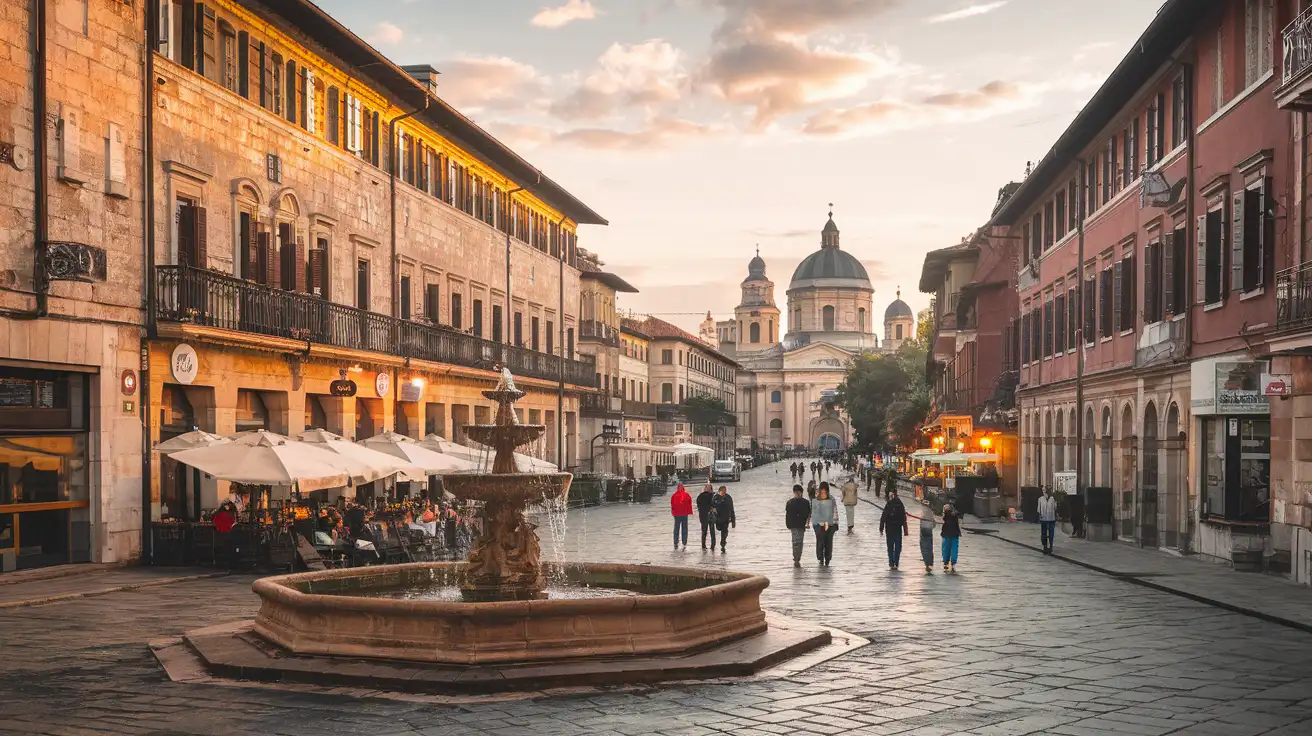
Rome at golden hour
Compare Internet Plans in Rome
 Recommended Recommended | Local SIM / Operator | Roaming | |
|---|---|---|---|
| FEATURES | |||
| Setup time | Few minutes | Store visit + paperwork | Auto |
| No local ID needed | Online checkout | Local ID required | Use home account |
| Speed | 4G/LTE; 5G in some areas | Carrier-grade | Partner-dependent |
| Travel support | English support 24/7 | Operator shops and call centre | Home carrier hours |
| Keep home number | Dual SIM | Replaces it | Same number |
| Cost predictability | Fixed price | Bills can spike | Bill-shock risk |
| PRICING | |||
Typical pricing | See plans below | — | — |
PRICING — PICK YOUR ESIMNO PLAN
Featured eSIM plans
Italian Mobile

Italian Mobile
Italian Mobile
Italian Mobile
Italian Mobile
Italian Mobile
Italian Mobile
Italian Mobile


