
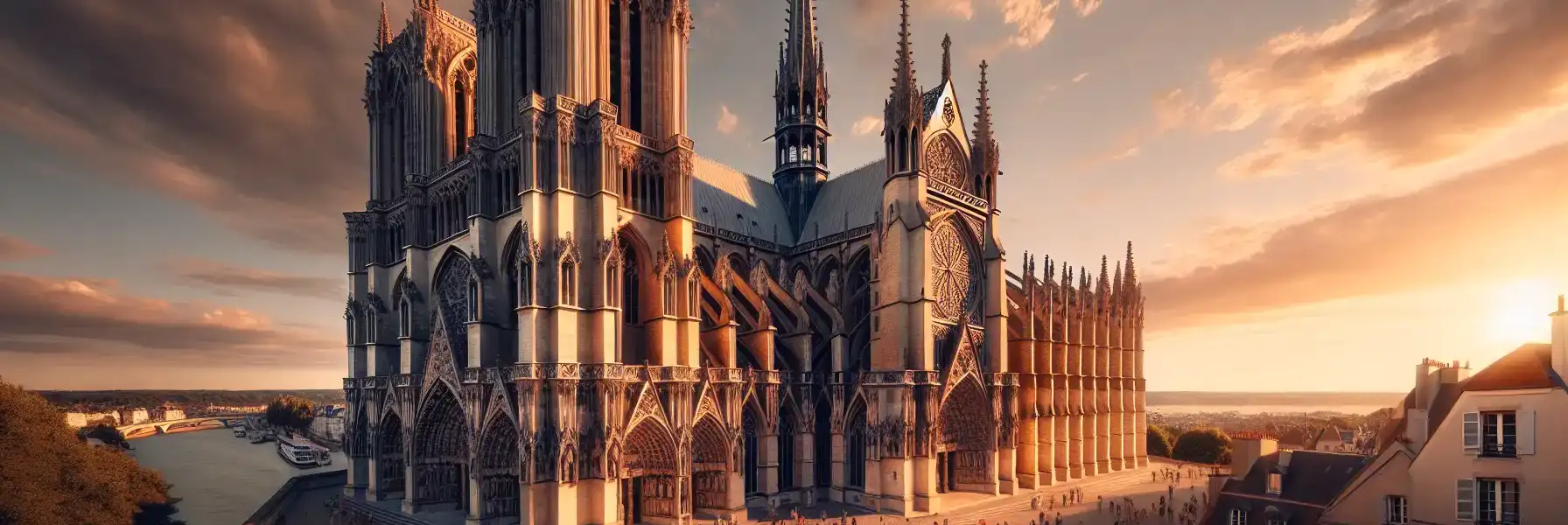
Quick Facts
- Address
- 6 Parvis Notre-Dame, Île de la Cité, 75004 Paris
- Opening Hours
- Daily ~7:45am–7:00pm (extended Thursday evenings)
- Cathedral Entry
- Free (timed reservation strongly recommended)
- Treasury Admission
- ~€12 adults, reduced rates for youth
- Tower Admission
- ~€13 adults (under-18 and EU 18–25 free)
- Nearest Métro
- Cité (Line 4), Saint-Michel-Notre-Dame (RER B/C)
- Official Website
- notredamedeparis.fr
- UNESCO Status
- Part of 'Paris, Banks of the Seine' (1991)
- eSIMno Networks
- Bouygues, Orange, SFR
About Notre-Dame Cathedral
Notre-Dame de Paris occupies the eastern end of the Île de la Cité, the small teardrop-shaped island in the Seine that has served as the nucleus of Paris since Roman times. Construction began around 1163 under Bishop Maurice de Sully, part of a wave of cathedral-building that swept northern France during the 12th and 13th centuries. The main structure was largely complete by the 1260s, though towers, chapels, and decorative elements continued to evolve for another century. What emerged was one of the earliest and most influential examples of French Gothic architecture — a style defined by pointed arches, rib vaults, and the revolutionary flying buttresses that allowed walls to become vast windows rather than load-bearing masses.
The building has witnessed an extraordinary range of French history. Henry VI of England was crowned King of France inside the nave in 1431, during the latter stages of the Hundred Years' War. Napoleon Bonaparte staged his imperial coronation here in December 1804, placing the crown on his own head in a ceremony immortalized by Jacques-Louis David's enormous painting now hanging in the Louvre. During the French Revolution, the cathedral was desacralized, rededicated to the Cult of Reason, and subjected to vandalism that destroyed much of its medieval statuary — including the original Gallery of Kings above the west portals.
By the early 19th century, Notre-Dame had fallen into serious disrepair. Victor Hugo's 1831 novel Notre-Dame de Paris — known in English as The Hunchback of Notre-Dame — is widely credited with sparking public interest in the building's preservation. A major restoration campaign led by architects Jean-Baptiste-Antoine Lassus and Eugène Viollet-le-Duc began around 1844 and continued for over two decades. Viollet-le-Duc rebuilt the spire, restored the flying buttresses, and added the famous chimeras and gargoyles that now define the cathedral's silhouette. His work was both historically informed and frankly inventive — the brooding stryge overlooking Paris from the tower gallery is his own creation, not a medieval original.
The cathedral remained central to French national life through the 20th century. Charles de Gaulle attended a thanksgiving Mass here following the Liberation of Paris in August 1944, and state funerals for French presidents have been held within its walls. Notre-Dame is included in the UNESCO World Heritage listing 'Paris, Banks of the Seine,' inscribed in 1991.
On 15 April 2019, a fire — likely caused by an electrical fault or improperly extinguished cigarette during renovation work — engulfed the roof and spire. The oak roof structure, known as 'the forest' for its 13th-century timber framework, was destroyed, and the spire collapsed through the vaulting below. Firefighters saved the main structure, the towers, most of the stained glass, and the majority of the cathedral's treasures, including the Crown of Thorns. An international restoration effort followed, funded by donations from around the world. The new spire was completed in late 2023, built to match Viollet-le-Duc's 19th-century design using approximately 1,000 oaks sourced from French forests. Notre-Dame reopened to the public in December 2024, five and a half years after the fire.
The cathedral remains the seat of the Archbishop of Paris and the symbolic center point of France — the bronze star embedded in the parvis outside marks 'kilomètre zéro,' the point from which all road distances in the country are measured.
Highlights and Must-See Features
The West Façade and Portals
The main entrance to Notre-Dame faces the parvis, the large stone plaza cleared in the 19th century to give visitors an unobstructed view of the façade. Three deeply carved portals punctuate the ground level: the Portal of the Virgin on the left, depicting scenes from Mary's life and death; the Portal of the Last Judgment in the center, showing Christ separating the saved from the damned; and the Portal of St. Anne on the right, the oldest of the three, with 12th-century sculpture depicting the Virgin and Child. Above the portals runs the Gallery of Kings — 28 statues representing the biblical kings of Judah. The originals were decapitated during the Revolution; 21 of the heads were discovered in a Paris basement in 1977 and are now displayed at the Musée de Cluny. The current statues are 19th-century replacements.
The Rose Windows
Three monumental rose windows define the interior light of Notre-Dame. The North Rose, installed around 1250, is the best preserved, retaining most of its original 13th-century stained glass. It depicts Old Testament prophets, judges, kings, and high priests arranged in concentric circles around the Virgin and Child at the center — a theological map in colored light measuring about 13 meters in diameter. The South Rose faces the Seine and was rebuilt in the 13th century after partial collapse; it shows scenes from the life of Christ and the martyrs. The West Rose, above the main organ, dates to around 1220 and depicts the Virgin surrounded by the labors of the months and signs of the zodiac. All three windows survived the 2019 fire, though they required extensive cleaning to remove lead dust deposited during the blaze.
The Grand Organ
Located on the tribune above the west entrance, the Cavaillé-Coll grand organ is one of the largest pipe organs in France, with roughly 8,000 pipes spread across five manuals and pedal. The case dates to the 15th century; the current instrument was built by Aristide Cavaillé-Coll in the 1860s during Viollet-le-Duc's restoration. The organ survived the fire largely intact — protected by its position high above the nave — but required painstaking cleaning and tuning to remove lead contamination. It was played again for the first time at the reopening ceremony in December 2024.
The Rebuilt Spire and Roof
The new spire, completed in late 2023, rises 96 meters above the ground and replicates Viollet-le-Duc's 1859 design in every visible detail, including the copper rooster weathervane at its peak. That rooster contains relics: fragments of the Crown of Thorns, a relic of Saint Denis, and a relic of Saint Geneviève, the patron saint of Paris. The surrounding roof structure — the new 'forest' — was milled from approximately 1,000 oak trees donated or sourced from French forests, aged and assembled using traditional carpentry techniques. The lead cladding follows historical methods, though with modern fire-safety systems integrated beneath.
The Treasury
Housed off the south side of the choir, the Treasury displays liturgical objects, reliquaries, and ecclesiastical vestments accumulated over centuries. The most significant piece is the Crown of Thorns, traditionally venerated as the relic worn by Christ at the Crucifixion. Louis IX (Saint Louis) acquired the relic from the Latin Emperor of Constantinople in the 1230s and built Sainte-Chapelle specifically to house it; it was transferred to Notre-Dame during the Revolution. The crown was rescued from the cathedral during the 2019 fire and is now displayed in a new reliquary designed by French goldsmith Sylvain Dubuisson. The Treasury charges a separate admission of approximately €12 for adults.
The Towers and the Galerie des Chimères
The two western towers rise about 69 meters above the parvis. The tower climb — managed by the Centre des Monuments Nationaux — leads up 387 steps through the South Tower, passing the Galerie des Chimères on the balcony level. This is where you'll find the famous stryge, the horned, winged demon-figure leaning on his elbows and contemplating Paris — Viollet-le-Duc's most iconic addition, carved in the 1850s. The gallery also features gargoyles (functional water spouts) and additional chimeras (purely decorative grotesques). Continuing upward, the climb reaches the bell chamber, home to Emmanuel, the great bourdon bell cast in 1685 and weighing over 13 tons. Tower tickets are approximately €13 for adults; EU residents aged 18–25 and all visitors under 18 enter free.
The Choir and Ambulatory
The eastern end of the cathedral contains the choir, enclosed by an elaborate 14th-century stone screen (the clôture) carved with painted reliefs depicting scenes from the life of Christ. The ambulatory — the walkway circling behind the high altar — allows visitors to view the choir from various angles and to access the Treasury entrance. Side chapels line the outer walls, many containing significant artwork and tombs of archbishops.
The Archaeological Crypt
Beneath the parvis, directly in front of the cathedral, lies the Crypte Archéologique de l'Île de la Cité. This underground museum preserves the archaeological remains discovered during excavations in the 1960s: Gallo-Roman quays, medieval cellars, the foundations of the Hôtel-Dieu hospital, and traces of the island's evolution from Roman Lutetia through medieval Paris. The crypt is managed separately from the cathedral and charges its own admission.
Visit Strategy
Reservation System and Entry
Entry to Notre-Dame Cathedral is free, but since the December 2024 reopening, the extraordinary demand has made timed-entry reservations essentially mandatory during busy periods. Reservations can be made through the official Notre-Dame de Paris website or app, typically opening several weeks in advance. A walk-up queue exists for visitors without reservations, but waits can stretch to two hours or more during peak season. Book early morning or late afternoon slots for shorter internal queues. Your reservation confirmation will arrive as a QR code — have it ready on your phone as you approach the security screening area on the parvis.
Best Times to Visit
The quietest windows are early morning immediately at opening (around 7:45am) or during the final hour before evening closure. Weekday mornings in late autumn and winter — excluding the Christmas-to-New-Year holiday period — tend to see the lightest crowds. Spring and summer weekends are the busiest, particularly between 11:00am and 4:00pm. Thursday evenings, when the cathedral stays open later, can offer a pleasant atmosphere after the day-trip crowds have dispersed.
Duration
A basic walk through the nave and ambulatory takes 30–45 minutes. Add another 30 minutes for the Treasury if visiting. The tower climb, including waiting time at the base and the ascent/descent, typically requires 60–90 minutes. A thorough visit encompassing the cathedral interior, Treasury, towers, and the exterior walk around the apse might occupy a full morning or afternoon.
Mass and Liturgical Services
Notre-Dame remains an active parish church with multiple Masses celebrated daily. Visitor circulation within the nave is restricted during services, and the atmosphere shifts considerably from tourist hours. The Sunday schedule includes a sung capitular Mass, typically in the late morning, featuring the cathedral's choir and often the grand organ. Attending Mass offers a contemplative experience distinct from general visiting hours — but if your primary goal is sightseeing and photography, check the service schedule and plan around it.
Photography Rules
Personal photography without flash is permitted inside the nave and ambulatory during regular visiting hours. Tripods, monopods, selfie sticks, and flash photography are prohibited. Photography is not allowed during Mass or other liturgical services. Video recording follows the same guidelines — handheld only, no flash, no commercial equipment without special permission. The rose windows photograph best when sunlight is streaming through; the North Rose receives direct light in the morning, the South Rose in the afternoon.
Security Screening
All visitors pass through airport-style security screening before entering the cathedral. Large backpacks and suitcases may be refused; there is no baggage storage facility at the cathedral itself, so plan accordingly if arriving from or departing to a train station. Small bags and daypacks are generally permitted.
Accessibility
The ground floor of the cathedral is accessible to wheelchair users and visitors with mobility impairments via a level entrance. The tower climb involves 387 steps with no elevator — it is not accessible to those unable to climb stairs. The Treasury has limited step-free access; check current conditions with cathedral staff.
Tower Tickets
The towers are managed by the Centre des Monuments Nationaux, not by the cathedral itself, and require a separate ticket purchased through the CMN website or on-site kiosks. Tickets are timed to manage capacity on the narrow staircases. During peak periods, tower tickets can sell out days in advance — book early if the chimera gallery and bell chamber are priorities. Under-18s and EU residents aged 18–25 enter free but still require a timed reservation.
Visiting Etiquette and Service Times
Dress Code and Modesty Requirements
Notre-Dame is an active Catholic cathedral, not a museum, and dress expectations reflect that status. Shoulders and knees should be covered. Tank tops, short shorts, and beachwear are inappropriate and may result in refused entry during busy periods when staff are actively managing the queue. Men should remove hats upon entering the building. The interior is often cooler than outside, particularly in summer, so a light layer serves double duty. These expectations apply equally to visitors attending Mass and those entering for general sightseeing.
Service and Prayer Schedule
Mass is celebrated multiple times daily, with weekday services typically in the morning and early evening. The Sunday schedule is more elaborate, usually including a principal sung Mass (Messe capitulaire) around late morning, featuring the cathedral's maîtrise (choir) and often the grand organ. Vespers are sung on Sunday afternoons. During all liturgical services, visitor circulation within the nave is halted — you may remain seated in the pews, but walking, photography, and audible conversation are prohibited. If you arrive during a service and wish only to sightsee, you'll need to wait until it concludes or return later. Check the current schedule on the official website before your visit, as times shift for feast days and special occasions.
Ceremony and Festival Calendar
The liturgical year brings particular solemnity to certain dates. Christmas Midnight Mass draws enormous attendance and typically requires advance registration. Holy Week services — Palm Sunday, the Triduum (Holy Thursday, Good Friday, Easter Vigil), and Easter Sunday — transform the cathedral's atmosphere entirely. The Feast of the Assumption (15 August) is a major celebration, and the veneration of the Crown of Thorns occurs on Good Friday. All Saints' Day (1 November) and the Feast of Notre-Dame (15 August, coinciding with the Assumption) are significant. Visiting during these periods offers profound experiences but requires patience with crowds and restricted access.
Photography and Behavior Inside
Silence is requested throughout the interior. Mobile phones should be set to silent mode before entering. Flash photography, tripods, and selfie sticks are prohibited at all times. Personal photography without flash is permitted during regular visiting hours but prohibited during Mass and other services. Photographing individual worshippers without their consent is considered inappropriate. The cathedral is a place of prayer for many visitors; moving quietly, speaking in low voices, and avoiding congestion in front of the chapels shows respect for those using the space devotionally.
Donations, Guides, and Audio Tours
Entry to the cathedral is free, but donation boxes are placed throughout the building, and contributions support ongoing maintenance and the completion of post-fire restoration work. Votive candles can be lit in side chapels for a suggested donation. Official audio guides are available for hire near the entrance, covering the architectural history, major artworks, and theological significance of the building. Guided group tours led by licensed cathedral guides can be arranged in advance through the official website. Unofficial guides soliciting business outside the cathedral are best avoided — they are not affiliated with Notre-Dame and quality varies widely.
Nearby Attractions and Logistics
Sainte-Chapelle
A four-minute walk west along the Île de la Cité brings you to Sainte-Chapelle, the 13th-century royal chapel built by Louis IX (Saint Louis) to house the Crown of Thorns before it was transferred to Notre-Dame. The upper chapel — reached via a narrow spiral staircase — contains 15 towering stained-glass windows depicting over 1,000 biblical scenes, widely considered the finest medieval glass ensemble in existence. Entry is approximately €13 for adults; combined tickets with the adjacent Conciergerie are available and offer better value if visiting both. Morning light brings the windows to their most luminous; arrive early to avoid tour groups.
The Conciergerie
Immediately adjacent to Sainte-Chapelle, the Conciergerie served as a medieval royal palace before becoming a Revolutionary prison. Marie Antoinette was held here before her execution in 1793; her reconstructed cell can be visited. The vaulted Salle des Gens d'Armes — one of the largest surviving medieval halls in Europe — offers a striking sense of scale. Budget 45–60 minutes.
Crypte Archéologique de l'Île de la Cité
Directly beneath the parvis in front of Notre-Dame, this compact archaeological museum displays foundations and remains spanning from Gallo-Roman Lutetia through the Middle Ages. It's managed separately from the cathedral with its own admission. A useful visit if you want to understand the layers of history beneath your feet.
Île Saint-Louis
A five-minute walk east via the Pont Saint-Louis leads to the quieter sister island, developed in the 17th century and lined with elegant townhouses. The church of Saint-Louis-en-l'Île features an ornate baroque interior. Berthillon, at 31 rue Saint-Louis-en-l'Île, has served Paris's most celebrated ice cream since 1954 — expect queues in warm weather.
Shakespeare and Company
Across the Petit Pont on the Left Bank at 37 rue de la Bûcherie, this English-language bookstore has occupied its current location since 1951, founded by George Whitman and now run by his daughter Sylvia. The cramped rooms, creaking floors, and views back toward the cathedral make it a mandatory stop for literary-minded visitors.
Getting Around
Métro Cité (Line 4) emerges directly onto the Île de la Cité, steps from the parvis. Saint-Michel-Notre-Dame (RER B, RER C, and Métro Line 4) sits on the Left Bank, a three-minute walk across the Petit Pont. Hôtel de Ville (Lines 1 and 11) is about eight minutes on foot, crossing the Pont d'Arcole. Bus lines 21, 38, 47, 58, 70, 72, 75, and 96 serve stops within a few minutes' walk. The Louvre is 15 minutes on foot via the Right Bank quays. Sainte-Chapelle is four minutes west; the Panthéon is 15 minutes south through the Latin Quarter.
Suggested Day Itinerary
Begin around 8:00 with a reserved entry to Notre-Dame, experiencing the interior in relative calm. After exiting, visit the Crypte Archéologique beneath the parvis. Walk west along the island to Sainte-Chapelle for late morning, when direct sunlight floods the upper chapel. Visit the Conciergerie next door, then cross to Île Saint-Louis for lunch at a bistro on rue Saint-Louis-en-l'Île or ice cream at Berthillon. In the afternoon, browse Shakespeare and Company and stroll the Left Bank quays lined with bouquinistes (secondhand booksellers). Return to the cathedral in the late afternoon for sunset views from the Square Jean XXIII behind the apse, where the flying buttresses are best appreciated against golden light.
Why Data Matters at Notre-Dame
The Île de la Cité sits at the geographic center of Paris but doesn't offer the same density of public WiFi that you'd find in the Marais or around the Champs-Élysées. Your phone becomes essential here: the timed-entry reservation system delivers QR codes that need to display reliably at the security checkpoint. Tower tickets come from a separate website with a separate confirmation. Navigation apps smooth the short walks between Notre-Dame, Sainte-Chapelle, and the Conciergerie when signage isn't obvious. And if you need to modify a restaurant booking on Île Saint-Louis or check RER schedules at Saint-Michel, mobile data handles it faster than hunting for café WiFi with a password.
An eSIMno France plan connects through Bouygues, Orange, or SFR — the same networks Parisians use daily — and activates before you land. No SIM card swaps, no airport kiosk queues, no registration paperwork. For a day that moves between timed reservations, ticketed climbs, and spontaneous Left Bank wandering, reliable local data removes friction you don't need.
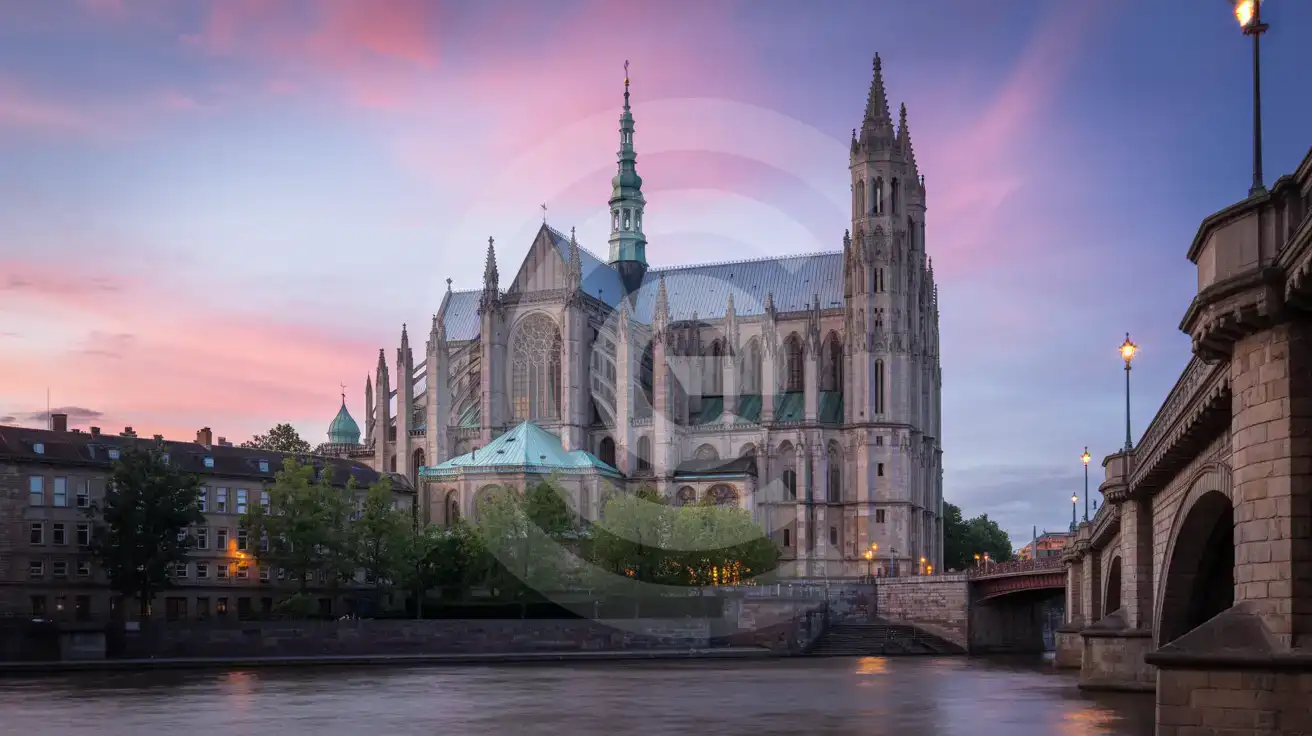
Gothic Silhouette
Compare WiFi Options at Notre-Dame Cathedral
 Recommended Recommended | Local SIM / Operator | Roaming | |
|---|---|---|---|
| FEATURES | |||
| Setup time | Few minutes | Store visit + paperwork | Auto |
| No local ID needed | Online checkout | Local ID required | Use home account |
| Speed | 4G/LTE; 5G in some areas | Carrier-grade | Partner-dependent |
| Travel support | English support 24/7 | Operator shops and call centre | Home carrier hours |
| Keep home number | Dual SIM | Replaces it | Same number |
| Cost predictability | Fixed price | Bills can spike | Bill-shock risk |
| PRICING | |||
Typical pricing | See plans below | — | — |
PRICING — PICK YOUR ESIMNO PLAN
Featured eSIM plans
France Mobile

France Mobile
France Mobile
France Mobile
France Mobile
France Mobile
France Mobile
France Mobile


