
Quick Facts
- Host City
- Galway, Ireland
- Likely Venue
- Galway Racecourse, Ballybrit
- Event Dates
- Wednesday, September 23, 2026
- Founded
- Started in 2015
- Typical Opening Hours
- Approx. 09:00-17:00 each day
- Registration / Doors
- Usually from about 08:30; confirm final exhibitor notice
- Expected Attendance
- Roughly 4,000-5,000 visitors and delegates
- Ticket Price
- Trade registration is often free in advance; some conference sessions may be paid separately
- From Shannon Airport
- About 85 km; 1 hr 10 min by car, around 1 hr 45 min by bus via Galway
- From Ireland West Airport Knock
- About 87 km; around 1 hr 15 min by car
- From Galway City Centre
- About 5 km; 10-15 min by taxi, 20-30 min by bus
- Taxi Fare to Venue
- Approx. EUR 12-18 from Eyre Square, EUR 30-45 from Shannon Airport coach stop after arrival in Galway
- Public Transport to Venue Area
- Bus Éireann city routes serving Ballybrit and Dublin Road corridor; Galway Ceannt rail station for onward taxi/bus
- eSIMno Networks
- Meteor, Three, Vodafone
Why This Event Matters
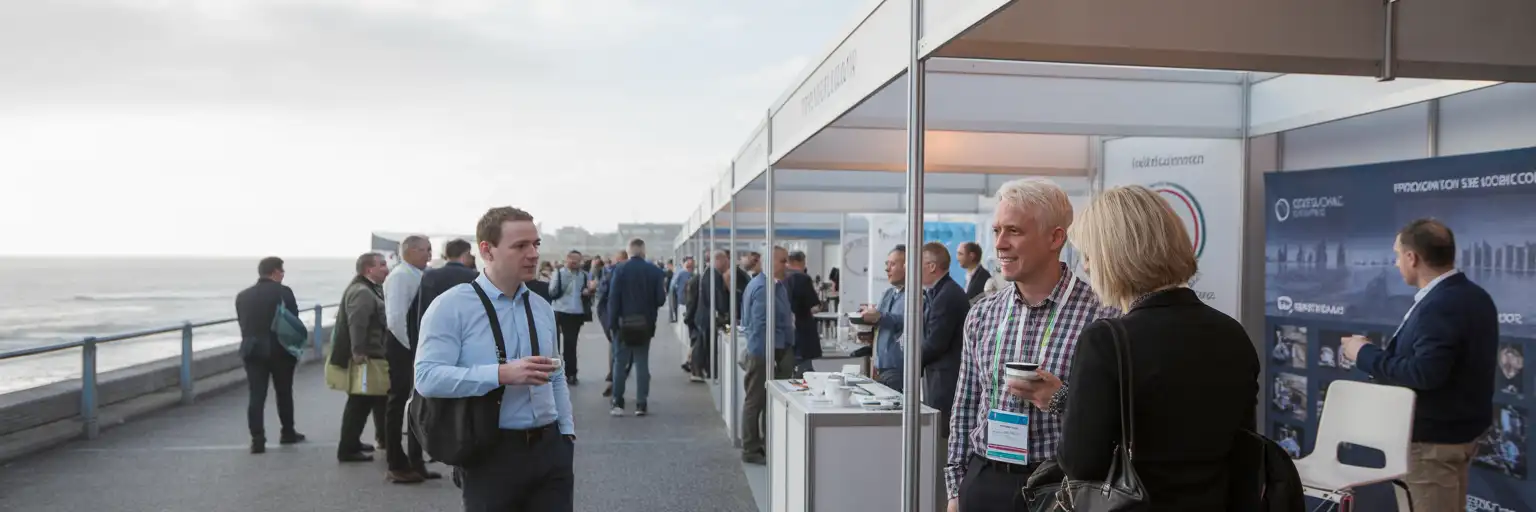
Some trade fairs are big on spectacle. Medical Technology Ireland is big on usefulness. It serves Ireland’s globally connected medical device sector, and that gives the event a very specific energy: fewer casual wanderers, more engineers comparing capabilities, procurement teams checking supplier fit, and executives trying to turn a short trip into a productive one.
The reason people travel for it is simple. Galway sits in one of Europe’s strongest medtech clusters, so this isn’t just a hall full of stands; it’s a practical meeting point for manufacturing, sourcing, and supply-chain conversations that can continue well beyond the exhibition floor. That’s also why this event tends to attract overseas suppliers, buyers, engineers, consultants, and investors who want high-value B2B time rather than a broad consumer-facing expo.
If you’re wondering who should attend, think medical device manufacturers, production and design engineers, procurement teams, specialist suppliers, consultants, and investors looking at the Irish and wider European medtech pipeline. In other words, people who actually need to meet. And Galway is small enough that those meetings can spill into coffee, dinner, and next-day follow-up without burning an hour in traffic.
Getting There and Getting Around During Event Days
The most likely venue is Galway Racecourse in Ballybrit, which has hosted this event in recent editions and makes sense for a trade fair of this size. Ballybrit is east of the city centre, close to the Dublin Road corridor, so you don’t need to stay in the medieval core to make life easy.
Flying in: Shannon Airport is usually the most practical international gateway. By road it’s about 85 km to Galway, typically 1 hour 10 minutes by taxi or rental car in normal traffic. If you take a coach to Galway first, allow around 1 hour 45 minutes to 2 hours including transfer time, then another 10 to 15 minutes by taxi to Ballybrit. Ireland West Airport Knock is a useful backup at roughly 87 km and about 1 hour 15 minutes by car. Dublin Airport is farther away but still viable if flight prices are better; expect about 210 km and usually 2 hours 30 minutes to 3 hours by coach or car depending on traffic.
Best areas to stay: Ballybrit is the obvious low-friction choice if you want to be near the venue. Hotels around Dublin Road, Briarhill, and Ballybrit save time on early starts. If you’d rather be somewhere livelier after hours, stay near Eyre Square or the Forster Street area. From there you’re close to Galway Ceannt rail and coach connections, plenty of restaurants, and you’re still only about 5 km from the venue.
Getting around: Galway doesn’t have a metro or tram, so event-week movement is mostly bus, taxi, or walking in the centre. Bus Éireann city services along the Ballybrit and Dublin Road side of town are useful, but for a first morning at the show, many visitors simply take a taxi because it cuts out guesswork. A typical ride from Eyre Square to Galway Racecourse is about EUR 12 to EUR 18, and can edge higher during peak arrival or rain. If you’re coordinating several meetings in one day, explore eSIMno plans for Ireland so your map, calls, and backup ride options are ready when queues form.
Beyond the Halls: Galway After Meetings
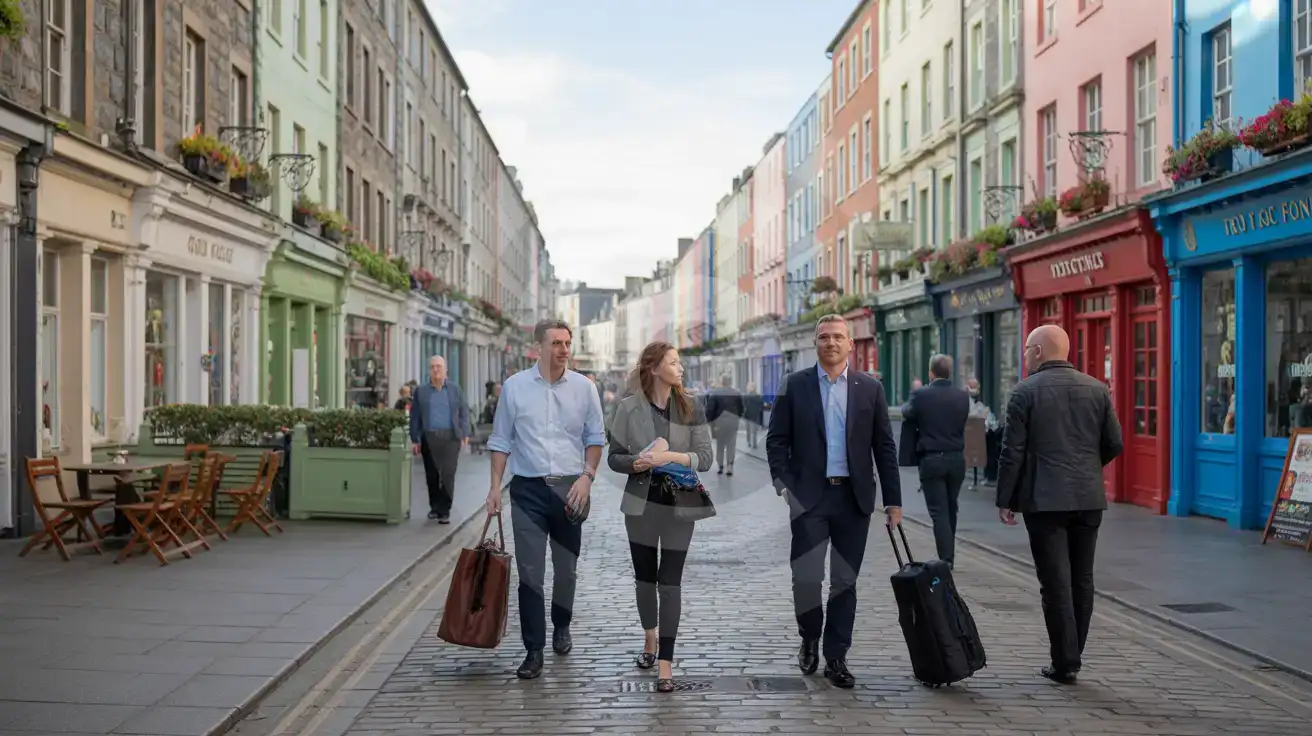
You don’t need a giant free afternoon to enjoy Galway. That’s one of its strengths. Once the fair wraps up, head into the centre for a short decompression walk around Spanish Arch and the River Corrib. It’s a handy reset between the last stand visit and an evening dinner, and around sunset the light there is usually worth a quick photo stop.
If you have an extra hour, wander the lanes around Quay Street and Latin Quarter. Yes, it’s popular, but for business travelers it works because everything is compact: pubs for informal meetups, seafood spots, and places where a planned 30-minute drink turns into a useful networking session. For a quieter detour, the path at Nimmo’s Pier gives you sea air and a good look back toward the city without needing a car.
Food-wise, keep it local. Try Galway oysters if they’re in season, a bowl of seafood chowder with brown bread, or Connemara lamb if you want something hearty after a long expo day. Around Quay Street, Cross Street, and the nearby West End, you’ll find some of the city’s best evening options. The West End, near Dominick Street, is a good call if you want somewhere slightly less touristy for dinner. Don’t leave without trying a proper Irish coffee or a pint in a pub with live traditional music—just know that music sessions get busy from about 20:00 onward, so booking dinner for 18:30 or 19:00 usually works better.
One more practical note: Galway weather in late September can change fast. A dry morning can become a windy, wet walk by 16:00. Keep your phone charged for taxis, maps, and restaurant bookings, especially if your evening plans move from Ballybrit into town.
How to Stay Connected Without Losing Time
- Before wheels-down: load your essentials
Save your registration email, QR code, hotel address, and the venue pin for Galway Racecourse before departure. If your first stop is Shannon or Dublin Airport, having data ready means you can check coach times to Galway while still taxiing to the terminal. - On event morning: expect WiFi to feel crowded at peak check-in
Trade fair WiFi is fine for quick browsing, but the busiest stretch is usually around 08:30-10:00 when everyone is scanning badges, downloading hall maps, and messaging arrivals. Keep your own data active so you’re not stuck reloading a ticket at the entrance. - During meetings: use mobile data for the small but crucial stuff
Medical Technology Ireland is the kind of event where lead capture forms, calendar updates, LinkedIn swaps, and emailed spec sheets happen in the gaps between stands. A stable connection matters more than you think, especially if you’re stepping outside the hall or moving between conference and expo areas. - After the show: make the city-centre handoff easy
The awkward part of the day is often not the event itself but the switch from Ballybrit to dinner in Eyre Square, Quay Street, or the West End. Keep maps, taxi booking, and group messages live so you can pivot quickly if traffic builds or the meetup location changes.
What We’d Keep Handy for These Two Days
- Book accommodation early if you want Ballybrit or Eyre Square; Galway inventory is smaller than Dublin, and busy event weeks tighten fast.
- Carry a light waterproof layer. Late September in Galway is often around 12-16°C, with quick showers and coastal wind that can make short walks feel longer.
- If you’re meeting multiple suppliers, set one fallback point in the city centre—Eyre Square is the easiest shared reference when plans unravel.
Galway Between Meetings
Compare Connectivity for Medical Technology Ireland 2026
 Recommended Recommended | Local SIM / Operator | Roaming | |
|---|---|---|---|
| FEATURES | |||
| Setup time | Few minutes | Store visit + paperwork | Auto |
| No local ID needed | Online checkout | Local ID required | Use home account |
| Speed | 4G/LTE; 5G in some areas | Carrier-grade | Partner-dependent |
| Travel support | English support 24/7 | Operator shops and call centre | Home carrier hours |
| Keep home number | Dual SIM | Replaces it | Same number |
| Cost predictability | Fixed price | Bills can spike | Bill-shock risk |
| PRICING | |||
Typical pricing | See plans below | — | — |
PRICING — PICK YOUR ESIMNO PLAN
Destination overview
Frequently Asked Questions
Featured eSIM plans
IrelandNet

IrelandNet
IrelandNet
IrelandNet
IrelandNet
IrelandNet
IrelandNet
IrelandNet