
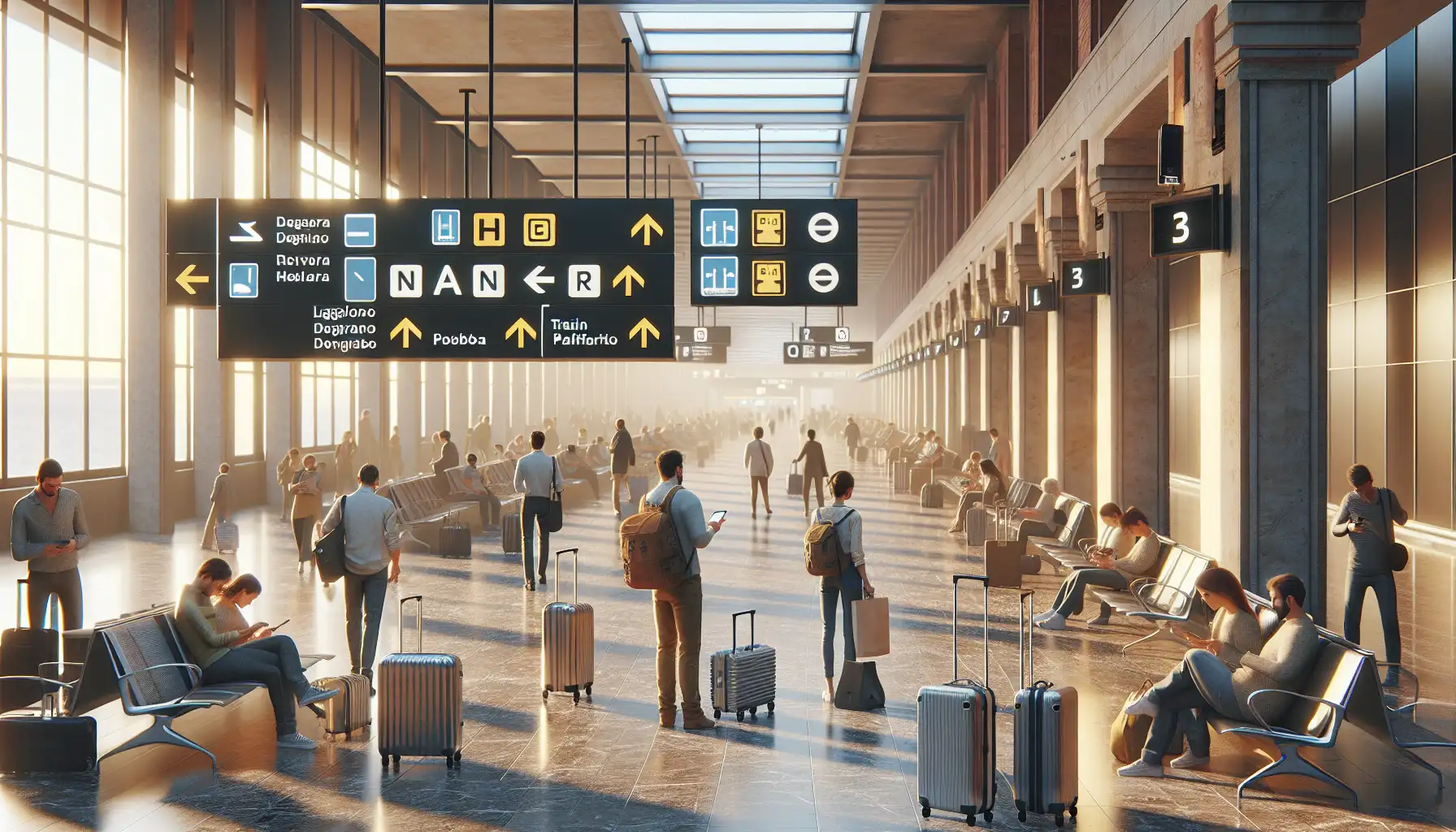
Quick Facts
- Best for arrival
- eSIM if you need maps, ride apps, or hotel messaging right away
- Airport WiFi
- Useful for short tasks in the terminal, less ideal once you start moving
- Typical city experience
- Good mobile coverage overall, but crowds, stations, and thick old buildings can slow things down
- Cost snapshot
- Airport WiFi is usually free; local eSIM data plans are often the more reliable paid option for a full Rome stay
- eSIMno Networks
- Vodafone, Wind Tre
WiFi vs Mobile Data at Fiumicino
Here’s the honest version: Fiumicino airport WiFi is fine for light tasks while you’re still inside the terminal. If all you need is to tell someone you’ve landed, check a reservation email, or pull up train times, it can do the job. The problem starts when your trip stops being stationary.
Once you’re heading toward the Leonardo Express, waiting for a taxi, or trying to coordinate a pickup after a delayed arrival, mobile data usually feels much smoother. Rome rewards quick decisions, and your phone tends to matter most in those in-between moments rather than while you’re sitting comfortably near a gate.
If you already know you’ll be moving between Fiumicino, Roma Termini, and busy sightseeing areas, it’s worth setting up data before you leave the airport. You can explore eSIMno plans for Leonardo da Vinci–Fiumicino, Rome, Italy and avoid relying on one login page after another.
How to Connect
- At Fiumicino arrivals: decide based on your next 60 minutes
If you’re staying put long enough to grab coffee and sort messages, airport WiFi is usually enough. If you’re going straight to the Leonardo Express or meeting a driver outside Terminal 3, switch to mobile data early so maps and chat apps don’t drop right when you leave the terminal. - On the way to Roma Termini: don’t count on WiFi continuity
The airport network won’t help once you’re in transit. If you need live platform info, hotel directions, or a backup route because of delays around Termini, this is where an eSIM starts paying for itself. - In crowded visitor zones like the Vatican Museums approach or Piazza Navona lanes: use mobile data, not public WiFi hunting
These are exactly the places where people stop, reload maps, and message their group at the same time. Instead of searching for a café network, keep your own data active so ticket emails, navigation, and translation tools open quickly. - At hotel check-in near places like Hotel Eden or along Via Veneto: keep data on until the room WiFi actually works
A lot of travelers switch too early. Stay on mobile data until the hotel network is connected, tested, and stable enough for what you need. It saves you from standing in the lobby trying to re-enter passwords while your booking app spins.
Tips
- If your phone supports WiFi Assist or adaptive switching, check the setting before landing. It can stop your phone from clinging to weak terminal WiFi when mobile data would work better.
- Keep one offline copy of your hotel address in Italian. It helps with taxi conversations and saves data if your app stalls outside the airport rank.
- If you’re arriving for a major event like the Rome Marathon or a big night at Stadio Olimpico, expect heavier network demand around stations and transport hubs. Load tickets and meeting points a little earlier than usual.
Simple Cost Breakdown
For most travelers, the real comparison isn’t just free versus paid. It’s free but limited versus paid and available when you actually need it.
Airport WiFi: usually free, good for short sessions, and best treated as a convenience rather than your main connection plan.
Hotel WiFi: included at many properties, but quality varies a lot. A polished hotel lobby doesn’t always mean fast room speeds. Older buildings in central Rome can be charming and slightly annoying for signal strength at the same time.
eSIM data: usually the most predictable paid option for arrivals, transfers, and days spent moving around. If you’ll be using maps, messaging, ticket apps, and a bit of social media, a small-to-mid data plan often covers a city break comfortably. If you’re uploading lots of video from places like Villa Borghese viewpoints or sending work files from your hotel, go bigger.
We’d frame it this way: if your trip is mostly hotel, restaurant, and occasional browsing, WiFi may be enough. If your Rome plan includes trains, queues, changing reservations, and long sightseeing days, mobile data is usually worth the extra few euros.
Arrival Connection Moment
Compare WiFi Options at Leonardo da Vinci International Airport
 Recommended Recommended | Local SIM / Operator | Roaming | |
|---|---|---|---|
| FEATURES | |||
| Setup time | Few minutes | Store visit + paperwork | Auto |
| No local ID needed | Online checkout | Local ID required | Use home account |
| Speed | 4G/LTE; 5G in some areas | Carrier-grade | Partner-dependent |
| Travel support | English support 24/7 | Operator shops and call centre | Home carrier hours |
| Keep home number | Dual SIM | Replaces it | Same number |
| Cost predictability | Fixed price | Bills can spike | Bill-shock risk |
| PRICING | |||
Typical pricing | See plans below | — | — |
PRICING — PICK YOUR ESIMNO PLAN
Featured eSIM plans
Italian Mobile

Italian Mobile
Italian Mobile
Italian Mobile
Italian Mobile
Italian Mobile
Italian Mobile
Italian Mobile


