
Quick Facts
- Address
- Piazza del Duomo, 56126 Pisa PI, Italy
- Tower Climb Tickets
- €20–€27 (timed entry, groups of ~30)
- Combination Ticket
- ~€27 (Tower + Cathedral + Baptistery + Camposanto)
- Summer Hours
- 9:00 AM – 8:00 PM (April–September)
- Winter Hours
- 9:00 AM – 5:00 PM (November–February)
- Steps to Summit
- 294 spiral steps
- Current Tilt
- 3.97 degrees (reduced from 5.5° in 1990)
- Height
- 56m (low side) to 57m (high side)
- Nearest Train Station
- Pisa San Rossore (10-minute walk)
- Official Website
- opapisa.it
- eSIMno Networks
- Vodafone, Wind Tre
About the Leaning Tower of Pisa
The Leaning Tower of Pisa began as a straightforward commission — a freestanding bell tower for the Cathedral of Pisa, intended to complete an ecclesiastical complex that had been under construction since 1063. Bonanno Pisano laid the foundation in 1173 on a bed of clay, sand, and marine shells just three meters deep. By the time workers reached the second floor in 1178, the south side had already begun to sink. Construction halted for nearly a century.
That pause may have saved the tower from collapse. The long dormancy allowed the clay to compress and stabilize under the existing weight before Giovanni di Simone resumed work in 1272, deliberately building the upper floors with taller columns on the sinking side to compensate. The bell chamber was finally added by Tommaso di Andrea Pisano around 1372 — 199 years after the first stone was placed.
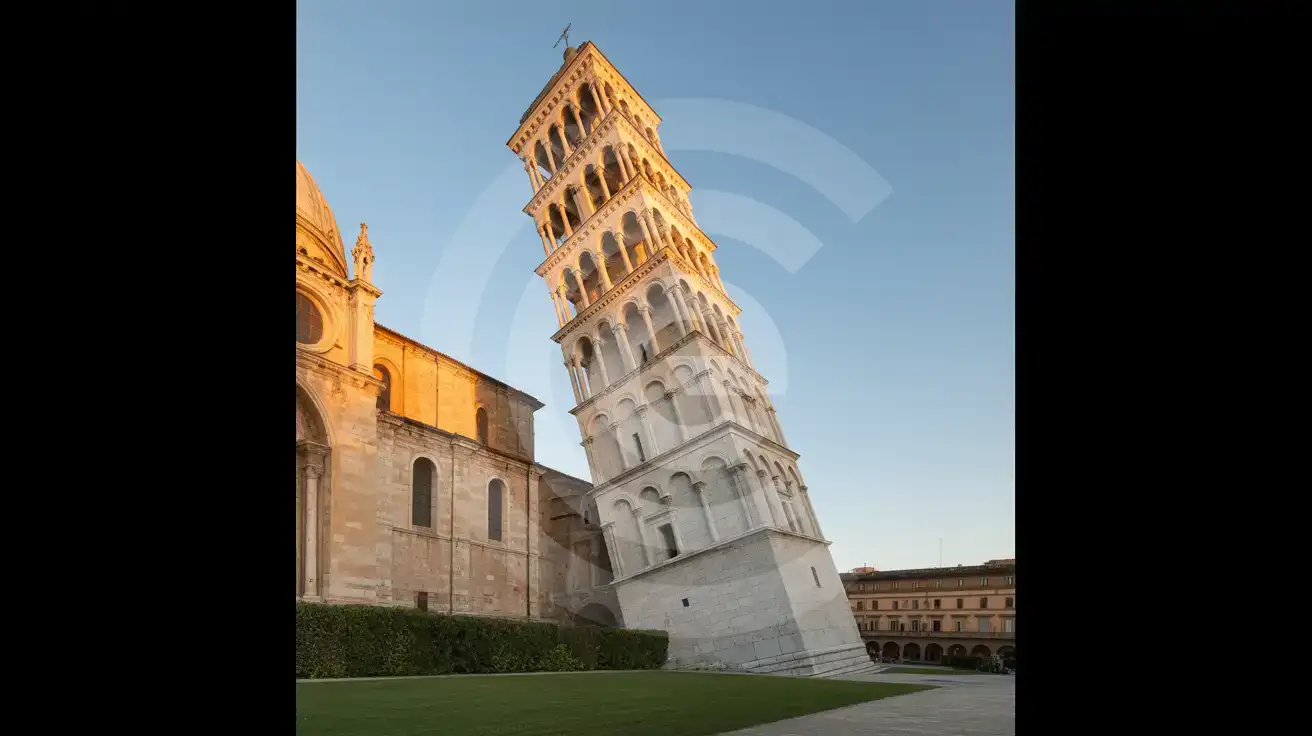
The result is a building that curves as it rises, a subtle banana shape visible when you study the profile from the east lawn. The tilt continued to worsen for centuries. By 1990, the tower leaned 5.5 degrees from vertical and engineers feared imminent collapse. An international committee spent eleven years removing 38 cubic meters of soil from beneath the north foundation, using lead counterweights and steel cables to gently coax the structure back. The tower reopened in 2001 with a reduced tilt of about 3.97 degrees — still dramatic enough for the tourist photograph, stable enough for another 200 years according to structural projections.
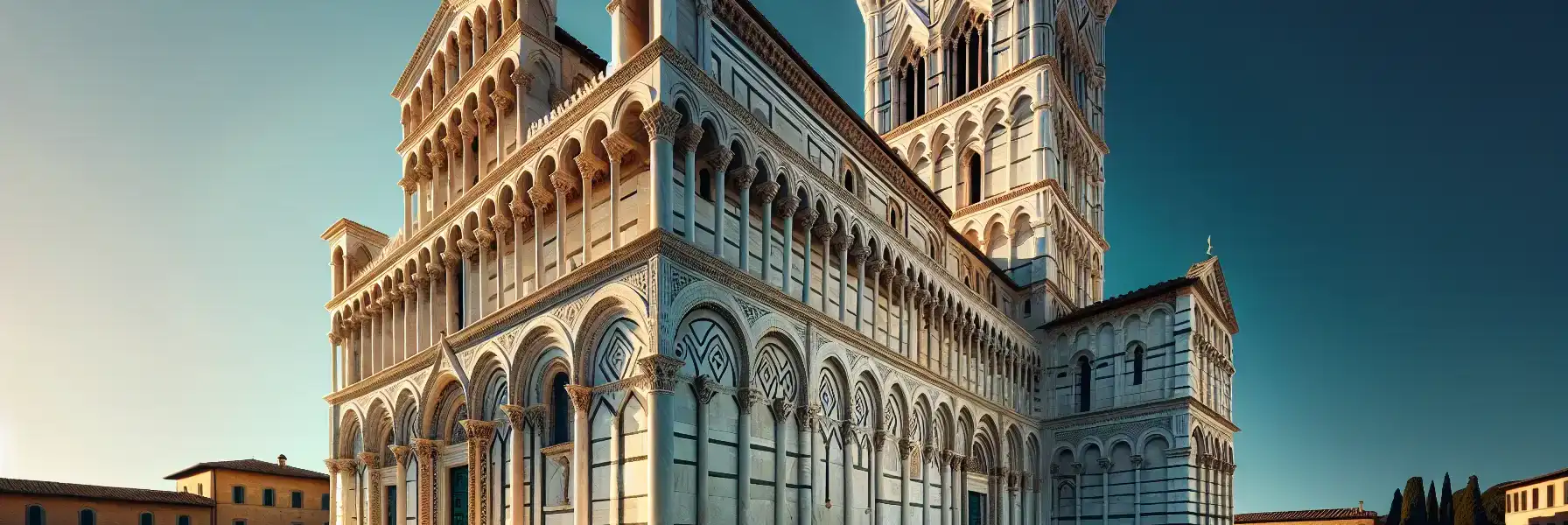
Eight stories of white Carrara marble rise 56 to 57 meters depending on which side you measure, wrapped in six tiers of open arcades that define the Pisan Romanesque style. The blind arcade at ground level gives way to delicate columned galleries above, each featuring classical capitals that reference ancient Roman architecture while pushing toward something distinctly medieval. The tower weighs approximately 14,500 metric tons — a fact that makes the soft foundation's long survival even more remarkable.
UNESCO inscribed the entire Piazza dei Miracoli complex as a World Heritage Site in 1987, recognizing not just the tower but the cathedral, baptistery, and monumental cemetery as a unified masterpiece of medieval Italian architecture. The tower draws five million visitors annually, though only about 40 can climb at any given time due to the narrow spiral staircase and structural load limits.
Highlights and What to See
The Bell Chamber and Summit Platform
The climb culminates in the torre's original purpose — a bell chamber housing seven bells, each tuned to a note on the musical scale. La Assunta, the largest at approximately 3.5 tons, was cast in 1655 and still rings for major religious occasions and noon daily, though the mechanism is now electrified to prevent the vibrations that once threatened structural integrity. The open viewing platform wraps around the bells, offering 360-degree panoramas across the Piazza dei Miracoli, the terracotta roofscape of central Pisa, and on clear days, the marble peaks of the Apuan Alps to the north.
The Spiral Staircase Experience
The 294 steps wind through the hollow cylinder in a tight clockwise spiral, the marble treads worn into smooth undulating grooves by eight centuries of feet. What makes this climb distinct from any other tower is the visceral sensation of the lean — your inner ear and leg muscles constantly adjust as the staircase tilts beneath you, creating a mildly disorienting experience that becomes more pronounced near the top. Small windows punctuate the walls, offering glimpses of the piazza below at each level.
The Romanesque Arcades
From ground level on the south lawn, the tower's six tiers of columned galleries present the finest example of Pisan Romanesque architecture anywhere. Each arcade features slender marble columns with Corinthian-inspired capitals, the interplay of light and shadow across the open galleries creating depth that changes throughout the day. The blind arcade at the base — solid arches without openings — provides the visual foundation, while the delicate open galleries above appear almost weightless.
The Cathedral of Pisa (Duomo di Santa Maria Assunta)
The cathedral predates the tower by over a century, its construction begun in 1063 to celebrate Pisa's naval victory over the Saracens at Palermo. Giovanni Pisano's marble pulpit, completed in 1310, ranks among the greatest achievements of Gothic sculpture — nine carved panels depicting scenes from the life of Christ supported by figures of prophets, sibyls, and allegorical virtues. The apse mosaic of Christ Pantocrator, partially attributed to Cimabue, gleams above the altar. Emperor Henry VII lies entombed here, his 14th-century sarcophagus a reminder of Pisa's imperial connections.
The Baptistery of San Giovanni
Italy's largest baptistery rises across the lawn as a layered wedding cake of Romanesque and Gothic elements, begun by Diotisalvi in 1152 and not completed until the 14th century. The interior's claim to fame is its remarkable acoustics — every 30 minutes or so, a staff member demonstrates the natural echo by singing a chord that sustains and harmonizes with itself for several seconds. Nicola Pisano's hexagonal pulpit from 1260, carved with Nativity and Crucifixion scenes, influenced his son Giovanni's later work in the cathedral.
The Camposanto Monumentale
The monumental cemetery along the piazza's north edge was begun in 1277 to house sacred soil brought from Golgotha during the Crusades — or so the legend claims. The cloister's covered walkways shelter Roman sarcophagi, medieval tombs, and the haunting remnants of 14th-century frescoes that survived Allied bombing in July 1944. The Triumph of Death, attributed to Buonamico Buffalmacco, depicts nobles on horseback confronting three open coffins in various stages of decay — a medieval meditation on mortality that influenced artists for generations.
The Museo dell'Opera del Duomo
This museum behind the tower houses original sculptures and liturgical objects removed from the cathedral complex for preservation. Works by Giovanni Pisano and Tino di Camaino that once adorned the cathedral and baptistery facades now rest at eye level where visitors can examine the carving detail impossible to see in their original elevated positions.
The Museo delle Sinopie
Across the piazza, this specialized museum displays the sinopie — the red-ochre preliminary drawings that medieval fresco painters applied directly to plaster before adding the final pigment layers. When the 1944 bombing destroyed or damaged the Camposanto frescoes, restoration efforts revealed these underdrawings beneath, preserving the artists' initial compositions in remarkable detail.
Visit Strategy
Booking Timed-Entry Tower Tickets
Tower climb tickets sell out regularly during peak season, sometimes days in advance for popular morning and late afternoon slots. The official Opera della Primaziale Pisana website (opapisa.it) releases tickets in rolling windows — booking two to three weeks ahead for July and August visits is not excessive. Same-day tickets sometimes become available at the ticket office behind the tower, but counting on this during summer months is a gamble. Tickets cost €20–€27 depending on season and any promotional pricing, with entry in timed groups of approximately 30 people every 15 to 30 minutes.
Children under 8 are prohibited from climbing due to the narrow staircase and safety regulations. Children aged 8–18 must be accompanied by an adult throughout the ascent.
Combination Tickets and Cathedral Entry
The combination ticket at approximately €27 covers the tower climb plus entry to the Cathedral, Baptistery, Camposanto, Museo dell'Opera del Duomo, and Museo delle Sinopie — genuine value if you plan to visit more than two monuments. Cathedral entry alone is technically free, but a timed ticket must still be obtained from the ticket office; this prevents overcrowding during peak hours.
Best Times to Visit
The piazza transforms dramatically based on crowd density. Early morning — arriving when gates open at 9:00 AM — offers the lightest foot traffic and the crispest light for photography, with the sun illuminating the tower's eastern face. Late afternoon after 5:00 PM brings golden hour conditions, longer shadows that emphasize the arcade columns, and departing tour groups. The midday hours between 11:00 AM and 3:00 PM see the heaviest crowds, particularly when cruise ship excursions from Livorno arrive en masse.
Seasonally, April through May and September through October deliver pleasant temperatures in the 18–24°C range, manageable crowds, and reliable weather. July and August bring heat, humidity, and peak tourist volume. Winter visits (November through February) offer the shortest queues but reduced hours and occasional closures for weather.
Photography Rules and Restrictions
Photography is permitted throughout the piazza grounds and inside the tower, including the bell chamber and summit platform. Inside the Cathedral and Baptistery, photography without flash is allowed. Tripods and selfie sticks are prohibited inside the tower. Large bags, backpacks, and any item that won't fit in a small locker must be checked at the free cloakroom near the ticket office before climbing — this is a strict policy, and the lockers are small.
Dress Code
The tower itself has no dress code, but sturdy closed-toe shoes are strongly recommended — the marble steps are deeply worn and can be slippery, particularly on the descent when the tilt works against your momentum. The Cathedral requires modest dress with shoulders and knees covered; lightweight scarves work for emergency coverage if needed.
Recommended Duration
Allow 30–40 minutes for the tower climb including the summit viewing time and descent. The full Piazza dei Miracoli circuit — tower, cathedral, baptistery, camposanto, and one museum — requires 3–4 hours at a comfortable pace. A half-day visit (4–5 hours) permits the complete monument circuit plus a coffee break and lunch along Via Santa Maria.
Site Walk-Through and Photographer's Guide
Recommended Walk Sequence
Enter the Piazza dei Miracoli through the Porta Santa Maria gate on the south side — the approach along Via Santa Maria from the Arno River delivers the classic first view with the tower, cathedral, and baptistery aligned in a single frame. If arriving from Pisa San Rossore station, you'll enter from the northwest through Porta del Leone, which places the Camposanto immediately to your right and the tower directly ahead.
Begin with the tower climb if you've booked an early slot — the interior is climate-controlled and the summit views are clearest before midday haze develops. After descending, walk directly to the Cathedral (your tower ticket includes immediate cathedral entry) while your legs recover on the flat marble floors. Time your Baptistery visit for one of the acoustic demonstrations, typically offered every 30 minutes though schedules vary seasonally. Save the Camposanto for late morning or early afternoon when the interior cloister provides shade and respite from the piazza's reflective glare. End with the Museo dell'Opera del Duomo if energy permits — the air-conditioned galleries offer relief before the walk back to central Pisa.
Key Structures to Spend Time At
The Tower's Ground-Level Blind Arcade: Before climbing, circle the tower's base to examine the carved capitals and decorative reliefs at eye level. The south side shows the most pronounced lean and the best detail on the Romanesque arches.
Giovanni Pisano's Cathedral Pulpit: Inside the Duomo, locate the octagonal marble pulpit in the nave — the carved panels depicting the Last Judgment and Massacre of the Innocents rank among medieval sculpture's most emotionally intense works. Study the supporting figures: sibyls, prophets, and virtues bearing the weight of Christian narrative.
The Baptistery's Central Font: The octagonal baptismal font by Guido Bigarelli dates to 1246. Stand at its center during an acoustic demonstration to experience the sound directly beneath the dome's focal point.
The Camposanto's North Gallery: The surviving fresco fragments, particularly the Triumph of Death sequence, line the north cloister. The sinopia museum across the piazza shows the underdrawings that survived when the frescoes themselves were damaged.
The Bell Chamber's Seven Bells: At the summit, identify each bell by size — La Assunta (the largest, tuned to B), San Ranieri, La Terza, La Pasquareccia, Il Vespruccio, Dal Pozzo, and La Giustizia. The mechanism is visible through the iron framework.
Best Photo Spots and Lighting Times
The classic forced-perspective "holding up the tower" shot works best from the southeast lawn, approximately 50 meters from the base. Morning light (9:00–11:00 AM) illuminates the tower's east-facing arcades directly. Late afternoon (5:00–7:00 PM in summer) brings golden side-lighting that emphasizes the column shadows and creates dramatic contrast against the white marble.
For the iconic postcard angle showing tower, cathedral, and baptistery together, position yourself on the southwest lawn near the Porta Santa Maria entrance. The three monuments align with the tower's lean clearly visible against the cathedral's horizontal mass.
The summit platform offers the best aerial perspective over the piazza — photograph downward through the bell chamber's iron railings for an unusual angle showing the cathedral's nave roof and the Baptistery dome. The Apuan Alps appear in the northern distance on clear days.
Restoration and Excavation Status
The tower's major stabilization project concluded in 2001, and the structure is currently in a maintenance phase rather than active restoration. Periodic cleaning of the marble facade occurs in sections, occasionally obscuring portions of the lower arcades behind protective netting. The Camposanto frescoes undergo continuous conservation — some sections remain behind glass or in controlled-access zones. The cathedral's bronze doors by Bonanno Pisano were removed for restoration several years ago; check current status before visiting if the doors are a specific interest.
Souvenirs and On-Site Shopping
The official Opera della Primaziale Pisana bookshop near the ticket office stocks quality art books, architectural studies, and reproduction prints worth considering — the scholarly publications on the tower's engineering history are particularly well-produced. The piazza's perimeter is lined with tourist stalls selling the predictable miniature towers, magnets, and printed scarves at varying quality levels; the better ceramics appear at shops along Via Santa Maria toward the Arno rather than at the piazza itself. Skip the overpriced tower replicas at the closest stalls and walk two blocks south for better prices and selection.
Nearby Attractions and Logistics
Getting to the Piazza dei Miracoli
From Pisa Centrale, the city's main train station, take the LAM Rossa bus toward Torre 1 — the ride takes 10–15 minutes depending on traffic. Alternatively, walk 25 minutes north through the city center along Via Roma and Corso Italia, crossing the Arno at Ponte di Mezzo for a scenic introduction to Pisa's medieval core.
From Pisa San Rossore station, a smaller stop served by regional trains, the piazza is a flat 10-minute walk northwest through residential streets. This station is particularly convenient for day-trippers arriving from Florence, as many regional trains stop here before continuing to Pisa Centrale.
Pisa International Airport (Galileo Galilei, airport code PSA) lies 5 kilometers south of the city center. The Pisa Mover automated shuttle connects the airport to Pisa Centrale in 8 minutes, running every 5–8 minutes from early morning until midnight. From Centrale, continue to the piazza by bus or on foot.
Florence's Santa Maria Novella station connects to Pisa Centrale in approximately 50–60 minutes by regional train, with departures every 30 minutes throughout the day. Day trips from Florence are easily managed with an early departure.
Nearby Sites Worth Visiting
Piazza dei Cavalieri: A 10-minute walk south from the tower, this Renaissance square was redesigned by Giorgio Vasari in the 1560s as the headquarters of the Knights of St. Stephen. The Palazzo della Carovana now houses the Scuola Normale Superiore, founded by Napoleon in 1810 and still one of Italy's most prestigious universities. The facade's elaborate sgraffito decoration and the Church of Santo Stefano dei Cavalieri repay a brief detour.
Borgo Stretto: Pisa's main shopping street runs south toward the Arno beneath medieval arcades, lined with cafés, bookshops, and clothing stores. The covered walkways provide shade in summer and shelter from rain in cooler months.
Santa Maria della Spina: This tiny Gothic church on the Arno's south bank (Lungarno Gambacorti) was built to house a thorn from Christ's crown. The exterior's ornate spires and sculptural detail make it one of Italy's finest small Gothic buildings — it takes five minutes to see but photographs beautifully against the river.
Orto Botanico di Pisa: Founded in 1544, this is one of the world's oldest university botanical gardens. The peaceful grounds offer a quiet escape from piazza crowds, a 15-minute walk from the tower.
Eating and Drinking
Via Santa Maria between the piazza and Borgo Stretto hosts several trattorias serving Tuscan standards — look for cecina (chickpea flatbread), pici pasta with wild boar ragù, and ribollita (bread soup). The restaurants immediately facing the piazza charge tourist premiums; walking three blocks south improves both quality and value significantly. For coffee and pastry, the bars along Borgo Stretto cater to university students and locals at reasonable prices.
Why Data Matters at the Leaning Tower
The Piazza dei Miracoli operates on timed-entry tickets and real-time queue management — your confirmation email, mobile boarding pass for the train from Florence, and the official Opera della Primaziale Pisana website all require reliable data to access when you need them. Standing at the ticket office trying to reload a confirmation on spotty public WiFi while your time slot ticks away is a frustration worth avoiding.
Beyond ticketing, data keeps the day running smoothly: checking Trenitalia schedules for the return train, finding that trattoria three blocks from the tourist strip, translating the Italian signage at the Camposanto, and uploading that perfectly timed forced-perspective shot before the light changes. The piazza's free WiFi exists but struggles under peak tourist load.
An eSIMno plan for Italy connects through Vodafone or Wind Tre — both networks provide solid coverage across Pisa and the Tuscan rail corridor. Activate before your flight, and you're online the moment you step off the Pisa Mover at Centrale. No SIM card queues, no language-barrier negotiations at phone shops, no worrying whether your unlocked phone will accept a physical card. The data is simply there when you need it.
The Tower at Golden Hour
Compare WiFi Options at Leaning Tower of Pisa
 Recommended Recommended | Local SIM / Operator | Roaming | |
|---|---|---|---|
| FEATURES | |||
| Setup time | Few minutes | Store visit + paperwork | Auto |
| No local ID needed | Online checkout | Local ID required | Use home account |
| Speed | 4G/LTE; 5G in some areas | Carrier-grade | Partner-dependent |
| Travel support | English support 24/7 | Operator shops and call centre | Home carrier hours |
| Keep home number | Dual SIM | Replaces it | Same number |
| Cost predictability | Fixed price | Bills can spike | Bill-shock risk |
| PRICING | |||
Typical pricing | See plans below | — | — |
PRICING — PICK YOUR ESIMNO PLAN
Featured eSIM plans
Italian Mobile

Italian Mobile
Italian Mobile
Italian Mobile
Italian Mobile
Italian Mobile
Italian Mobile
Italian Mobile


