
Quick Facts
- Event Date
- Saturday, October 24, 2026
- Location
- Langkawi, Kedah, Malaysia
- Likely Venue Area
- Pantai Kok / resort corridor near the west coast
- How Long It Runs
- Main race day plus 2-4 days of check-in, briefing, expo, and roll-down activities
- First Held
- Annual event with roots in the 2000s; Langkawi has been a long-running Ironman destination
- Typical Race Start
- About 7:00-7:30 for main starts; athlete check-in commonly begins before 6:00
- Typical Race-Day Finish Window
- Into the afternoon and evening, often around 17:00-24:00 depending on cutoff structure
- Nearest Airport
- Langkawi International Airport (LGK)
- Airport to Venue Area
- About 8-15 km, usually 15-25 minutes by taxi or rideshare
- Kuah Town to Venue Area
- Roughly 25-35 km, usually 35-50 minutes by road
- Typical Taxi Fare
- About RM 20-40 from airport to Pantai Kok; RM 40-70 from Kuah, approximate
- Ticket / Spectator Access
- Watching is usually free in public viewing areas; paid costs are mainly race entry, lodging, and transport
- eSIMno Networks
- Celcom, Digi
Why This Event Pulls People In
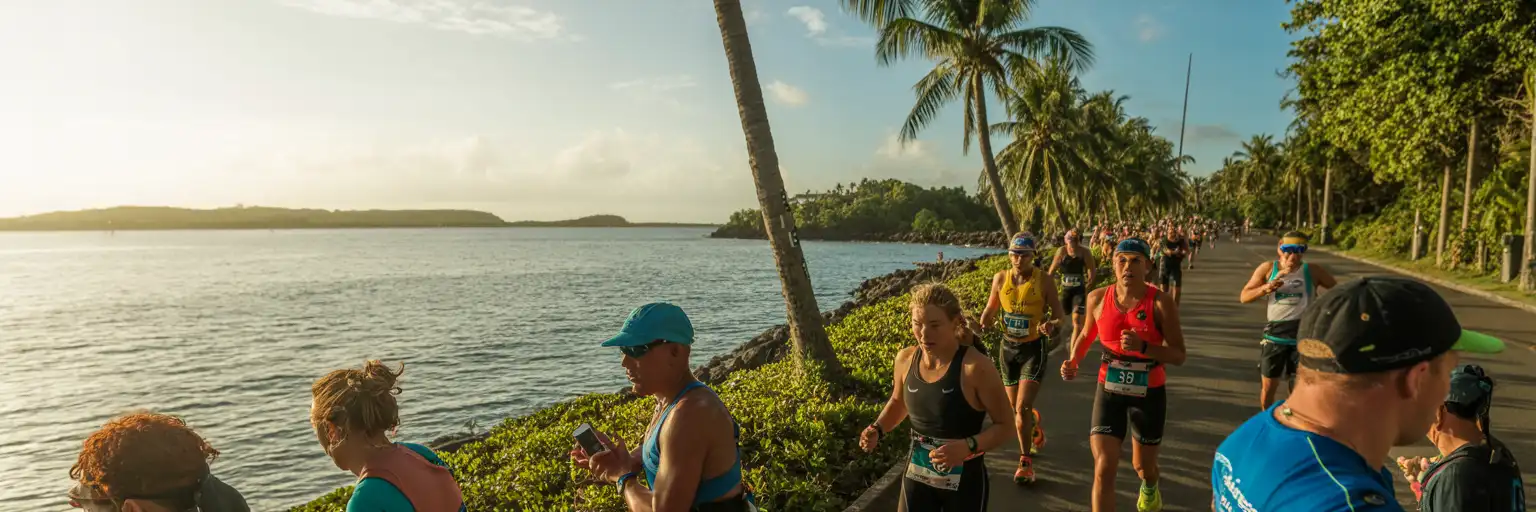
Some races are pure sport. This one doubles as a trip people plan their year around. Ironman Malaysia 2026 brings international age-group athletes to Langkawi for a full-distance race, but the reason people keep coming isn't only the branding or the finish-line photo. It's the mix of serious endurance competition and island downtime once the hard part is over.
That matters if you're deciding whether this trip is worth the flights, bike case, and extra planning. The why travel piece is straightforward: athletes and companions come for a destination triathlon that combines competition with leisure travel. You can feel that in the crowd. It's not just racers. You'll see athlete families, coaches, endurance-focused friend groups, and multisport creators who want a race that gives them both content and a proper holiday backdrop.
The why choose this event angle is just as clear. This is a globally recognized endurance race with strong international participant travel and longer average stays than a typical urban event weekend. People don't usually fly to Langkawi for 24 hours and leave. They build in arrival days, course prep, recovery meals, and often one beach or sightseeing day after the race.
And who should attend? Triathletes first, obviously. But also endurance travelers who like turning a race into a bigger trip, families who want an island base instead of a dense city center, coaches managing multiple athletes, and content creators who need race footage, tracking apps, and stable uploads. It's a specific crowd. Focused, a little sleep-deprived, very organized.
Getting There and Getting Around on Race Week
Langkawi is one of those places where transport looks simple on the map and still rewards planning. The island is served by Langkawi International Airport (LGK), which is the obvious arrival point for almost everyone coming for the race. From the airport to the likely event corridor around Pantai Kok, expect roughly 15 to 25 minutes by taxi or e-hailing if traffic is light. The distance is only around 8 to 15 km, depending on your hotel.
If you're arriving from Kuala Lumpur, Penang, or Singapore on a same-day connection, this short airport transfer is one of the nice parts of the trip. No long city commute after landing. Just keep in mind that race week can put extra pressure on taxis, especially if several flights land close together. Booking a car in advance is smart if you're carrying a bike box.
There isn't a metro or train network on Langkawi, so local movement is mostly by taxi, e-hailing, hotel shuttle, rental car, or scooter. On event days, roads near the course may close early, sometimes before 6:00, so supporters should not assume they can improvise on the morning. If you're staying outside the race zone in Kuah, the drive to the west-coast venue area is usually 35 to 50 minutes. From Pantai Cenang, it is often closer to 20 to 30 minutes.
For accommodation, the easiest choices are Pantai Kok for proximity, Pantai Cenang for more restaurants and mid-range stays, and Kuah Town if you want practical shops and ferry access. Pantai Kok is best for athletes who want to stay near race operations; Pantai Cenang works well for supporters who want cafés, beaches, and an easier social scene after dark.
Once you're on the island, mobile data really helps because transport is fragmented. There isn't one neat rail line to memorize. You'll be juggling ride bookings, hotel pins, route closures, and weather checks, so it's worth saving offline maps and also having live data. If you want that set before touchdown, you can explore eSIMno plans for Malaysia and avoid hunting for a SIM after baggage claim.
Langkawi Race-Week Setting

What To Do Beyond the Event
Let's be honest: after months of training, most people want one excellent meal and one genuinely good view. Langkawi delivers both.
Start with the Langkawi SkyCab and Sky Bridge near Pantai Kok. This is the easiest add-on if you're already based near the likely venue area. Go early, ideally before 10:00, because late-morning queues build fast and the midday heat isn't kind on tired legs. If the weather is clear, the ridge and sea views are the kind that make supporters forgive the early alarms.
For a softer recovery-day plan, book a Kilim Karst Geoforest Park mangrove boat trip. It's a different side of the island—limestone formations, quieter water, and a break from the race bubble. Morning trips usually feel cooler and calmer than afternoon departures, and you'll want data handy to coordinate pickup points since some boat operators use changing jetties.
If you want a beach stretch without overthinking it, Pantai Cenang is the social default. It's livelier than Pantai Kok and easy for casual dinners, coffee stops, and sunset walks. This is also where a lot of post-race conversation happens: athletes reliving the swim, supporters comparing tracker stress levels, everyone pretending they might sign up again.
Food-wise, don't leave Langkawi without trying nasi campur at a local warung, laksa Kedah if you spot it on a menu, and a simple late breakfast of roti canai with teh tarik. In Pantai Cenang, you'll find plenty of seafood grills and casual Malay spots; in Kuah, look around the local restaurant rows and night-market areas for more everyday pricing. If your appetite comes back hard after race day, that's normal. Lean into it.
One personal note: Langkawi is at its best when you don't overschedule the day after the race. Pick one outing, not four. The island rewards slower plans.
How to Stay Connected for Ironman Week
- Before you fly
Save your hotel pin, the airport arrival plan, and your likely race-area locations before departure. Langkawi is easy enough once you're oriented, but race week means you may land tired, carrying gear, and needing a car within 15 minutes of baggage claim. - At athlete check-in and briefing time
Expect lots of people using their phones at once for registration emails, waivers, maps, and last-minute schedule changes. Screenshot the important race details, but keep live data on too in case briefing times, shuttle notes, or expo information shift. - On race morning
This is the moment mobile data becomes practical, not optional. Supporters use tracking apps, athletes check wind and rain, and everyone is watching road closures. If you need reliable access around Pantai Kok and the wider island road network, explore eSIMno plans for Malaysia before race week starts. - During the long middle hours
Ironman days are long. Families split up between swim exit, bike viewing points, cafés, and finish-line areas. Group messaging, live location sharing, and quick ride bookings matter much more here than at a short stadium event. - After the finish
The network rush usually comes all at once: photos, finish-line videos, reunion messages, restaurant searches, and airport rebooking if your plans change. Hotel WiFi can slow down in the evening, so having your own data is the easiest backup.
Race-Week Pointers We’d Actually Save
- If you're bringing a bike case, don't assume every taxi can take it; pre-book a larger vehicle from LGK, especially if you land after 18:00.
- Stay in Pantai Kok if race-morning calm matters most; stay in Pantai Cenang if your group wants more dining choices within walking distance.
- Aim to be in the venue area at least 60-90 minutes earlier than you think you need on race day. Road closures on island events can turn a short drive into a frustrating one.
- Carry some cash in Malaysian ringgit for smaller cafés, local food stops, and drivers who may prefer simple payment.
- If you're supporting an athlete, agree on one post-finish meeting point away from the busiest barricades. Everyone's phone battery drops faster on race day than they expect.
Compare Connectivity for Ironman Malaysia 2026
 Recommended Recommended | Local SIM / Operator | Roaming | |
|---|---|---|---|
| FEATURES | |||
| Setup time | Few minutes | Store visit + paperwork | Auto |
| No local ID needed | Online checkout | Local ID required | Use home account |
| Speed | 4G/LTE; 5G in some areas | Carrier-grade | Partner-dependent |
| Travel support | English support 24/7 | Operator shops and call centre | Home carrier hours |
| Keep home number | Dual SIM | Replaces it | Same number |
| Cost predictability | Fixed price | Bills can spike | Bill-shock risk |
| PRICING | |||
Typical pricing | See plans below | — | — |
PRICING — PICK YOUR ESIMNO PLAN
Destination overview
Frequently Asked Questions
Featured eSIM plans
Malaysia Mobile

Malaysia Mobile
Malaysia Mobile
Malaysia Mobile
Malaysia Mobile
Malaysia Mobile
Malaysia Mobile
Malaysia Mobile