
Quick Facts
- Event date
- Sunday, November 22, 2026
- Event type
- Full-distance IRONMAN triathlon
- How long it runs
- Main race day plus 2-4 days of check-in, briefing, expo, and bike logistics
- Started
- Annual event; established in the late 2000s and now one of Mexico's flagship long-course races
- Typical race-day hours
- Start usually around 06:40-07:00; finish-line activity can continue until around midnight
- Venue area
- San Miguel de Cozumel waterfront / downtown race-zone area
- Airport to race area
- Cozumel International Airport to downtown: about 3-5 km, usually 10-15 minutes by taxi
- Ferry to race area
- Cozumel Ferry Pier to downtown hotels and race-zone streets: about 5-15 minutes on foot or 5 minutes by taxi
- Typical taxi fare
- Airport to downtown usually MXN 150-300; in-town rides often MXN 80-180
- Expected crowd
- Several thousand visitors across athletes, families, support crews, volunteers, and fans
- Ticket price
- Spectating is generally free; athlete entry is usually priced in the several-hundred-USD range, paid via race organizer
- eSIMno Networks
- AT&T, Telcel
Why This Event Pulls People Back to Cozumel
This isn’t a fly-in, watch-for-two-hours, fly-home kind of sports trip. IRONMAN Cozumel has real destination gravity. Long-course triathlon participants and supporters typically travel internationally and stay nearly a week, and once you see the setup, it makes sense: race admin, bike assembly, briefing schedules, practice swims, and then the need to do absolutely nothing on a beach for a day or two afterward.
What makes this one stand out is simple. It’s a flagship endurance event in Mexico with strong destination appeal and repeat global participation. You get the big-race atmosphere, but you also get an island where supporters can actually enjoy themselves between logistics runs. Expect a crowd made up of endurance athletes, triathlon fans, support crews, and active-travel visitors rather than casual sports tourists drifting in for an afternoon.
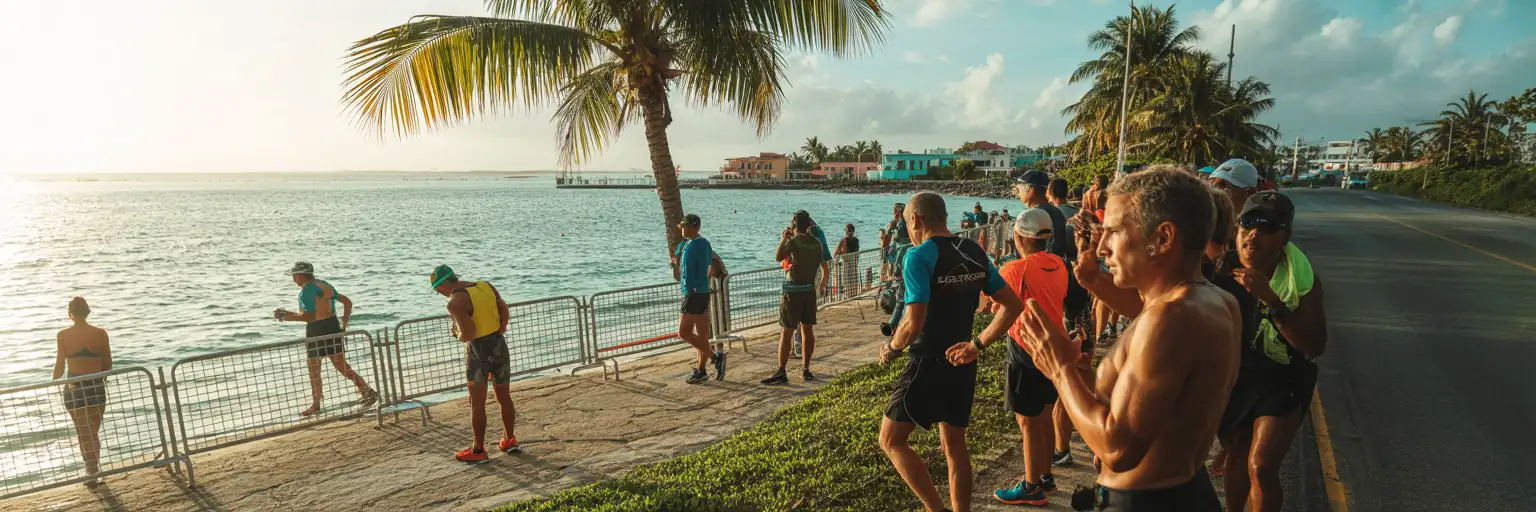
The likely race hub is the San Miguel de Cozumel waterfront and central hotel zone, where previous race activity has typically clustered around the downtown seafront, transition access, and the finish-line area. That puts most of the useful things close together: hotels, cafés, pharmacies, convenience stores, the ferry side of town, and plenty of places for family members to wait without feeling stranded. It’s intense, but manageable. That’s a good combo.
Getting There and Moving Around on Race Week
The easy surprise with Cozumel is how close the airport is. Cozumel International Airport sits just west of San Miguel, so the ride to most downtown and waterfront hotels is usually only 10 to 15 minutes. A taxi is the normal choice, and for that short hop you’ll usually pay around MXN 150 to 300 depending on luggage and whether you’ve arrived at a busy moment with bike boxes everywhere.
If you’re coming through Cancún instead, the route is longer but common: Cancún Airport to Playa del Carmen is roughly 55 km and often 50 to 75 minutes by shuttle or private transfer, then the ferry from Playa del Carmen to Cozumel takes about 35 to 45 minutes, followed by a short walk or taxi from the Cozumel Ferry Pier. Add it up and you’re usually looking at 2.5 to 4 hours door to door, longer on busy travel days.
For accommodation, the smartest base is usually central San Miguel de Cozumel near the waterfront, Palacio Municipal de Cozumel, Coral Reefs Monument, and the ferry pier side of town. That area works best for athlete check-ins, supporter meetups, and race-morning walks. North of downtown around Hotel B Cozumel or toward the Presidente InterContinental Cozumel Resort & Spa gives you a quieter stay, but then you’ll rely more on taxis on race weekend. South-coast resort zones are scenic, though less practical if you need repeated trips in and out of the race hub.
Public urban transport on Cozumel is limited compared with big mainland cities. Think taxis, hotel shuttles, rental scooters, rental cars, and walking in the central area. There’s no metro or tram network here. During event days, that actually simplifies things: stay central, expect temporary road closures, and use the ferry, taxi stands, or pre-booked transfers rather than hoping for big-city transit options. For live maps, closure updates, and hotel pins, it’s worth having data ready before you land; you can explore eSIMno plans for Mexico before race week starts.
What to Do Beyond the Finish Line
Once the race adrenaline wears off, Cozumel is excellent at helping people slow down. If you’ve got one recovery day, head to Chankanaab National Park or Chankanaab Adventure Beach Park. It’s close enough to town for an easy half-day, and the calm water works well for a gentle post-race swim or simply floating around and pretending your legs are fine.
For a proper island-day upgrade, Palancar Reef is the classic call. Book a snorkeling or diving trip in advance and go early; morning conditions are often kinder, and you’ll get clearer water before boats stack up. If your group includes non-racers who want something quieter and more unusual, the Cozumel Pearl Farm makes a memorable outing, but it’s more excursion-style and needs extra planning.
Back in town, don’t skip the small-city details. Walk past the Coral Reefs Monument around sunset, browse around Mercado Municipal for snacks and local staples, and duck into the 3D Museum of Wonders Cozumel if your support crew wants a light, air-conditioned hour. If you want one historical stop without overcommitting, El Cedral gives you a link to the island’s older story beyond beach clubs and race branding.
Food matters more than people admit on race trips. Around central San Miguel, look for fresh fish tacos, ceviche, and tikin xic-style fish, plus Yucatán dishes like cochinita pibil and panuchos. Near the waterfront, Hard Rock Cafe Cozumel is an easy familiar meetup point, but for something more local, the streets around Mercado Municipal are better for quick breakfasts and informal lunches. If the crew wants a celebratory dinner, Buccanos at Night is one of the island’s more polished evening options. Don’t leave without trying a proper limey ceviche with a cold agua fresca after a salty, humid day. It just tastes right here.
Staying Connected When the Island Gets Busy
Race week in Cozumel creates very specific phone moments. You’re not just checking social media. You’re pulling up athlete tracking before sunrise, confirming briefing times, checking whether a road is already closed, sending a pin to the exact side of transition, and trying to share a finish-line photo while hundreds of other people are doing the same thing nearby.
Hotel Wi-Fi is fine for basic evening use, but it’s rarely what we’d trust for race-morning coordination. Crowds concentrate in the same downtown corridor, and that’s when mobile data becomes the safer option for QR emails, digital waivers, WhatsApp updates, weather radar, and map reroutes. Support crews especially need it, because they’re the ones bouncing between the swim start area, bike-course access points, cafés, and the finish line.
There’s also an island factor here. Cozumel is compact, but once you move away from the central zone toward beach clubs or reef excursions, you don’t want to discover too late that your roaming setup is patchy or expensive. Setting up early helps. If you want something practical before the trip, explore eSIMno plans for Mexico so your phone is ready for airport arrival, ferry coordination, and race-day messaging without hunting for a SIM shop after check-in.
One personal note: on island race trips, the phone battery usually dies before your energy does. Bring a power bank on race day. It sounds obvious, but by hour 9 or 10 of spectating, obvious becomes essential.
How to Connect for IRONMAN Cozumel Week
- Before wheels-up
Install your eSIM before flying so your phone is ready as soon as you land in Cozumel or step off the ferry from Playa del Carmen. Race week is not the moment to be comparing SIM kiosks while dragging a bike case. - Save the places that matter
Pin your hotel, the downtown waterfront race area, Cozumel International Airport, Cozumel Ferry Pier, HC International Hospital, and Costamed Cozumel Medical Center. Those are the locations people end up searching for quickly during race week. - Use data for supporter coordination
Create a group chat before race day and share live locations, not just text messages. In a moving event spread across swim, bike, and run sections, 'we're near the finish' is too vague to be useful. - Expect the heaviest phone use before sunrise and after dark
The big spikes are race-start prep, midday tracking, and finish-line meetups that can run late into the evening. Check your plan before race day so uploads, maps, and athlete tracking don't stall when crowds build.
Small Things That Make This Week Easier
- If you're staying more than 4 km south or north of downtown, budget extra taxi time on race weekend even if the map says the ride is short.
- The ferry route via Playa del Carmen is useful, but don't stack it too tightly before mandatory check-in; weather and queues can easily turn a simple transfer into a half-day project.
- For breakfast on race morning, line something up the night before. Cozumel starts early for this event, but not every café starts early enough for athletes and support crews.
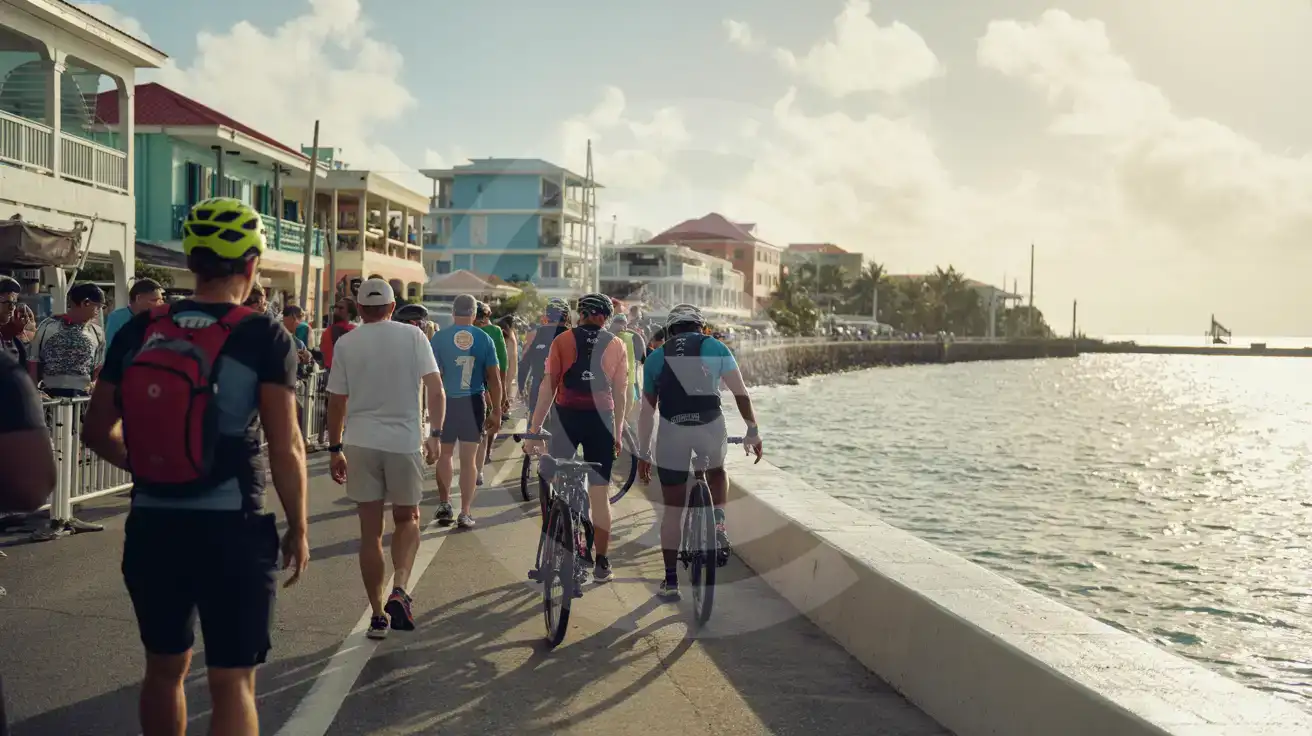
Cozumel Race-Week Atmosphere
Compare Internet Plans in Cozumel
 Recommended Recommended | Local SIM / Operator | Roaming | |
|---|---|---|---|
| FEATURES | |||
| Setup time | Few minutes | Store visit + paperwork | Auto |
| No local ID needed | Online checkout | Local ID required | Use home account |
| Speed | 4G/LTE; 5G in some areas | Carrier-grade | Partner-dependent |
| Travel support | English support 24/7 | Operator shops and call centre | Home carrier hours |
| Keep home number | Dual SIM | Replaces it | Same number |
| Cost predictability | Fixed price | Bills can spike | Bill-shock risk |
| PRICING | |||
Typical pricing | See plans below | — | — |
PRICING — PICK YOUR ESIMNO PLAN
Destination overview
Frequently Asked Questions
Featured eSIM plans
Viva Mexico

Viva Mexico
Viva Mexico
Viva Mexico
Viva Mexico
Viva Mexico
Viva Mexico
Viva Mexico