
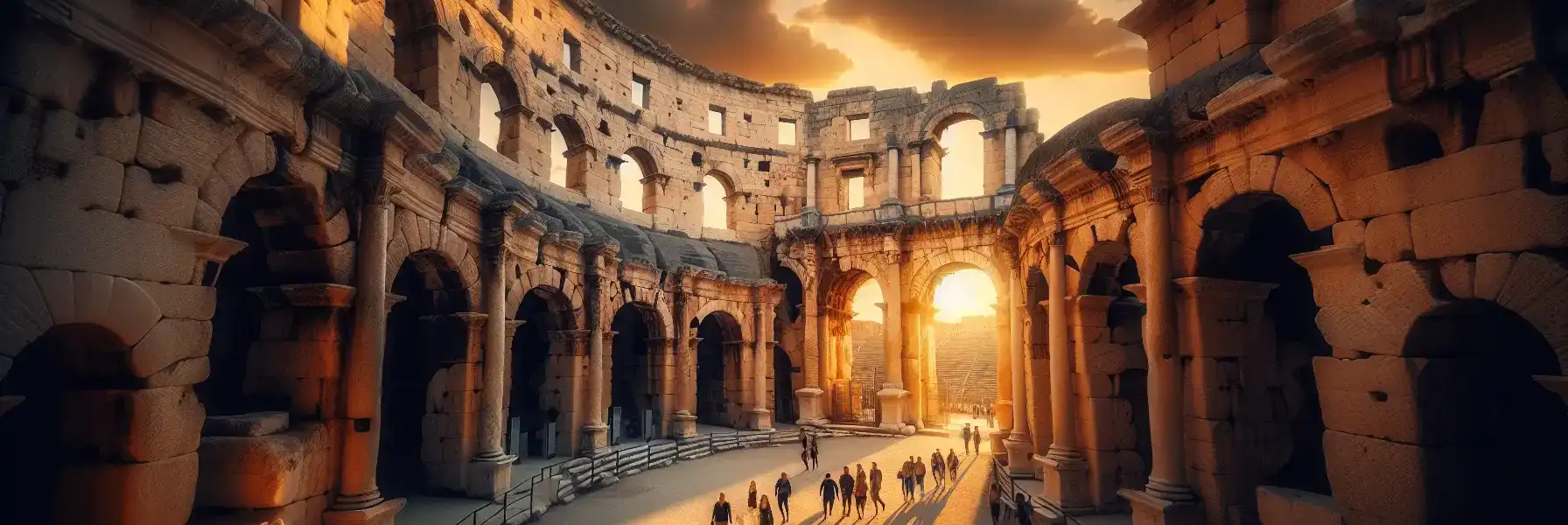
Quick Facts
- Address
- Piazza del Colosseo, 1, 00184 Roma RM, Italy
- Hours
- Daily 9:00 AM – one hour before sunset (closing varies 4:30 PM winter to 7:15 PM summer)
- Closed
- January 1, December 25
- Standard Ticket
- €18 (includes Roman Forum & Palatine Hill)
- Full Experience Ticket
- €24 (adds Arena Floor & Belvedere access)
- Free Admission
- Under 18; First Sunday monthly (Domenica al Museo)
- Nearest Metro
- Colosseo (Line B)
- Official Site
- parcocolosseo.it
- eSIMno Networks
- Vodafone, Wind Tre
About the Colosseum
The Colosseum — originally the Flavian Amphitheatre, or Amphitheatrum Flavium — rises from the valley between Rome's Palatine, Esquiline, and Caelian hills as the largest amphitheater ever constructed in the ancient world. Its story begins with political calculation. After the suicide of Emperor Nero in 68 AD, the new Flavian dynasty needed to distance itself from the excesses of their predecessor. Nero had seized acres of prime Roman real estate for his sprawling Domus Aurea, the Golden House, complete with an artificial lake — the Stagnum Neronis — where he staged pleasure cruises. Emperor Vespasian drained that lake and began construction around 72 AD on what would become the most democratic entertainment venue in Roman history.
Where Nero had built for himself, the Flavians built for the people.
The amphitheater rose with remarkable speed. Roman engineers employed an estimated 100,000 cubic meters of travertine limestone quarried from Tivoli, held together not by mortar but by iron clamps totaling an estimated 300 tons. Vespasian died in 79 AD with construction nearly complete, and his son Titus inaugurated the amphitheater in 80 AD with spectacular games lasting one hundred days. Ancient sources claim 9,000 wild animals were killed during these inaugural spectacles. The third Flavian emperor, Domitian, added the final elements: the hypogeum — the underground service level with its complex system of lifts and trap doors — and the uppermost seating tier.
At full capacity, the Colosseum held between 50,000 and 80,000 spectators (estimates vary based on seating density calculations). The venue operated with remarkable efficiency: 76 numbered entrance arches funneled ticket-holders to their assigned sections, and the entire audience could evacuate in minutes through a system the Romans called vomitoria — passageways that "spewed forth" crowds. A retractable awning system, the velarium, shaded spectators from the Mediterranean sun, operated by sailors from the imperial fleet stationed nearby.
For over four centuries, the arena hosted gladiatorial combat (munera), wild beast hunts (venationes), public executions, and elaborate theatrical productions recreating famous battles. The last recorded gladiatorial games occurred in the early 5th century, though animal hunts continued for another hundred years. Earthquakes — particularly a devastating one in 1349 — collapsed the southern outer wall, and for centuries the Colosseum served as a quarry, its travertine blocks repurposed for Roman palaces, churches, and even portions of St. Peter's Basilica.
The monument's symbolic rehabilitation began in the 18th century when Pope Benedict XIV consecrated the arena to the Passion of Christ, honoring the Christian martyrs believed to have died there. That tradition continues: each Good Friday, the Pope leads the Via Crucis procession through the Colosseum's arches. UNESCO inscribed the site on the World Heritage List in 1980, and in 2007, a global popular vote named it one of the New Seven Wonders of the World. The Colosseum now appears on the Italian five-cent euro coin — a reminder that nearly two thousand years after Titus declared the inaugural games open, this amphitheater remains the defining symbol of Rome.
Highlights & Must-See
The Outer Travertine Façade and Numbered Arches
The surviving northern exterior wall demonstrates the classical Roman approach to monumental architecture: three arcaded levels topped by an attic story, with each tier featuring a different column order — Doric at ground level, Ionic above, Corinthian on the third tier, and Corinthian pilasters on the solid attic. Look for the Roman numerals still visible above some entrance arches. Arch LII (52) near the main visitor entrance retains particularly clear numbering. These weren't decorative — each ticketed spectator entered through a designated arch corresponding to their seating assignment, a crowd-management system that modern stadiums still emulate.
The Arena Floor and Reconstructed Platform
A modern wooden platform on the eastern side of the arena recreates a portion of the original floor surface. Standing here transforms your perspective entirely. You're at gladiator eye level, looking up at the tiered seating where 50,000 Romans once cheered, jeered, and decided fates. The arena floor was originally covered with sand — harena in Latin, giving us our word "arena" — which absorbed blood and provided footing for combat. Beneath your feet, the hypogeum tunnels stretch in a grid pattern, once hidden from spectators by the wooden floor above.
The Hypogeum
The underground level is the Colosseum's engineering marvel. This two-story subterranean network of corridors, animal cages, and mechanical rooms once operated like backstage at a theater of death. Counterweighted elevators lifted wild animals — lions, bears, leopards, even rhinoceroses — through trap doors directly into the arena. Gladiators waited in cells, listening to the crowd above. The hypogeum wasn't part of Vespasian's original design; Domitian added it after the inaugural games, which is why some historians believe early spectacles included naumachiae — mock naval battles with the arena flooded — before the underground level made flooding impossible. Access requires a Full Experience or Underground guided tour ticket.
The Belvedere (Fifth Tier)
The uppermost viewing level reopened after the Tod's-funded restoration completed in stages through 2016. From here, you're standing roughly where Rome's poorest citizens — women, slaves, and foreigners — once watched the spectacles from wooden benches. The elevation provides sweeping views: the Roman Forum's columns to the northwest, the Arch of Constantine immediately below, the Palatine Hill's cypress trees, and on clear days, the distant silhouette of the Alban Hills. Access is limited-capacity and requires the Full Experience ticket or a guided tour.
The Cross and Christian Memorial
A simple wooden cross stands on the arena's northern perimeter, marking the site's consecration to Christian martyrdom. Whether significant numbers of Christians actually died here remains historically debated — Roman sources don't specifically document Christian executions in the Colosseum — but the association became powerful enough that Pope Benedict XIV placed the monument under the protection of the Church in 1749. Every Good Friday, the Pope carries a cross through the arena in the Via Crucis ceremony, broadcast to millions worldwide.
The Permanent Exhibition
Display cases on the second level contain artifacts that bring the building's function into sharp focus: fragments of marble seating inscribed with section designations (some reserved for senators, priests, or Vestal Virgins), architectural decorations that once adorned the interior, and objects recovered from hypogeum excavations. A bronze hand fragment from the colossal Nero statue that gave the Colosseum its name sits in one case — a tangible link to the monument's origin story.
The Internal Corridors and Vomitoria
Walking through the monument's internal passages, you'll traverse the same ambulatories and stairways that Romans used nearly 2,000 years ago. The vomitoria — those passageways designed for rapid crowd dispersal — are engineering lessons in crowd flow. Notice how sight lines were carefully calculated so spectators could find their seats efficiently. The travertine paving stones underfoot, worn smooth by centuries of footsteps, are largely original.
The Arch of Constantine Viewpoint
Though technically outside the Colosseum proper, the view from the upper tiers toward the Arch of Constantine is essential. This triumphal arch, dedicated in 315 AD to commemorate Constantine's victory at the Battle of Milvian Bridge, stands precisely where emperors would have entered for games. The arch's sculptural panels, pillaged from earlier monuments of Trajan, Hadrian, and Marcus Aurelius, represent a fascinating artistic recycling — Constantine's builders considered older work superior to what their own sculptors could produce.
Visit Strategy
Ticket Strategy: Book Online, Book Early
Timed-entry reservations are mandatory, and inventory frequently sells out days — sometimes weeks — in advance, particularly for the Full Experience ticket that includes hypogeum and arena floor access. The official booking platform is CoopCulture (coopculture.it), the Ministry of Culture's ticketing partner. Avoid third-party resellers charging marked-up prices unless you're specifically seeking a guided tour with added interpretation.
Three ticket tiers exist:
- Standard (€18): Covers Colosseum ground and second level, plus Roman Forum and Palatine Hill. Valid 24 hours from first use, with single Colosseum entry.
- Full Experience (€24): Adds Arena Floor and Belvedere access. This is the ticket for photographers and anyone wanting the complete experience.
- Underground Tours (€24+): Guided hypogeum access at various price points, sometimes combined with after-hours visits.
EU citizens aged 18–25 receive a reduced rate; under-18s enter free (but still need a reservation). The first Sunday of each month is free admission under Domenica al Museo — and it's predictably mobbed. Avoid unless you thrive in crowds.
Best Time to Visit
The 9:00 AM opening slot offers the quietest conditions and the best light for photography, with morning sun illuminating the arena from the east. The final two hours before closing are similarly calm — most tour groups have departed, and the golden-hour light on the travertine is exceptional. Midday (11:00 AM–2:00 PM) brings peak crowds and, in summer, punishing heat with minimal shade inside the monument.
Seasonally, April through May and late September through early November hit the sweet spot: comfortable temperatures, manageable humidity, and smaller crowds than peak summer. July and August see temperatures exceeding 35°C (95°F), and the Colosseum offers almost no refuge from the sun. If you must visit midsummer, go early or late, and carry at least a liter of water.
Weekdays are noticeably quieter than weekends. Tuesday and Wednesday mornings tend to be calmest.
Recommended Duration
A standard ticket visit takes 90 minutes to two hours if you're reading plaques and absorbing context. The Full Experience — arena floor, Belvedere climb, and thorough exploration — requires three hours minimum. If you've booked a hypogeum tour, budget closer to four hours for the complete experience.
Factor in the security line at entrance. Even with timed tickets, screening can take 15–30 minutes during busy periods. Arrive at least 15 minutes before your slot.
Photography Rules
Personal, non-commercial photography is unrestricted throughout the monument — shoot freely with phones and cameras. Tripods require authorization (applied for in advance through the park authority), as do professional video rigs. Selfie sticks are technically prohibited, though enforcement varies. Drones are absolutely forbidden; the airspace above the Colosseum is restricted.
The best photo spots: the Arena Floor platform looking up at the tiered seating; the Belvedere looking down into the hypogeum grid; the second-level ambulatory framing the Arch of Constantine through an arch; and the external viewpoint on the sidewalk facing the northern façade, ideally at sunrise or sunset when tourist density drops and the travertine glows amber.
What to Bring, What to Leave
Wear sturdy, closed-toe shoes — the ancient paving is uneven, and you'll cover significant distance on stone surfaces. Sunscreen, sunglasses, and a hat are essential from April through October. Water bottles are permitted and necessary; refill at the fountains outside (Rome's nasoni — little noses — dispense clean drinking water citywide).
Large bags and backpacks must be checked at security. The bag-check line can be lengthy, so travel light if possible — a small crossbody or daypack under 30 liters generally passes. Umbrellas, while allowed, are cumbersome on crowded walkways.
Site Walk-Through & Photographer's Guide
Recommended Walk Sequence
Enter through the security checkpoint on the eastern side of the monument, facing Via dei Fori Imperiali. After clearing security, proceed counterclockwise around the ground-level ambulatory. This direction catches morning light on the hypogeum's exposed chambers and avoids head-on collision with the majority of visitors, who instinctively turn right.
Ground level first: circle the ambulatory, stopping to photograph the hypogeum grid from multiple angles. The southeastern section offers particularly clear sightlines into the underground corridors where animal cages once lined the walls. Continue to the Arena Floor platform (if your ticket includes access) — morning sun illuminates it from behind, creating dramatic shadows across the reconstructed wooden surface.
Ascend to the second level via the internal staircases on the monument's western side. Here, the permanent exhibition cases deserve attention before the crowds thicken. Work your way around the second-level ambulatory, pausing at the viewpoints toward the Arch of Constantine and the Palatine Hill.
Save the Belvedere (fifth tier) for the final segment of your visit. The climb is significant — roughly equivalent to five stories — and the elevated views reward patient timing. Late morning or late afternoon light creates the most dramatic conditions from this height.
Key Structures to Spend Time At
Arch LII (Ground Level, North Side): One of the best-preserved numbered entrance arches. The Roman numeral "LII" remains legible above the opening, demonstrating the ticketing system that managed 50,000 spectators. Photograph it with a wide lens to capture the full archway and its inscription.
The Hypogeum Lift Mechanisms (Ground Level, Central Area): Look for the reconstructed wooden lift platforms and the stone channels where counterweights once ran. These trap doors rose animals — and occasionally gladiators — directly into combat. Interpretive panels explain the mechanics, but the physical evidence speaks louder.
The Arena Floor Platform (Requires Full Experience Ticket): Stand at the platform's center and turn 360 degrees. This is the gladiator's perspective. Notice how the seating tiers rise steeply — the acoustics focused crowd noise downward, amplifying the roar that combatants heard in their final moments.
The Senatorial Seating Inscriptions (Second Level Exhibition): Marble fragments designating reserved seats for senators and religious officials. The Romans assigned seating by social class with military precision — these inscriptions are the archaeological proof.
The Cross and Memorial (Ground Level, North Perimeter): The simple wooden cross commemorating Christian martyrdom sits against the arena wall. It's smaller and more modest than visitors expect, which somehow makes it more affecting.
The Belvedere Terrace (Fifth Tier): The highest accessible point offers the only perspective where you can see both the hypogeum's complete grid pattern and the Roman Forum's temples in a single view. The Arch of Constantine appears directly below, scaled correctly against the amphitheater's mass.
Best Photo Spots & Lighting Times
Sunrise (6:00–7:30 AM): The exterior — specifically the northeastern façade viewed from across the street near the Metro exit — glows orange-pink before opening hours. No ticket required; this is street-level shooting.
9:00–10:30 AM: Interior photography peaks during the first ninety minutes after opening. Morning sun enters through the eastern arches, casting long shadows across the hypogeum. The Arena Floor platform receives direct illumination without the harsh overhead glare of midday.
Golden Hour (1–2 hours before sunset): The Belvedere terrace transforms as western light rakes across the travertine. The ambulatory arches frame the Palatine Hill against warm sky tones. Crowds thin, and the monument feels closer to how it appeared in Ridley Scott's imagination.
Restoration & Excavation Status
The major façade restoration funded by Tod's concluded in 2016, cleaning centuries of grime from the northern exterior and reopening the Belvedere level. Current work focuses on the hypogeum's ongoing stabilization and interpretation — some tunnel sections remain closed for structural reinforcement, with walkways routing around active conservation zones. A project to construct a retractable arena floor that would allow the Colosseum to host events is periodically announced and debated; as of now, the wooden viewing platform represents the only floor reconstruction.
Expect scaffolding in at least one section during any visit — the monument requires perpetual maintenance. Scaffolding locations rotate, so the photographic impact varies by timing.
Souvenirs & On-Site Shopping
The official bookshop inside the Colosseum (ground level, near the exit) stocks quality publications unavailable elsewhere: archaeological monographs, archival photography collections, and detailed guides to the hypogeum and restoration work. The €12–€25 range yields genuinely informative books rather than tourist-shop fluff.
Skip the plastic gladiator helmets and "I ❤ Roma" keychains from vendors outside — they're overpriced and identical to merchandise throughout the city. If you want a meaningful memento, the bookshop's reproduction prints of historical Colosseum engravings make elegant gifts. The nearby Palatine Hill bookshop carries overlapping inventory if the Colosseum shop is crowded.
Nearby Attractions & Logistics
The Roman Forum and Palatine Hill
Your Colosseum ticket includes same-day access to the Roman Forum and Palatine Hill — use it. Exit the Colosseum and walk five minutes northwest along Via dei Fori Imperiali, or enter directly through the Arch of Titus on the Forum's eastern edge. The Forum was ancient Rome's political and commercial heart: the Curia Julia where senators deliberated, the Temple of Saturn housing the state treasury, the House of the Vestals where sacred flame-keepers lived, and the Rostra platform where Mark Antony delivered Caesar's funeral oration.
Climb the Palatine Hill from the Forum's western end for imperial palace ruins — the Domus Augustana and Domus Flavia — and panoramic views down into the Circus Maximus chariot-racing track. Budget at least two hours for Forum and Palatine combined; three if you're reading every plaque.
The Arch of Constantine
One minute's walk southwest of the Colosseum, this triumphal arch commemorates Constantine's 312 AD victory at the Battle of Milvian Bridge. At 21 meters tall, it's the largest surviving Roman triumphal arch. The sculptural panels repurpose earlier imperial monuments — look for the circular medallions depicting hunting scenes, originally carved for Hadrian, and the rectangular friezes showing Marcus Aurelius distributing largesse. Constantine's builders apparently considered older work superior to contemporary craftsmanship.
Basilica of San Clemente
A ten-minute walk east along Via di San Giovanni in Laterano brings you to Rome's most remarkable archaeological layer cake. The current 12th-century church sits atop a 4th-century basilica, which in turn sits atop a 1st-century Roman house containing a Mithraeum — a temple to the mystery cult god Mithras. You descend through centuries, literally, ending in a space where devotees once sacrificed bulls. Entry €10.
Domus Aurea
Nero's Golden House survives beneath the Oppian Hill, a five-minute walk northeast. Guided tours (€16–€18, reservation required) include VR headsets reconstructing the frescoed halls as they appeared when Nero declared the 300-room palace finally "fit for a human being." The experience is haunting — walking through buried chambers that once held Rome's most extravagant art collection.
San Pietro in Vincoli
Ten minutes uphill from the Colosseum, this church houses Michelangelo's monumental Moses sculpture, part of an unfinished tomb for Pope Julius II. The horns on Moses's head — a Renaissance misinterpretation of the Hebrew word for "radiant" — provoke endless art-history debate. Free entry.
Getting There
Metro Line B stops at Colosseo station, exiting directly opposite the monument's entrance. Tram 3 and 8 serve Piazza del Colosseo, as do bus lines 51, 75, 85, 87, and 118. From Roma Termini, Metro Line B takes four minutes (two stops). Walking from Piazza Venezia takes roughly 15 minutes along Via dei Fori Imperiali, passing Trajan's Column and the Imperial Forums en route.
Where to Eat Nearby
Avoid the tourist-trap restaurants with photo menus lining Via dei Fori Imperiali. Instead, walk 10 minutes north into the Monti neighborhood (Via dei Serpenti, Via del Boschetto) for trattorias serving genuine Roman fare: cacio e pepe, carbonara, amatriciana. Prices drop noticeably once you're two blocks from the archaeological zone. Ai Tre Scalini on Via Panisperna is a reliable Monti standby.
Why Data Matters at the Colosseum
The Colosseum's ticketing system runs entirely online, and the moment you realize your entry slot is in 15 minutes while your confirmation email won't load over congested public WiFi is not a moment you want to experience. The official audio guides require app downloads that demand reliable data. Google Maps becomes essential navigating the Roman Forum's unmarked paths, and if you're trying to identify which temple ruin you're photographing, Rome's archaeological signage assumes you'll research on the spot.
Public WiFi around the Colosseum zone is unreliable at best — too many devices competing for too little bandwidth. An eSIMno plan for Italy connects you to Vodafone and Wind Tre networks the moment your flight lands at Fiumicino, with speeds that handle QR code displays, audio streaming, and photo uploads without the buffering anxiety. Download your tickets the night before, but have live data as backup. You'll use it.
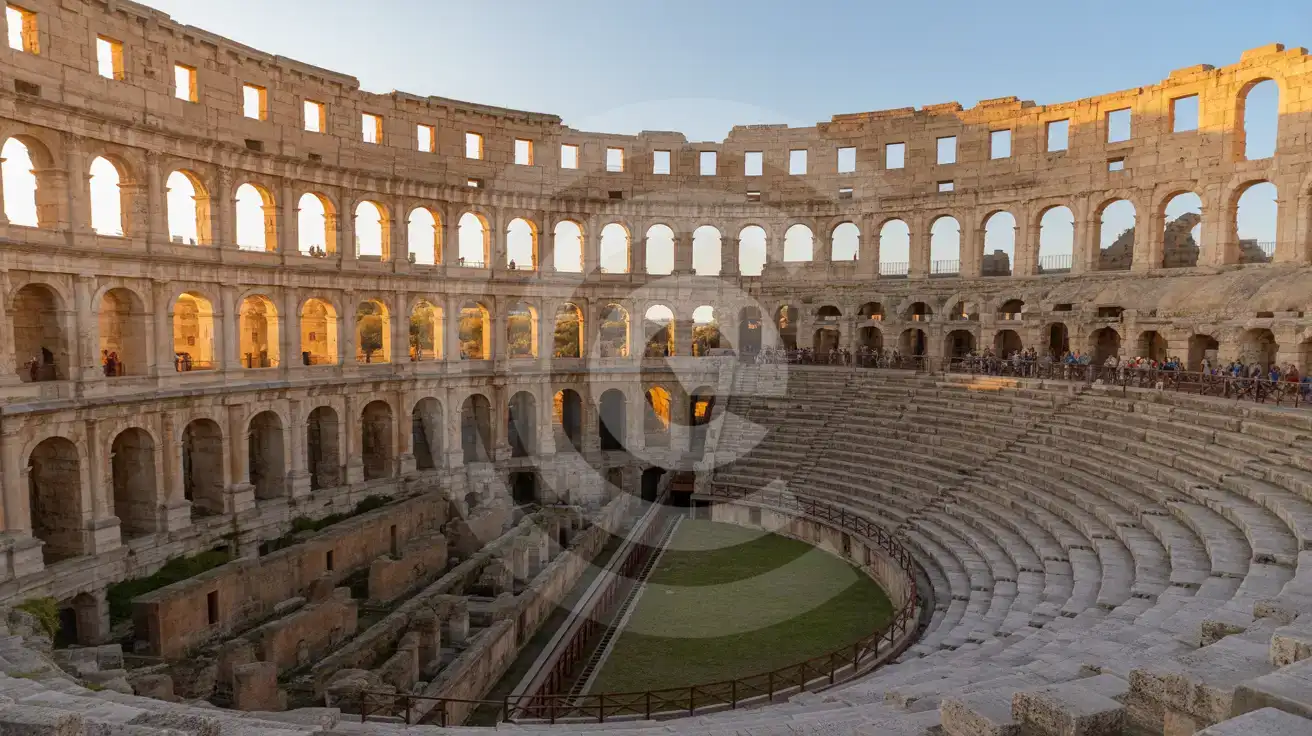
The Amphitheater at Golden Hour
Compare WiFi Options at Colosseum
 Recommended Recommended | Local SIM / Operator | Roaming | |
|---|---|---|---|
| FEATURES | |||
| Setup time | Few minutes | Store visit + paperwork | Auto |
| No local ID needed | Online checkout | Local ID required | Use home account |
| Speed | 4G/LTE; 5G in some areas | Carrier-grade | Partner-dependent |
| Travel support | English support 24/7 | Operator shops and call centre | Home carrier hours |
| Keep home number | Dual SIM | Replaces it | Same number |
| Cost predictability | Fixed price | Bills can spike | Bill-shock risk |
| PRICING | |||
Typical pricing | See plans below | — | — |
PRICING — PICK YOUR ESIMNO PLAN
Featured eSIM plans
Italian Mobile

Italian Mobile
Italian Mobile
Italian Mobile
Italian Mobile
Italian Mobile
Italian Mobile
Italian Mobile


