

Quick Facts
- Best for arrivals
- Mobile data is usually faster and less fiddly than relying on airport or hotel WiFi alone
- Free WiFi availability
- Common at O'Hare, many hotels, cafes, and some museums, but quality varies by crowd and location
- Best areas to keep data on
- O'Hare transfers, the Magnificent Mile, Navy Pier, Grant Park festival zones, and stadium exits
- Typical traveler spend
- Free if you only use public WiFi; around $10-$25 for short-stay mobile data depending on usage
- eSIMno Networks
- AT&T, T-Mobile, Verizon
WiFi vs Mobile Data in Chicago
Chicago gives you plenty of chances to get online, but not all connections are equal. Free WiFi is useful at O'Hare International Airport, in hotel lobbies, and in many cafes around downtown. If you're sitting still at The Ritz-Carlton, Chicago or taking a break near Water Tower Place, WiFi can be perfectly fine for backups, email, or downloading tomorrow's map.
The weak spot is movement. As soon as you're rolling into the city, walking the Magnificent Mile, heading toward Navy Pier, or trying to leave a concert in Grant Park, public WiFi stops being the easy answer. Login screens, crowded networks, and patchy handoffs waste time. Mobile data is usually the better choice for maps, rideshares, ticket scans, and messaging while you're actually out doing things.
If you want a simple setup, use WiFi as a bonus rather than your main plan. For most travelers, that's the sweet spot: hotel or cafe WiFi for heavier downloads, mobile data for the moments that matter. If you're planning ahead, you can explore eSIMno plans for Chicago and arrive with data ready to go.
How to Connect
- At O'Hare International Airport, decide before you leave the terminal
Airport WiFi is handy for a quick message after landing, but if you're ordering a rideshare, checking CTA Blue Line timing, or confirming a hotel address while moving through arrivals, mobile data is the safer bet. This is a good moment to switch from backup WiFi to your main connection so you are not stuck on a login page with luggage in tow. - Near the Magnificent Mile, don't count on cafe WiFi for navigation
This stretch is busy, vertical, and full of quick stops. If you're bouncing between Water Tower Place, John Hancock Center, and nearby restaurants, mobile data usually works better than hopping from one guest network to another. Use WiFi only if you're sitting down for a while and don't need constant map access. - On a Navy Pier transfer, keep data on while moving
If you're heading to the pier by bus, rideshare, or on foot from downtown, this is not the moment to rely on public WiFi. You'll want live directions, ticket emails, and weather checks by the lake. The same goes for boat or shoreline plans where you may be between access points and need your phone to just work. - At hotel check-in, test WiFi but keep mobile data as backup
Once you reach your hotel, connect to the property WiFi and run a quick speed check before assuming it will cover everything. In busy periods, especially during major conventions at McCormick Place or event weekends like Lollapalooza, hotel networks can slow down at night. Keep mobile data ready for calls, uploads, and route planning before you head back out.
Tips
- If you're attending ASCO Annual Meeting 2026 at McCormick Place, expect heavier network demand nearby and avoid leaving setup until the morning of your first session.
- Download CTA maps and museum tickets while on stable WiFi, then use mobile data for live routing and entry scans around Millennium Park, the Field Museum, and Shedd Aquarium.
- Lakefront weather changes quickly. If you're heading to North Avenue Beach or walking from Grant Park toward Navy Pier, keep data on for radar, transit updates, and rideshare timing.
What It Usually Costs
Here's the practical breakdown. Public WiFi can cost nothing, but the tradeoff is time: sign-ins, weak speeds, and the occasional need to reconnect when you move. Hotel WiFi is often included, though some properties reserve faster tiers for premium rooms or loyalty members. Cafe WiFi usually comes with the price of a coffee or snack.
Mobile data costs more, but it buys convenience. For a short Chicago trip, many travelers only need a modest data plan for maps, messaging, ticket access, and rideshares. Heavy users, remote workers, and conference attendees may want more headroom for video calls and hotspot use. We've found that paying a little for reliable data often saves more value in time than people expect, especially in a city where plans can change block by block.
A simple rule: if your phone is mostly for hotel evenings, WiFi may be enough. If you're moving between O'Hare, downtown, museums, stadiums, and the lakefront, mobile data is usually worth it.
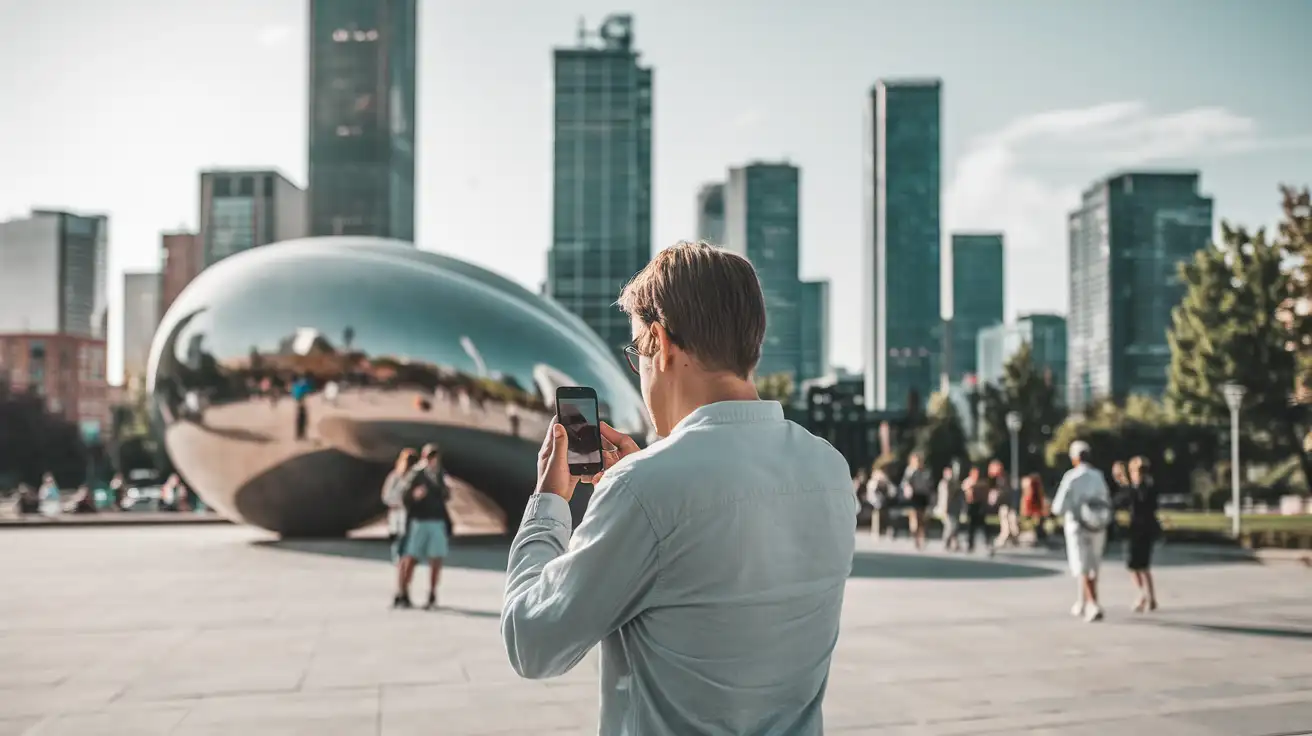
Chicago Connectivity on the Move
Compare Internet Plans in Chicago
 Recommended Recommended | Local SIM / Operator | Roaming | |
|---|---|---|---|
| FEATURES | |||
| Setup time | Few minutes | Store visit + paperwork | Auto |
| No local ID needed | Online checkout | Local ID required | Use home account |
| Speed | 4G/LTE; 5G in some areas | Carrier-grade | Partner-dependent |
| Travel support | English support 24/7 | Operator shops and call centre | Home carrier hours |
| Keep home number | Dual SIM | Replaces it | Same number |
| Cost predictability | Fixed price | Bills can spike | Bill-shock risk |
| PRICING | |||
Typical pricing | See plans below | — | — |
PRICING — PICK YOUR ESIMNO PLAN
Featured eSIM plans
American Mobile

American Mobile
American Mobile
American Mobile
American Mobile
American Mobile


