
Quick Facts
- Hours
- 6:00 AM – 1:00 AM daily, year-round
- Admission
- Free (attractions inside have separate fees)
- Size
- 843 acres (2.5 miles north to south)
- Address
- 59th St to 110th St, Fifth Ave to Central Park West
- Nearest Subway (South)
- 59th St–Columbus Circle (A, B, C, D, 1) or Fifth Ave/59th St (N, R, W)
- Nearest Subway (East)
- 77th St (6), 86th St (4, 5, 6), Lexington Ave/63rd St (F, Q)
- Zoo Hours
- 10:00 AM – 5:00 PM (extended summer weekends)
- Zoo Admission
- ~$20 adults
- Official Site
- centralparknyc.org
- eSIMno Networks
- AT&T, T-Mobile, Verizon
About Central Park
Central Park exists because mid-19th-century New Yorkers looked at the rapid industrialization devouring Manhattan and decided they needed a breathing space before it was too late. In 1853, the New York State Legislature authorized the city to acquire more than 700 acres of rocky, swampy land in the middle of the island — land considered unsuitable for commercial development but perfect for the democratic public park that reformers envisioned. A design competition followed, and in 1858 Frederick Law Olmsted and Calvert Vaux won with their Greensward Plan, a vision of pastoral meadows, winding paths, and naturalistic water features that would provide visual and psychological escape from the grid of streets surrounding it.
Construction took nearly two decades. Workers moved more earth than would later be excavated for the Panama Canal, blasted Manhattan schist to create the rocky outcrops that now feel so natural, and planted more than 270,000 trees and shrubs. The park was substantially complete by 1876, and it immediately became what Olmsted intended: a place where all New Yorkers — regardless of class, ethnicity, or occupation — could share the same green space. That egalitarian vision still holds. On any given summer Saturday, you'll find Dominican families grilling in the North Meadow, hedge fund managers jogging the Reservoir loop, birders scanning the Ramble for warblers, and tourists photographing Bethesda Fountain for Instagram.
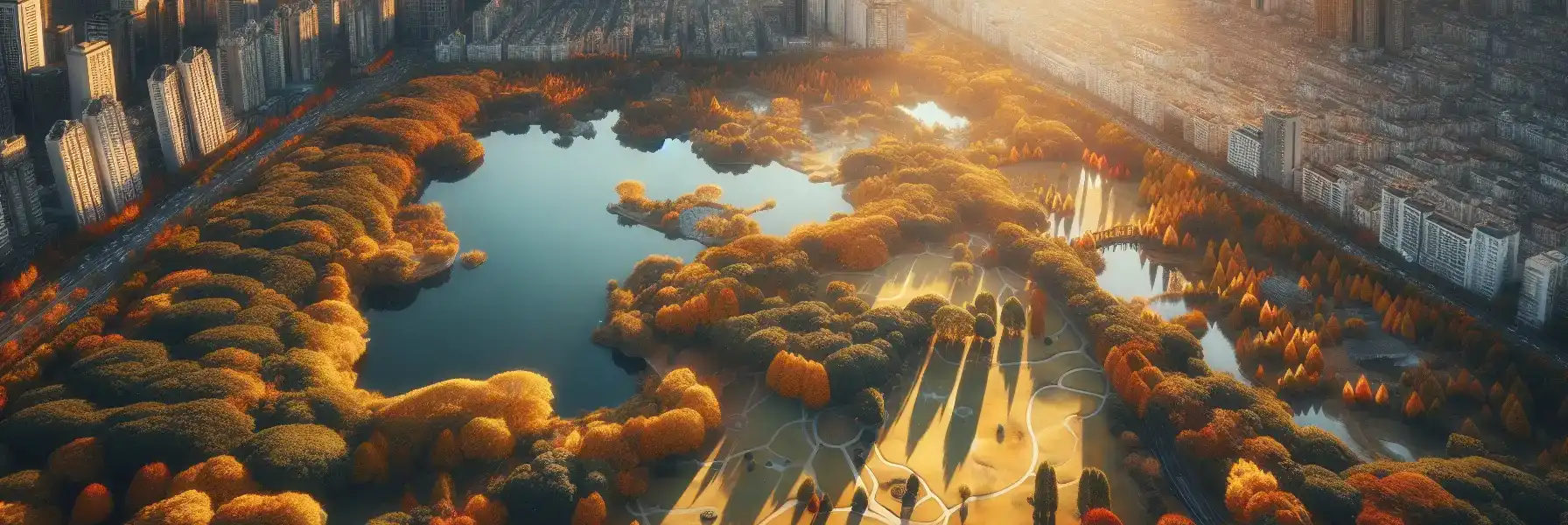
The park's visual signature is the contrast between its naturalistic landscape and the skyline framing it. From Sheep Meadow, the prewar towers of Central Park West — the San Remo, the Eldorado, the Majestic — rise above the treeline like a stone and brick mountain range. From the southern entrances, the Plaza Hotel and the glass towers of Midtown loom over the Pond. This juxtaposition was always intentional: Olmsted wanted visitors to feel they had left the city even while remaining in its geographic center.
Since 1980, the Central Park Conservancy — a private non-profit founded by Elizabeth Barlow Rogers — has managed day-to-day operations, horticulture, and maintenance under contract with the city. The Conservancy raises roughly 75% of the park's annual operating budget through philanthropy, and their work has transformed a space that had fallen into serious disrepair by the 1970s back into one of the world's great urban parks. The restoration of Bethesda Terrace's Minton tile ceiling, the replanting of the Ramble's woodland understory, the maintenance of 21 playgrounds and 9,000 benches — all of it depends on this public-private partnership.
The numbers tell part of the story: 843 acres, 42 million annual visitors, 36 bridges and arches (each with a unique design), 21 playgrounds, 7 bodies of water, more than 20,000 trees. But what makes Central Park extraordinary isn't quantifiable. It's the moment when you turn a corner on a woodland path and suddenly the skyline vanishes, replaced by nothing but green. It's the sound of oars splashing on the Lake while traffic hums invisibly beyond the trees. It's the fact that after 165 years, Olmsted and Vaux's democratic experiment is still working.
Highlights & Must-See
Bethesda Terrace and Fountain
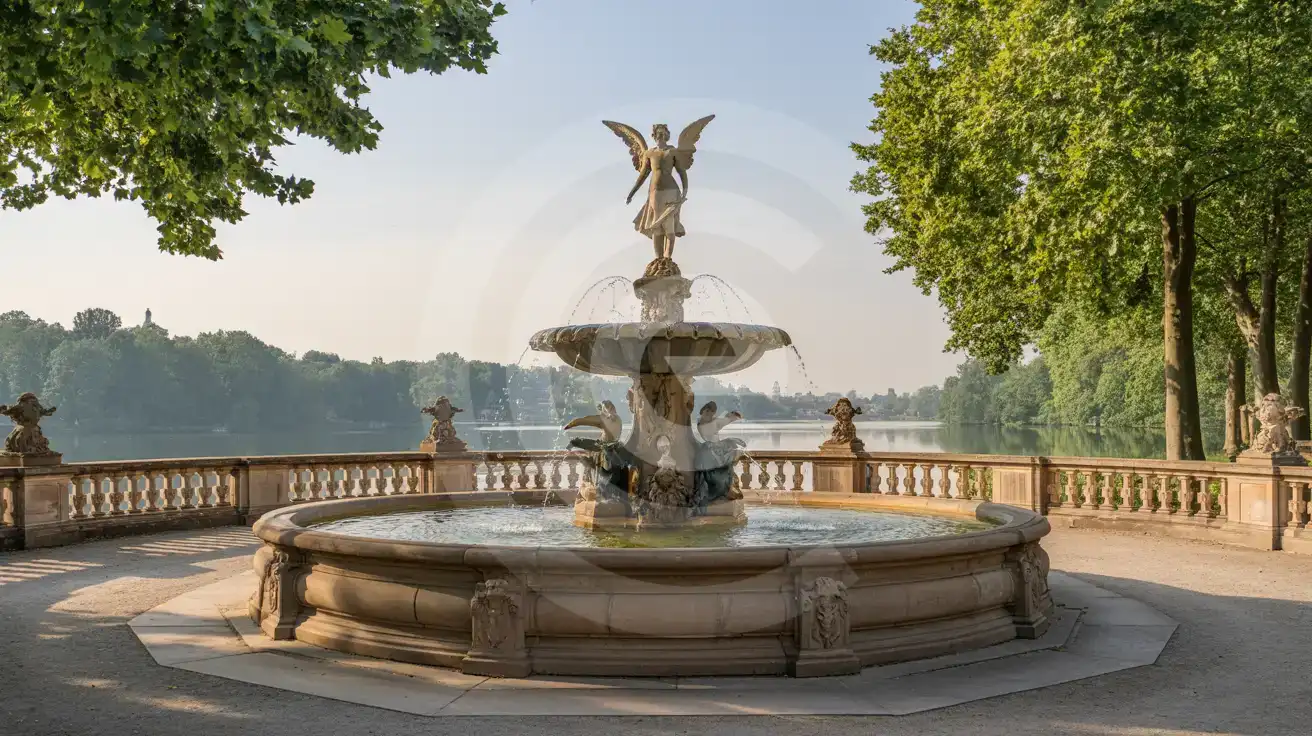
The architectural heart of Central Park, Bethesda Terrace connects the Mall to the Lake via a grand staircase and a two-level arcade. The lower terrace surrounds Bethesda Fountain, whose centerpiece — the Angel of the Waters statue by Emma Stebbins, unveiled in 1873 — was the first major public art commission awarded to a woman in New York City. The bronze angel commemorates the 1842 opening of the Croton Aqueduct, which brought fresh water to Manhattan. Look up in the arcade to see the restored Minton tile ceiling, a masterpiece of decorative tilework that spent decades hidden under grime before the Conservancy's restoration. Morning light here is exceptional; by midday, the terrace becomes a staging ground for wedding photos and buskers.
The Mall and Literary Walk
The only formal, straight promenade in the park, the Mall stretches from 66th to 72nd Street beneath a canopy of American elms — one of the largest remaining stands in North America, protected by aggressive disease management. At the southern end, the Literary Walk features bronze statues of Shakespeare, Robert Burns, Sir Walter Scott, and Fitz-Greene Halleck. The Mall's cathedral-like quality is most dramatic in summer, when the elm canopy creates a green tunnel, and in autumn, when fallen leaves carpet the flagstones.
Bow Bridge
The most photographed bridge in Central Park, Bow Bridge spans the Lake between Cherry Hill and the Ramble. The cast-iron structure, designed by Vaux in 1862, curves gracefully outward like an archer's bow — hence the name. It offers postcard views of the San Remo towers and the wooded Ramble shore, and the surrounding Cherry Hill erupts in pink blossoms each April. Arrive early to avoid the wedding party and engagement photo crowds.
Strawberry Fields and the Imagine Mosaic
This 2.5-acre triangular garden memorializes John Lennon, who lived at the Dakota apartment building directly across Central Park West at 72nd Street until his assassination in December 1980. The centerpiece is the Imagine mosaic, a black-and-white inlay donated by the city of Naples, Italy. Fans gather here year-round, but especially on December 8 (the anniversary of Lennon's death) and October 9 (his birthday). The surrounding garden was designated a Garden of Peace by more than 120 countries, and the plantings were designed by landscape architect Bruce Kelly.
The Ramble
A 36-acre woodland in the heart of the park, the Ramble was designed to feel wild and disorienting — and it succeeds. The winding paths, rocky outcrops, and dense understory make it Manhattan's premier birding location, especially during spring and fall migration when more than 230 species have been recorded. The Ramble connects to the Lake via several rustic bridges and offers rare solitude even on crowded weekends. Bring binoculars and patience.
Belvedere Castle
Perched on Vista Rock, the second-highest natural point in the park, Belvedere Castle is a Victorian Gothic folly designed by Vaux in 1869. It now serves as a National Weather Service observation station and a Conservancy visitor center. The castle's terrace offers commanding views of the Great Lawn to the north and the wooded Ramble to the south. Below lies Turtle Pond, home to snapping turtles and red-eared sliders, and adjacent to the castle is the Delacorte Theater, where the Public Theater stages free Shakespeare in the Park each summer.
The Jacqueline Kennedy Onassis Reservoir
This 106-acre body of water, renamed in 1994 for the former First Lady who lived nearby on Fifth Avenue, is bordered by a 1.58-mile bridle path that doubles as the park's most popular running track. The soft cinder surface is easier on joints than pavement, and the views — the Midtown skyline to the south, the prewar towers of Central Park West to the west, the Upper East Side mansions to the east — reward every lap. The Reservoir was decommissioned from the city's water supply system in 1993 but remains filled and photogenic.
Central Park Zoo
Operated by the Wildlife Conservation Society, this 6.5-acre zoo near Fifth Avenue and 64th Street houses snow leopards, grizzly bears, red pandas, sea lions, and a tropical rainforest aviary. The adjacent Tisch Children's Zoo offers hands-on animal encounters for younger visitors. Above the arcade connecting the two sections, the Delacorte Clock chimes on the half hour as bronze animal musicians rotate around the tower. The zoo is compact and manageable in 90 minutes, making it a good anchor for a south-end park visit.
Conservatory Garden
The only formal garden in Central Park, this six-acre space at Fifth Avenue and 105th Street is divided into three distinct sections: the Italian Garden (centered on a lawn and fountain), the French Garden (organized around seasonal flower displays), and the English Garden (featuring the Burnett Fountain, inspired by The Secret Garden). The Vanderbilt Gate entrance — wrought iron originally from the Cornelius Vanderbilt II mansion — sets the tone. Peak bloom runs late April through June, with a secondary chrysanthemum show in October. This is the quietest corner of Central Park, largely undiscovered by tourists.
The Loeb Boathouse and the Lake
Rowboats have been available for rent on the Lake since the 1870s, and the current Loeb Boathouse (1954) continues the tradition. Rental rates run around $20 per hour plus a cash deposit, and the experience — gliding past Bow Bridge, watching turtles sun on logs, hearing the city fade to background murmur — remains one of Central Park's great pleasures. The Boathouse restaurant offers lakeside dining, though reservations are advisable for weekend brunch.
Visit Strategy
Best Time to Visit
Central Park is a four-season destination, but the peak experiences cluster around specific windows. Cherry blossoms at Cherry Hill and around the Reservoir typically hit full bloom in mid-to-late April — arrival timing depends on winter temperatures, so check the Conservancy's bloom tracker. Fall foliage in the Ramble and along the Mall peaks in late October to early November, with red maples, sweetgums, and the famous American elms creating layers of color. Summer brings SummerStage concerts at Rumsey Playfield (near 72nd Street, east side) and free Shakespeare in the Park at the Delacorte Theater, though both require planning — SummerStage events often require tickets, and Shakespeare in the Park lines form by early morning for same-day distribution.
For pure crowd avoidance, visit on weekday mornings before 9:00 AM. The park officially opens at 6:00 AM, and the first hours belong to joggers, dog walkers, and birders rather than tour groups. Weekend afternoons — especially sunny ones — bring the densest crowds to Sheep Meadow, Bethesda Terrace, and the south-end entrances. Rainy days dramatically thin the crowds while adding atmosphere to the Ramble and the forested paths.
Orientation and Maps
The park's path system was deliberately designed to feel confusing — Olmsted wanted visitors to lose themselves — and it works. The Conservancy provides free paper maps at four visitor centers: Belvedere Castle, the Dairy (mid-park at 65th Street), the Chess & Checkers House, and the Charles A. Dana Discovery Center at the northern end near Harlem Meer. Download the Central Park Conservancy's official app before arrival for offline maps and self-guided audio tours.
The easiest orientation trick: lamppost numbers. The first two or three digits of the number stamped on each park lamppost indicate the nearest cross-street. Lamppost 7203 sits near 72nd Street; lamppost 10102 is near 101st Street. Once you internalize this, you'll never feel lost.
Ticketing Strategy for Attractions
Central Park itself is free and requires no tickets. Individual attractions inside the park charge separately:
- Central Park Zoo: ~$20 adults, $15 children 3-12, free under 3. Buy online to skip the ticket window.
- Wollman Rink (ice skating, November–March): ~$15–$35 depending on day and time, plus $10 skate rental.
- Loeb Boathouse rowboat rental: ~$20/hour plus refundable cash deposit.
- Shakespeare in the Park: Free, but tickets are distributed same-day at the Delacorte Theater (line forms early morning) or via the Public Theater's digital lottery.
Recommended Duration
The park is 2.5 miles long. Walking the entire perimeter takes roughly 3 hours; walking end-to-end through the interior takes 90 minutes without stops. For a first visit, plan 3–4 hours focusing on either the south end (Pond to Bethesda Terrace to Strawberry Fields) or a north-end loop (Reservoir, Conservatory Garden, Harlem Meer). Trying to see everything in one visit leads to exhaustion and superficial impressions.
Photography Rules
Personal photography is unrestricted throughout the park. Commercial photography and filming require permits from the Mayor's Office of Media and Entertainment. Wedding and engagement photo sessions are common at Bow Bridge, Bethesda Terrace, and the Conservatory Garden; if you're seeking empty backgrounds, arrive early morning or visit during inclement weather. Drone flights are prohibited.
Avoiding the Touts
Horse-and-carriage drivers and pedicab operators cluster at the south entrances near Grand Army Plaza and Columbus Circle. City-regulated carriage rates start at $57 for the first 20 minutes, but unlicensed operators often quote higher — insist on seeing the rate card before agreeing. Pedicab pricing is unregulated and negotiated; establish the total fare before departure. For a better guided experience at lower cost, the Central Park Conservancy runs free official walking tours, and Central Park Bike Tours rents bicycles near Columbus Circle starting around $15/hour.
Trail Highlights & Wildlife Watching
Top Trails by Difficulty
The Mall and Literary Walk (0.25 miles, flat, 10 minutes): The formal promenade from 66th to 72nd Street is paved, level, and wheelchair-accessible. Beneath the American elm canopy, this is more of a processional walk than a hike — perfect for visitors who want iconic photos without breaking a sweat. Start at the southern end near the 65th Street Transverse and walk north toward Bethesda Terrace.
Reservoir Loop (1.58 miles, flat, 25–35 minutes): The soft cinder bridle path circling the Jacqueline Kennedy Onassis Reservoir is the park's premier running and walking track. The surface is forgiving, the views of the skyline are continuous, and the loop is clearly marked. Enter from the 90th Street entrances on either side. No bicycles allowed.
The Ramble (variable, 30–90 minutes): This 36-acre woodland offers no single defined trail but rather a network of winding paths through dense forest, over rustic bridges, and around rocky outcrops. Elevation changes are modest — perhaps 40 feet total — but the constant turns and the overgrown feeling make navigation tricky. Expect to get slightly lost, which is the point. Enter from Bow Bridge on the south or Belvedere Castle on the north.
North Woods and the Ravine (1.5 miles loop, moderate terrain, 45–60 minutes): The most rugged section of Central Park, the North Woods between 101st and 110th Streets contains the Loch (a stream valley), the Ravine, and multiple waterfalls including the Glen Span Arch cascade. Paths are unpaved, rocky in places, and feel genuinely wild. This is the least-visited section of the park; arrive early morning for near-solitude.
Harlem Meer Loop (0.5 miles, flat, 15 minutes): The northernmost body of water in the park, Harlem Meer is bordered by a gentle path connecting the Charles A. Dana Discovery Center, the Conservatory Garden entrance, and the Lasker Rink area. Fishing is permitted with Discovery Center loaner poles (catch-and-release only). The loop is flat, easy, and quiet.
Full Park Perimeter (6 miles, mixed surface, 2.5–3 hours): The park drives — now largely closed to car traffic — form a complete loop around the entire park. The surface is asphalt, suitable for runners and cyclists. Expect gradual hills, especially in the north end. This is a workout, not a stroll.
Best Wildlife Watching Spots & Times
Central Park's location on the Atlantic Flyway makes it one of the best urban birding sites in North America. More than 230 species have been recorded, with peak diversity during spring migration (late April to late May) and fall migration (September to early November).
The Ramble: The most productive birding spot in the park. Look for warblers in the understory during May — magnolia, black-throated blue, blackburnian, and American redstart are reliable. The Oven (a rocky clearing) and Azalea Pond are hotspots. Arrive before 8:00 AM for peak activity.
Turtle Pond: Herons, egrets, and cormorants fish here spring through fall. Red-eared sliders and snapping turtles sun on logs. The viewing platform near Belvedere Castle offers good sightlines.
North Woods: Red-bellied woodpeckers, downy woodpeckers, and great horned owls are resident year-round. The stream corridor attracts Louisiana waterthrush in spring.
Harlem Meer: Ducks and geese gather in winter; fish-eating birds (cormorants, night-herons) appear spring through fall. The Discovery Center loans binoculars for free.
Beyond birds, expect to see eastern gray squirrels everywhere, eastern chipmunks in wooded areas, raccoons at dusk, and — rarely — coyotes, which have colonized the park since 2010. Red-tailed hawks nest on Fifth Avenue building ledges and hunt over the Great Lawn.
Camping & Overnight Options
Central Park does not permit camping, and the park officially closes at 1:00 AM. Overnight stays are prohibited and enforced by park rangers. For visitors seeking immersive time in the park, the strategy is to arrive at 6:00 AM opening and stay until dusk, then find accommodation nearby.
The closest hotels to central park entrances include the Plaza Hotel (Fifth Avenue and 59th Street), the JW Marriott Essex House (Central Park South), and the Mandarin Oriental at Columbus Circle. Budget options cluster in Midtown along Eighth Avenue and in the Upper West Side along Broadway.
What to Pack
Comfortable walking shoes: You'll cover more ground than expected. Paved paths accommodate any footwear, but the Ramble and North Woods have rocky sections where ankle support helps.
Layered clothing: The park can be 5–10 degrees cooler than surrounding streets due to tree cover and water bodies. Spring and fall mornings are chilly even when midday warms up.
Water bottle: Drinking fountains exist but are unevenly distributed. Refill at the visitor centers.
Binoculars: Even cheap ones transform the birding experience. The Discovery Center loans them free.
Portable phone charger: A full day of GPS use, photography, and app navigation drains batteries. There are no public charging stations in the park.
Sunscreen and hat: Sheep Meadow and the Great Lawn offer no shade. Midday summer sun is intense.
Cash: The Loeb Boathouse rowboat rental requires a cash deposit. Some food vendors are cash-only.
Park map or downloaded app: The path system is designed to confuse. Don't rely on cellular data you might not have.
Safety & Permit Requirements
Central Park is statistically one of the safest precincts in New York City, patrolled by the Central Park Precinct (NYPD). Common-sense precautions apply: stay on marked paths after dark, keep valuables secure, and avoid isolated areas in the northern section late at night. Emergency call boxes are located throughout the park.
Permits are required for events with more than 20 people, amplified sound, commercial photography, and filming. Athletic events (races, organized group fitness) require Parks Department permits. Drone flights are prohibited citywide in New York. Fishing at Harlem Meer requires no license but operates catch-and-release only with barbless hooks.
Nearby Attractions & Logistics
Museums on the Park's Edge
The Metropolitan Museum of Art sits directly inside the park at Fifth Avenue and 82nd Street — its rear façade connects to the Greywacke Arch and Cleopatra's Needle (the Egyptian obelisk behind the museum). A Central Park visit pairs naturally with a Met visit; enter the park through the 79th Street entrance, walk north to the Obelisk, then enter the Met through the 81st Street side entrance. The American Museum of Natural History and Rose Center for Earth and Space occupy the entire block at Central Park West and 79th Street, directly across from the Naturalist's Gate park entrance. The Solomon R. Guggenheim Museum is a 10-minute walk from the park's Fifth Avenue entrances between 88th and 89th Streets.
Shopping and Dining South of the Park
Grand Army Plaza at 59th Street and Fifth Avenue anchors the park's southeast corner, with the Plaza Hotel and the Bergdorf Goodman flagship store flanking the entrance. Fifth Avenue from 59th to 49th Street concentrates flagship retail: Tiffany & Co. (temporarily relocated during renovation), Saks Fifth Avenue, Cartier, and the Rockefeller Center complex. For food, avoid the tourist-trap restaurants directly on Central Park South; instead, walk 10 minutes east to Lexington Avenue for better value, or south to the Grand Central Market for quick lunch options.
Transit Connections
More than a dozen subway stations ring Central Park's perimeter. From the south (59th Street), the A/B/C/D/1 trains stop at Columbus Circle on the west side, while the N/R/W trains stop at Fifth Avenue/59th Street on the east. The 6 train runs along Lexington Avenue with stops at 68th, 77th, 86th, 96th, and 103rd Streets — all within a block of the park's east entrances. The B/C trains run along Central Park West with stops at 72nd, 81st (Museum of Natural History), 86th, 96th, and 110th Streets. A single subway ride costs $2.90 via OMNY contactless payment or MetroCard.
From JFK Airport, the AirTrain plus A train to Columbus Circle runs approximately 75–90 minutes and costs $11.15 total. From LaGuardia, the Q70-SBS bus connects to the Roosevelt Avenue subway station (7, E, F, M, R trains); total travel time to the park is roughly 60 minutes.
Walking Distances from Key Entry Points
From Grand Army Plaza (59th and Fifth) to Bethesda Terrace: 0.7 miles, 15 minutes. From Columbus Circle to Strawberry Fields: 0.6 miles, 12 minutes. From the 86th Street subway (B/C) to the Reservoir running path: 0.2 miles, 4 minutes. From the 103rd Street entrance (6 train) to the Conservatory Garden: 0.3 miles, 6 minutes.
Where to Eat Nearby
Inside the park, the Loeb Boathouse offers full-service dining overlooking the Lake — reservations recommended for weekend brunch. Le Pain Quotidien operates a café at the Mineral Springs Pavilion near Sheep Meadow. The Conservatory Garden has no food service, but the 105th Street entrance is a short walk from East Harlem's restaurant row on Lexington Avenue.
Outside the park, options multiply. For classic New York delicatessen, Barney Greengrass on Amsterdam Avenue at 86th Street serves smoked fish and bagels since 1908. For upscale dining, Jean-Georges at Columbus Circle (Trump International Hotel) holds three Michelin stars. For casual lunch, the food hall at the Turnstyle Underground Market (Columbus Circle station) offers quick options before entering the park from the southwest.
Why Data Matters at Central Park
Central Park's path system was designed to disorient — and it still works. The winding routes, the lack of straight sightlines, and the deliberate absence of clear signage mean that even longtime New Yorkers occasionally lose their bearings in the Ramble or the North Woods. A working phone with GPS transforms the experience from frustrating wandering to purposeful exploration.
Beyond navigation, data connectivity matters for real-time coordination: meeting friends at the Bethesda Fountain, checking Shakespeare in the Park ticket availability on the Public Theater app, confirming Loeb Boathouse reservation times, or looking up which subway entrance gets you closest to the Conservatory Garden. The park has limited public WiFi (some exists near the visitor centers), but coverage is inconsistent, and bandwidth chokes on crowded weekends.
An eSIMno plan connecting to AT&T or T-Mobile gives you reliable data from the moment you exit the subway. No hunting for SIM card kiosks, no carrier store detours — just working maps, working transit apps, and the ability to share that Bow Bridge photo before you've even left the bridge. For a park this size, that's not a luxury; it's what makes the difference between a great day and a frustrating one.
The Heart of the Park
Compare WiFi Options at Central Park
 Recommended Recommended | Local SIM / Operator | Roaming | |
|---|---|---|---|
| FEATURES | |||
| Setup time | Few minutes | Store visit + paperwork | Auto |
| No local ID needed | Online checkout | Local ID required | Use home account |
| Speed | 4G/LTE; 5G in some areas | Carrier-grade | Partner-dependent |
| Travel support | English support 24/7 | Operator shops and call centre | Home carrier hours |
| Keep home number | Dual SIM | Replaces it | Same number |
| Cost predictability | Fixed price | Bills can spike | Bill-shock risk |
| PRICING | |||
Typical pricing | See plans below | — | — |
PRICING — PICK YOUR ESIMNO PLAN
Featured eSIM plans
American Mobile

American Mobile
American Mobile
American Mobile
American Mobile
American Mobile


