
Quick Facts
- 2027 Edition
- Starts 30 August 2027; annual event ending around Labor Day week
- Location
- Black Rock City, Black Rock Desert, Nevada, near Gerlach
- How Long It Runs
- About 8 days including opening Sunday through Labor Day Monday
- Founded
- 1986
- Expected Attendance
- Roughly 70,000 to 80,000 people in most recent large editions
- Gate Opening
- Typically from 12:01 am on opening Sunday; arrivals before opening are generally not allowed without special authorization
- Typical Ticket Range
- About USD 575 standard admission, with vehicle passes typically extra at around USD 150; higher-priced support tiers may apply
- Nearest Main Airport
- Reno-Tahoe International Airport, about 120 miles / 193 km away
- Airport to Playa Travel Time
- Usually 2.5 to 4 hours by car or burner bus depending on traffic; much longer during peak entry waves
- Reno to Gerlach
- Around 2 to 2.5 hours by car before gate queues
- Public Transport to Venue
- No regular metro or train to the event site; access is mainly by car, shuttle, charter or festival bus
- Typical Reno Taxi/Rideshare
- Airport to Downtown Reno usually about USD 15 to 30
- eSIMno Networks
- AT&T, T-Mobile, Verizon Wireless
Why This Event Pulls People So Far Off the Usual Route
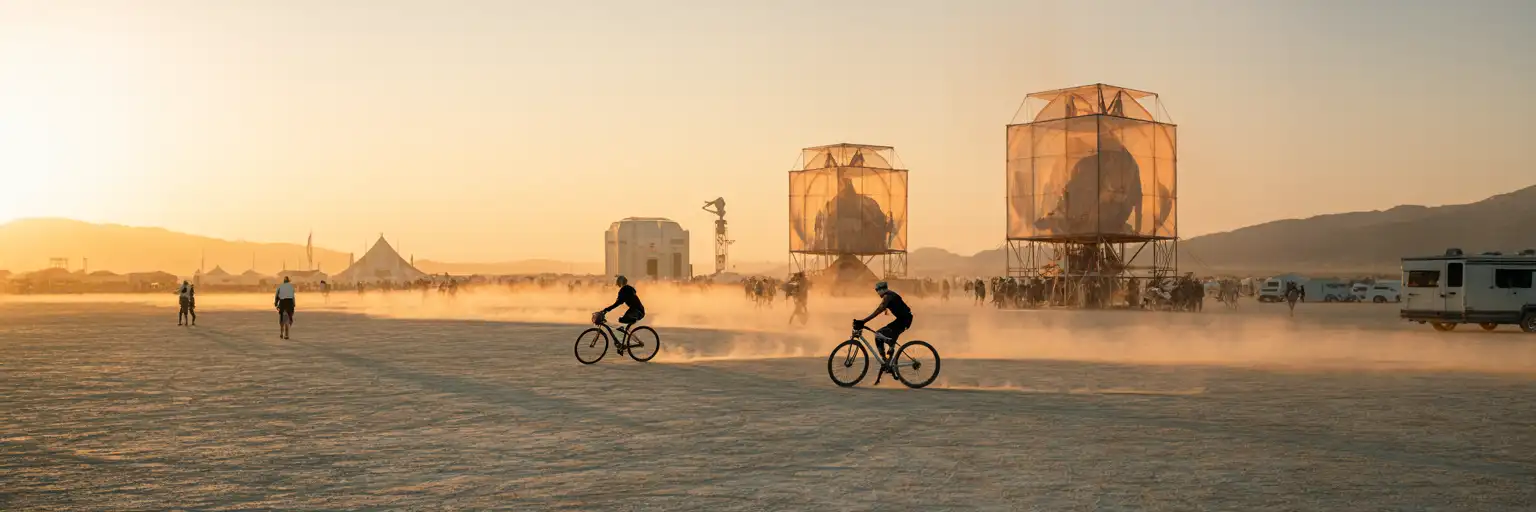
Burning Man is one of those rare events where the remoteness is part of the appeal. People travel here for immersive art, participatory culture, and a genuinely one-of-a-kind desert experience. That matters, because this is not the sort of festival where you show up for a headline act, grab a drink, and head back to your hotel at 11pm. You’re entering a temporary city built on an alkali lakebed in Nevada, and for many travelers that commitment is exactly the point.
Its global cultural cachet is real. Burning Man has become a major long-haul travel motivator for people who care about art, experimental environments, and community-driven experiences more than conventional tourism boxes. We see the same pattern every year: art-focused travelers, experiential tourists, global creative communities, and repeat destination-event attendees all build entire US trips around it. If your idea of a memorable journey is something immersive rather than passive, this is very much your lane.
And expectations should be set properly. Conditions are harsh, schedules on playa run differently from city festivals, and basic logistics take time. But that’s also why the event feels unlike anywhere else. You don’t just attend Burning Man. You prepare for it, travel into it, and live inside it for a week.
Getting There and Around: Reno, Gerlach, and the Last Stretch to Black Rock City
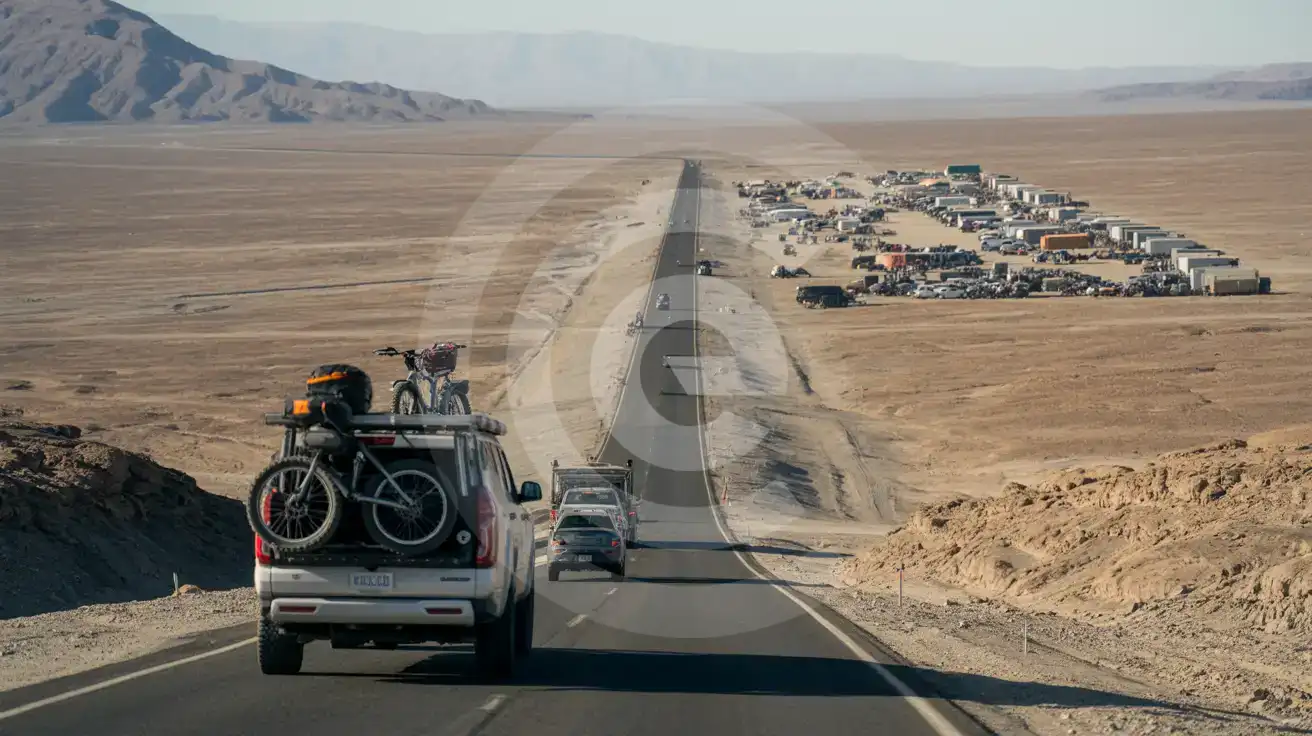
Let’s talk real distances, because they matter here more than almost any other festival. The main gateway for most international and domestic flyers is Reno-Tahoe International Airport. From the airport to the Burning Man site, you’re looking at roughly 120 miles or 193 km. In light traffic that can be around 2.5 hours, but on opening day or other peak arrival windows it often becomes 4 hours or more once the queue to Gate builds. If you’re collecting a rental car, shopping for supplies, and repacking gear in Reno, plan a full transition day rather than trying to rush it.
There’s no metro, tram, or regular train serving the venue area. This is a remote desert event, so your practical options are rental car, RV, rides arranged with your camp, private charter, or the Burner Express-style event bus when offered. The road approach usually runs through Wadsworth, Nixon, Empire, and Gerlach before the final push to Gate. Gerlach is the last tiny settlement before the playa and not a place to count on for major resupply.
If you’re staying before or after the event, Downtown Reno is the easiest base for one-night arrivals, airport convenience, and supermarket runs. Midtown Reno works well if you want better cafés and a more local feel. Sparks can also make sense if you’re picking up supplies on the east side. From Reno city center to the playa, estimate around 110 to 125 miles depending on your route and staging point.
During event days, getting around Black Rock City is mostly about walking and bikes. A bicycle isn’t optional in the practical sense for many camps; it’s how people cover the wide city grid efficiently. Inside the city, distances can feel bigger than they look on the map, especially in heat, wind, or whiteout dust. Save your camp location offline before you arrive, and if you still need a US data setup for the run out from Reno, you can explore eSIMno plans for the United States before the airport leg even starts.
Black Rock Desert Arrival Mood
What To Do Beyond the Event: Reno Stops Worth Knowing Before or After Playa
Most Burning Man trips naturally route through Reno, so it’s worth using the city well instead of treating it as just a fuel stop. One smart pre-playa stop is the Nevada Museum of Art in downtown Reno. It fits the mood of the trip, it’s manageable in 60 to 90 minutes, and it gives you one last dose of climate control before the desert takes over.
For food, Midtown Reno is the area we’d point friends toward first. South Virginia Street has plenty of easy options for a decent sit-down meal before the dust week begins. If you want something more local and filling, try Basque food in the Reno area when timing allows. Dishes like lamb stew, chorizo, beans, and family-style sides are part of northern Nevada’s food identity and make more sense here than chasing generic chain food. Louis’ Basque Corner near downtown is the classic name many travelers know.
Have an extra half day after Burning Man? Head to Rancho San Rafael Regional Park for open space and a reset, or make the 45-minute drive to Lake Tahoe’s north shore if you want cold blue water and pine air after a week of dust. Tahoe works especially well if you’ve built in a recovery night before your flight out. One small tip from experience: don’t schedule a tight same-day lake detour if you’re also cleaning rental gear and returning a vehicle. Post-playa time disappears fast.
And don’t leave Reno without doing a proper final supply run. Big-box stores and grocery branches around Reno and Sparks are where many attendees buy water, ice chests, last-minute goggles, and snacks. Once you head past the city, convenience drops sharply.
Staying Connected When the Event Is the Challenge
This is where Burning Man differs from almost every other festival guide you’ll read. The issue isn’t just crowded WiFi. In many cases, there simply isn’t venue-style public WiFi you can sensibly rely on across the event. Coverage can be limited, congestion happens, and weather conditions are rough on both batteries and devices. Dust gets everywhere. Heat drains phones faster. And the moment when you really need data is often before you even hit the gate: checking bus instructions, pulling up camp coordinates, opening ticket or travel emails, messaging your group from Reno, or confirming the latest road conditions.
Activate your eSIM before you leave the airport or hotel. That gives you time to download offline maps, screenshot gate details, save emergency contacts, and pin your accommodation in Reno. We’d also share plans with your camp before arrival: estimated departure from Reno, expected queue time, and your last known location. Once you’re on playa, keep essential information offline because the network experience can vary a lot by device, crowd load, and exact location.
There are a few very Burning Man-specific phone moments people forget about. One: your group gets split during final shopping in Reno and somebody has the vehicle pass details. Two: you arrive dusty and tired and need to re-open a shuttle or rental message with barely any patience left. Three: after the event, thousands of people are trying to navigate exodus timing, fuel stops, and airport changes at once. That’s the window where having data already sorted helps most. If you want a practical option ahead of the trip, you can explore eSIMno plans for the United States and set things up while you still have stable WiFi.
How to Connect for Burning Man Without Leaving It Too Late
- Before the Reno supply run
Turn on your data setup as soon as you land at Reno-Tahoe International Airport or once you reach your hotel. That’s the best moment to load grocery pins, rental details, camp instructions, and any bus or shuttle updates before the trip becomes all errands and packing. - Before you leave pavement behind
In Reno or Sparks, download offline maps for Reno, Wadsworth, Nixon, Gerlach, and the Black Rock Desert approach. Screenshot ticket emails, vehicle pass information, gate times, and camp location notes. On playa, assume you may need those files without dependable live service. - Use your data for the transition points, not constant browsing
The key windows are airport arrival, final shopping, the drive to Gate, exodus planning, and the post-event return to Reno. That’s when maps, weather checks, fuel searches, QR bookings, and group messages save the most time.
A Few Things Experienced Travelers Keep in Mind
- Aim to reach Reno at least 1 night before heading to the playa. Same-day airport-to-desert attempts look efficient on paper and feel rough in real life.
- Pack a battery bank and keep your phone in a dust-protective pouch. Fine alkaline dust is hard on charging ports and camera lenses.
- If your group is convoying, agree on one final message checkpoint in Reno and one backup meeting plan if nobody has signal near Gate.
Compare Connectivity for Burning Man
 Recommended Recommended | Local SIM / Operator | Roaming | |
|---|---|---|---|
| FEATURES | |||
| Setup time | Few minutes | Store visit + paperwork | Auto |
| No local ID needed | Online checkout | Local ID required | Use home account |
| Speed | 4G/LTE; 5G in some areas | Carrier-grade | Partner-dependent |
| Travel support | English support 24/7 | Operator shops and call centre | Home carrier hours |
| Keep home number | Dual SIM | Replaces it | Same number |
| Cost predictability | Fixed price | Bills can spike | Bill-shock risk |
| PRICING | |||
Typical pricing | See plans below | — | — |
PRICING — PICK YOUR ESIMNO PLAN
Destination overview
Frequently Asked Questions
Featured eSIM plans
American Mobile

American Mobile
American Mobile
American Mobile
American Mobile
American Mobile