
Quick Facts
- Host City
- Linz, Austria
- Festival Dates
- Thursday, September 9, 2027
- Founded
- 1979
- Likely Main Venue Area
- POSTCITY Linz and citywide venues around central Linz
- Typical Program Hours
- Roughly 10:00-19:00 for exhibitions; some evening talks, performances, and openings run later
- Doors / First Access
- Main venue access often begins around 09:30-10:00; check final daily program
- Expected Attendance
- Usually tens of thousands across the full festival; major editions often draw 50,000+ visits citywide
- Ticket Range
- Approx. EUR 20-30 day ticket; multi-day and reduced tickets usually available
- Airport Transfer
- Blue Danube Airport to central Linz about 15 km, around 20-25 min by taxi or 30-45 min by bus/train combinations
- City Centre to Venue Area
- Linz Hauptplatz or Hauptbahnhof to POSTCITY area around 10-20 min by tram or on foot depending on stop
- Typical Taxi Fare
- Airport to central Linz about EUR 25-35; city centre to venue usually EUR 8-15
- eSIMno Networks
- A1, H3G, T-Mobile
Why This Event Feels Different
Ars Electronica isn’t just another festival with a cool name attached to a city. It has been shaping conversations around art, technology, and digital culture since 1979, and that long history gives it weight. People travel to Linz for cutting-edge digital art, immersive installations, and future-focused cultural programming that often feels more like stepping inside a living lab than attending a standard arts event.
That international reputation matters. This is one of the rare festivals where you’ll hear students, curators, coders, media artists, and culture-tech travelers all comparing notes over coffee in the same queue. If you’re the sort of traveler who likes coming home with new ideas, not just new photos, this one earns the trip. That’s also why it keeps pulling in a global creative crowd: its brand recognition in media arts is genuinely exceptional, and people build September travel around it.
Who should attend? Digital creatives, artists, students, and curious travelers who want culture with a forward tilt. Expect citywide programming, a lot of walking, and moments where you’ll want to save an exhibit location fast. Keep an eye on the final schedule once it drops, and if you want your maps and live updates working all day, it’s worth taking a look at explore eSIMno plans for Austria before you fly.
Getting There and Getting Around During Festival Days
Linz is served by Blue Danube Airport (LNZ), a small airport west of the city. In practice, plenty of international visitors also arrive via Vienna Airport and continue to Linz by Railjet or Westbahn. From Vienna Airport to Linz Hauptbahnhof, the train journey is usually about 1 hour 45 minutes to 2 hours 15 minutes depending on the connection. From Blue Danube Airport, a taxi into central Linz is usually 20 to 25 minutes and roughly EUR 25 to 35. Public transport is slower but manageable with a bus plus rail or bus plus tram combination, usually 30 to 45 minutes in total.
The festival’s best-known recent hub has been POSTCITY, the huge former postal logistics complex beside Linz Hauptbahnhof. Even when programming spreads across the city, this area tends to remain central to the festival rhythm. That makes the station district, the Innere Stadt around Landstraße and Hauptplatz, and the Urfahr side across the Danube smart places to stay. If you want maximum convenience, sleeping near Hauptbahnhof cuts your morning friction almost to zero. If you prefer cafés and river walks, Innere Stadt feels better after hours.
Public transport in Linz is refreshingly straightforward. Tram lines 1 and 2 link the main station with the city core and continue north toward Urfahr; line 3 also serves central corridors; line 4 is handy for some east-west city moves. Local buses fill in the gaps. On busy festival days, trams are usually the easiest option because they dodge the parking hassle completely. One personal observation: Linz feels compact on the map, but after a full day of venue-hopping your legs may disagree. Save your tram stops in advance.
If you’re arriving late or heading back after an evening program, taxis and ride bookings are simple enough in the centre, and most short inner-city hops come in around EUR 8 to 15. Just expect a little waiting time right after headline evening events let out.
What to Do Beyond the Festival
Don’t spend every hour indoors. Linz is one of those cities that rewards a break between intense exhibits.
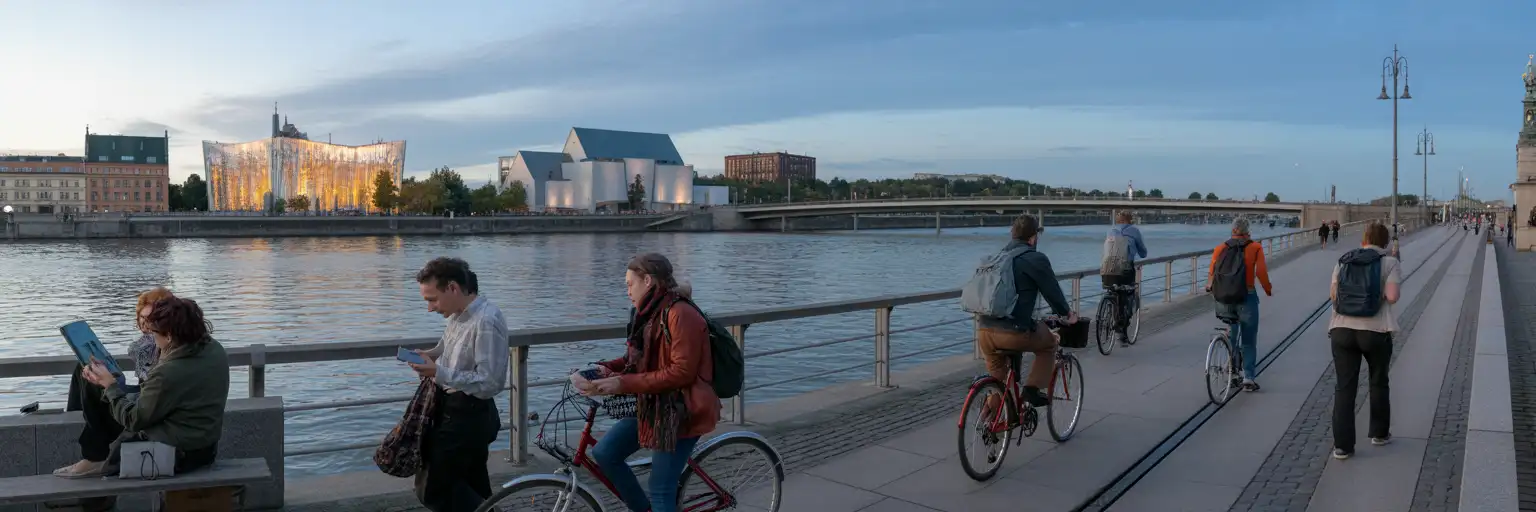
Start with the Lentos Art Museum area on the Danube. Even if you don’t go inside, the riverfront walk here is a good reset after screen-heavy installations. Sunset is especially nice, and the path toward Nibelungenbrücke gives you easy city views without eating half your day.
Then make time for the Pöstlingberg. The mountain tram up is part of the fun, and the view back over Linz helps you understand how compact the city really is. Go late afternoon if you want softer light and fewer school-group vibes. It’s also a good move on the festival day when your schedule starts later.
For something more atmospheric, wander the Altstadt lanes near the old town. This is where Linz shifts from practical transport hub to somewhere you’ll want to linger. Small bars, courtyards, and old façades make it a solid pre-dinner neighborhood.
Food-wise, don’t leave Linz without trying Linzer Torte in the city where it belongs. For savory options, look for classic Austrian dishes like Wiener Schnitzel, Tafelspitz, and a proper plate of Käsespätzle. Around Landstraße and the old town you’ll find a good concentration of restaurants and cafés. If you want something distinctly local and slightly old-school, the brewery scene is worth your time too. A beer hall dinner after a festival day just fits here.
Two useful names to pin: Promenadenhof for a traditional Austrian meal near the centre, and Klosterhof if you like historic brewery atmosphere. For cake and coffee, cafés around Herrenstraße and Landstraße are easy bets. This is also where having data helps more than people admit: opening hours can shift, and some smaller places still rely on online menus or booking messages.
Staying Connected When the Festival Spreads Across the City
This festival creates a very specific phone-usage pattern. You’re not only checking one venue map once. You’re scanning QR tickets, refreshing the day’s schedule, messaging friends who got pulled into a different talk, and figuring out whether the next installation is 7 minutes away or 22. Add crowded public WiFi and a few hundred people uploading photos from the same hall, and things can slow down fast.
The main pressure points are predictable: morning entry windows, lunchtime schedule reshuffles, and the hour after evening programs when everybody is trying to send location pins at once. Interactive exhibits can also nudge you online with companion apps, audio, or browser-based participation. If you’re relying on venue WiFi alone, expect the occasional stall right when you need your screen to load now, not in 90 seconds.
That’s why we’d sort data before arrival. With an eSIMno plan, you can step off the plane or train with service already active on strong local partner networks. It’s useful for practical festival moments more than anything flashy: opening your ticket at the entrance, checking tram departures from Hauptbahnhof, uploading a quick photo set before moving on, or dropping a live pin so your group can regroup outside a venue without a 15-message back-and-forth.
One more thing. Linz is easy to navigate until you’re tired. Then every wrong tram platform suddenly feels personal. Offline maps help, but real-time data is what saves you when platform info changes or you decide on a last-minute dinner across the river.
How to Connect for This Festival Trip
- Before departure: save the festival spine of the city
Download or bookmark Linz Hauptbahnhof, POSTCITY, Hauptplatz, Landstraße, and your hotel before you fly. Ars Electronica often spreads across multiple venues, so having those core pins ready saves time on day one. - On arrival: get data working before the transfer
If you land at Blue Danube Airport or arrive through Vienna Airport, activate your plan before you start the trip into Linz. That way you can check train platforms, bus timing, or taxi pickup points immediately instead of hunting for station WiFi. - Before each festival morning: screenshot the schedule block you actually need
Even with data, it’s smart to keep the day’s must-see sessions and ticket QR codes in your photo gallery. Entry windows and room capacities can create bottlenecks, especially around popular talks and installations. - During venue hops: use live transport, not memory
Linz is compact, but festival fatigue is real. Check real-time tram and bus departures between Hauptbahnhof, Landstraße, Hauptplatz, and Urfahr so you don’t waste 15 minutes on the wrong platform.
A Few Good Calls to Make the Trip Easier
- If you want the least stressful stay, book near Hauptbahnhof or Landstraße; it keeps both the festival hub and evening dining within easy reach.
- Carry a small power bank. Interactive exhibits, camera use, maps, and constant schedule checks drain battery faster here than at a standard music festival.
- Build one non-festival hour into each day for the riverfront or Pöstlingberg. Ars Electronica is stimulating in the best way, but a reset helps you enjoy the next venue more.
Festival Evenings in Linz
Compare Connectivity for Ars Electronica Festival 2026
 Recommended Recommended | Local SIM / Operator | Roaming | |
|---|---|---|---|
| FEATURES | |||
| Setup time | Few minutes | Store visit + paperwork | Auto |
| No local ID needed | Online checkout | Local ID required | Use home account |
| Speed | 4G/LTE; 5G in some areas | Carrier-grade | Partner-dependent |
| Travel support | English support 24/7 | Operator shops and call centre | Home carrier hours |
| Keep home number | Dual SIM | Replaces it | Same number |
| Cost predictability | Fixed price | Bills can spike | Bill-shock risk |
| PRICING | |||
Typical pricing | See plans below | — | — |
PRICING — PICK YOUR ESIMNO PLAN
Destination overview
Frequently Asked Questions
Featured eSIM plans
Austria Net

Austria Net
Austria Net
Austria Net
Austria Net
Austria Net
Austria Net
Austria Net